


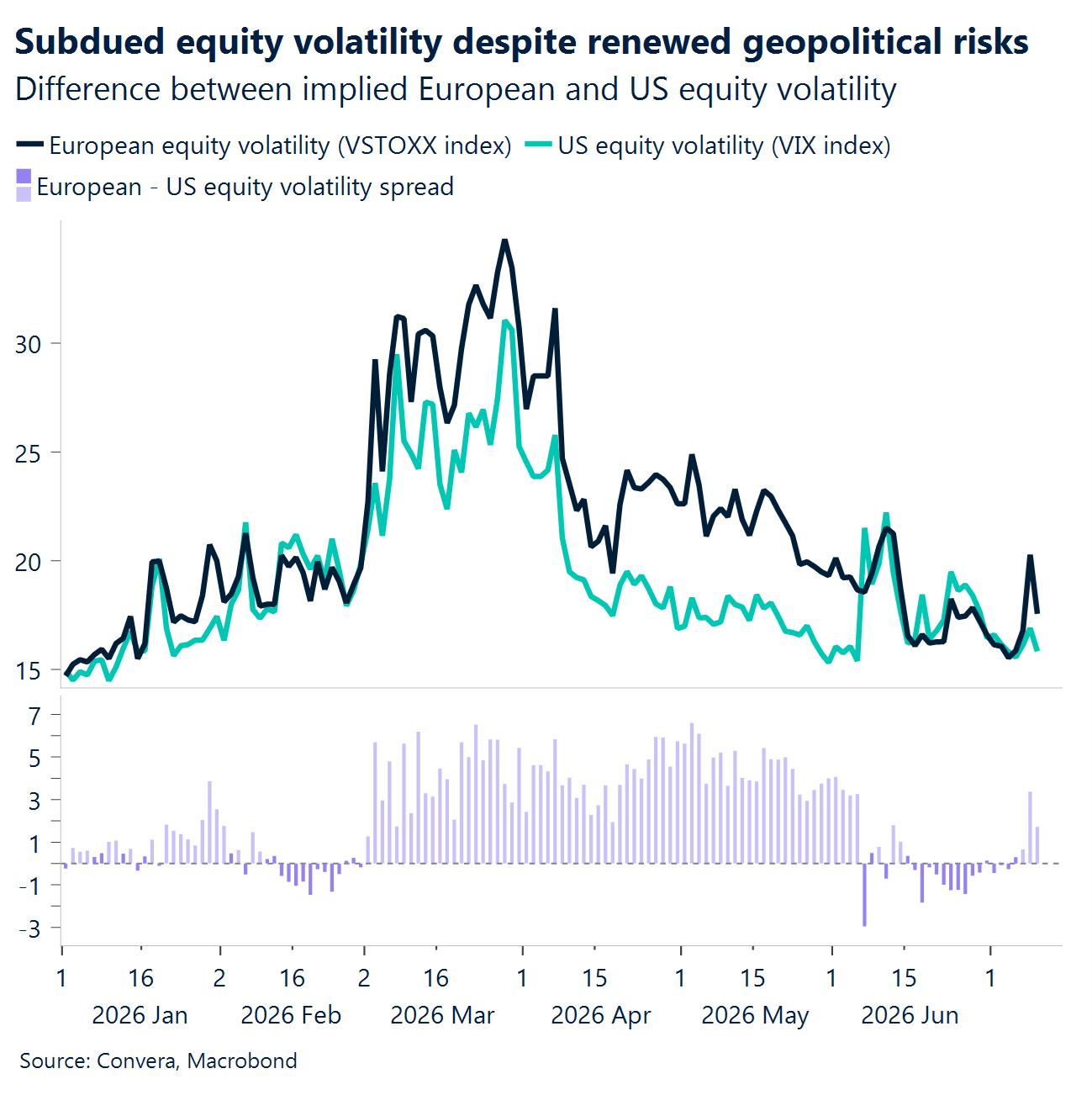
- Memorandum of Misunderstanding. US-Iran negotiations aren’t going as planned, with fresh hostilities flaring this week. Oil prices jumped as much as 10%, triggering a spike in rates volatility. Yet equity volatility has been contained, especially in the US.
- Bearish bonds. The jump in energy prices sparked the biggest rise in short-dated UK and European bond yields since March as investors repriced for higher inflation and tighter monetary policy.
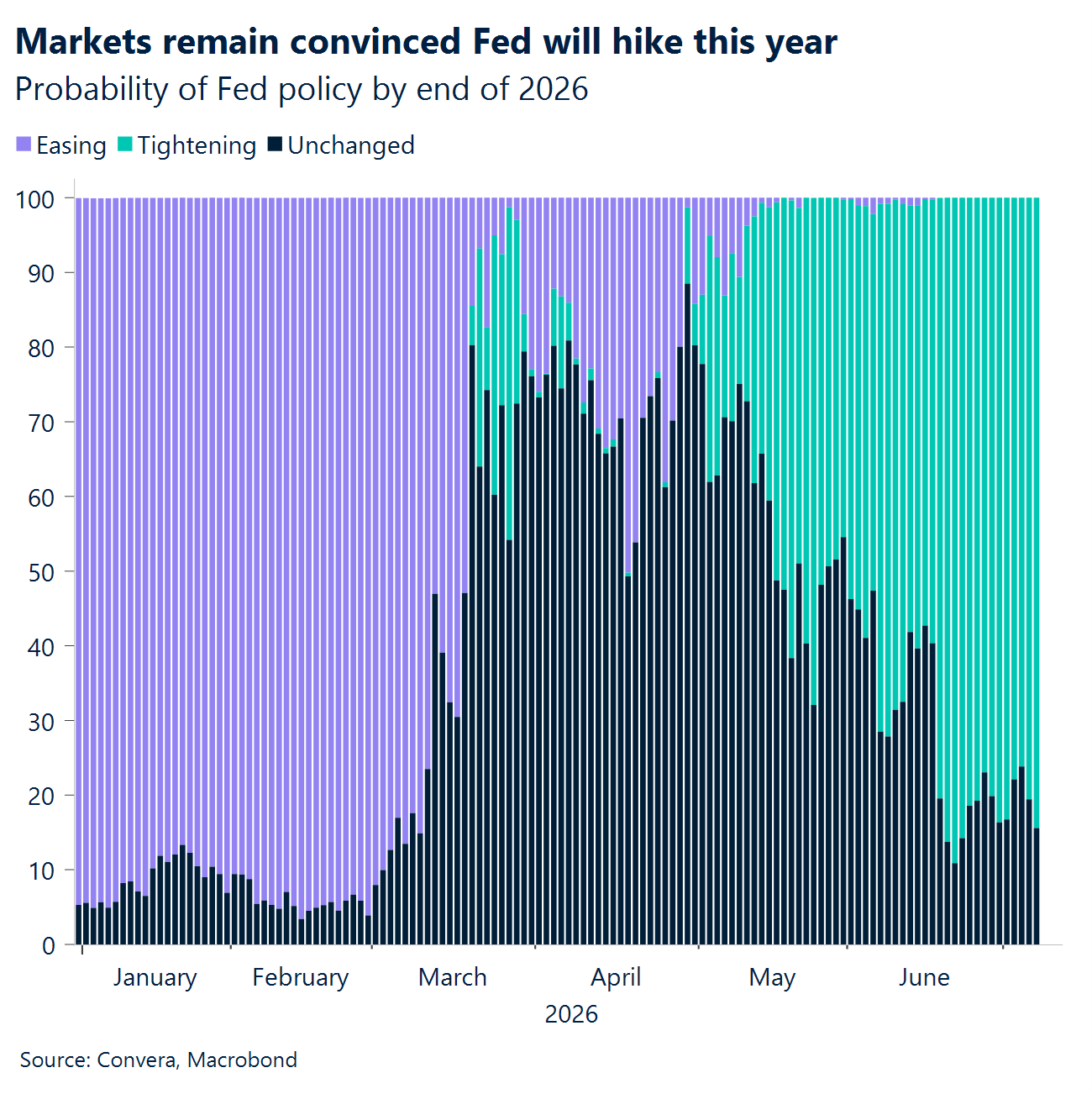
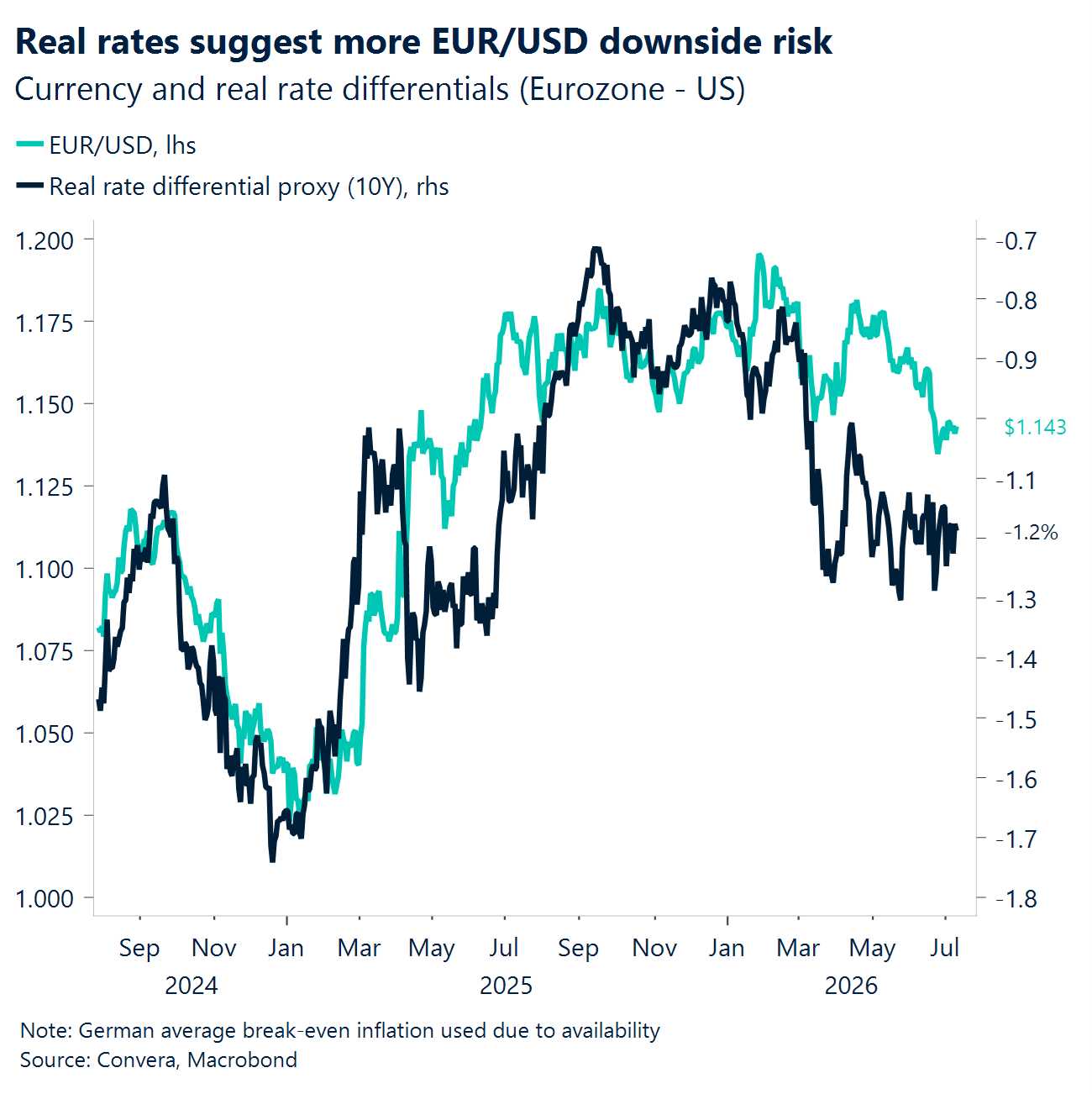
- Higher real starting point. Long-dated US real yields climbed to their highest level since 2008, as rising oil prices combined with a resilient economy rekindled speculation that the Fed could raise rates as soon as September.
- Hawks of War(sh). Minutes from Kevin Warsh’s first FOMC meeting struck a hawkish tone too, with policymakers citing war-related inflation risks and a few members even seeing a case for a rate hike at last month’s meeting.
- ECB flags another hike. The minutes of the European Central Bank’s June meeting also confirmed that the Governing Council was leaning toward another 25-basis-point hike, probably in September.
- Count Binface. In the UK, Nigel Farage’s decision to quit Parliament and seek re-election in a Clacton by-election put politics back in the spotlight. The Reform UK leader faces novelty candidate Count Binface as his most prominent challenger.
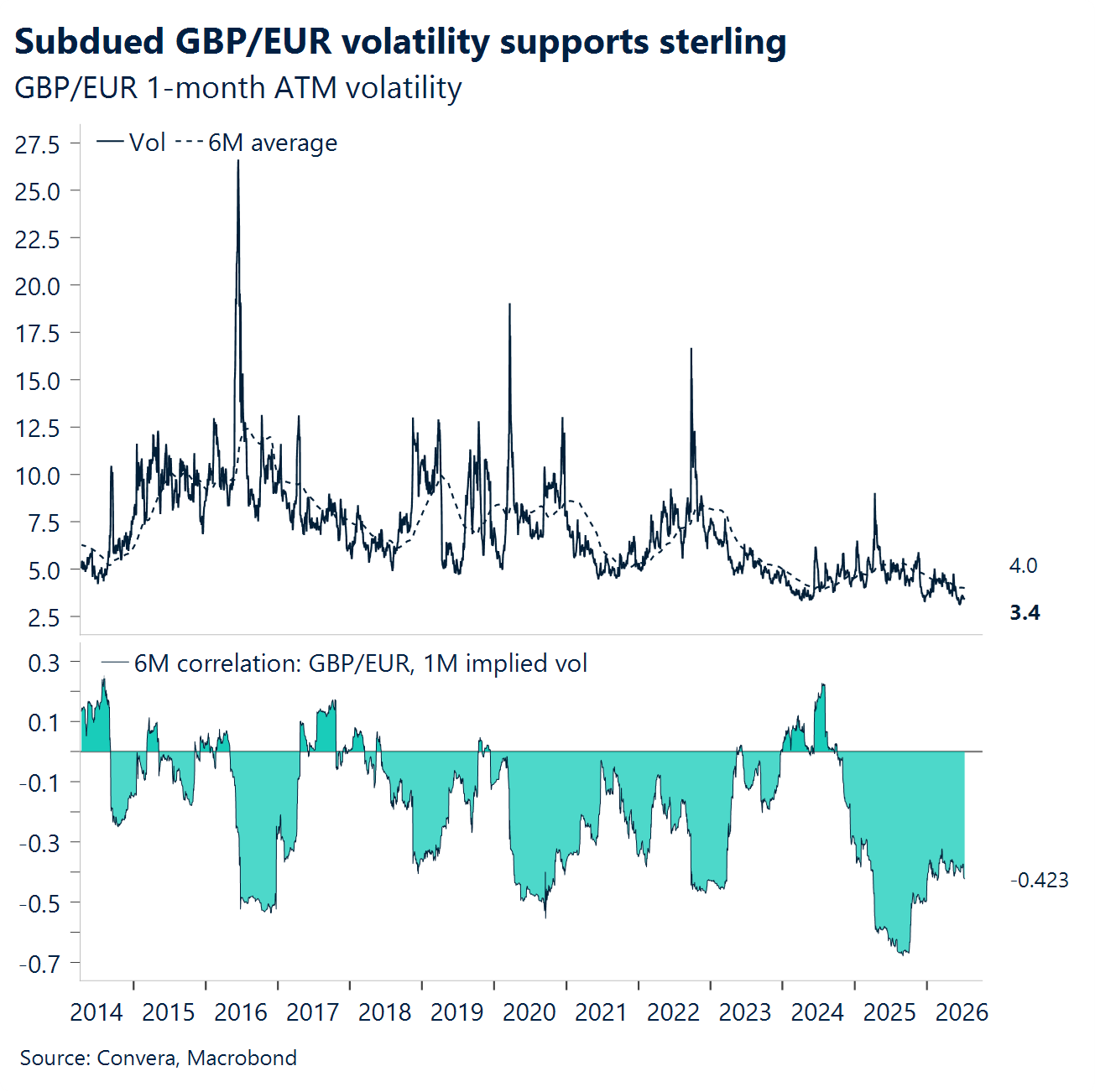
- Sleepy FX. Currency volatility remains muted overall, which plays into the favour of high-yielding currencies, which includes the British pound.
Global Macro
Fading geopolitical risk, rising rates focus
Déjà vu. Despite both sides favouring de-escalation, deep-seated mistrust continues to drive periodic flare-ups in US-Iran tensions, fuelling pockets of market volatility and uncertainty over the most likely outcome. Two key questions remain front and centre for investors: whether Iran will again disrupt shipping through the Strait of Hormuz, and whether the conflict escalates into a broader regional war that causes lasting damage to oil production infrastructure.
Focus. For now, with ships still moving through the Strait of Hormuz, energy infrastructure largely untouched and oil prices back under control, markets have pared some of the risk-off positioning seen earlier in the week, easing pressure on fixed income and pulling bond yields back from recent highs. The risk is that markets are becoming too complacent, but fading geopolitical shocks has been a winning strategy so far, leaving investors once again laser-focused on front-end rate differentials as the primary driver of market pricing.
Repricing. Investors appear reluctant to price significantly more tightening by major central banks unless tensions escalate further. Still, we have seen more hawkish repricing in the UK and Europe, hence the euro and pound’s modest gains versus the US dollar over the last few days.
Test. Overall, markets continue to price in one Fed rate hike before year-end, supported by this week’s hawkish FOMC minutes. The next key test for that outlook will be upcoming US inflation data, which could determine whether expectations for further tightening are reinforced or challenged.
Week ahead
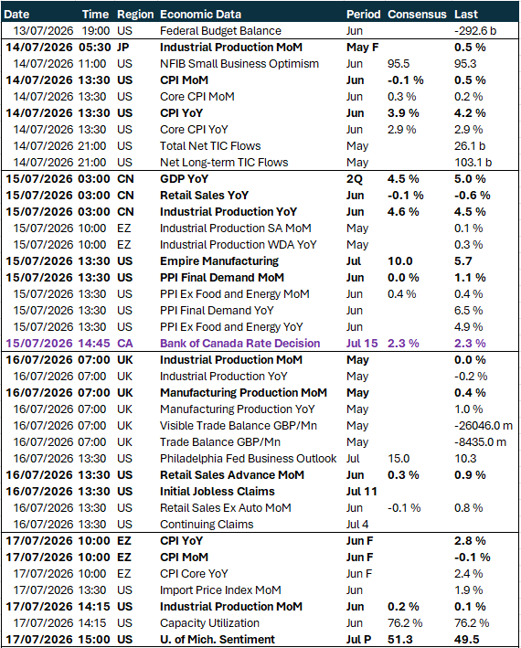
US CPI to dominate
- Waiting for calmer waters. Besides macro releases, investors will want to see more conciliatory rhetoric from both the US and Iran, with talks resuming and vessel traffic beginning to normalize.
- CPI: Hawk or dove? All eyes are on next week’s US CPI report. Both doves and hawks will be looking for validation of their respective Fed narratives. Falling oil prices and a softer-than-expected NFP report support the dovish camp, while recent geopolitical flare-ups reinforce the view that the Fed’s tightening bias may remain in place. We would expect a fairly two-sided market reaction should the inflation print either overshoot or undershoot expectations.
- Consumer pulse check. US retail sales for June are also due next week. Strong May figures helped ease concerns that geopolitical tensions were weighing on consumer confidence. While higher oil prices inflated the headline number, underlying spending was firm as well. Consensus expects a 0.2% monthly increase in June retail sales (nominal), reflecting the recent decline in oil prices. However, World Cup-related spending could help keep consumption momentum relatively robust.
- Testing the UK’s momentum. The UK’s monthly GDP and industrial production figures are due next week. While these releases can be volatile, they remain useful gauges of economic momentum amid ongoing geopolitical uncertainty. The Bank of England will need further evidence of a cooling economy to challenge its still-hawkish stance, particularly given inflation remains above target.
FX views
Muted reaction
USD Standing guard. The dollar was only briefly supported by this week’s flare-up in geopolitical tensions, with initial safe-haven demand fading as oil prices reversed lower and equities rebounded into week-end. Nevertheless, sustained elevated energy prices underpin the Fed’s hawkish bias and should help keep the dollar supported, particularly against low-yielding currencies, while high-yielders remain cushioned by carry demand. Still, markets may be underestimating the risk of a Strait of Hormuz disruption and a renewed oil price spike. As such, risks remain skewed to the upside for the dollar, although continued geopolitical headline fatigue and stable energy markets would likely leave DXY rangebound. Attention now turns to next week’s US CPI release and Fed Chair Kevin Warsh’s congressional testimony, both of which could provide a clearer steer on the Fed’s policy outlook and thus the dollar’s direction.
EUR Waiting on CPI. EUR/USD spent the week consolidating just above 1.14 after hitting a one-year low of 1.1325 on the back of a hawkish Fed narrative. Since then, softer-than-expected data on both sides of the Atlantic – eurozone inflation and the US jobs report – combined with lower oil prices have tempered hawkish expectations for both the ECB and the Fed, leaving the pair with little directional momentum. More generally, the euro has struggled to draw sustained support from war-driven yield gains, as growth concerns continue to dominate investor thinking, with memories of the 2022 energy crisis still fresh. By contrast, the dollar has benefited from a more resilient macro backdrop and lower exposure to imported energy. EUR/USD remains pinned below the 21-day moving average near 1.1450, suggesting sellers remain in control. Assuming no further escalation in the Middle East, next week’s US CPI report could prove a key catalyst and may pave the way for a move back towards 1.15.
GBP Sterling still supported. GBP/USD is hovering near three-week highs, while GBP/EUR continues to trade close to one-year highs. With little on the data front and renewed tensions in the Middle East this week, BoE doves have struggled to find catalysts that would justify a weaker pound. We see this month’s UK CPI release and the Bank of England’s policy meeting as the next key tests. Both could either add momentum to sterling’s recent strength or help cap the rally if lower oil prices feature more prominently in the inflation data and MPC messaging. While one further BoE rate hike remains priced in by year-end, a softer-than-expected inflation print would likely weigh on sterling. However, it is unlikely to fully reverse recent gains, particularly against the euro. The Bank is still expected to retain an overall hawkish stance, while domestic political risks remain subdued amid expectations of a smooth transition to Burnham.
CHF Lagging risk-off moves. The Swiss franc continues to drift lower against most major peers despite another flare-up in geopolitical tensions. The move reinforces a key theme of recent months: while underlying haven demand for CHF persists, it is no longer translating into sustained currency outperformance. A major constraint remains the SNB’s repeated emphasis on its increased willingness to intervene in FX markets.. As a result, the franc has largely ceded traditional haven leadership to the USD, while acting more as a stabiliser than a surge asset. Still, looking ahead any progress toward peace in the Middle East would likely weigh further on franc as well. For now, EUR/CHF is holding above key daily moving averages, with a break above 0.93 needed to generate further upside momentum, while a weekly close above 0.81 in USD/CHF would reinforce the pair’s bullish recovery.
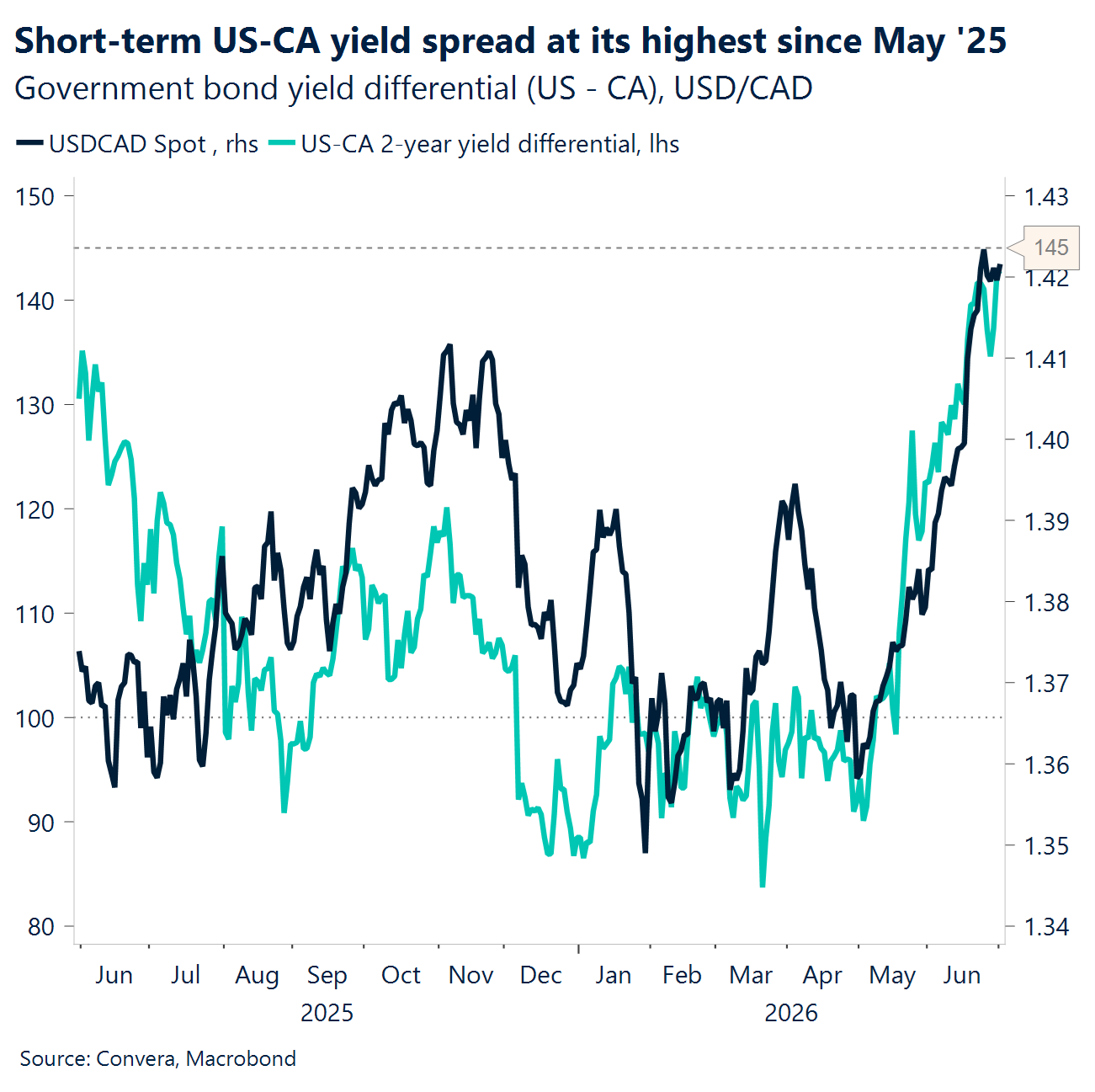
CAD Growth cools while price worries build. The Bank of Canada’s latest business survey makes for uncomfortable reading. Firms expect weaker sales, with the balance of opinion sliding to +15 from +24, and the broader outlook gauge sank deeper into negative ground at -0.39. Companies now put the odds of a recession over the coming year at 17%, nearly double the previous 9%. Yet price expectations run the other way. Some 44% of firms see inflation above 3% over the next two years, up sharply from 11%, and households have pushed their five-year view to 3.39% from 3.02%. We see 1.4200 as the next hurdle. Below, the 21-day EMA at 1.4133 offers the first cushion, then the 50-day EMA at 1.4005 and the 100-day EMA at 1.3908. The chart shows the widening US-Canada yield gap pulling the pair higher, though the RSI for USD/CAD now sits close to overbought.
AUD Oil shock bruises confidence, not jobs. A softer dollar and steadier risk appetite lift AUD/USD, while the prospect of higher Australian rates puts a floor under it. The Reserve Bank says the jump in oil prices has knocked household and business confidence but has yet to slow the economy in any meaningful way. Policymakers cautioned against simply looking through supply shocks, especially if people start expecting higher inflation to stick, and repeated that the Board will do whatever it takes to bring inflation back to target and keep employment full. With the cash rate at 4.35% and markets pricing barely 12bp of further increases by year-end, the risk still tilts toward higher rates. That case would fade quickly if the shock started biting into jobs and growth. AUD/USD sits roughly 5% under its May high of 0.7278. We want the pair to clear the 100-day EMA at 0.7009, then 50-day EMA at 0.7019 before we trust the recovery. Below, 0.6900 is the line that matters. AUD/JPY, meanwhile, pushed to a two-week high.
CNH USD/CNH more than 2-week low. Chinese consumer prices rose 1.0% from a year earlier in June, a touch under the 1.1% expected and down from May’s 1.2%. Officials pointed to slower increases in gold jewellery and petrol, which together trimmed roughly 0.23 percentage points from the headline figure. Food prices also rose more slowly. Factory-gate prices told the opposite story, climbing 4.1% in line with forecasts and picking up from 3.9%. The yuan has stayed strong all through 2026. USD/CNH trades near a three-year low, only about 0.4% above the 6.7539 trough hit on 17 June. To build any upward momentum, the pair needs to break above the 50-day EMA at 6.7998 and then the 100-day EMA at 6.8362. On the way down, 6.7800 is the next line of support.
JPY The 160 handle comes into view. USD/JPY is heavy above 161 after the finance minister said the government wants pension funds, including the ¥293trn state fund, to lift their holdings of Japanese assets substantially. No numbers, no timeline. But the fund splits its money roughly evenly between assets at home and abroad, so even a modest tilt homeward implies an enormous flow. That is what the market has chosen to price. The bond market said it loudest. Ten-year yields fell 10bp and the 20-year dropped more than 11bp, the steepest move in a month. That narrowing gap, not the headline itself, is what pulls USD/JPY lower. We read the whole thing as damage control: yields had run to multi-decade highs on worries about loose spending and political pressure on the central bank, and the yen sat at a 40-year low. The pair trades about 1% shy of the 162.84 peak set on 1 July. We look to the 50-day EMA at 160.51, key psychological handle of 160.00, then the 100-day EMA at 159.23 as the next key levels of support.
Have a question? [email protected]
*The FX rates published are provided by Convera’s Market Insights team for research purposes only. The rates have a unique source and may not align to any live exchange rates quoted on other sites. They are not an indication of actual buy/sell rates, or a financial offer.