
- Another week of tariff threats from President Trump, and important economic data, has been overshadowed by Israel’s attack on Iran’s nuclear facilities. Global equities tumbled as the VIX fear index jumped back above 20 – a level often seen as a dividing line between calm and panic in markets.
- The biggest reaction was in energy markets, where gas prices jumped 5% and oil prices surged up to 13% at one point. While shipments of oil and gas through the Strait of Hormuz remain unaffected for now, traders are starting to price in the risk of disruption. Brent’s implied volatility is now at the highest level since 2022, reflecting extreme jitters among traders.
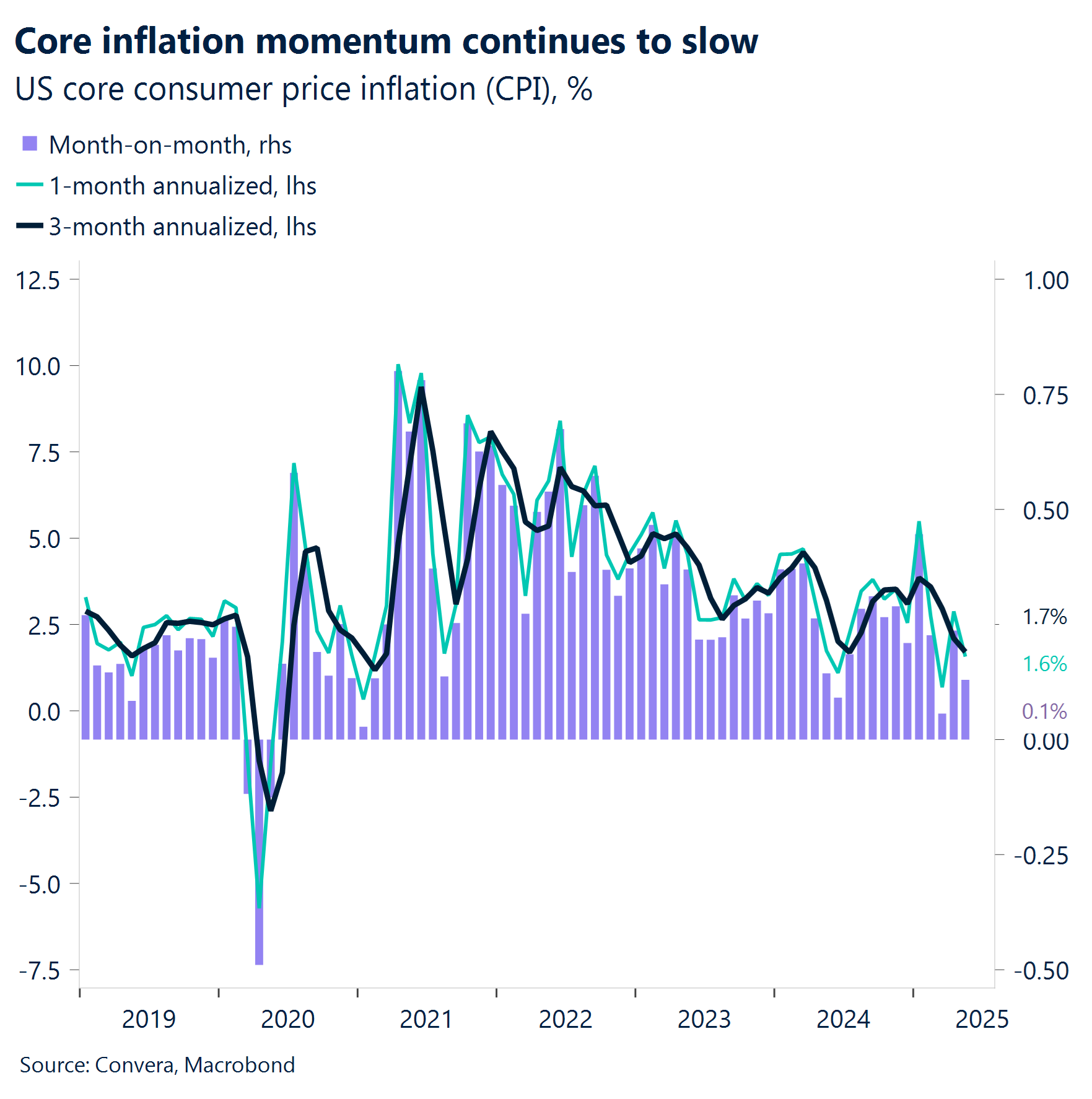
- The increase in energy costs will come as unwelcome news to Fed Chair Powell as it risks reigniting inflation just as the market was starting to warm up to a softer macro backdrop. US CPI and PPI for May came in lower than expected, suggesting the broader impact of the trade war remains disinflationary at this stage.
- The data, combined with Trump’s plans to notify trading partners about unilateral tariff rates ahead of the July 9, pushed the USD to its lowest level since 2022 as markets recalibrated expectations for two potential Fed rate cuts by year-end.
- However, the oversold and undervalued dollar found a catalyst for a rebound in higher oil prices by way of the US comparative advantage in energy independence.
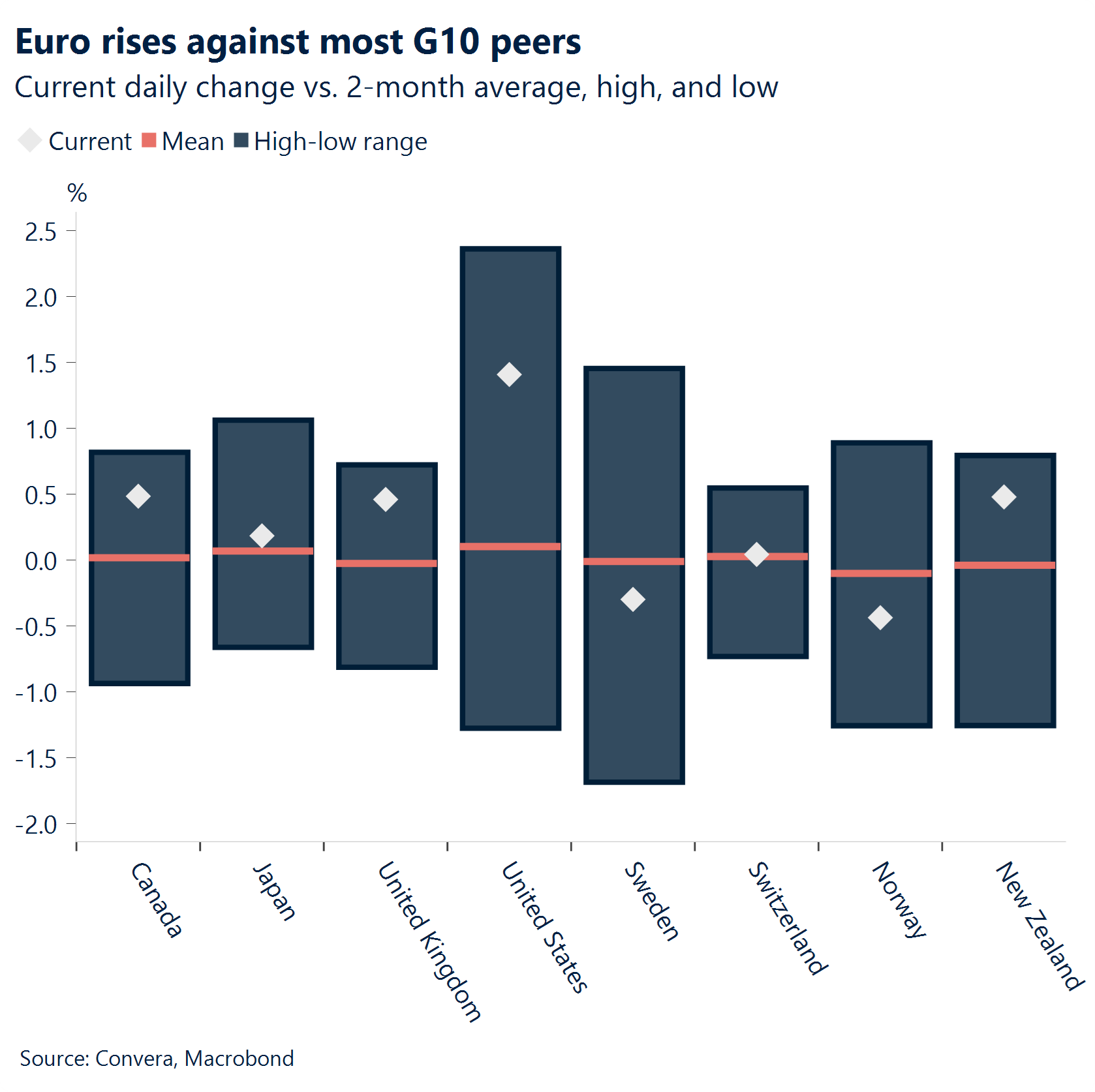
- Investors are flocking to safe havens, like gold, JPY and CHF, hesitant to hold risk assets due to uncertainty surrounding further escalation. But, whilst the EUR doesn’t like higher oil prices, it’s still holding onto over 1% gains versus the USD this week.

Global Macro
Inflation chills, dollar slips
Tame inflation reports. The latest US Consumer Price Index (CPI) data showed headline and core inflation rising 0.1% m/m in May, down from April’s prints and below forecasts. The string of below-forecast inflation prints suggest consumers have yet to fully experience the effects of President Trump’s tariffs, likely due to temporary tariff pauses, companies absorbing costs, or pre-emptive inventory stockpiling. The broader impact of the trade war remains disinflationary at this stage, which, all else being equal, is supportive for financial assets.
Also, the US Producer Price Index (PPI) edged up 0.1% in May, signaling muted inflation with no tariff-driven price shocks. While some components hinted at tariff-related increases, they were balanced by modest inflation elsewhere, keeping overall price pressures in check.
Trade risk ramps up. President Trump’s new tariffs-related threats involved notifying trading partners within the next one to two weeks about unilateral tariff rates ahead of the July 9 deadline, and expanding steel tariffs starting June 23, escalating trade uncertainty and souring market sentiment. The news, combined with inflation reports, pushed the dollar to its lowest level since 2022 as markets recalibrated expectations for two potential Fed rate cuts by year-end.
Jobless claims keep going up. Continuing unemployment claims track those still jobless after their first week of filing, while initial unemployment claims represent new filings. This week, continuing claims surged to 1.956 million, up from 1.902 million last week, the highest level since November 2021. Finding a new job after losing one is becoming increasingly difficult, signaling mounting challenges in the labor market. Initials also jumped above expected.
Regional outlook: UK
Taking a turn for the worse
Slowing economy. Away from the trade and geopolitical drama, UK data this week has been a drag on the pound. The British economy shrank 0.3% m/m in April, the first decline in six months, and the biggest since October 2024. Services output fell by 0.4%, following growth of 0.4% in March, and was the largest contributor to the fall in GDP. Industrial and manufacturing production also came in below forecasts.
Cooling jobs market. The gloomy numbers followed a dovish UK jobs report. Vacancies declined as businesses adjusted to higher payroll taxes and minimum wage hikes from April’s budget and separate tax data showed payroll employment fell by 109,000 in May, the biggest drop since May 2020, all of which are reinforcing signs of labour market cooling.
Easing pay growth. Pay growth excluding bonuses eased to 5.2%, its slowest pace in seven months, and below forecasts of 5.3%. Private-sector wage growth, closely watched by the Bank of England (BoE), slipped to 5.1% from 5.5%. Still, wage growth momentum remains stubborn and inconsistent with the BoE’s 2% inflation target.
More BoE cuts priced in. Though we expect BoE to keep rates unchanged at 4.25% in June, the data cements the probability of an August rate reduction and has increased traders’ conviction a further second quarter-point cut is on the cards for Q4.
Struggling sterling. The pound retains an attractive yield advantage over its peers, but falling short-dated yields erodes that appeal, alongside domestic growth and fiscal risks shifting to the downside.

Week ahead
Bracing for policy rate decisions
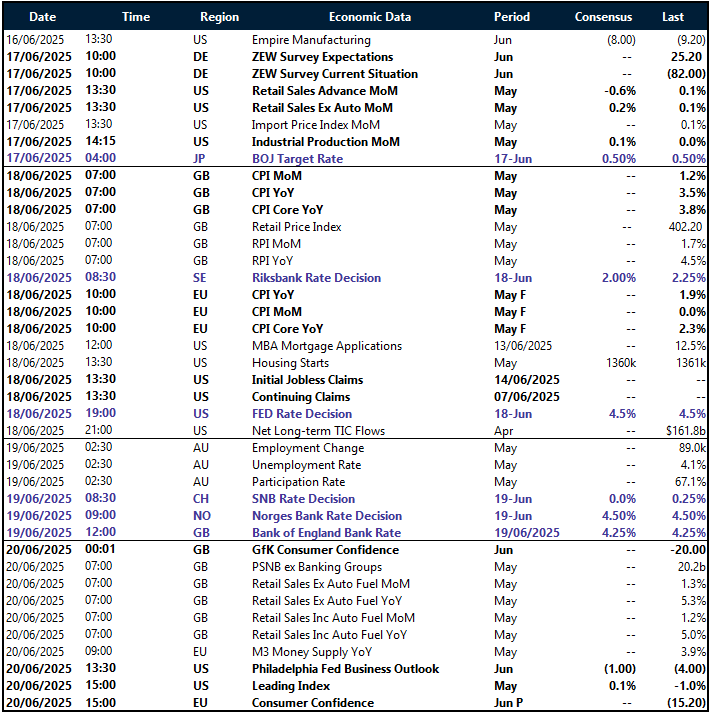
- Central banks steer the narrative. The BoE and Fed each have two rate cuts priced in by year-end, though both are expected to hold rates steady next week. The Swiss National Bank has one full cut priced in, with the possibility of a larger, 50 bps, reduction to curb franc appreciation. While growth-focused Riksbank is expected to cut by 25 bps, Norway and Japan are expected to keep rates unchanged in next week’s meetings.
- Soft data focus. US sentiment indicators are also key to watch. The Conference Board leading index and the Philadelphia Fed manufacturing business outlook Survey will provide insight into the overall business climate. A weaker-than-expected reading could reinforce concerns about dampened sentiment toward the US economic outlook, adding to the recently disappointing ISM data.
- Hard data focus. US retail sales & industrial production are critical for assessing consumer spending and factory output. These releases will help gauge the strength of economic momentum. Soft prints would further fuel a cautious stance on growth prospects, potentially impacting market sentiment. UK inflation and retail sales will also be crucial data points for the BoE in determing the pace of future rate cuts.
- Green shoots in Europe. Germany’s ZEW expectations index is set to rise, driven by fiscal loosening and anticipation of the 2025 draft budget, which includes adjustments for the €500 billion infrastructure fund and new defense spending exemptions under the amended debt brake. These developments will likely overshadow weak April industrial production, at least for now.
FX Views
Euro steals the show
USD The floor keeps falling. The US dollar index tumbled to a new 3-year low, hit by a double blow from soft inflation data and renewed trade tensions. The geopolitical flare up has offered some safe-haven support but this will be a litmus test as investors increasingly question whether it is still the first place of refuge in a crisis. Domestically, the string of weaker-than-expected CPI and PPI prints reinforced expectations that the Fed will cut rates twice this year, pushing short-dated yields lower and steepening the yield curve – diminishing the dollar’s appeal. Further pressure came from Trump’s fresh tariff threats, which rattled risk appetite, marking another sign that the dollar’s losing its safe haven shine. The broader outlook remains asymmetrically tilted to the downside, as the US risk premium rises, weighed down by fiscal concerns and a global shift away from US asset exposure. At a time when US economic exceptionalism faces scrutiny, a confirmed rebound in core data or soft data improvement could be one factor capable of reviving the buck as well as rising oil prices. But for now, the prevailing sentiment favours the dollar depreciating further, particularly against defensive peers.
EUR Euro rally gains steam, but can it hold? This week, the euro’s rally regained momentum, with EUR/USD comfortably surpassing April’s highs of $1.1615 and holding above both short- and long-term moving averages. The narrowing distance across shorter-term averages further reinforces bullish momentum. However, while the broader trend remains firmly bullish, signs of short-term exhaustion have emerged since the rally began in February. Still highly reliant on deteriorating US sentiment, the spot price has struggled to sustain above shorter-term moving averages throughout May, suggesting a potential reversal in the coming days should trade-related optimism resurfaces. Beyond technicals, last week’s euro jump remains fundamentally fragile. Although softer-than-expected US inflation fueled expectations of a Fed rate cut, narrowing rate differentials in favor of the euro, these differentials still broadly support USD strength. Given this backdrop, a sustained move toward the $1.1500–$1.1600 range appears difficult to justify.
GBP Riding the risk rollercoaster. The prospect of lower BoE interest rates and falling short-term gilt yields has dampened sterling’s appeal following a string of downbeat domestic data this week. GBP/EUR has slumped to to a 4-week low, breaking below key daily moving averages, signaling further downside risks. Meanwhile, GBP/USD bounced off its 21-day moving average, keeping the short-term uptrend intact, but its rally to a fresh 3-year high of $1.3632 was cut short by surging oil prices and plunging risk sentiment amid the Iran-Israel geopolitical flare-up. Sterling’s high beta to risk makes it particularly sensitive to global uncertainty, prompting investors to sell GBP in favor of safe-haven assets, including the euro, which has been outperforming in volatile market conditions. Beyond geopolitics, the UK-US economic surprise differential has narrowed, making it harder for GBP/USD to sustain gains above $1.36. Indeed, traders continue to pare their bullish sterling outlook, and they now expect almost no gains in the British currency over the next 1 to 3 months and a depreciating pound over a longer horizon. The BoE meeting on Thursday will offer clues as to whether markets are right in betting two more rate cuts this year.
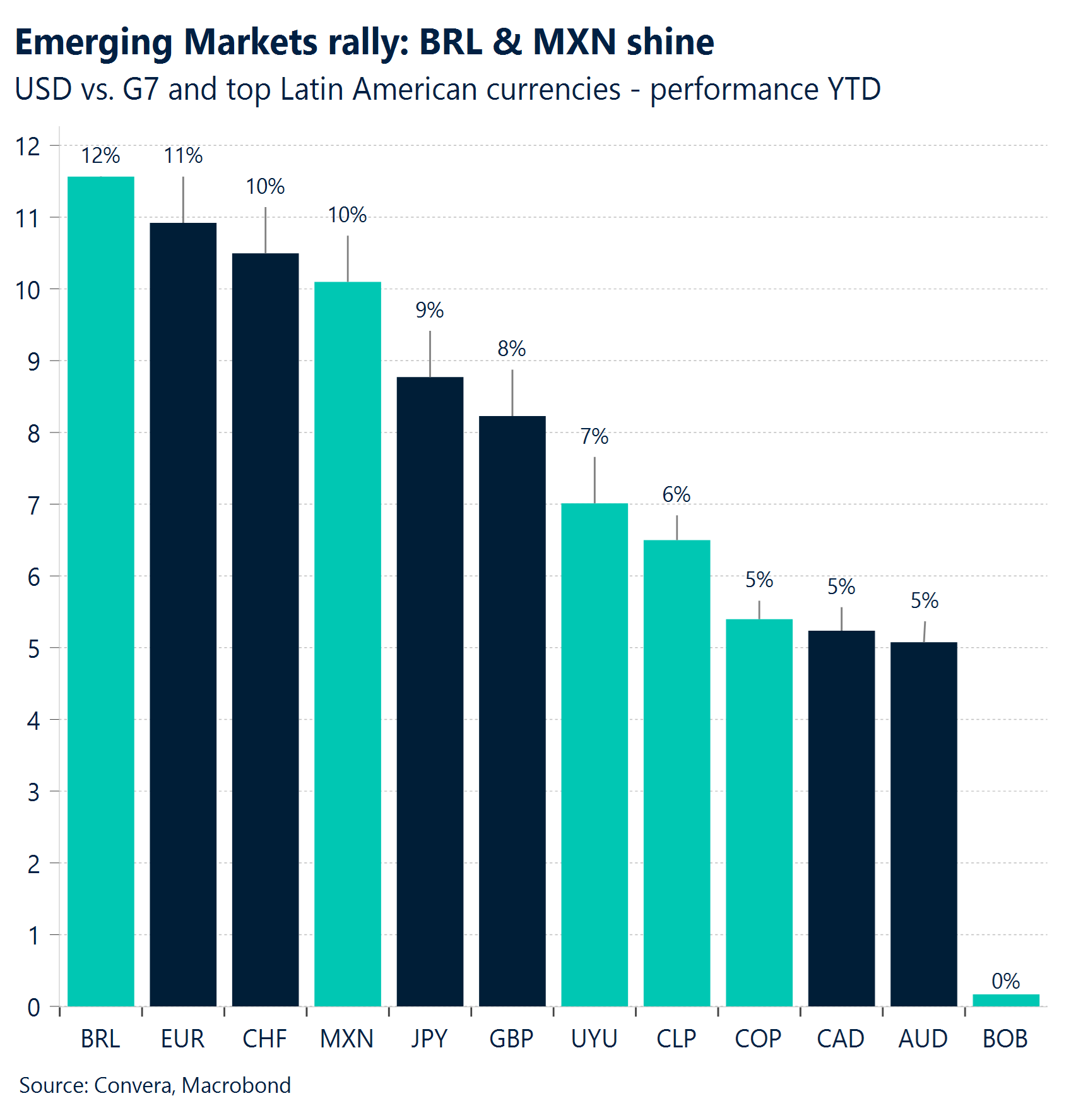
CHF Tactical cut expected. The Swiss franc has extended its advance against the US dollar eying a test of a new decade high, adding to gains of over 10% year-to-date as safe haven demand swells due to Iran-Isreal conflict. On a trade-weighted basis, the franc is nearing levels last seen when the Swiss National Bank (SNB) signalled its willingness to act against excessive currency strength. Ultimately, the franc’s sharp appreciation has created a deflationary challenge for the SNB. Thus, there’s growing speculation that the SNB may soon step in, either pushing interest rates into negative territory or using FX intervention to curb the franc’s rapid appreciation. The latter could be trickier now Switzerland is included on the US Treasury’s FX monitoring list. It’s also worth noting the franc’s performance relative to the euro remains more critical for inflation given 70% of its imports come from the EU. As the Swissy has marginally weakened against the euro this year, the SNB may hold off on aggressive policy for now, but we expect a 25-basis point rate cut this Thursday.

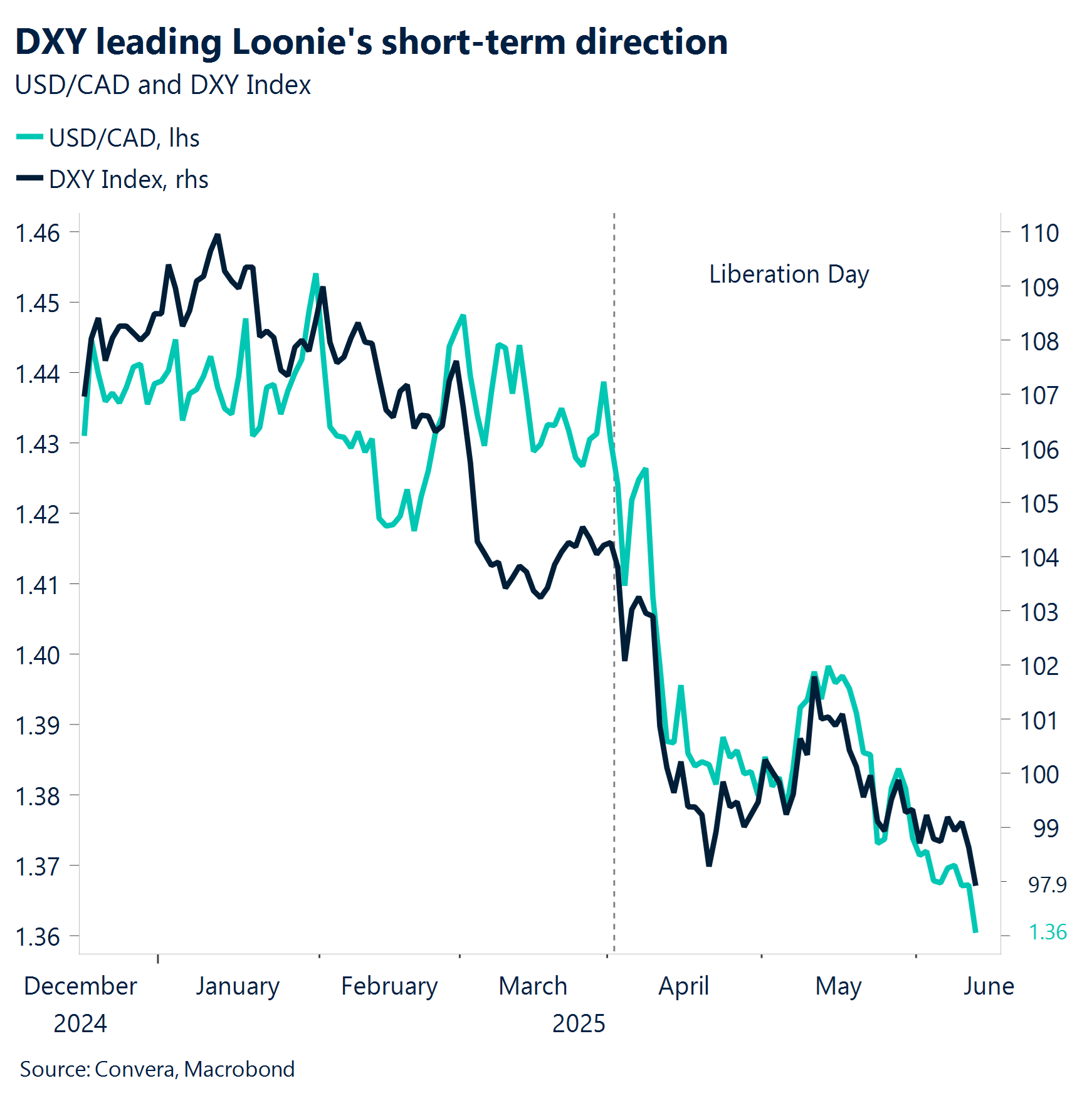
CAD Breaks below 1.36. Wednesday’s soft US CPI data has reset rate expectations, bringing them back to where they stood at the end of last month, two cuts projected by year-end. Despite falling yields across the curve, there’s still no clear evidence of economic deterioration, keeping bearish sentiment firmly in control of USD trading across G10 currencies. The Canadian dollar spent most of the week fluctuating within a narrow range of $1.365 to $1.369, but on Thursday, it slipped below $1.365, hitting a new 2025 low of $1.3592. The $1.365 level remains a critical short-term support/resistance, with multiple closes below potentially paving the way for a move toward the $1.36–$1.355 range. However, buying interest could emerge around the $1.36 zone, as the pair nears oversold territory based on the Relative Strength Index (RSI), potentially limiting further downside momentum. Meanwhile, bullish sentiment in options markets has eased, reflecting a more cautious outlook. Notably, Canadian pension funds and asset managers, traditionally known for low hedge ratios on U.S. assets, have ramped up hedging activity since late April. Given the sizeable presence of the pension and insurance sector, these moves have had a notable market impact.
AUD Australia’s inflation jumps, rate cut still on the table? Consumer inflation expectations in Australia rose sharply from 4.1% in May to 5% in June, the highest since July 2023. This diverges from the Q1 headline CPI, which aligned with the Reserve Bank of Australia’s 2-3% target. Interestingly, markets are still pricing in a 25bps rate cut at the RBA’s July meeting, highlighting mixed sentiment. AUD/USD has returned 5% in Year-To-Date gains. Technically, AUD/USD remains in a positive trend but is struggling to clear resistance at 0.6535-0.6550 Fibonacci levels. Support around 0.6344-0.6357 and the 50-day EMA of 0.6423 will be critical for the pair’s direction. Upcoming Australian employment data, including unemployment rates and full employment changes, will likely determine if the Aussie can sustain its upward momentum.
JPY Gains on safe-haven flow. Geopolitical tensions in the Middle East are escalating rapidly, with potential ripple effects across global markets. The yen has gained nearly 1% as investors seek safety. USD/JPY is approximately 3% above its September 2024 lows. The pair is currently at the lower end of its 30-day trading range. Key medium-term support lies at key psychological support level of 140. The next resistance levels are the 21-day EMA of 144.13 and the 50-day EMA of 144.99. Besides geopolitical tensions there is a very tricky BoJ meeting next week, with a near impossible task of threading the needle between holding rates unchanged and keeping the door open for another hike. Upcoming data, also includes trade balance, and CPI reports, which will provide further direction for the yen.
CNY China’s deflation adds to CNH woes. China’s economic challenges persist, with May inflation data pointing to ongoing deflationary pressures. CPI contracted at -0.1% YoY, marginally better than the -0.2% forecast, while PPI deflation deepened to -3.3%, marking 32 consecutive months of declines. Despite the Golden Week holiday, weak domestic demand and intensifying price wars in the auto industry underline China’s fragile recovery, adding pressure on the yuan. USD/CNH remains more than 3% below its April peak of 7.4290, with resistance at the 21-day EMA (7.1962) and the 50-day EMA (7.2218). A break above these levels could signal further yuan weakness. Traders will closely watch key data releases, including fixed asset investment, industrial production, unemployment, and loan prime rates, for hints on Beijing’s next policy moves.

MXN Continued momentum. The Mexican peso has maintained its recent momentum, breaking below its 200-week moving average support at 19 and reaching as low as 18.82 on Thursday, its weakest level in nine months. In the short term, the peso is expected to consolidate its breakout and establish support near 18.9, with a potential medium-term rebound toward its 20-day moving average at 19.1.
A softer U.S. inflation report drove front-end Treasury yields lower, sparking a broad dollar selloff. At its peak, the peso surged more than 1.2% against the dollar on Thursday, sending USD/MXN to its lowest level since last August. Meanwhile, one-year USD/MXN risk reversals dropped to their lowest point since January, suggesting a shift toward a structurally bullish stance on the peso rather than a short-term positioning play, reinforcing confidence in its medium-term outlook.
What stands out so far this year is the strong demand for carry currencies, those that benefit from high-interest rate differentials, where the peso has taken the lead alongside the Brazilian real among Latin American currencies. Investors are keeping a close eye on this trend, as it underscores the peso’s resilience amid a challenging domestic backdrop and the evolving economic relationship between the U.S. and Mexico.
Have a question? [email protected]
*The FX rates published are provided by Convera’s Market Insights team for research purposes only. The rates have a unique source and may not align to any live exchange rates quoted on other sites. They are not an indication of actual buy/sell rates, or a financial offer.