

USD: Warsh inherits a tough inflation setup
Markets took yesterday’s CPI in stride, but the price action still leaned “higher-for-longer.” Two-year Treasury yields held near 4% after the release, US equity stayed slightly weaker, and the USD DXY Index edged higher on the day. The backdrop matters because Kevin Warsh is on the cusp of taking the Fed’s helm: the Senate confirmed his 14-year term as a governor by a 51–45 vote, with a separate vote to confirm him as chair expected as soon as today. His first full meeting in charge looks set to be the June 16–17 FOMC, with one more CPI report arriving June 10, so the “tone-setting” moment for independence and credibility is right around the corner.
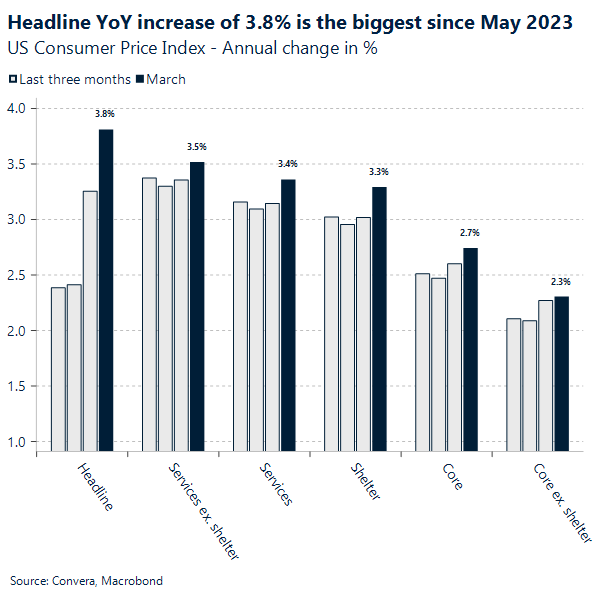
The inflation story itself is straightforward: it re-accelerated. Headline CPI rose 0.6% m/m and 3.8% y/y in April, the strongest annual pace since May 2023, while core CPI rose 0.4% m/m and 2.8% y/y. Energy again carried a big share of the monthly gain, with the BLS noting it accounted for over 40% of April’s increase as the energy index climbed 3.8% on the month. The uncomfortable part is that, services ex-shelter is running around 3.5% y/y, shelter is still about 3.3%, and even “core ex-shelter” is only down near ~2.3%, better, but not exactly a clean glidepath.
This is why Warsh’s policy views now look boxed in. He has argued for a pathway to lower rates over time, often framed around dialing back the Fed’s footprint (balance sheet) and treating some shocks as one-offs rather than true, persistent inflation. The problem is timing: after a hot CPI print, cutting early risks looking political, while hiking into an energy shock risks looking panicked. Add the global backdrop and it tightens further. Market-implied pricing has the Fed essentially parked near current levels through 2026, with non-trivial odds of firmer policy into 2027, so no imminent easing. At the same time, markets are actively debating renewed tightening elsewhere. As flagged in the latest weekly report, the tightening club is growing, and there are meaningful hike probabilities for the ECB and the Bank of Japan at their next meetings, which keeps global rate differentials in play.
If you want a Warsh’s-advocate case for eventual cuts, it probably has to lean on “core quality,” not the headline. One, part of April’s core firmness looks flattered by a technical issue in the rent samples after the 2025 shutdown, as owners’ equivalent rent alone added about 0.17pp to core inflation, so that can fade without needing demand to crater. Two, there are hints of cooling where pricing power is thinner: core commodities were flat on the month, and several big-ticket/price-sensitive lines (new vehicles, communication, medical care) actually fell in April. Three, real income is no longer cushioning the blow, real average hourly earnings are down 0.3% y/y, so consumers may end up cutting discretionary spend to cover fuel and food, which can restrain core goods and some services with a lag. Put that together and Warsh could plausibly argue later this year that policy is already restrictive “enough,” especially if the next CPI shows cooler core momentum. But until that evidence arrives, the bar for a meaningfully weaker dollar is higher: yesterday’s hotter inflation kept US yields supported and the dollar bid, the kind of mix that tends to cap near-term USD downside.

EUR: Euro drifts on Gulf stalemate, China in focus
Yesterday was one of those days of broad-based softness for the euro amid stifled progress in the Gulf. Risk sentiment, which the euro has closely tracked since the onset of the conflict, has weakened after Iran and the US rejected each other’s proposed peace offers a few days ago. Fears are building that the already fragile ceasefire may therefore be on the verge of collapsing, as sporadic strikes have also intensified while both sides made attempts to transit through the Strait of Hormuz.
We continue to see downside risks building for EUR/USD. Deteriorating risk sentiment is the primary short-term bearish impetus, likely to intensify should there still be no concrete progress in reopening the strait. The longer-term bearish force lies in the softer macro backdrop that is likely to emerge from ongoing geopolitical tensions. The longer the strait remains shut, the greater the risks to the eurozone’s energy-dependent economy. The outcome would be a less credible hawkish ECB, at least relative to the Fed, as we believe the US’s more resilient economic response to the conflict would result in a stronger transmission of rates support into the dollar.
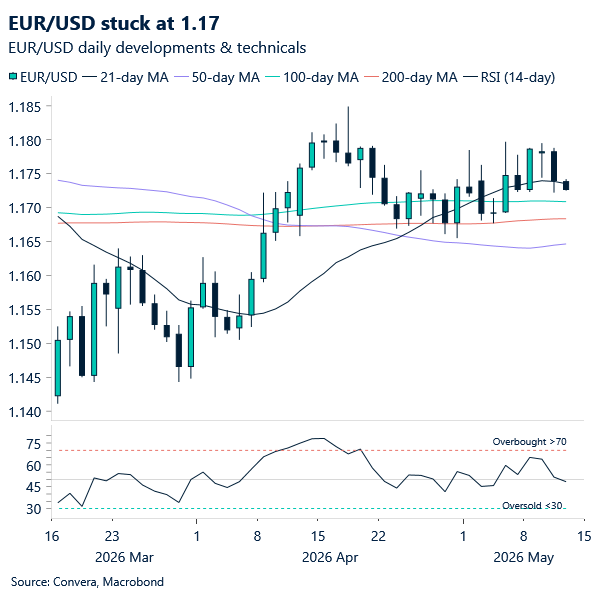
Away from longer-term considerations, we expect EUR/USD to hover around the 1.17 area this week until clearer signals emerge regarding the US and Iran’s posture toward peace, following several failed negotiation attempts.
Meanwhile, President Trump is heading to China for the high-stakes Beijing summit, accompanied by a delegation of leading technology executives, with Nvidia Corp. co-founder Jensen Huang a last-minute addition. The event is likely to support equities, as it will address issues that sentiment has been particularly sensitive to, including the conflict and tariffs. In turn, we expect the downside in EUR/USD driven by geopolitical jitters to be more cushioned, and anticipate quieter trading today.
GBP: UK assets wobble as Starmer hangs on
UK assets came under renewed pressure on Tuesday as political uncertainty around Prime Minister Keir Starmer intensified, prompting markets to reprice UK‑specific risk after a prolonged period of complacency.
Following a tense cabinet meeting, Starmer vowed to fight on, but the intervention failed to calm nerves. Four ministers resigned, including Home Office minister Jess Phillips, while more than 80 Labour MPs publicly called for him to step aside. Betting odds now put Starmer’s chances of surviving beyond this year at just one in five, leaving markets focused less on if he goes and more on how and when.
Starmer is due to meet Health Secretary Wes Streeting this morning, just hours before the King’s Speech. Streeting is widely viewed as a leading contender in any leadership contest, while Greater Manchester Mayor Andy Burnham is another mooted rival, though he would first need to enter Parliament via a by‑election. Angela Rayner is also seen as a serious candidate, and one investors would likely view as the most challenging from a fiscal perspective. While expectations of Starmer’s departure are growing, the timing and structure of any transition remain the key market variables.
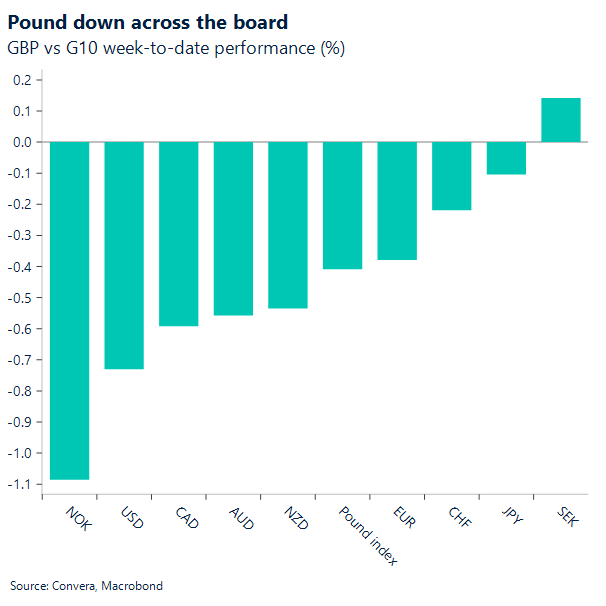
The market reaction yesterday was telling. Sterling slid to the foot of the G10 leaderboard, while gilts sold off sharply, led by the long end. The 30‑year gilt yield rose as much as 14bp to 5.81% – its highest level since 1998 – before paring slightly later in the session. Sterling and gilts weakening simultaneously is a familiar and unwelcome pattern for investors, reflecting rising political and fiscal risk premia.
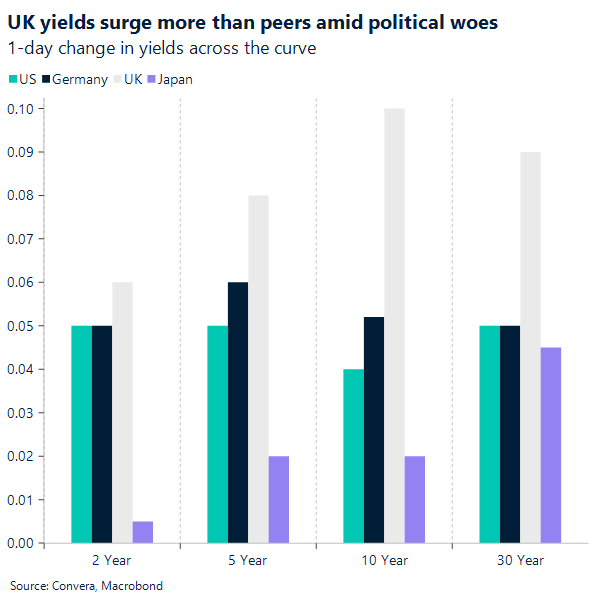
That said, sterling has not yet capitulated. GBP/USD is drifting back towards 1.35, but even a break below that level would do little to dent the rally since late March, when the pair was trading closer to 1.31. For context, during last November’s bout of fiscal anxiety ahead of the Budget, GBP/USD threatened to slip below 1.30 – a level it has traded beneath around 55% of the time since the 2016 referendum.
Looking ahead, downside risks are not one‑way. If Starmer sets out a clear timetable for a managed resignation later in the year, UK assets could stabilise. Moreover, despite domestic politics returning to the fore, sterling remains highly sensitive to external forces. Its high beta to global risk sentiment – and ongoing resilience in equity markets amid heightened geopolitical tensions in the Middle East – continues to provide an important buffer for the pound at this stage.
Market snapshot
Table: Currency trends, trading ranges & technical indicators

Key global risk events
Calendar: May 11-15
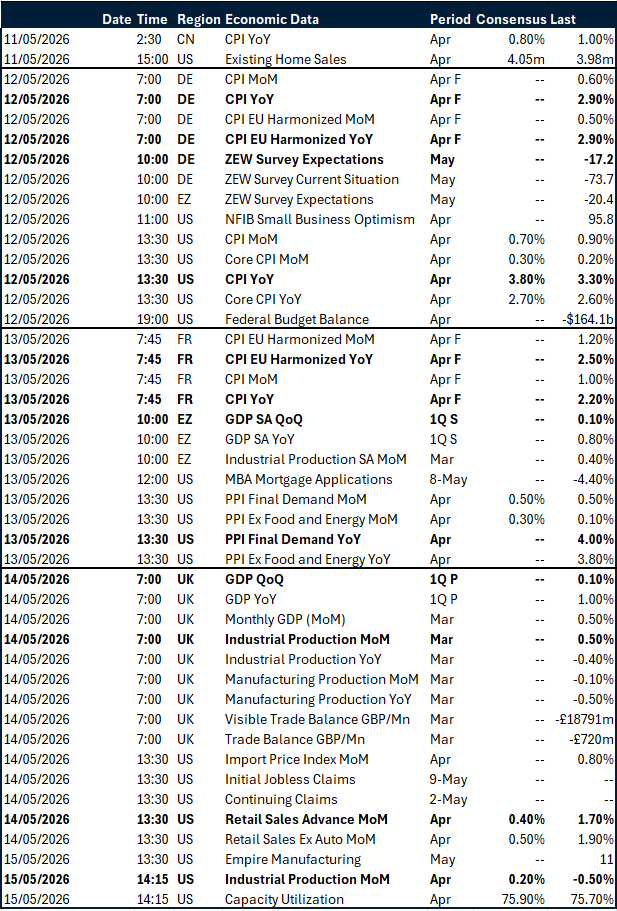
All times are in BST
Have a question? [email protected]
*The FX rates published are provided by Convera’s Market Insights team for research purposes only. The rates have a unique source and may not align to any live exchange rates quoted on other sites. They are not an indication of actual buy/sell rates, or a financial offer.