
- Peace of the action. The main market driver this week was a swing back into de-escalation optimism around US-Iran talks, which saw equities reach new all-time highs, EM/high-beta assets rally, and the US dollar fall to over two-month lows.
- The waiting game. Iran is reviewing a new US proposal to end hostilities, which includes partial sanctions relief, a moratorium on Iran’s uranium enrichment programme, and a phased reopening of the Strait of Hormuz.
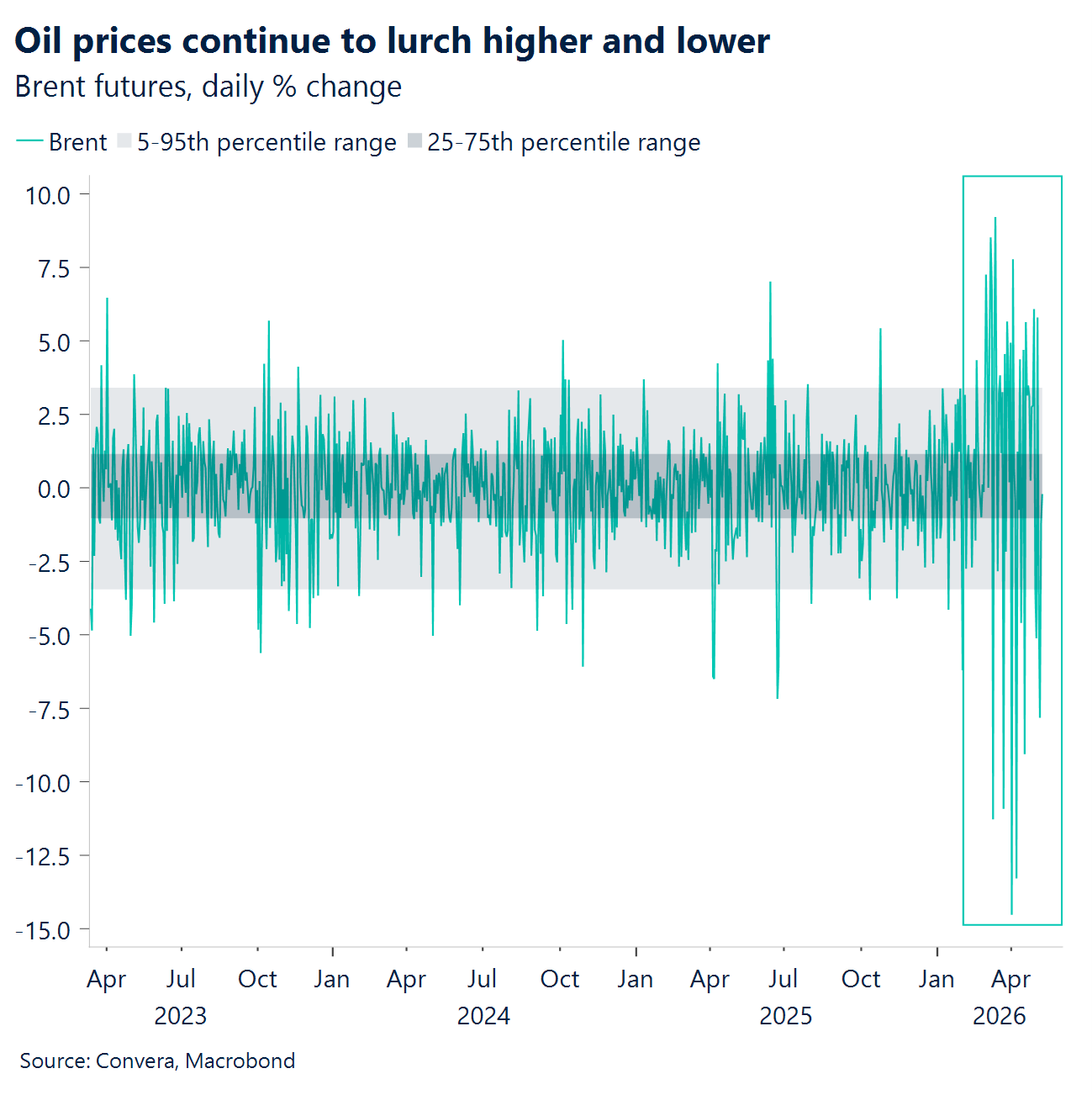
- Barrel of doubt. Despite the optimism, it is far too early to sound the all-clear. Oil remains highly volatile, and the risk of a renewed supply squeeze or inventory-driven spike is still very real.
- Supply chain pressures. In other sign of protracted disruption from the war, the Federal Reserve Bank of New York’s index of global supply chain pressure hit the highest level since July 2022.
- Data, not drama (yet). US data stayed broadly resilient but unspectacular: JOLTS showed stable openings and a rebound in hiring, whilst Nonfarm payrolls rose by 115,000, well above consensus reinforcing a resilient US labour market.
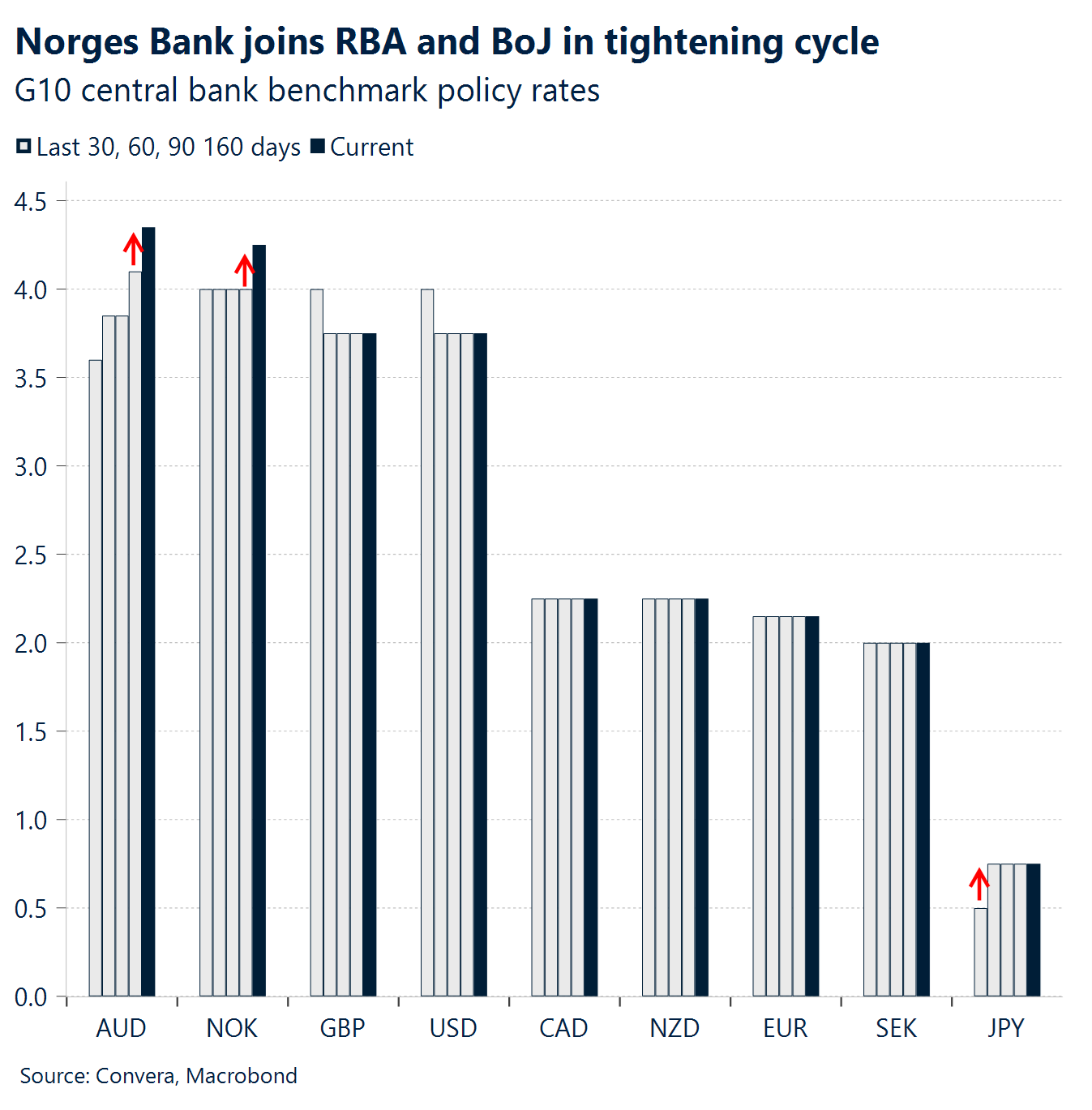
- Nordic nudge. Norges Bank joined Australia in pushing back against the inflation shock, with a 25bps hike, the NOK was able to recover some earlier oil-driven losses.
- Ballot blues. Starmer’s heavy local election losses added a fresh layer of UK political risk. Sterling remains resilient for now but remains vulnerable alongside gilts if markets start to question fiscal discipline.
Global Macro
The tightening club is growing
Tightening club. The week’s dominant macro story was a re‑emergent G10 hiking bloc: RBA +25bp to 4.35% and a surprise hike by Norges Bank +25bp to 4.25%, reinforcing the “hold wave” is starting to crumble. Australia explicitly cited fuel‑driven inflation and second‑round risks, while Norway framed the move as inflation still too high amid elevated commodity uncertainty. Japan stayed in the same bucket directionally: BoJ held at 0.75% on a 6–3 split, keeping normalization pressure alive and supporting the tightening narrative via bias if not an actual hike yet.
RBA hawkish. The RBA lifted the cash rate target to 4.35% and emphasized that inflation is likely to remain above target for some time, with risks tilted to the upside. The statement leaned hard on energy and pass‑through, explicitly flagging early signs of broader price effects beyond fuel. Net for markets, this keeps Australia on the “rates‑support” side of G10 dispersion and makes AUD carry harder to fade on macro grounds alone.
US NFP. Nonfarm payrolls rose by 115,000, well above the 65,000 consensus estimate and stronger than all but a handful of forecasts, marking the first back‑to‑back monthly job gains in a year. Even after accounting for a modest two‑month net revision subtracting 16,000 jobs, the headline number comfortably clears the estimated 30,000 breakeven pace needed to absorb new labor‑force entrants. At the same time, the unemployment rate held steady at 4.3% while labor force participation edged higher.
US services. US services remained in expansion, but the details sent a mixed signal: ISM Services 53.6 vs 53.7 expected (54.0 prior) with New Orders down to 53.5 (from 60.6). The inflation impulse stayed uncomfortable: Prices Paid held at 70.7 (still one of the hottest readings since 2022), consistent with energy and transport cost pass‑through.
Week ahead
Stagflation watch
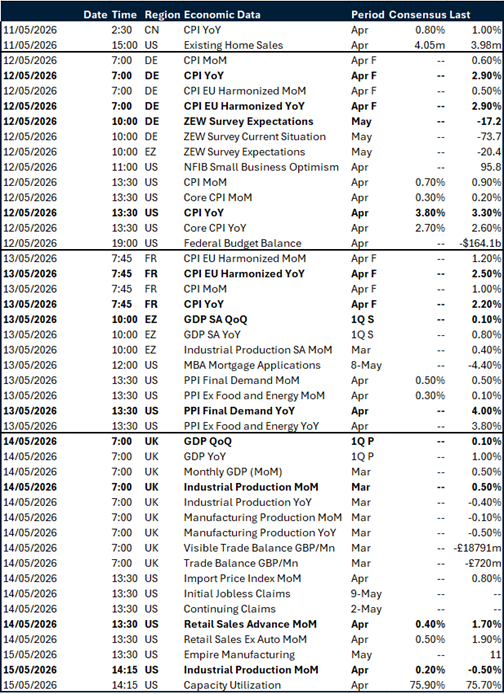
- ZEW signals mounting growth strain. Germany’s ZEW surveys are due next week. The economic expectations sub‑index has fallen to its lowest level since 2022, as an already disappointing start to 2026 has coincided with the eruption of the conflict in the Middle East, pushing oil prices higher and further clouding the energy‑dependent eurozone macro outlook. These surveys tend to capture the drag from geopolitical shocks relatively quickly and will be closely scrutinised ahead of next month’s ECB policy meeting, as they help officials assess the extent to which a rate hike remains warranted amid deteriorating economic sentiment.
- UK growth in the spotlight. Q1 UK GDP is due. Against a backdrop of fragile politics following Labour’s local election defeat and ongoing conflict in the Middle East, the release will be closely watched. A strong print could provide some relief for Starmer, sustaining recent upbeat momentum despite a challenging macro outlook and limited fiscal space.
- CPI back on the rise. The US will release its April CPI report next week. Inflation is expected to rise to 3.8% from 3.3%, continuing an upward trend since the conflict erupted at the end of February. Coupled with a solid jobs report, such an outcome would likely reinforce the case for the Fed to remain on hold, at least for now.
- Growth pulse under the microscope. US April industrial production and retail sales are also due next week. Against the backdrop of renewed trade tensions with Europe and the ongoing conflict in the Middle East, these releases will provide important signals on industrial momentum and consumer demand. The latter will be complemented later in the month by real consumption data, offering a more complete picture of the state of US consumer spending.
FX views
De-escalation trade lives on, surprisingly
USD Oil up, dollar flat The US dollar has traded less forcefully in response to geopolitical noise this week. A pro‑risk environment has largely held, as hopes that the conflict may end soon remain intact despite recent bouts of violence. The mood has also been supported by solid, AI‑boosted corporate earnings. In this context, the safe‑haven bid the dollar has enjoyed since the conflict erupted has been more contained, leaving its upside more mechanically tied to swings in oil prices. Indeed, despite oil revisiting conflict‑driven highs, the US dollar has struggled to reclaim the 98 handle, sitting just below the 200‑day moving average near 98.500 – a useful gauge of long‑term momentum. That said, we are not leaning toward a distinctly bearish profile either. Oil is likely to remain elevated for some time, regardless of whether the conflict resolves swiftly or not. Moreover, investors’ growing focus on relative macro performance in a conflict‑ridden environment should help support the dollar if it proves resilient for the US, while postponing a more structural bearish narrative tied to Trump’s erratic modus operandi.
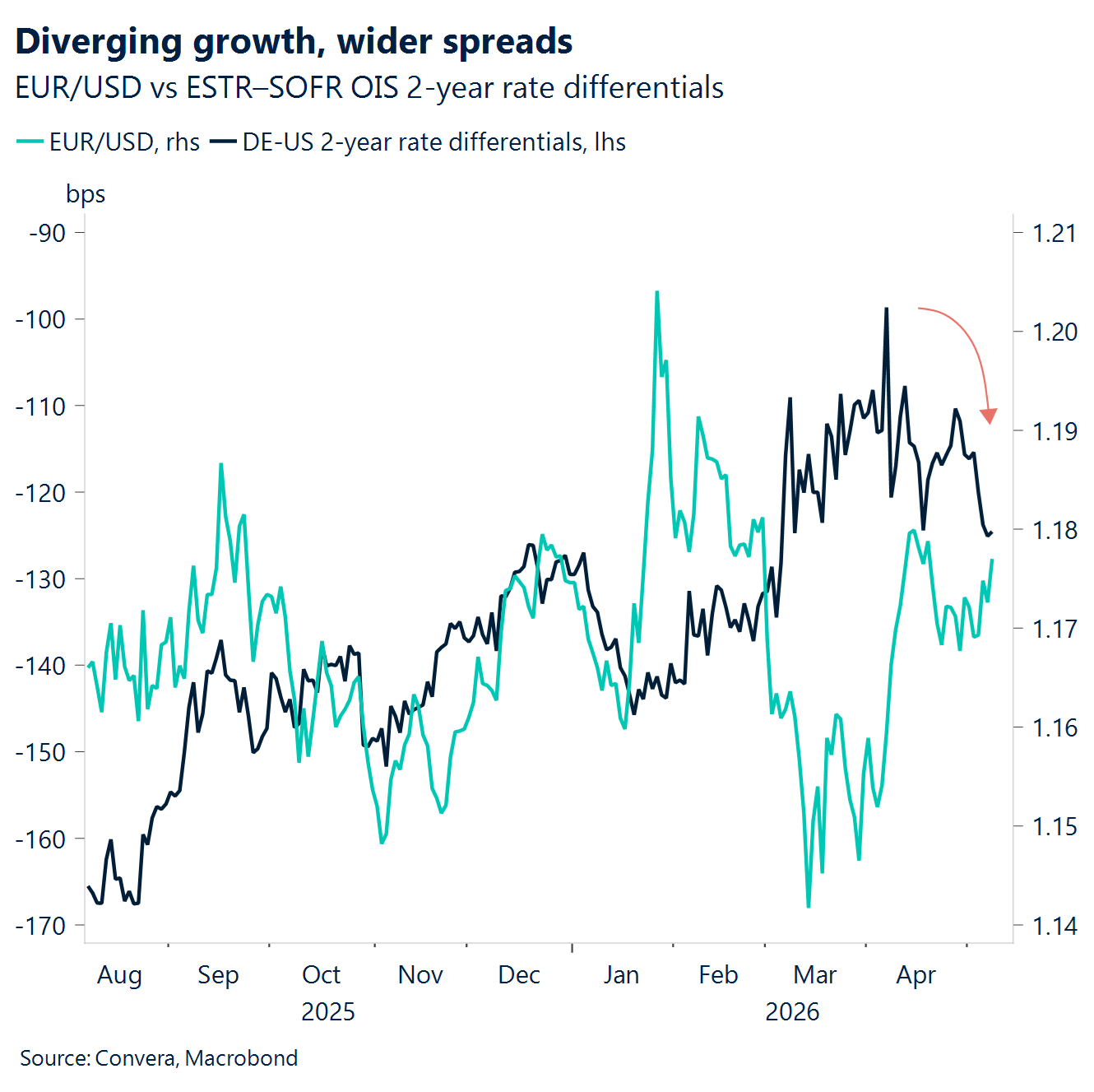
EUR Limited room to run. The euro continues to trade the de‑escalation narrative, edging slightly higher against the dollar this week (+0.4%), while softening against high‑beta G10 and CEE FX, which tend to attract stronger demand as sentiment improves. While the euro may be done reacting aggressively to geopolitical headlines absent significant re‑escalation, the focus now shifts to the macro backdrop and market perceptions of the ECB’s hawkish leanings. Markets still price almost an 80% chance of a hike next month, but with macro momentum having disappointed even before the conflict, the credibility of further tightening is questionable. With renewed US trade tensions reintroducing stifling uncertainty as well, the macro outlook is unlikely to improve materially. As a result, the euro’s upside remains limited, which is why we refrain from chasing EUR/USD much beyond 1.18, even if the conflict resolves swiftly.
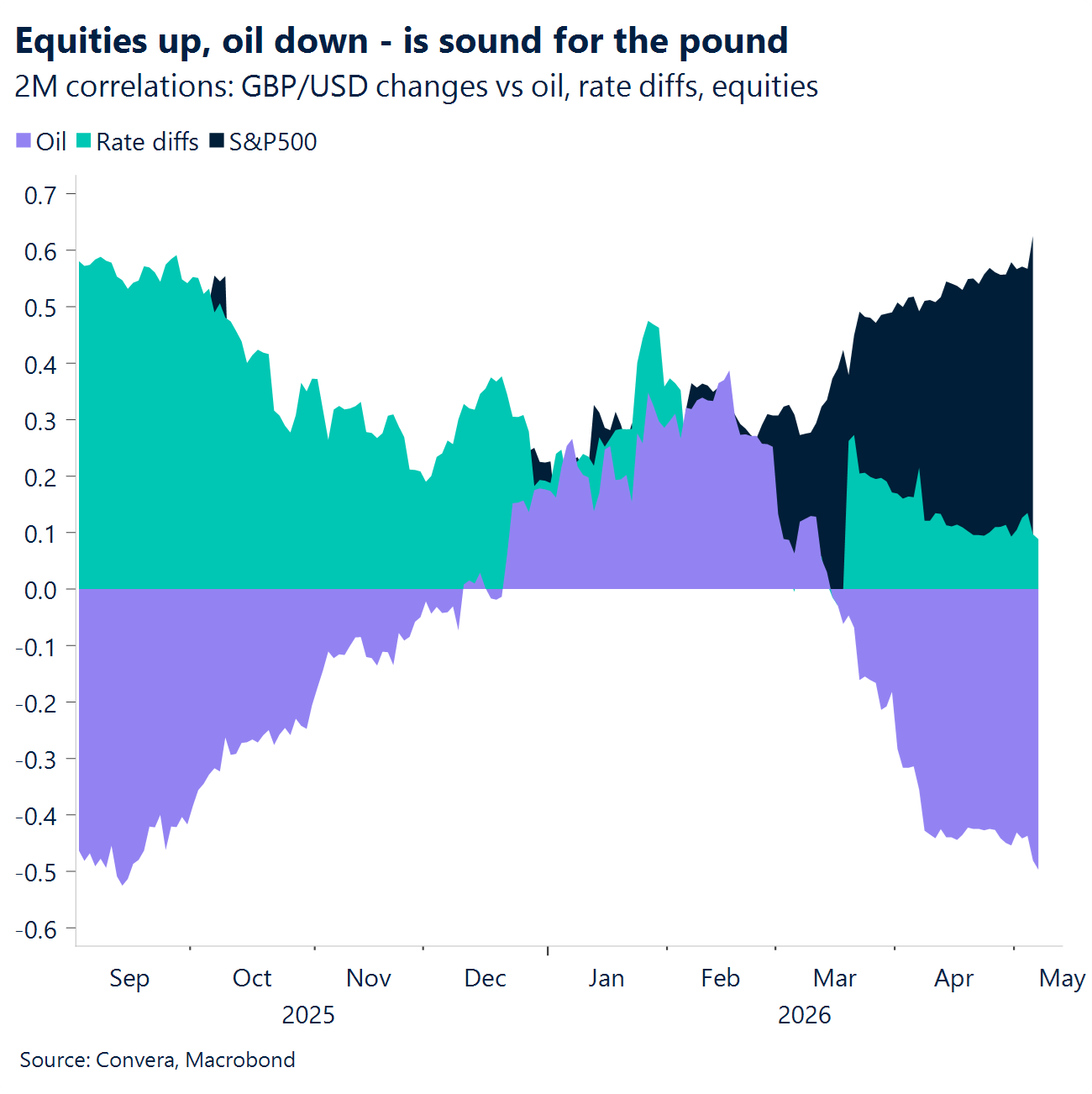
GBP Shrugs off election fallout (for now). Sterling proved resilient through the week with GBP/USD on track to notch its fifth consecutive weekly gain. Early‑week escalation in the Middle East and firmer oil prices briefly knocked cable lower toward 1.35, but the pullback held above the rising 21‑day moving average, reinforcing the view that recent weakness was corrective rather than trend‑breaking. Optimism around a US-Iran deal has buoyed risk appetite and the risk-sensitive pound overall. But UK yields were again in the spotlight. Long‑dated gilt yields reached their highest levels since the late 1990s, reflecting hawkish BoE pricing and a growing domestic political risk premium. Labour’s heavy losses in the local elections have raised fresh questions over Prime Minister Starmer’s authority. Investors will be watching cabinet commentary closely for signs of pressure or resignations, as markets assess the risk of loosening fiscal discipline and higher borrowing later this year under alternative leadership scenarios. In this environment, higher yields could become increasingly unfriendly for sterling. GBP/EUR remains the cleaner outlet for UK political risk, while GBP/USD continues to trade primarily off global risk and oil dynamics.
CHF Hawkish inflation surprise. The Swiss franc advanced this week, supported by an improving global backdrop and firmer domestic fundamentals. Reduced geopolitical risk around a potential US–Iran deal and a sharp drop in oil prices helped lift broader risk sentiment while improving Switzerland’s terms of trade, benefiting CHF primarily against the US dollar. Domestic influences also played a growing role after Swiss inflation surprised to the upside. Headline CPI rose to 0.6% y/y, effectively removing the prospect of a return to negative policy rates and forcing markets to reassess the SNB’s easing bias. OIS pricing has shifted toward the possibility of a rate hike by year‑end – plausible given the SNB’s historically low tolerance for inflation overshoots and its swift reaction function. With EUR/CHF already around 1.7% lower YTD, reduced easing risk and firmer inflation dynamics leave the cross biased lower, even as elevated valuation and SNB intervention rhetoric continue to cap the pace of CHF appreciation.
CAD Weak jobs report. This week’s Canada narrative was a mix of better headline trade numbers and lingering policy cross-currents. March delivered a C$1.78bn merchandise trade surplus as exports jumped on higher energy prices and a burst of gold shipments, while imports slipped. At the same time, US metal tariffs are biting into manufacturing (with Ottawa rolling out a C$1.5bn relief package), and the fiscal backdrop is getting noisier after the PBO flagged rising debt-servicing costs and hazy funding details for big-ticket initiatives. Labour report for the month of April was weak, sending the CAD from its lowest 1.355 to 1.368 after the report. CAD is still a “USD giving back premium” story more than a pure Loonie breakout. USD/CAD is trading around 1.368 ending the week, sitting below the 20/50/100/200-day moving averages, which keeps the near-term technical bias pointed lower for the pair, after a sequence of lower highs since late March. The first line in the sand is 1.3600, then the more meaningful support zone near 1.3520–1.3500; a clean break there would open room for a deeper extension. On the topside, rebounds should run into supply around 1.3680**, then 1.3720–1.3730, with the 200-day near 1.3815 still the bigger trend filter, so unless USD/CAD can reclaim the mid-1.37s on a closing basis, the setup favors choppy-to-lower trade into the next week.
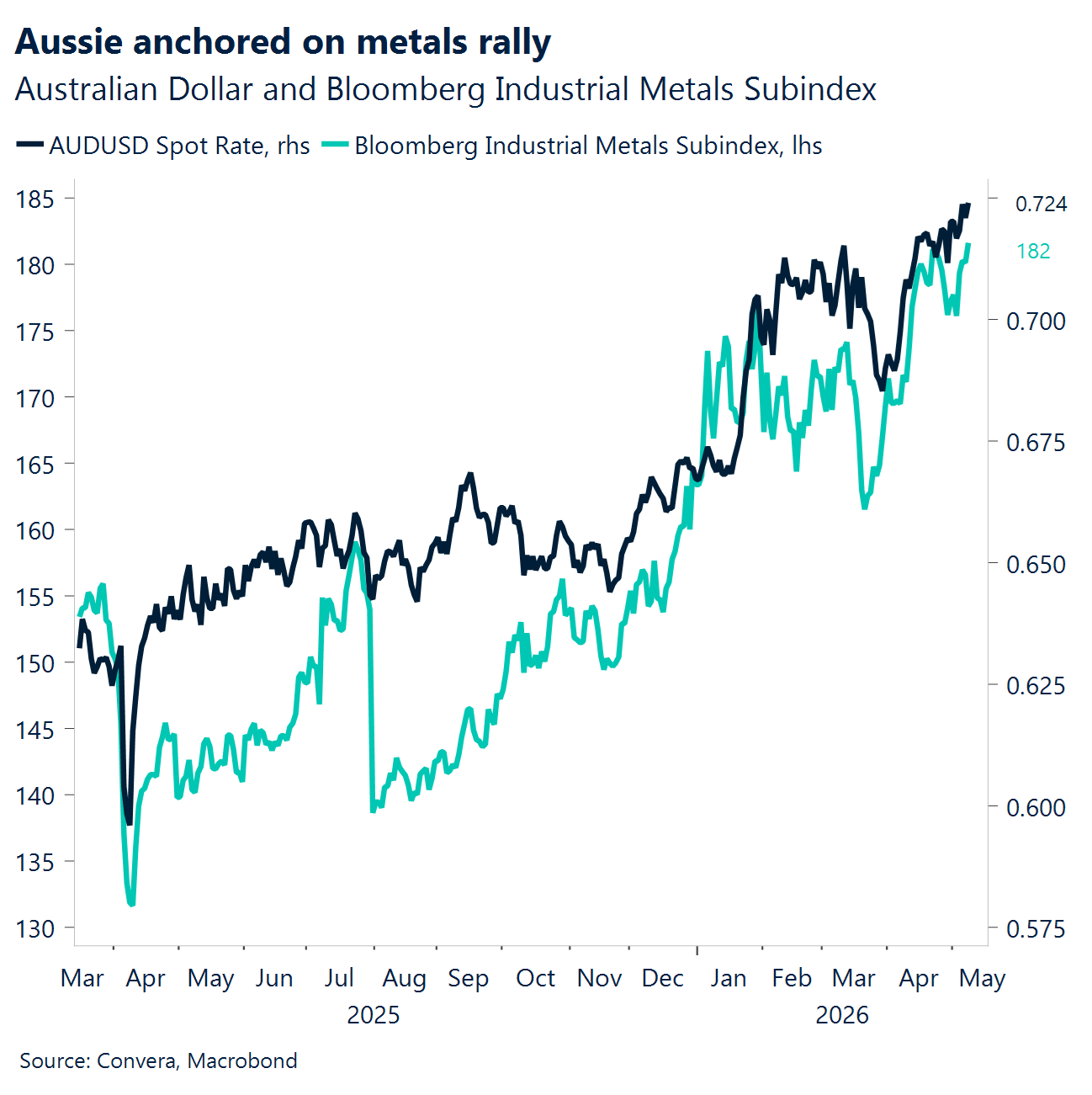
AUD Resilient near highs. The Reserve Bank of Australia shifted to a more aggressive stance following its May meeting, hiking the cash rate by 0.25% to 4.35%. This 8-1 vote shows a clear consensus, especially as headline inflation forecasts now sit higher at 4.0% for the end of the year. Optimism over a potential US-Iran peace deal evaporated following fresh hostilities in the Strait of Hormuz. The US military reported intercepting Iranian attacks on three American warships, while Iran accused the US of violating a ceasefire. These rising geopolitical tensions create a difficult environment for the AUD/USD pair. AUD/USD now looks vulnerable to a pull back from its four-year highs. It is currently trading about 1% below the May 6th peak of 0.7278, though it remains near the top of its six-month range. On the way down, key support is near the 21-day moving average at 0.7153, and then the 50-day moving average at 0.7083. Keep an eye on upcoming data for building approvals, business confidence, wages, and home loans.
CNH Trade tension shifts focus to the Yuan. The upcoming May 14-15 meeting between President Donald Trump and President Xi Jinping carries extra weight now. US Trade Representative Jamieson Greer noted that the President will raise the issue of China’s energy purchases from Iran. While Greer mentioned they don’t want this to derail the broader relationship or potential Beijing agreements, it remains a clear point of friction. USD/CNH has dropped to more than three-year lows. It is hovering just 0.1% above the May 7th bottom of 6.7958. If the pair attempts a recovery, it faces resistance at the 21-day moving average (6.8314) and the 50-day moving average (6.8588). All eyes on upcoming trade balance, inflation numbers, and new loan figures.
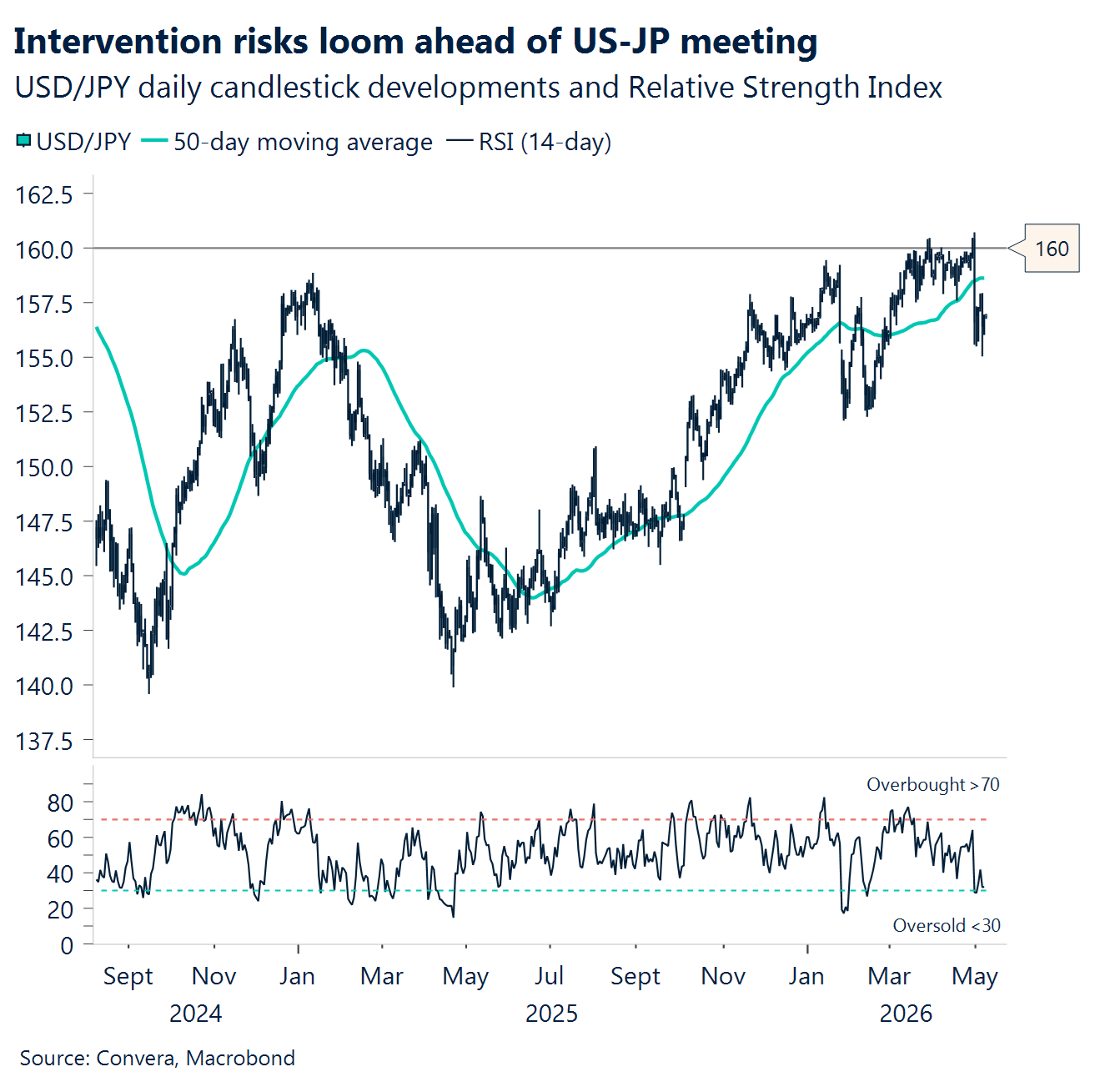
JPY Yen intervention risks. The Bank of Japan is sounding more hawkish. Minutes from the March meeting show board members are ready to raise rates if the Iran conflict keeps energy prices high and pushes up general inflation. Investors are now pricing in a 93% chance of a rate hike in July. Japan stepped into the foreign exchange market during the early‑May holidays, following yen‑buying operations on April 30, marking repeated rounds of market intervention. USD/JPY is struggling to break past 157 at the time of writing. The threat of government intervention is keeping a lid on the pair, which has already fallen about 2.3% from its April 30th high of 160.72. The 100-day moving average at 157.13 should act as a firm ceiling, and the market looks nervous anywhere above 157.25. All eyes are now on the upcoming meeting between US Treasury Secretary Scott Bessent and Japanese leadership. The next key support lies at 155.00. Market participants will keep an eye on household spending and current account data as the next big catalysts.
MXN End of cycle. Banxico delivered a second straight 25bp cut, taking the overnight interbank target rate down to 6.50% effective May 8, but the split vote made the decision feel more cautious than dovish. Even more important for markets, the statement read like a “final cut” rather than an invitation to keep moving lower. Banxico explicitly framed this step as concluding the easing cycle that began in March 2024, and it signaled that maintaining the reference rate at current levels should be appropriate from here. For USD/MXN, the cut mechanically narrows Mexico’s carry advantage, but the “likely done” guidance should help cap follow-through upside in the pair by limiting expectations for further spread compression. Volatility on the other hand, has been more about shifting global tone and USD swings than a sudden deterioration in local confidence. USD/MXN is around 17.2, and importantly it’s trading below the 20/50/100/200-day moving averages, which keeps the broader technical bias pointed lower for the pair as long as rallies keep failing under those trend filters. Near-term, the peso can stay well-bid after the decision if risk sentiment holds and oil prices stabilize.
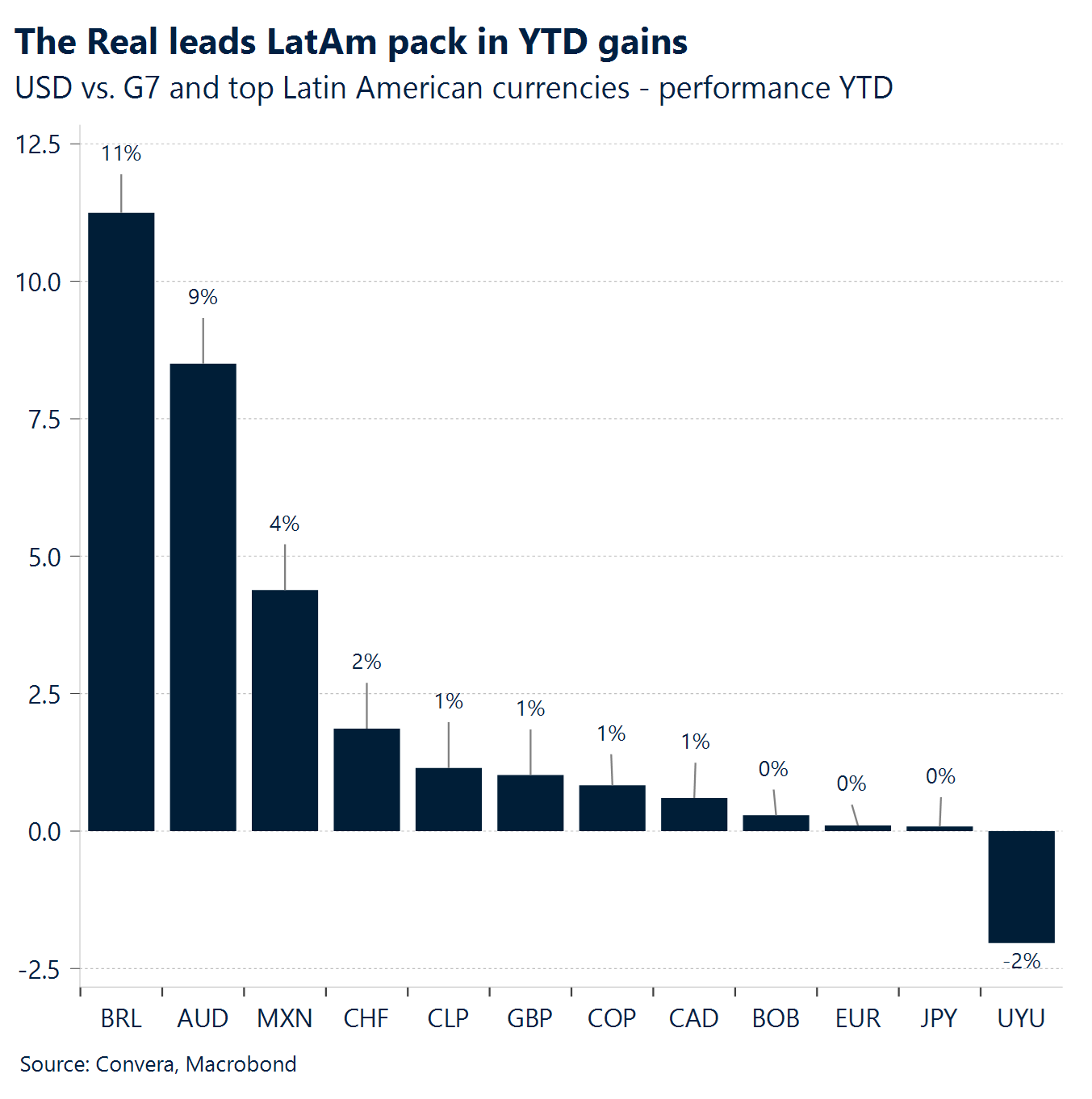
BRL Reverse swap. Brazil’s story this week was really about the central bank leaning into BRL strength rather than fighting weakness. For the first time in a decade, the BCB bought dollars in the futures market via a reverse swap auction (about US$500m equivalent), effectively using the rally to unwind part of the derivatives stock it has historically used to smooth FX volatility. The move fits the broader “casadão” playbook of trimming swap exposure as conditions allow, and the fact they ran the reverse swap on its own (without the spot leg) is a pretty clear signal they’re comfortable absorbing excess USD supply at these levels. Technically, the bias is BRL-positive. USD/BRL is around 4.92, and it’s trading below the 20/50/100/200-day moving averages, which reinforces the longer-running downtrend that’s been in place since mid-2025. The immediate area to watch is 4.90, a clean break would put 4.80 in view as the next support zone, while rebounds likely run into sellers near 4.98.
Have a question? [email protected]
*The FX rates published are provided by Convera’s Market Insights team for research purposes only. The rates have a unique source and may not align to any live exchange rates quoted on other sites. They are not an indication of actual buy/sell rates, or a financial offer.