


All eyes on Jackson Hole
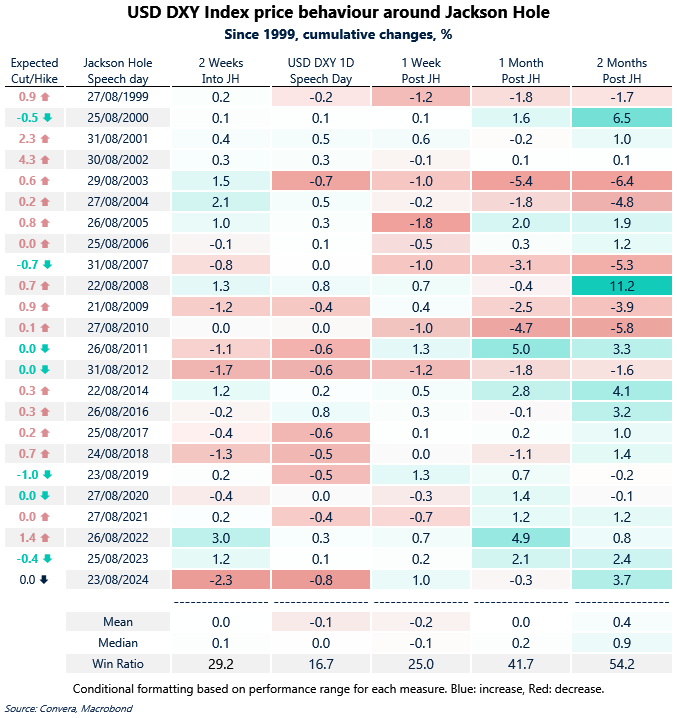
Jackson Hole is about to get a dose of reality. Federal Reserve (Fed) Chair Jerome Powell is set to deliver his final speech at the symposium, and all eyes are on whether he’ll confirm market expectations for a September rate cut. The problem is, the market’s conviction is built on some shaky foundations, and Powell’s speech could be the thunderbolt that shatters the calm.
The current atmosphere feels eerily similar to last year, with markets fixated on a September cut. But the underlying data is starkly different. In 2024, the Fed was facing a different beast: a rising unemployment rate and the specter of recession. This year, after cutting 100 basis points, core inflation is still stubborn and the labor market, while showing some signs of cooling, isn’t screaming for emergency intervention. The economic context is simply not the same, yet the market is pricing in a cut with near-certainty.
This disconnect is what makes Powell’s speech a high-stakes event. However, the markets have been re-pricing the odds of a cut from a near-lock of 95% two weeks ago down to a still-optimistic 70%. It’s as if markets are waking up from a summer stupor, slowly realizing that inflation isn’t a ghost of the past. This subtle shift has already given the USD a jolt, pulling it out of its weekly lull and sending it gaining against all major currencies. Repositioning can also be seen in Equity markets. Despite the S&P 500 sitting near 52-week highs, AAII sentiment remains subdued. Tech has led the declines, while defensives like Health Care, Real Estate, and Staples are leading the gains this week.
Adding to the tension is the political pressure cooker Powell is navigating. With nine months left in his term and a new, more dovish member, Stephen Miran, joining the board, the administration is actively trying to undermine the Fed’s independence and push for more aggressive easing. This backdrop raises the question: will Powell’s final Jackson Hole address be a legacy-defining moment of defiance, or will he bend to the political winds?
The stage is set for a dramatic showdown. Will Powell use this platform to once again reiterate the dual mandate, stressing the upside risks to inflation and the uncertain effects of tariffs? Or will he lean into the market’s hopes and signal the resumption of rate cuts? The market is locked and loaded, betting heavily on an imminent move. If Powell holds the line and emphasizes data dependency, the “pain trade” could be a tough one.
Euro softens despite strong PMIs
The euro has slipped 1% against the US dollar this week, underperforming despite a string of stronger-than-expected PMI prints from the Eurozone. Broader global PMI data offered tentative signs of recovery, with upbeat readings from India and Australia hinting at a potential inflection point for the global economy following the disruptive impact of US tariff actions earlier this year. However, risk sentiment remains fragile ahead of Fed Chair Powell’s speech at Jackson Hole, where markets fear a hawkish tone.
On the macro front, the Eurozone composite PMI rose to 51.1 in August, beating expectations of 50.7 and marking the fastest pace of private sector expansion since May 2024. The improvement was underpinned by a third consecutive expansion in services (50.7 vs 51.0 prior) and a surprise rebound in manufacturing (50.5 vs 49.8), the first expansion in over three years. Yet, business confidence deteriorated for a second straight month, weighed down by concerns over US tariffs and lingering structural challenges within the bloc.
Trade tensions remain in focus too, as the EU and US edge closer to finalizing a deal that would impose 15% US tariffs on select EU exports – namely pharmaceuticals, autos, and metals – replacing the steeper Section 232 levies. While this represents a partial de-escalation, it still adds to the uncertainty clouding the outlook.
Despite the encouraging economic data, market sentiment has soured. Equities are under pressure, the VIX volatility index is climbing, and pro-cyclical currencies are on the defensive. Traders appear to be reassessing global easing bets amid signs of sticky inflation and resilient growth. The prevailing risk is no longer a downturn, but an overheating global economy that could compel central banks to maintain restrictive policy for longer.
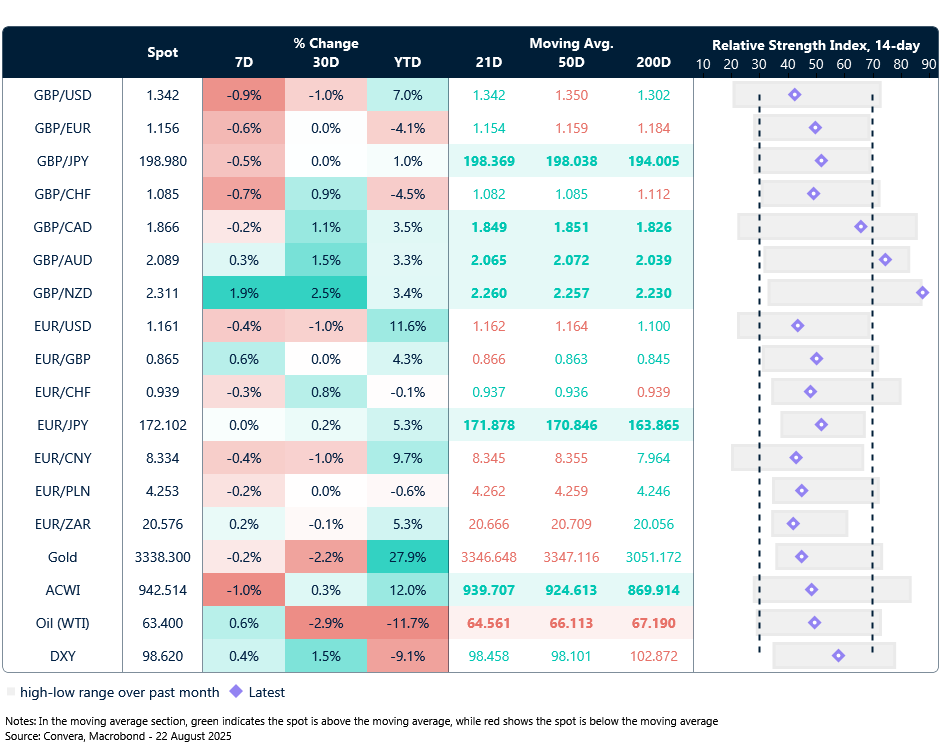
Technically, EUR/USD has broken below $1.16 and its 21-day moving average, signaling fading bullish momentum. A decisive move below $1.1560 could pave the way for a retest of the early August low near $1.14.

Pound at 2-week low as risk sentiment wavers
Tentative optimism is building around the UK’s economic outlook following a rebound in flash PMI data, which showed a pick-up in growth after a sluggish spring. Services activity accelerated and manufacturing showed signs of stabilisation. Yet, the pound remains under pressure, mirroring broader risk-off sentiment as markets reassess global easing prospects. GBP/USD is down 1.2% this week, trading below $1.34 and marking a two-week low – partly reflecting the drag from lower UK real yields flagged earlier this week.
The UK composite PMI rose to 53.0 in August from 51.5, beating expectations and marking the fastest pace of private-sector growth in a year. It was the fourth consecutive reading above the 50.0 threshold, signalling ongoing expansion. New business volumes rose at the strongest rate since October 2024, driven by a surge in services activity, which climbed to a one-year high of 53.6 (from 51.8). This offset a deeper contraction in manufacturing, which fell to 47.3 from 48.0.
However, firms, particularly in services, reported renewed cost pressures, with input inflation hitting its highest level since May. A key driver was the increase in National Insurance contributions. With July inflation holding steady at 3.8%, markets have scaled back expectations for near-term BoE easing, now pricing a 57% probability that the Bank Rate remains at 4.00% through year-end.
Adding to uncertainty, UK retail sales data – originally scheduled for release today – has been delayed due to quality assurance concerns. This raises questions about the reliability of official statistics, a critical issue given policymakers’ reliance on timely data. The delay may weigh on GBP sentiment, especially if confidence in UK data integrity continues to erode.

Global stocks slide, dollar firms
Table: Currency trends, trading ranges and technical indicators
Key global risk events
Calendar: August 18-22
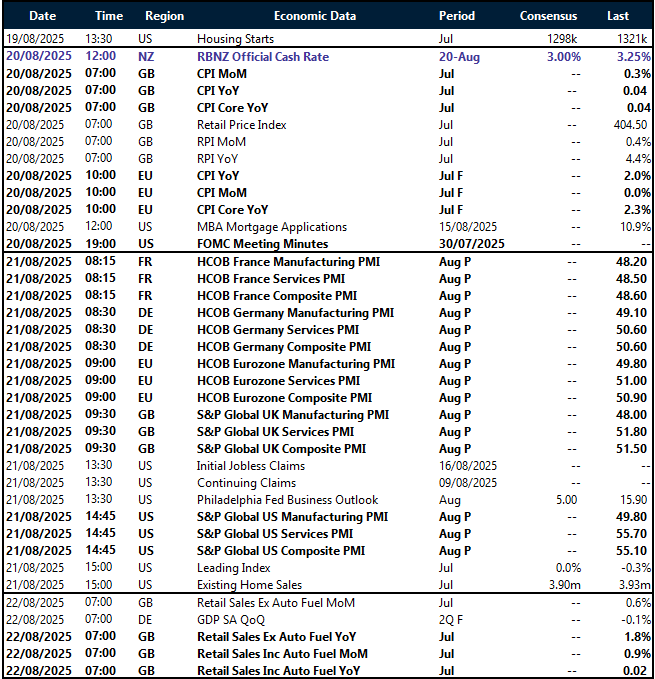
All times are in BST
Have a question? [email protected]
*The FX rates published are provided by Convera’s Market Insights team for research purposes only. The rates have a unique source and may not align to any live exchange rates quoted on other sites. They are not an indication of actual buy/sell rates, or a financial offer.