

USD: Oil surges again as peace talks break down
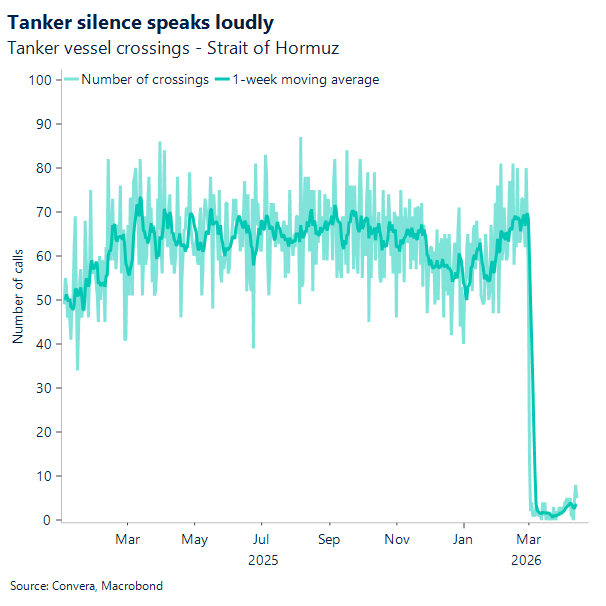
The fragile truce between the US and Iran has unravelled, and markets are now adjusting to a more entrenched geopolitical risk regime. Weekend negotiations in Islamabad failed to produce an agreement, prompting Washington to move ahead with a naval blockade of Iranian ports and effectively re‑tighten the choke point around the Strait of Hormuz. Brent crude surged more than 8%, topping $103 a barrel, while European gas futures spiked nearly 18%, underscoring how quickly the energy shock has re‑intensified.
The blockade is set to keep crude shipping costs at least 1,300% above pre‑war levels as marine insurance premiums soar, and the uncertainty around transit risk remains acute. Risk assets opened sharply lower, but the reaction has been more measured than the panic seen in the early days of the conflict. Several Asian equity benchmarks — including Japan’s Topix and Taiwan’s Taiex — stabilised after initial drops, while the Kospi retraced more than half its early losses.
Still, the failure to secure an agreement leaves uncertainty firmly embedded in the macro backdrop. In the near term, a stronger dollar alongside modestly lower yields is a reasonable equilibrium, yet the modest appreciation seen overnight and this morning suggest the dollar’s haven demand might be fading.
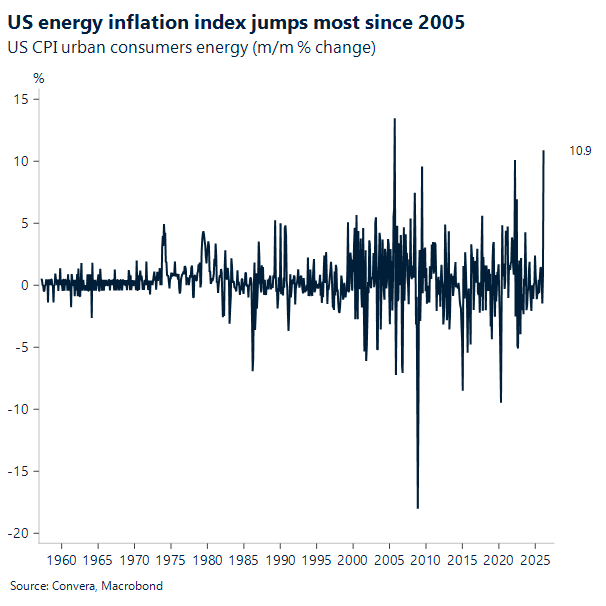
Meanwhile, Treasury price action is likely to become more complex once the initial headline shock fades. Front‑end yields may drift lower on haven demand, but any sustained upside in oil will quickly re‑anchor inflation expectations higher, putting renewed upward pressure on the long end. That risk is amplified by last week’s US CPI report, which already showed a sharp jump in headline inflation — with the energy basket rising at its fastest pace since 2005.
The breakdown in talks underlines why markets struggle to price a rapid end to the conflict or lean aggressively against the dollar. Even if Washington signals willingness to negotiate, the increasingly multilateral nature of the war means the US cannot fully control the escalation path. The decision to impose a naval blockade on all vessels entering or leaving Iranian ports reinforces that reality.
Whilst the broader takeaway is that macro markets are no longer reacting with the shock intensity seen in February, they’re also not pricing a quick resolution. With energy markets back at the centre of the storm, the USD retains a structural advantage until geopolitical conditions stabilise – but that advantage is no longer as forceful or automatic as it was earlier in the conflict.
EUR: Escalation returns but euro stays calm
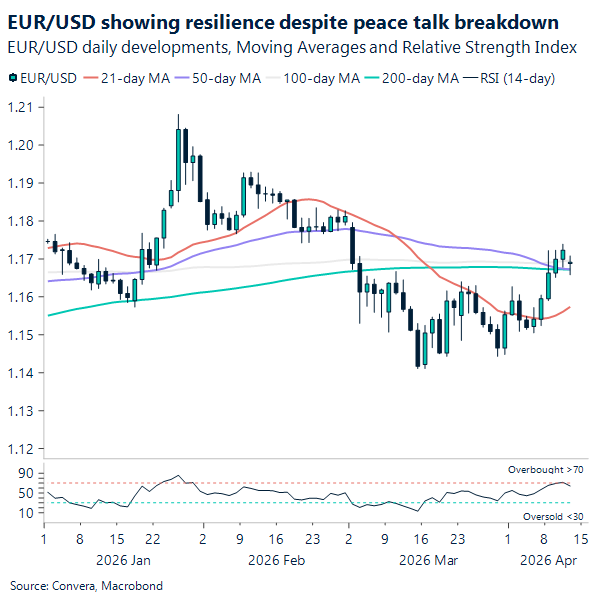
Despite the renewed escalation risk, EUR/USD’s reaction has been remarkably muted. The pair is still hovering near 1.17, close to its highest level since the conflict began, underscoring that FX markets are still trading more on signs of peace than signs of escalation. The breakdown in talks, the spike in oil and gas, and the US move toward a naval blockade would normally have driven a sharp euro selloff. Instead, the euro has barely budged.
Perhaps, because the US is now more directly entangled in the conflict, and the blockade raises worldwide inflation risks, that blunts the relative disadvantage for the euro and prevents a clean USD‑positive, EUR‑negative impulse. Or maybe, the dollar’s haven demand is far softer than in February as investors become conditioned to geopolitical volatility, and the initial panic premium that turbocharged USD upside earlier in the conflict simply isn’t being rebuilt.
Still, the euro’s resilience should not be mistaken for strength. Europe remains structurally more exposed to energy‑price volatility, and any sustained rise in crude or gas tightens financial conditions and revives the growth‑inflation squeeze that capped EUR/USD earlier in the conflict. The burden of proof remains on Europe: energy stability, shipping safety, and evidence that the growth drag is manageable.
For now, EUR/USD appears to be supported by USD fatigue, not by EUR optimism and the currency pair will only fall meaningfully again if escalation becomes both sustained and unambiguously Europe‑negative.
GBP: Risk-off shakes sterling – barely
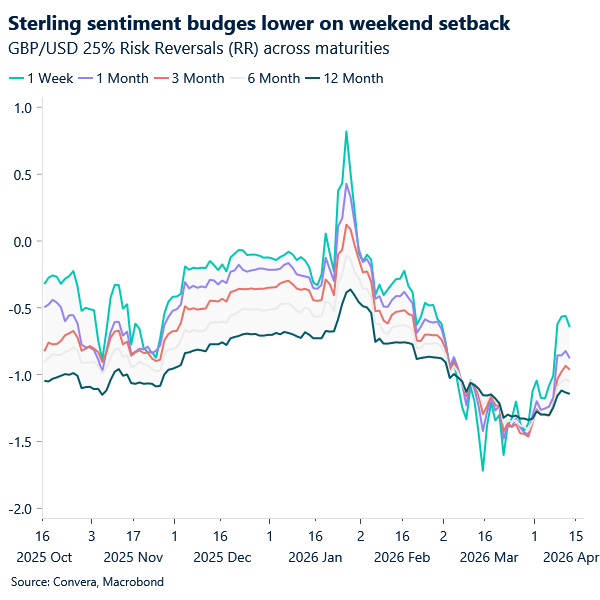
Sterling softened at the open this week as hopes for a deal slimmed following unsuccessful diplomatic developments over the weekend between the US and Iran. Given its high‑beta tendencies, and the strong build-up of hopes ahead of the weekend’s diplomatic marathon, the currency’s knee‑jerk reaction was understandably bearish, with risk-off sentiment re-gaining traction while re-establishing some safe-haven bid into the greenback. Still, underlying hopes for further talks, alongside the still‑intact ceasefire, has helped contain a more significant deterioration in sentiment, and, with it, sterling downside.
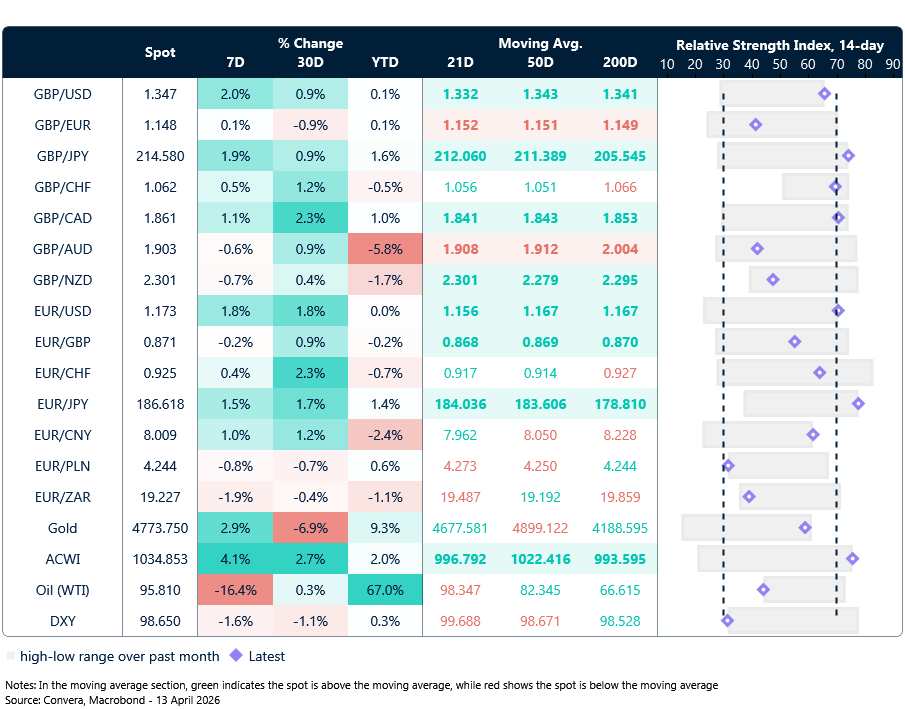
Ahead of a quiet data calendar this week, we expect sterling to keep parsing geopolitical headlines, trading nervously as the ceasefire deadline approaches and markets digest the implications of the weekend’s developments and Trump’s naval blockade threats. GBP/USD broke above the 200 day moving average near 1.3410 last week, a resistance level that has defined the conflict driven range since late February. Reluctance to slip back below that level today despite the weekend setback points to a sentiment backdrop still sprinkled with de escalation hopes. We see that support holding but fragile into today’s blockade deadline at 10 am ET.
Market snapshot
Table: Currency trends, trading ranges & technical indicators
Key global risk events
Calendar: April 13-17
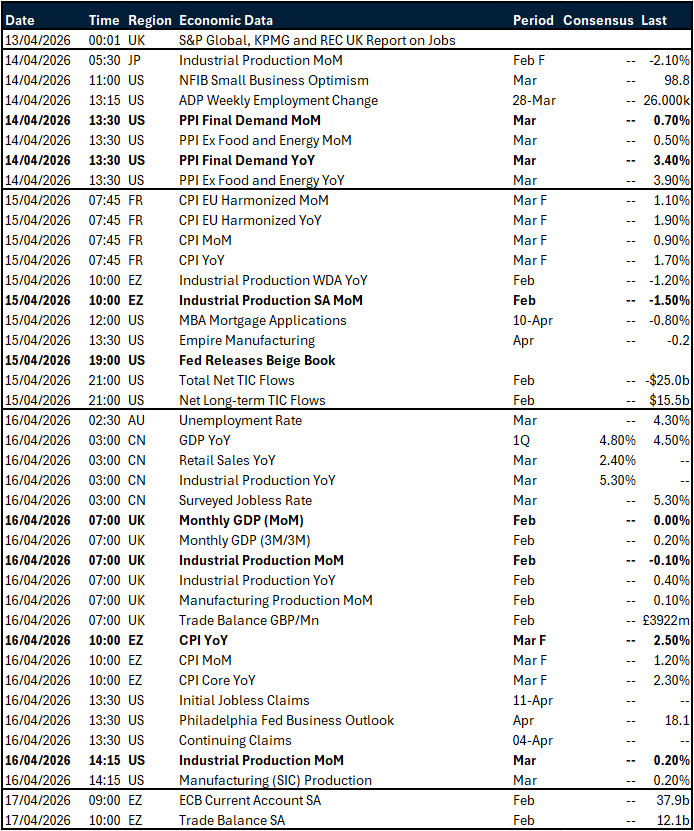
All times are in BST
Have a question? [email protected]
*The FX rates published are provided by Convera’s Market Insights team for research purposes only. The rates have a unique source and may not align to any live exchange rates quoted on other sites. They are not an indication of actual buy/sell rates, or a financial offer.