


USD: It’s Fed week
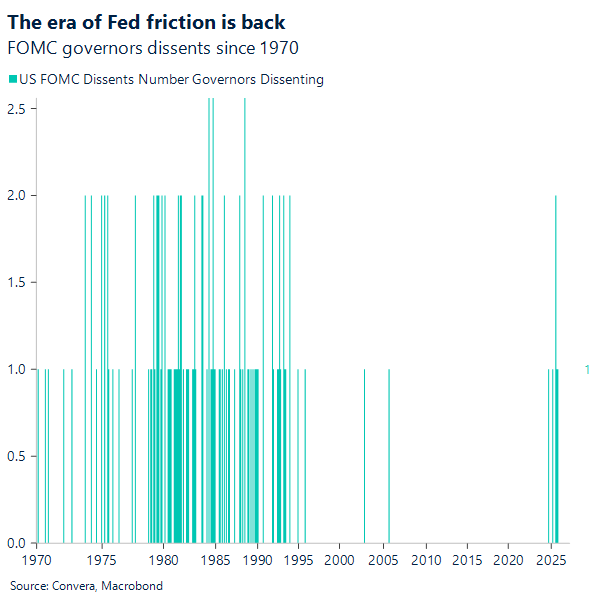
The Federal Reserve is entering a critical juncture, and its independence is under intense scrutiny. Speculation is mounting that Kevin Hassett, a vocal advocate for aggressive rate cuts, could be nominated to replace Chair Powell in May 2026. That possibility alone raises alarms about political influence, especially given the administration’s push for lower rates. The concern is that decisions may appear driven by politics rather than the Fed’s data-dependent mandate.
This tension comes to a head at the upcoming Fed meeting, where markets are pricing in a near-90% chance of a rate cut. Yet, the vote is unlikely to be unanimous. A fractured outcome, perhaps 7-5, would underscore the dilemma: how to support a cooling labor market without reigniting inflation, which remains stubbornly near 3%. A cut perceived as politically motivated rather than grounded in economic conviction risks being ineffective, or worse, counterproductive.
The economic backdrop complicates matters further. Growth is slowing, not accelerating. While PCE inflation met expectations, real consumer spending has eased to 2.1% year-over-year, challenging the narrative of robust demand and strengthening the case for easing. But fiscal headwinds loom large. A ballooning deficit could worsen if the Supreme Court curtails executive tariff authority, forcing heavier Treasury issuance. That supply surge would pressure yields higher, even as the Fed lowers short-term rates, creating an undesirable steepening of the curve. The result: mortgage and auto loan costs stay elevated, undermining the very goal of rate cuts.
For the U.S. Dollar, this mix of monetary vulnerability and fiscal uncertainty is toxic. A steeper curve and doubts about central bank independence weigh heavily on the currency. Add in tariff-related risks, either higher inflation or deeper deficits, and structural pressure intensifies. The Dollar’s path of least resistance looks lower.
Markets will be laser-focused on the Fed’s new dot plot and projections this week, especially as confidence erodes that the Chair reflects consensus.
While AI-driven market fears have largely subsided, the onset of the Fed friction era may define 2026 as a year where central bank independence becomes a dominant theme, shaping sentiment, volatility, and capital flows across global markets.
EUR: US leg holds the keys for EUR/USD
Rigidity in the euro leg of the USD/EUR 2‑year swap rate differential strengthened last week, following higher headline inflation in the eurozone alongside upward revisions to the bloc’s Composite PMI and Q3 GDP growth. This morning’s remarks from the ECB’s Schnabel, noting she would be comfortable with the next move being a hike, reinforced that firmness.
Meanwhile, the US leg remains far more malleable as we head into the Fed’s final policy meeting of the year, where a cut is expected. However, uncertainty over the Fed’s policy path ahead remains high, given the still‑hard‑to‑pin‑down degree of softness in the labour market and persistently elevated inflation. In other words, with rate differentials exerting greater influence on EUR/USD today than in the first half of the year, it is the US leg that will do much of the heavy lifting in the months ahead – though the extent remains debatable unless more US data comes through to solidify further dovishness.
For the week, the euro calendar looks relatively light, with the Fed’s policy meeting on Wednesday set to take centre stage.
For the week, we expect EUR/USD to continue trading above key moving averages, with 1.1640 as support and a test of the 1.17 level likely at least until the Fed’s meeting. Meanwhile, bearish forces continue to converge in keeping the dollar offered – from December seasonal effects to the JPY rate hike, and, of course, the dollar’s still‑overvalued tone relative to rate differentials with other major currencies.

GBP: Sterling’s rebound to meet yield reality
Sterling notched another strong week against the US dollar, rising just shy of 1% to fresh one‑month highs. Gains extended beyond the dollar though, with the pound advancing against most peers except the Aussie and yen. GBP/EUR, for example, has climbed for three consecutive weeks, though the pair remains in a broader downtrend while capped below its 200‑day moving average.
Positioning on GBP has turned less negative since the UK Budget eased fiscal risk premium, but the domestic backdrop remains challenging. The pound’s yield advantage has long been a support, yet with a BoE rate cut priced this month and further easing likely in 2026, UK front‑end bonds have scope to rally, pulling yields lower and weighing on sterling.
History offers a simple guide: over the past 30 years, the average gap between the two‑year yield and Bank Rate has been essentially zero. With Bank Rate expected to fall below 3.5% and the two‑year yield at 3.74%, there is still around 25bp of room to compress.
Friday’s GDP and other data pose downside risks — the UK often surprises negatively into year‑end — and could see markets price an even lower terminal rate, reinforcing a bearish longer-term narrative for GBP. In the short-term though, this tactical rebound might have legs if global risk appetite remains robust and seasonal trends play out.

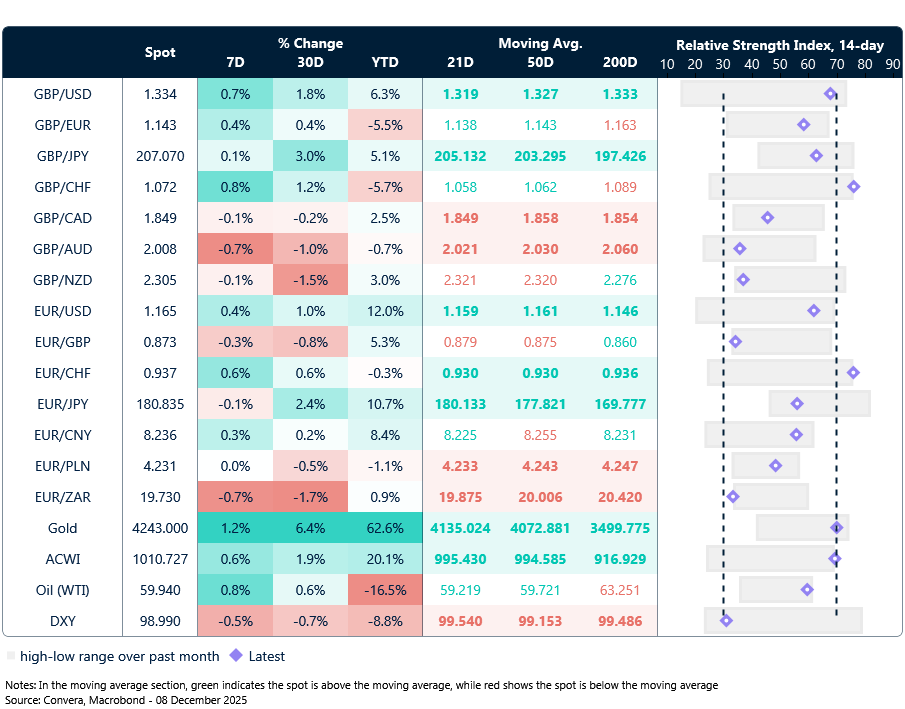
DXY sits at the bottom of the RSI spectrum
Table: Currency trends, trading ranges and technical indicators
Key global risk events
Calendar: November 8-12
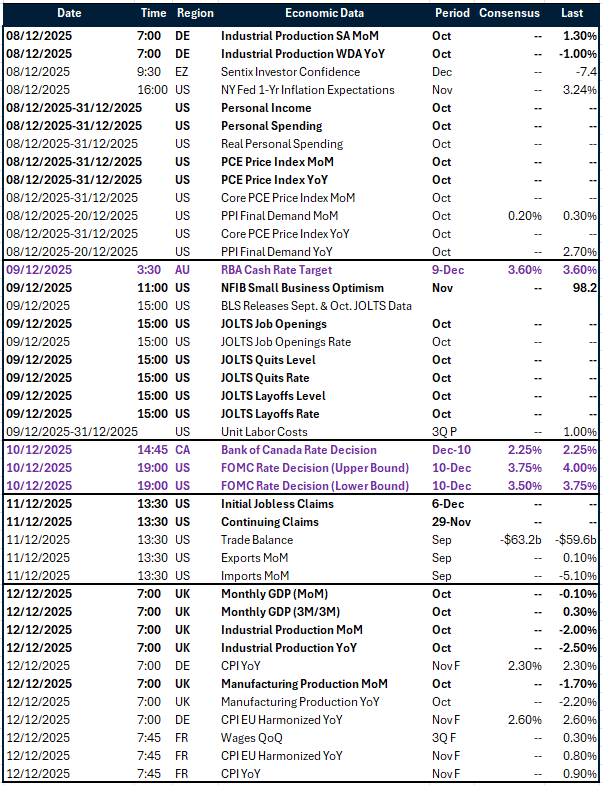
All times are in GMT
Have a question? [email protected]
*The FX rates published are provided by Convera’s Market Insights team for research purposes only. The rates have a unique source and may not align to any live exchange rates quoted on other sites. They are not an indication of actual buy/sell rates, or a financial offer.