

USD: Markets look to negotiations
Markets are holding back from an outright risk-off stance following the recent strikes involving the US and Iran, perhaps viewing the resumption of negotiations as the key test. Talks were paused this week as ceremonial funerals for former Supreme Leader Khamenei took place.
Meanwhile, investors have largely looked through Trump’s more bellicose rhetoric. Speaking at the NATO summit this week, the President suggested the ceasefire may already be over. Markets are familiar with Trump’s “escalate to de-escalate” tactics, while tit-for-tat exchanges have been a recurring feature of the conflict from the outset.
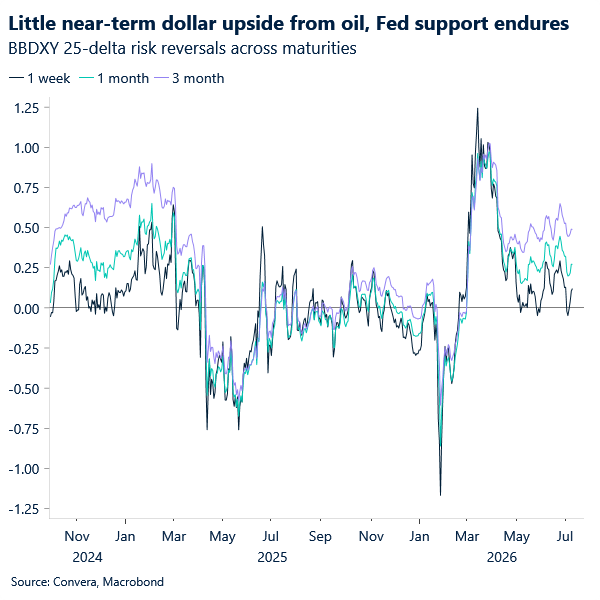
Oil prices pared earlier gains, remaining capped below $80 a barrel, while equities rebounded. The US dollar has also struggled to break decisively above 101 as markets better digest recent geopolitical developments. A more balanced, dollar-supportive positioning backdrop has limited further upside, reducing the scope for the kind of bearish-position unwinds that might otherwise have accelerated the move.
Away from geopolitics, Fed’s Williams highlighted demand-driven inflation risks stemming from the AI boom as one of his key concerns during an event organised by the New York Fed yesterday. The remarks indirectly reinforced last week’s more measured view of the Fed’s response to conflict-driven price pressures. With energy prices proving more subdued than expected, he suggested monetary policy remains well positioned to achieve the Fed’s objectives.
With little on the data calendar for the remainder of the week, attention shifts back to what recent US-Iran tensions mean for the expected resumption of negotiations.
EUR: Hawks and doves claim victory
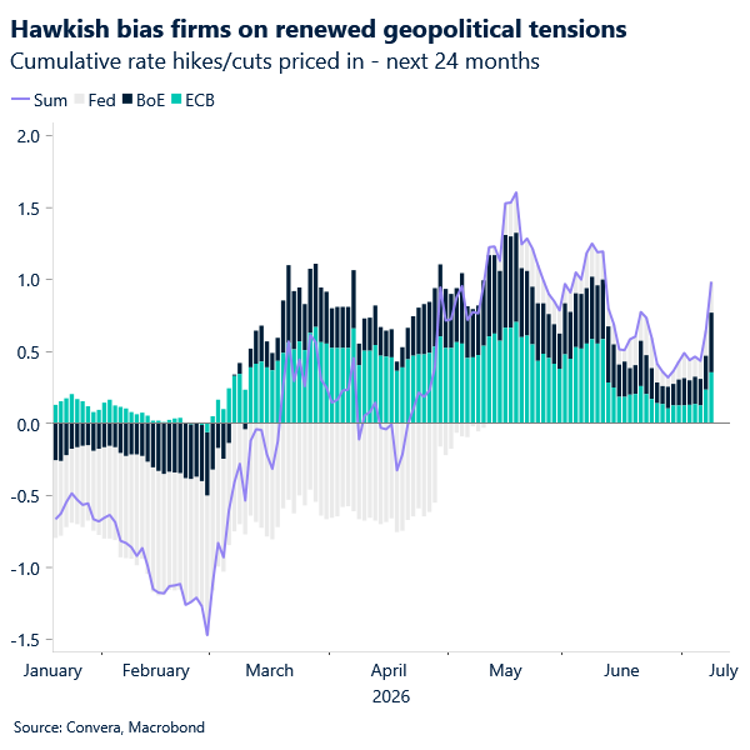
Yesterday saw the release of the ECB’s June policy meeting accounts. Unsurprisingly, the tone was hawkish. Policymakers acknowledged that further rate hikes had been considered, reflecting concerns around second-round inflation effects, which featured prominently in the discussion. At the same time, some remained of the view that the ongoing conflict represents more of an oil shock than a broad-based energy shock, underplaying a more entrenched inflation outcome.
Since the policy meeting, both hawks and doves have found fresh ammunition. The decline in oil prices, coupled with June’s inflation undershoot, supports the dovish case, while the renewed exchange of fire between the US and Iran this week lends weight to the hawkish argument.
The euro has pared back Tuesday’s sell-off, although it remains capped below its 21-day moving average, signalling that bearish momentum is still intact. It is notable to see the euro once again taking on a more risk-sensitive character when geopolitical tensions flare. Short-end yields declined yesterday as oil prices moderated and equities rebounded, but the euro seemed more supported by the risk rally than weighed down by lower yields.
Geopolitics will likely dominate the remainder of this week’s price action. A more convincing test of the 21-day moving average near 1.1450 would likely require a swift return to more conciliatory rhetoric.
GBP: Rates support returns, politics lingers
Sterling has remained resilient this week, particularly against the euro, as renewed tensions in the Middle East have pushed energy prices higher and prompted a familiar repricing of UK interest-rate expectations. In many respects, the market is revisiting the March-April playbook: rising oil and gas prices are reinforcing concerns about inflation persistence, prompting investors to price a more restrictive Bank of England (BoE) path and widening short-term rate differentials in favour of the pound.
That dynamic has been most visible in GBP/EUR, where sterling has continued to outperform. UK two-year yields have climbed faster than their German counterparts as markets increasingly factor in the risk that the BoE may need to lean against another energy-driven inflation shock. Given the UK’s recent history of sticky inflation, investors appear more willing to price future tightening into sterling than into most of its European peers.
Positioning may also be helping. Sterling bears remain relatively crowded, limiting the scope for aggressive downside moves and allowing positive rate dynamics to have a greater influence on price action.
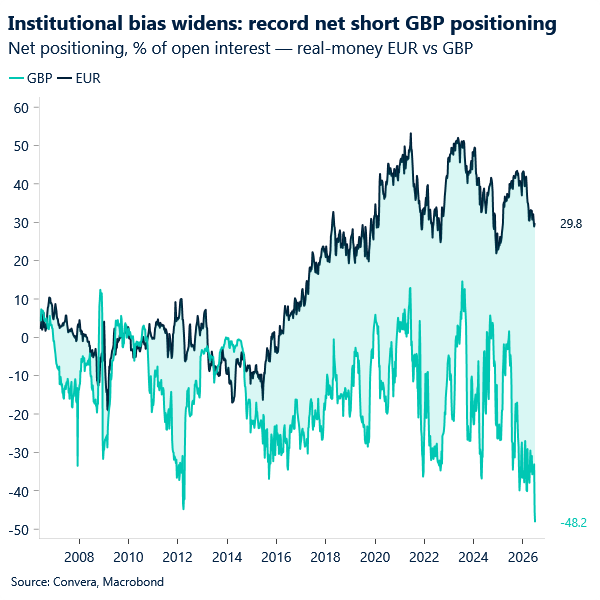
However, political risks have not disappeared. The opening of Labour leadership nominations today moves Andy Burnham one step closer to Downing Street, but markets remain focused on whether a future government can maintain fiscal credibility. While Burnham has recently adopted a more market-friendly tone, concerns around the sustainability of UK public finances continue to simmer. This week’s OBR warning on the long-run debt outlook highlights the scale of the challenge, while some economists see a greater risk of fiscal slippage under a Burnham administration.
For now, higher rates are supporting sterling. Whether that support proves durable will depend less on the next BoE move and more on whether investors remain convinced that the UK’s fiscal trajectory stays under control. Until then, sterling’s outlook remains constructive against the euro but considerably less clear-cut against the dollar.
Market snapshot
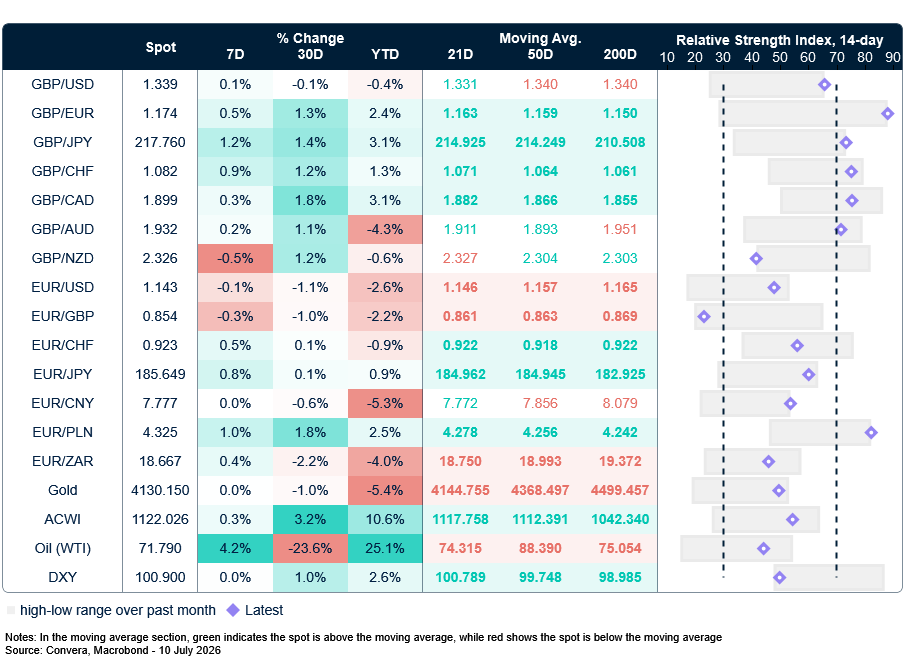
Table: Currency trends, trading ranges & technical indicators
Key global risk events
Calendar: July 06-10
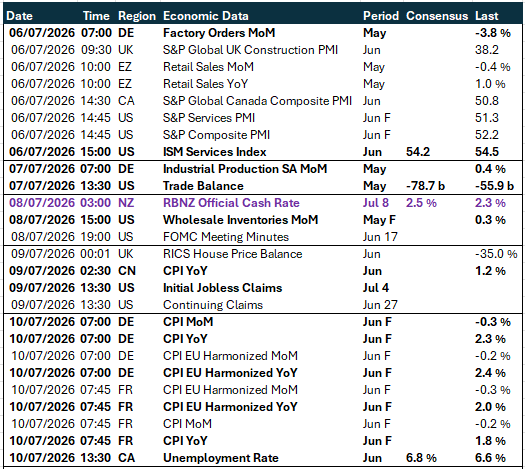
All times are in BST
Have a question? [email protected]
*The FX rates published are provided by Convera’s Market Insights team for research purposes only. The rates have a unique source and may not align to any live exchange rates quoted on other sites. They are not an indication of actual buy/sell rates, or a financial offer.