


USD: Jobs report buys Fed time
The July jobs report gave markets a weak headline, but not a clean macro signal. Payrolls fell by 23,000, and prior months were revised down by 103,000, pointing to a softer hiring trend. Yet the unemployment rate fell to 4.1%, helped by another drop in labor force participation. That makes the report difficult to read. Job creation weakened, but the jobless rate did not send the usual warning signal.
The participation drop is the key wrinkle. A smaller labor force can pull the unemployment rate lower even when employment conditions are softening. That means the decline in unemployment does not fully offset the weakness in payrolls. Some of the softness was also concentrated in noisy areas, including education, retail and leisure-related hiring, so one report is not enough to call a clear turn in the labor cycle.
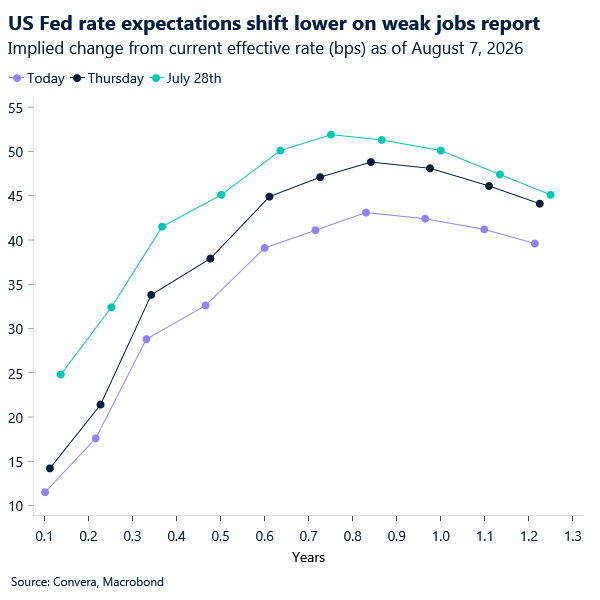
Because the unemployment rate moved lower, the debate now shifts even more firmly to inflation. For the Fed, the report buys time rather than forcing a decision. Rate expectations have moved lower across the curve, but a cooler CPI print this week would make two soft inflation readings in a row look more credible and strengthen the case for holding. A firmer print would reopen the inflation debate and give the hawkish side of the Committee more ammunition. The FOMC is a 12-member committee, so the three dissenters now have to test their hawkish case against a softer labor print, not just sticky inflation. With Warshspeak offering less explicit guidance, markets will keep doing more of the Fed’s work around each data point, especially the two inflation prints before the September meeting.
Markets reacted as expected to a report that weakened the case for aggressive hikes. Treasury yields fell, stock futures rose, and the curve bull steepened as traders trimmed near-term Fed tightening risk. The dollar also lost support as front-end rate expectations moved lower. From here, CPI will carry more weight than usual, since the labor market is no longer giving the Fed a clear green light to tighten. At the same time, the weak jobs report impact on rate-hike expectations and the broader bond market should add to downside risks for the dollar in the near-term.
EUR: US inflation is next key test
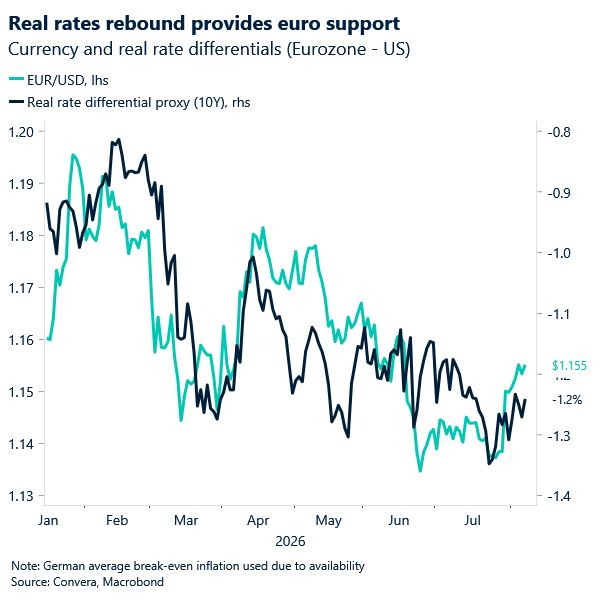
EUR/USD extended its recovery last week, notching another modest weekly gain as a weaker-than-expected US jobs report dragged Treasury yields and the dollar lower. That helped narrow rate differentials in the euro’s favour and allowed the pair to hold comfortably above 1.15.
However, the move continues to look more dollar-driven than euro-driven. While Eurozone growth and inflation data have surprised positively in recent weeks, the euro remains heavily dependent on the USD leg of the equation. Indeed, much of the recent rally reflects markets scaling back expectations of further Fed tightening rather than a fundamental reassessment of the euro area outlook.
Technically, EUR/USD now finds itself at an important juncture. The pair has repeatedly stalled around the 100-day moving average near 1.1570, making it the key level to watch in the week ahead. A sustained break above would suggest the summer recovery has further to run, while another rejection would reinforce the view that the June-July downtrend remains intact.
This week’s focus turns squarely to US CPI. Markets have spent the past fortnight steadily pricing Fed hike risks out of the dollar. A softer inflation print would likely validate that repricing and potentially open the door to a move toward 1.17 into quarter-end. Conversely, a firmer core reading could quickly revive Fed tightening expectations and send EUR/USD back toward the middle of its recent range.
GBP: Dollar in the driving seat
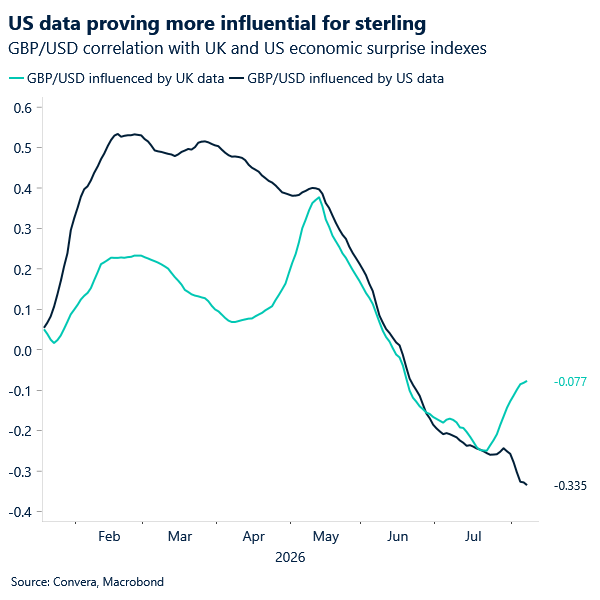
Sterling starts the week on slightly firmer footing after GBP/USD bounced back above 1.35 following Friday’s softer-than-expected US payrolls report. The move reinforces a theme we’ve highlighted repeatedly in recent weeks: the dollar leg remains the dominant driver of cable, with changes in US growth and rate expectations exerting a greater influence on price action than UK-specific developments. As such, this week’s US inflation test will do most of the heavy lifting in GBP/USD’s price action.
Against the euro, the picture is more subdued. GBP/EUR has largely consolidated in the mid-1.16s, having unwound much of July’s rally from above 1.18 without breaking any significant technical support. Momentum has clearly cooled, but the pullback still looks corrective rather than trend-changing, with the cross holding above key medium-term trend indicators.
The broader sterling narrative remains one of fading domestic influence. While UK data has generally held up better than feared in recent months, markets continue to focus on global drivers, namely the dollar, risk sentiment and energy prices. Lower oil prices have helped support sterling against commodity-linked currencies at times, but have simultaneously reduced some of the inflation pressure underpinning the pound’s yield advantage.
This week’s calendar is relatively quiet until Thursday’s UK GDP release, which will provide an important test of whether the UK’s relative growth outperformance remains intact. Politics also remains in the background, with the Clacton by-election this Thursday likely to attract attention.
Market snapshot
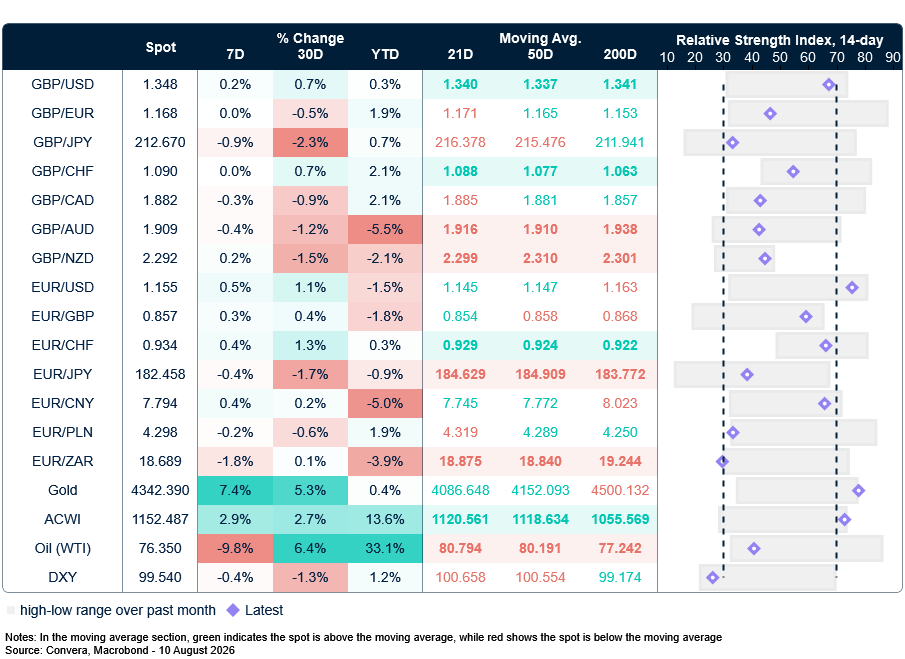
Table: Currency trends, trading ranges & technical indicators
Key global risk events
Calendar: August 10-14
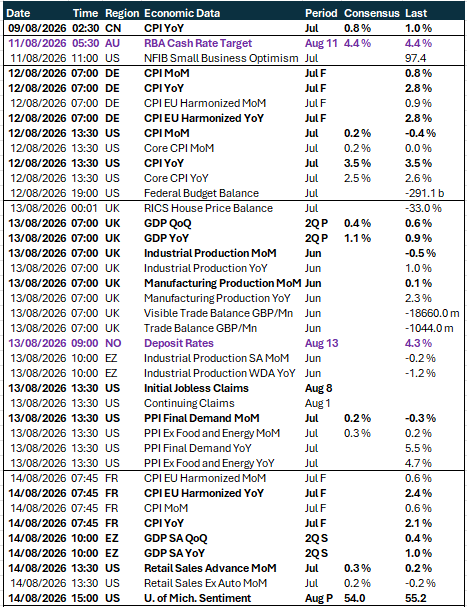
All times are in BST
Have a question? [email protected]
*The FX rates published are provided by Convera’s Market Insights team for research purposes only. The rates have a unique source and may not align to any live exchange rates quoted on other sites. They are not an indication of actual buy/sell rates, or a financial offer.