


Key Takeaways
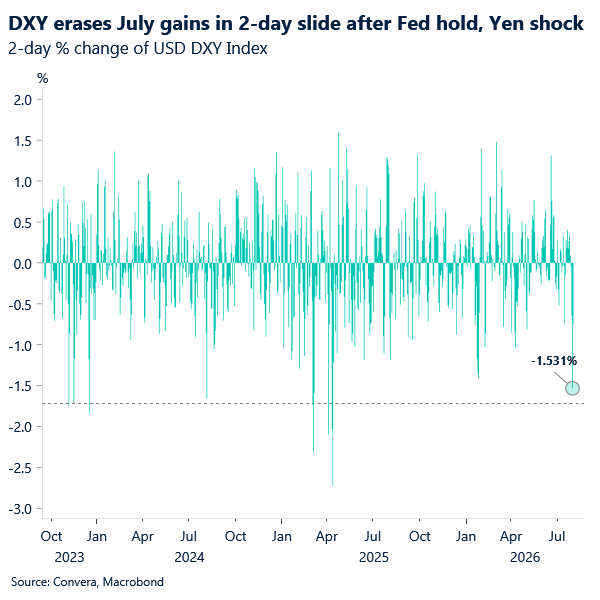
- The US dollar fell about 1.5% on lack of signals from the Fed and a sharp yen rally. The dollar ends the month partially recovering last two-day losses.
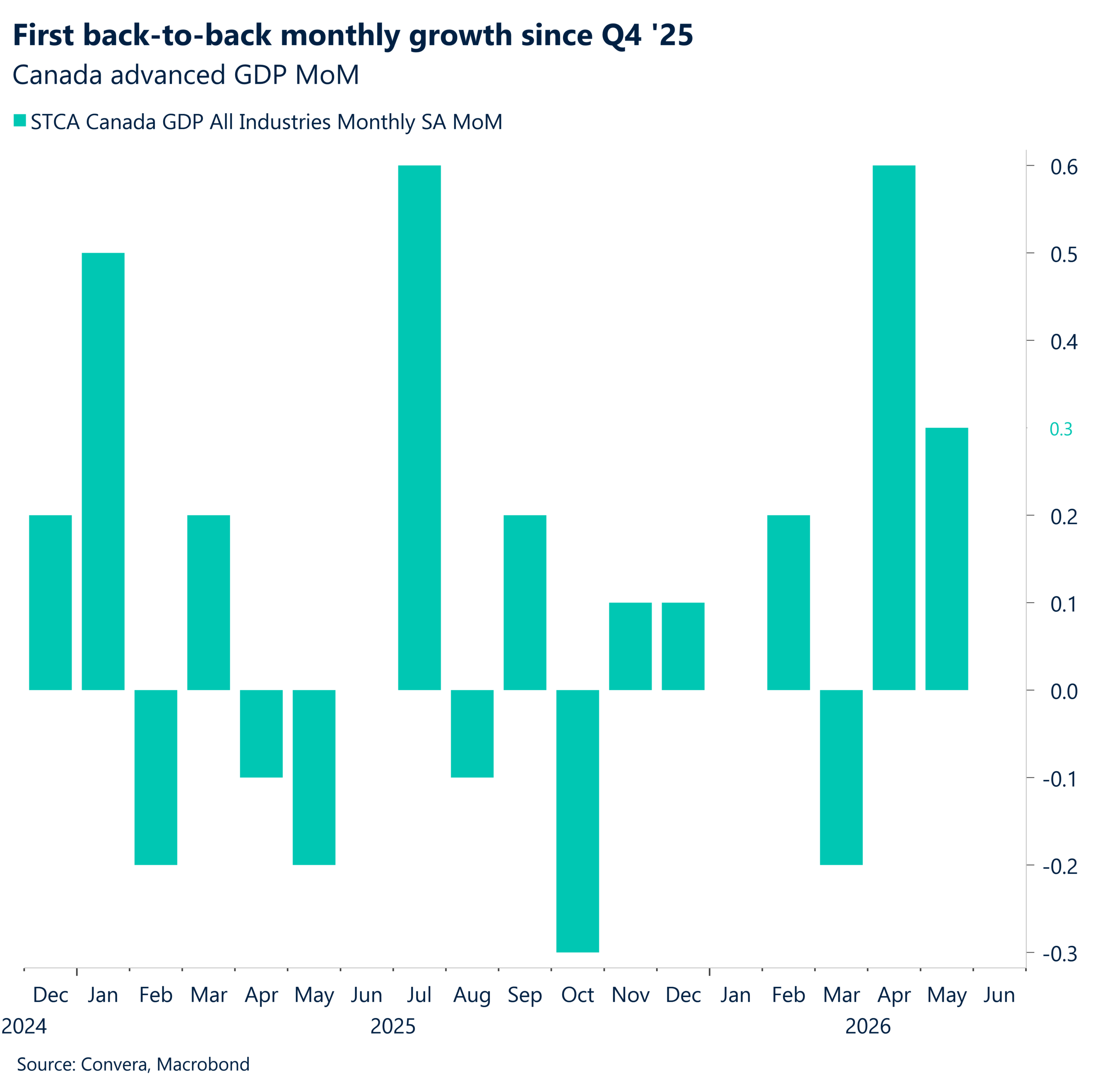
- Canada’s GDP grew 0.3% in May, exceeding expectations. Markets don’t expect a rate hike from the Bank of Canada in 2026.
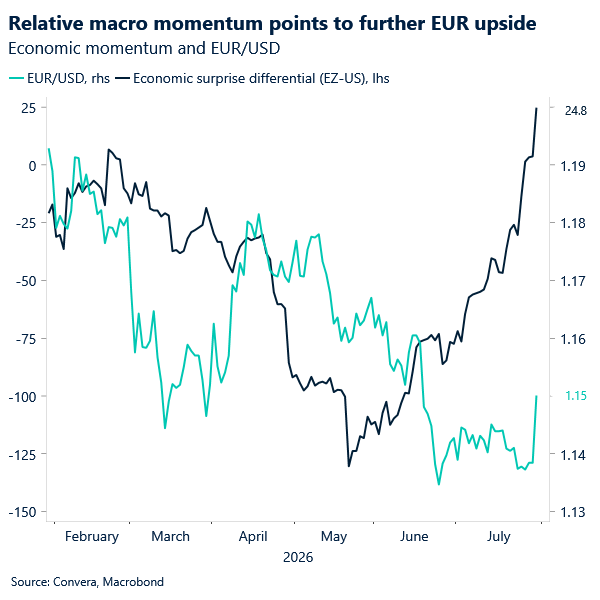
- EUR/USD has risen above 1.15, driven by US dollar weakness and better-than-expected Eurozone GDP performance.
- Market outlook suggests EUR/USD could reach 1.17 if the Fed maintains a non-hawkish stance in September.
USD: Warshspeak + yen shock steepen dollar reset
Call it Warshspeak, the new Greenspeak. Alan Greenspan made central-bank ambiguity famous by saying enough to shape expectations, but not enough to lock policy into a fixed path. Kevin Warsh is taking that idea in a more volatile direction, with less forward guidance, fewer road signs and more responsibility pushed onto market pricing and incoming data. That gives the Fed more flexibility, but it also makes every inflation, jobs and growth report between now and September more important.
The Fed held rates, and Warsh gave markets plenty of process but little guidance. He defended the 2% inflation target, praised the economy’s resilience and pushed back against the idea that no guidance amounts to confusion. Yet investors left without a clear answer on why the Fed paused, what would trigger a September hike or what he plans to say at Jackson Hole.
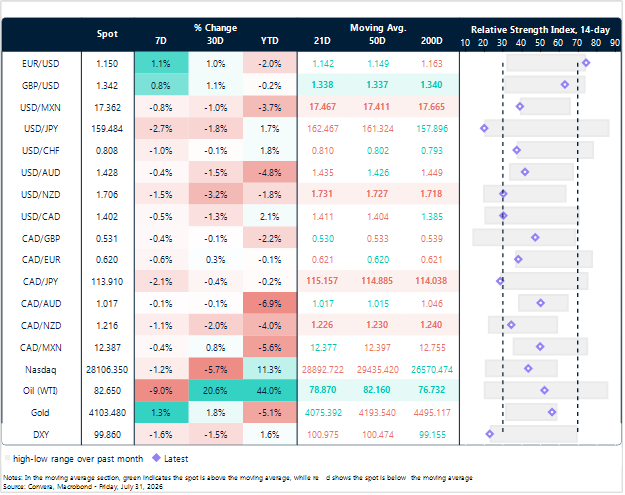
For the US dollar, the missing signal became the signal, especially after positioning had become stretched into the meeting. The front end rallied, the dollar fell and compounded by a sharp yen rally that looked consistent with FX intervention by Japanese authorities, the DXY has now dropped about 1.5% over two days, erasing its July gains and marking its worst two-day decline since April 2025. On Friday, it has slightly recovered to end the month.
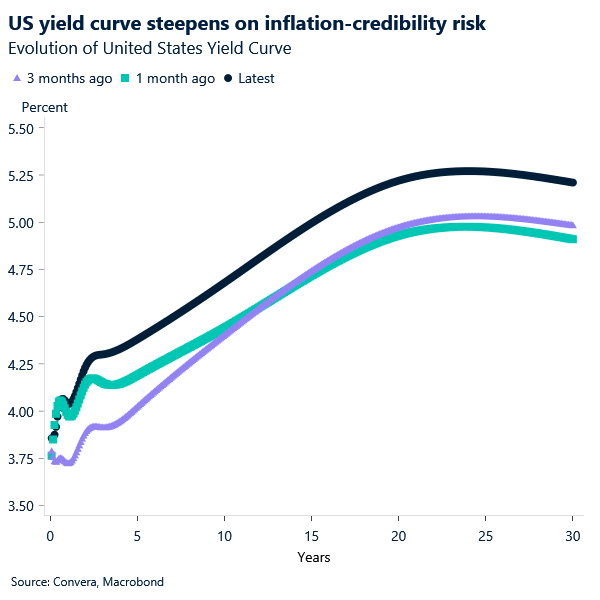
The curve reaction tells the bigger story. Three hawkish dissents exposed the “family fight” inside the FOMC, and the lack of guidance pushed that debate into the yield curve. The front end rallied on no hike and no near-term signal, while the long end pushed back against inflation-credibility risk. That kind of steepening is unusual at a meeting where the Fed move is a no move.
Yesterday’s macro data added more nuance than direction. Q2 GDP slowed to 1.5%, weighed down by a wider trade deficit and falling inventories, but the underlying details looked stronger than the headline. Real final sales to domestic purchasers rose 2.2%, while final sales to private domestic purchasers jumped 3.9%, helped by a resilient 3.2% gain in consumer spending and a 7% rise in private fixed investment. That suggests the economy absorbed the first energy shock better than feared, even with elevated prices through much of the quarter.
The inflation side gave the doves something to lean on. The PCE price index fell 0.1% in June, while core PCE rose just 0.1%, below expectations and enough to cut the implied probability of a September hike from roughly 70% on Wednesday to around 60%. Our baseline remains no hike this year, but September now looks closer to a coin flip than a hold. Warshspeak may give the Fed room to maneuver, but with growth still firm and inflation cooling only gradually, the next data print can quickly become the next policy shock.
CAD: Canada GDP beats in May
Canada’s economy grew 0.3% in May, above the 0.2% expected. The gain followed a revised 0.1% drop in April and marked the second straight monthly increase. On a year-over-year basis, GDP rose 1.7%, also ahead of the 1.4% consensus.
The details were solid. Goods output rose 0.6%, while services gained 0.2%. Mining, quarrying, and oil and gas led the advance again, helped by stronger oil sands activity and support work tied to energy production.
The early June estimate points to another 0.2% gain. That would leave the economy up 0.8% in the second quarter. Even so, markets are not pricing a Bank of Canada rate hike this year, as the growth mix still needs to be weighed against inflation and labour-market trends.
USD/CAD briefly touched 1.399, its lowest level in more than a month, before bouncing back toward 1.404. The move came as the US dollar recovered slightly after yen intervention. The upbeat Canadian GDP release has not done much for the USD/CAD, which remains tied to US dollar price discovery and relative yield performance.
EUR: Marching through one-month highs
EUR/USD has extended its post‑Fed recovery, pushing back above 1.15 as broad dollar weakness gathers momentum. While the initial catalyst was the Fed’s less hawkish-than-feared message, the latest leg higher has been driven by a sharp decline in USD/JPY, which has weighed heavily on the dollar more broadly.
The move has also been helped by falling US real yields. Lower short‑dated real rates have provided a clear boost to EUR/USD, while the near 9% decline in Brent crude this week has eased some of the energy-related concerns that had weighed on the eurozone outlook throughout recent months.
Encouragingly for the euro, the macro backdrop has held up better than many expected. Eurozone GDP expanded by 0.4% q/q in Q2, the strongest pace since early 2025, suggesting the region has absorbed the recent energy shock relatively well. Inflation data released today is expected to reinforce that resilience. With German and Spanish figures already surprising to the upside, a eurozone CPI print near 2.9% would support market expectations for further ECB tightening, with around 1½ additional hikes still priced by year-end.
That said, the recent rally still appears to be driven more by the USD leg than the EUR leg. Long-dollar positioning had become heavily stretched ahead of the Fed meeting, and the lack of a more hawkish signal has forced some investors to unwind those positions. As a result, any upside surprises in eurozone data are currently having an amplified impact on the single currency.
Looking ahead, if the Fed ultimately refrains from hiking in September, EUR/USD could be on course to finish Q3 closer to 1.17. For now, however, the pair is likely to remain driven by incoming data and shifting Fed expectations rather than a fundamentally stronger euro story.
Market snapshot
Table: Currency trends, trading ranges & technical indicators
Key global risk events
Calendar: July 27-31
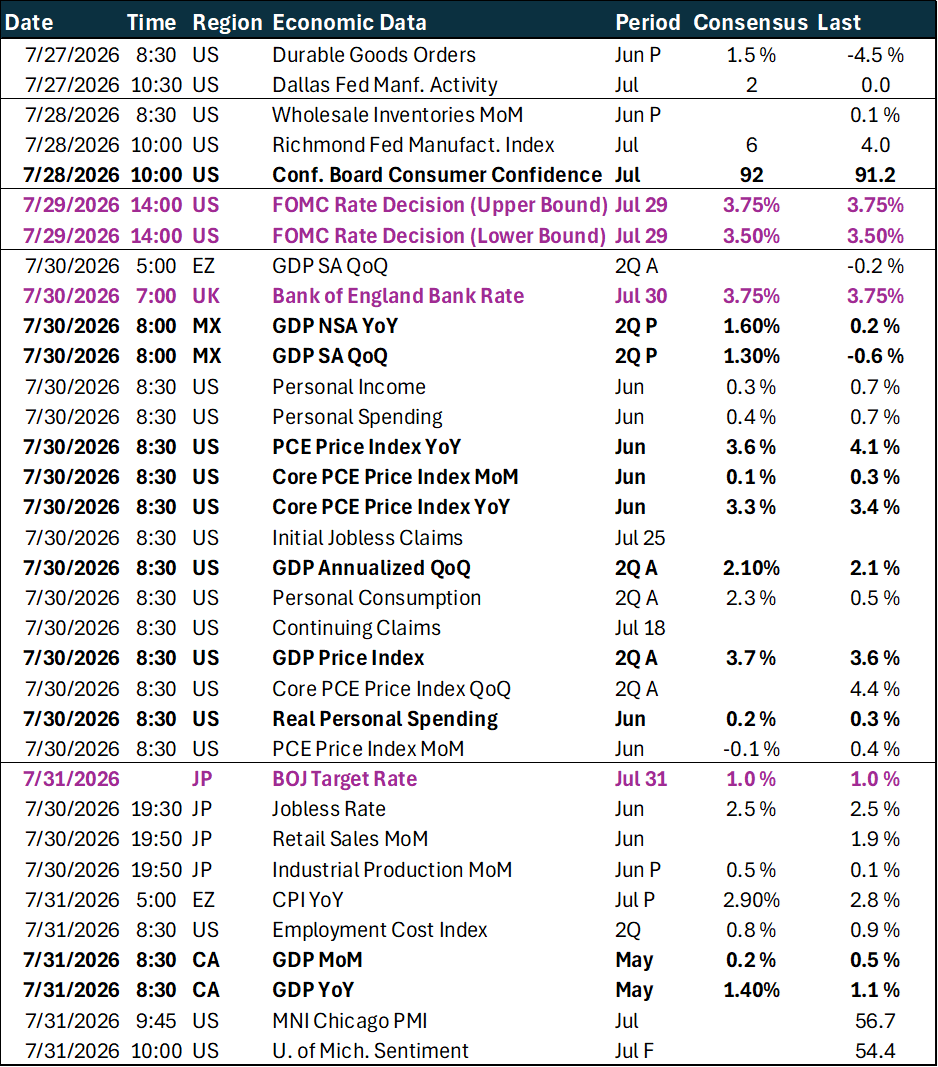
All times are in EST
Have a question? [email protected]
*The FX rates published are provided by Convera’s Market Insights team for research purposes only. The rates have a unique source and may not align to any live exchange rates quoted on other sites. They are not an indication of actual buy/sell rates, or a financial offer.