
USD: Dollar holds the line
The dollar starts the week under pressure after the heaviest US data run since spring. Retail sales fell 0.6% in July, missing expectations for a small gain, while the control group dropped 0.4%, a weak signal for consumption and GDP tracking. That followed a mild CPI print, softer PPI, and a payroll report that already had markets questioning the need for another Fed hike. The data have shifted the discussion from inflation alone to whether demand is starting to lose momentum.
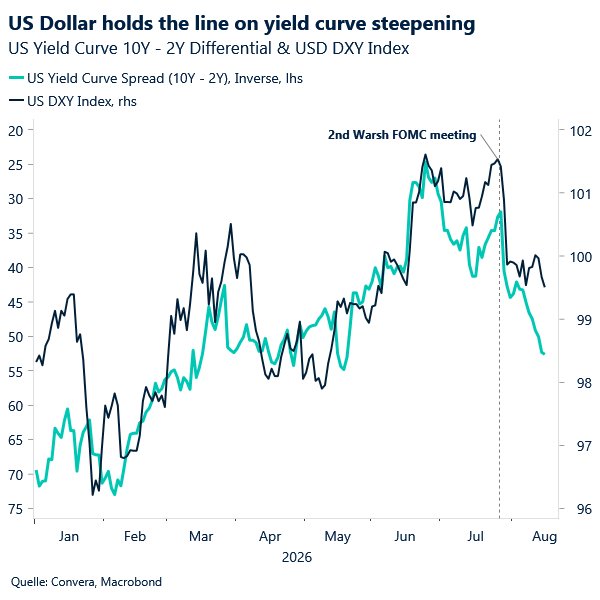
Treasuries tell a more complicated story. The US 2-year yield has fallen from its late-July peak as markets price out near-term Fed tightening, while the 10-year remains sticky around 4.69%. The 2s10s curve has steepened to approximately 52bps, its widest since May. The steepening has the front end reacting to softer data and the long end still carrying fiscal, supply and term-premium concerns. For the dollar, that mix limits the downside even as the domestic macro story weakens.
Geopolitics are also keeping the dollar from sliding more cleanly. The Iran ceasefire expires Monday, the Strait of Hormuz remains a live risk, and markets are waiting for details on a new US “economic isolation” plan for Iran. Oil has stayed contained despite the headlines, helped by expectations for softer global demand, but the risk is not gone. A diplomatic path would reduce the dollar’s oil-link bid, while renewed escalation could lift oil, long-end yields and the greenback.
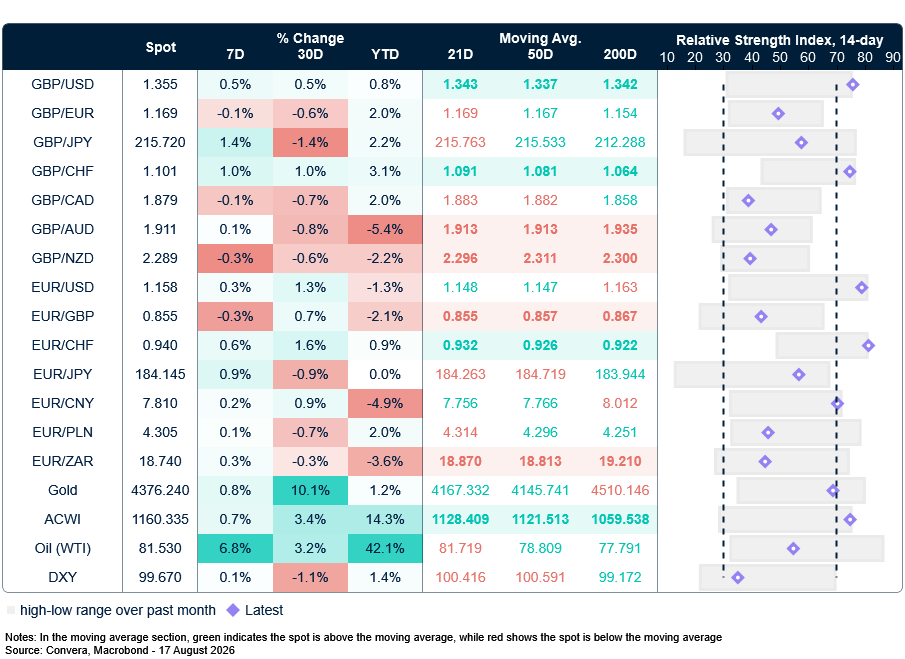
Technically, DXY is still holding above the 99.50 area, the post-payrolls low that has become the near-term floor. A break below that level would bring 99.20 into view, followed by the May lows near 98. This week is lighter on US data, so the focus shifts to the July FOMC minutes and earnings from Walmart, Target and Home Depot for a cleaner read on the consumer. For now, the dollar is bruised by softer data, but not broken.
EUR: Soft US data lifts EUR/USD to two-month highs
EUR/USD pushed higher on Friday to two-month highs after soft US retail sales data capped the week. The release added to a run of benign US inflation prints earlier in the week, helping trim the market-implied probability of a September Fed hike to around 30%, down from roughly 50% just days earlier.
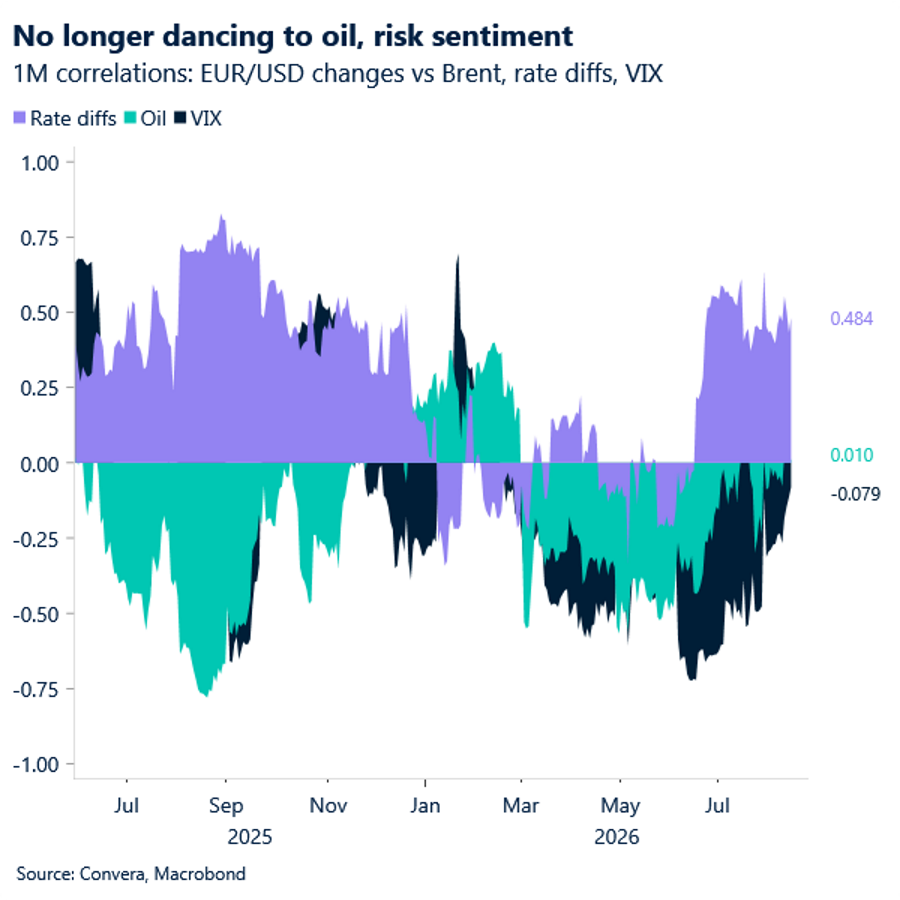
Elsewhere, Friday saw yield curves steepen across the US, eurozone and UK, with long-end yields rising faster than their short-end counterparts. As highlighted in our Thursday note last week (USD section), we think further steepening is likely to become a more dominant theme. Central banks may be gradually lowering their hawkish guard, while investors are becoming increasingly sensitive to fiscal spending pressures, particularly around defence, and potential supply-side inflation shocks linked to severe weather disruptions, such as droughts across Europe. The backdrop is one in which central banks may avoid further tightening as near-term inflation risks ease, while investors continue to demand greater compensation for elevated inflation uncertainty and long-term debt sustainability concerns.
EUR/USD opened the week on the front foot, although we are sceptical it has much scope to extend gains in the days ahead. Upside risks to oil prices from the US-Iran impasse and a relatively light data calendar should help cap upside. The 17 June high at 1.1617 remains a key resistance level, while range-bound trading in the mid-1.15s looks the more likely outcome.
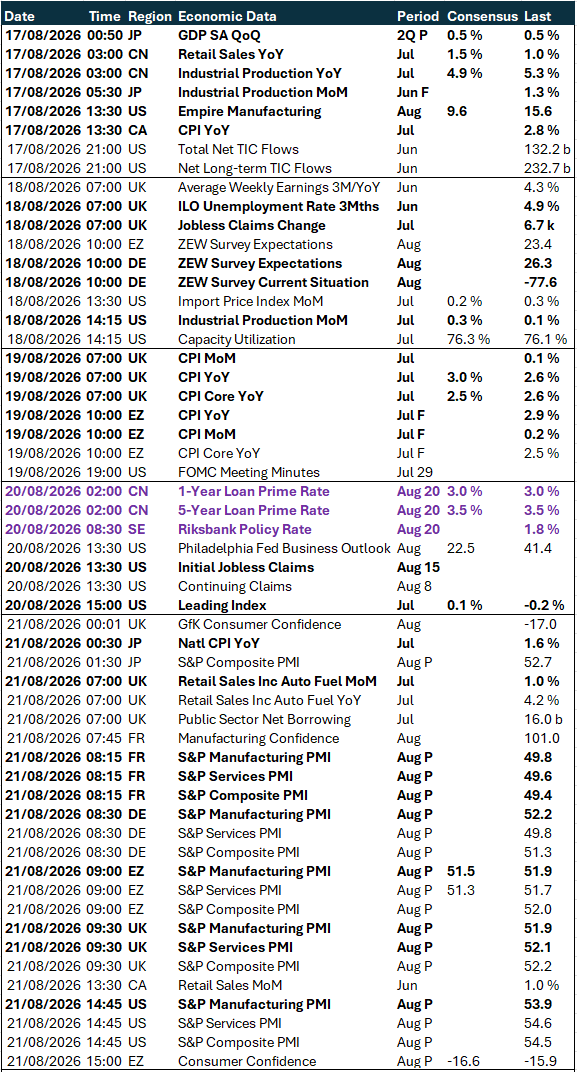
This week, we will be watching Germany’s ZEW survey and PMI releases across the major economies, including the US, eurozone and UK. The minutes from the Fed’s July meeting are also worth keeping an eye on.
GBP: Data week puts sterling’s resilience to the test
Sterling enters a critical week on relatively firm footing. GBP/USD has shifted well into the 1.35 arena amid rising UK-US rate differentials and remains comfortably above its key daily and weekly moving averages, preserving a constructive technical outlook. GBP/EUR regained the 1.17 handle briefly despite still appearing somewhat rich relative to underlying rate differentials. This largely reflects a combination of supportive carry dynamics, subdued volatility and resilient risk sentiment. Stronger-than-expected UK GDP data last week also reinforced the view that the UK economy has weathered recent geopolitical headwinds better than many feared.
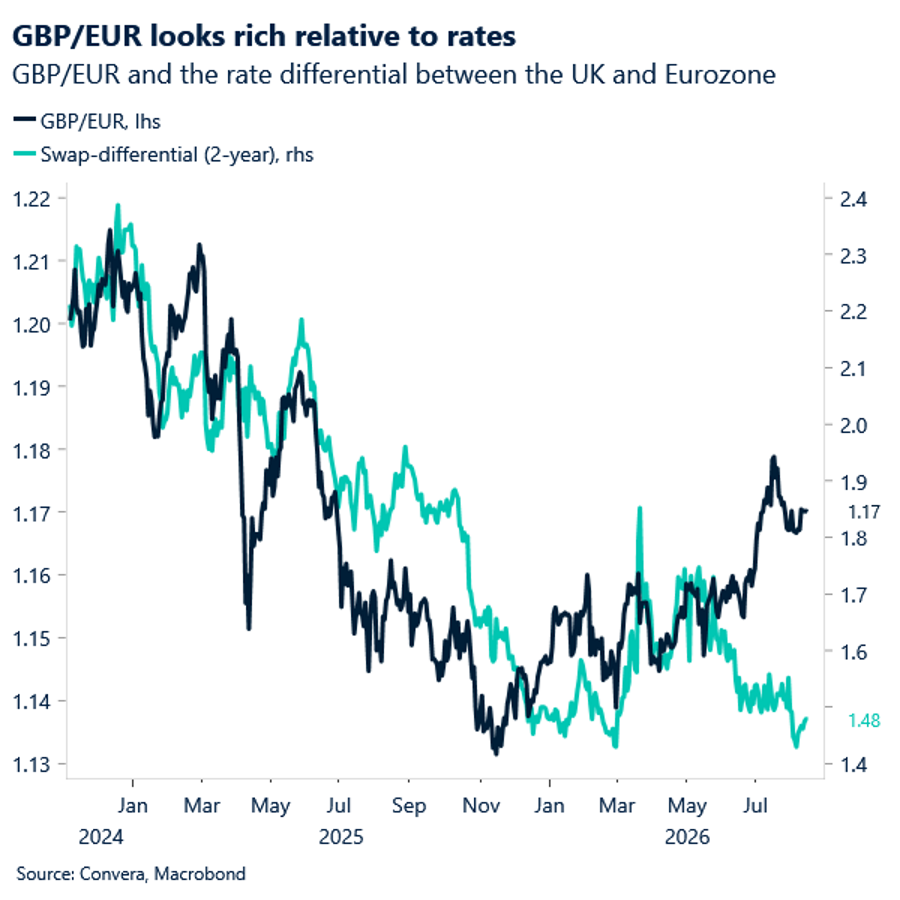
However, much of sterling’s recent support has come from the external backdrop rather than a clear improvement in domestic fundamentals. Equities remain near record highs, FX volatility sits well below long-run averages and investors continue to favour higher-yielding currencies in the search for carry. This has helped GBP outperform traditional funding currencies despite growing questions around the UK’s medium-term outlook.
The focus now shifts firmly to the UK data calendar. Tuesday’s labour market report is expected to show a still-fragile jobs backdrop, with private-sector hiring remaining subdued and wage growth continuing to cool. Wednesday’s inflation release could see headline CPI rise back towards 3% as higher household energy bills feed through, although services inflation is expected to ease further. Friday’s retail sales and consumer confidence figures will provide another important gauge of domestic demand.
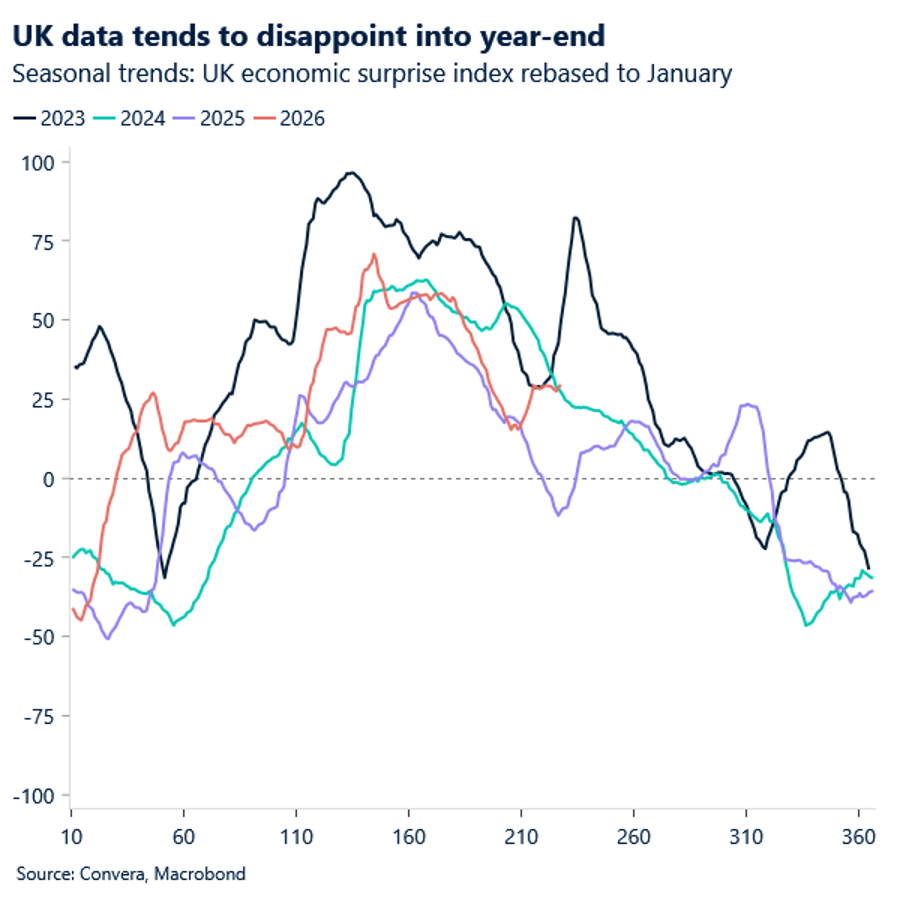
For sterling, the key issue is whether the recent run of relatively resilient data can continue – seasonality doesn’t bode well for the UK data in the second half of the year. Markets still see the Bank of England as one of the more hawkish central banks, helping preserve the pound’s yield advantage. A softer run of data could challenge that narrative and leave sterling more exposed, particularly given how much of its recent resilience has depended on favourable global conditions rather than domestic momentum.
Market snapshot
Table: Currency trends, trading ranges & technical indicators
Key global risk events
Calendar: August 17-21
All times are in BST
Have a question? [email protected]