

USD: Tame inflation print keeps hawks wanting more
July’s inflation report landed broadly in line with expectations, pointing to relatively contained price pressures. Headline CPI eased to 3.4% from 3.5% in June, while core inflation, which strips out volatile food and energy prices, declined to 2.5% from 2.6%, matching its five-year low reached in February.
Following last week’s soft jobs report, recent data have taken some pressure off the Fed to hike in September. Markets have moved from pricing roughly a 50/50 chance of a hike to a ~35% probability. The dollar slipped, while the yield curve steepened as short-end rates fell faster than their long-end counterparts.
There is still another inflation report, a jobs report, and the Jackson Hole symposium to come before the September meeting. Meanwhile, the stalemate around the Strait of Hormuz and upside risks to oil prices are likely to keep hawkish bets alive. Should that bias continue to unwind, further steepening would be expected in the near term.
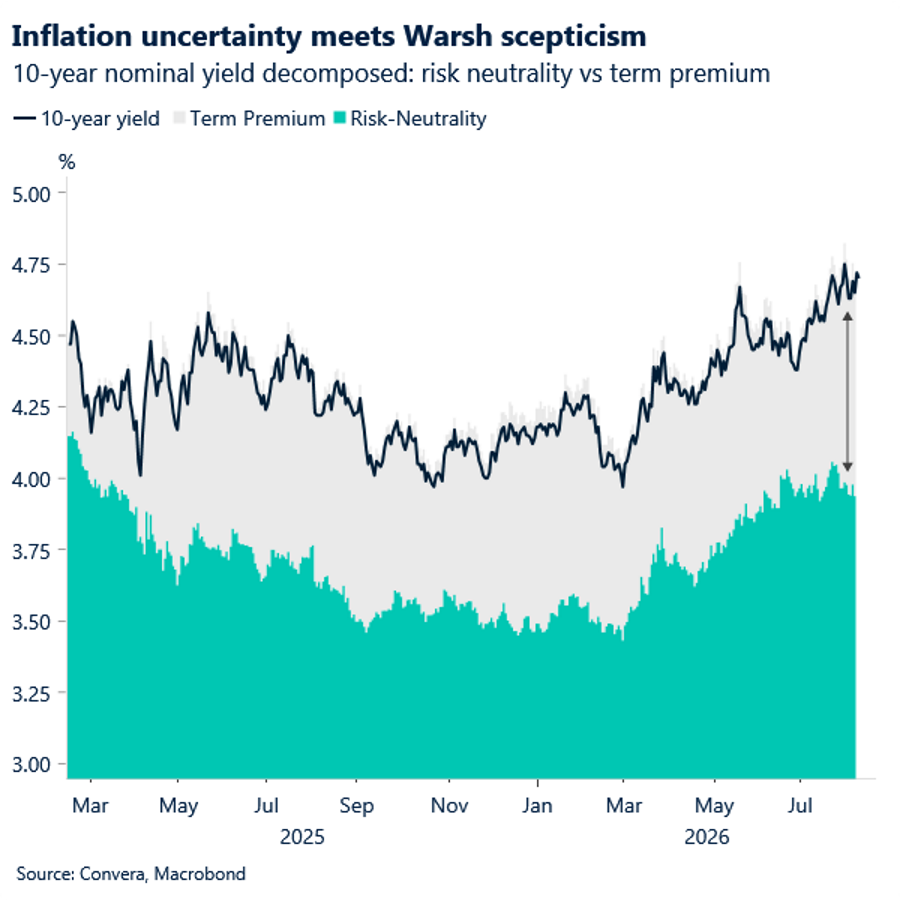
The term premium on 10-year Treasury yields – the extra return demanded by investors to compensate for perceived risk – has risen sharply since July. The rise reflects growing consensus that the energy shock is beginning to feed into longer-term inflation uncertainty, alongside some scepticism about Warsh’s less-than-clear hawkish credentials.
We continue to view further steepening of the curve as dollar-negative.
For now, however, the US dollar will need additional data to validate any further dovish repricing. Yesterday’s CPI print was simply not enough, with DXY remaining trapped in its 99.50-100.00 range.
Attention now turns to today’s July Producer Price Index (PPI) release, as several of its components feed directly into the Personal Consumption Expenditures (PCE) price index, the Fed’s preferred measure of inflation, due later this month.
EUR: EUR/USD shrugs off soft CPI
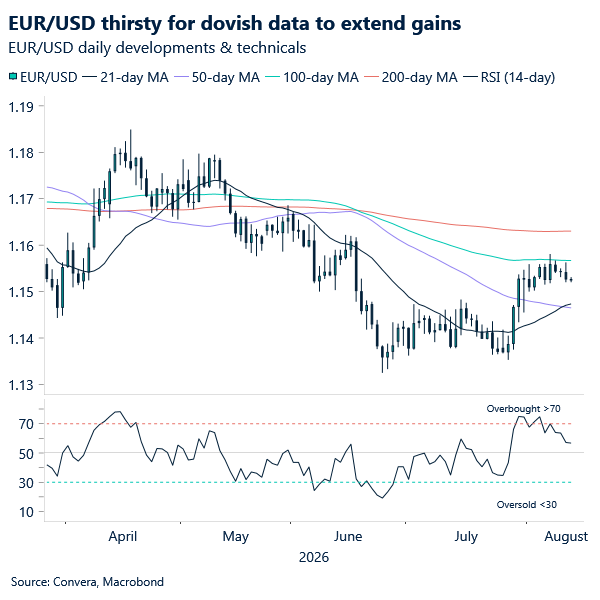
EUR/USD barely reacted to July’s benign US inflation report and continues to hover near 1.1550. Markets are still reluctant to unwind Fed hawkishness more aggressively as the US-Iran stalemate drags on.
A recent run of better-than-expected eurozone data has failed to lift the euro, while market pricing for next month’s ECB meeting is approaching a full 25bp rate hike. As a result, there is only so much the euro leg can do to push the pair convincingly toward 1.16. The heavy lifting will need to come from the US dollar.
Watch out for today’s US PPI release. An upside surprise is to exert some pressure on the pair. Beyond that, we expect the pair to remain stuck in a 1.1520-1.1560 range into the week’s end.
GBP: Calm seas keep sterling afloat
Sterling’s recent performance can be viewed through three overlapping lenses: oil, rates and risk sentiment. Against commodity-linked currencies such as the NOK and CAD, the pound remains under pressure from higher energy prices and the resulting terms-of-trade advantage enjoyed by oil exporters.
Higher oil prices would normally favour the dollar too, but that channel has been offset by softer US labour market and inflation data of late, which has trimmed Fed expectations and weighed on US yields and the buck. This has helped keep GBP/USD afloat at 1.35, broadly line with its 10-year average.
Meanwhile, the UK continues to offer one of the more attractive yield profiles in the G10 space, allowing sterling to maintain an advantage over traditional funding currencies such as the JPY and CHF, while also retaining a modest edge over the euro. That carry support remains particularly important in the current environment.
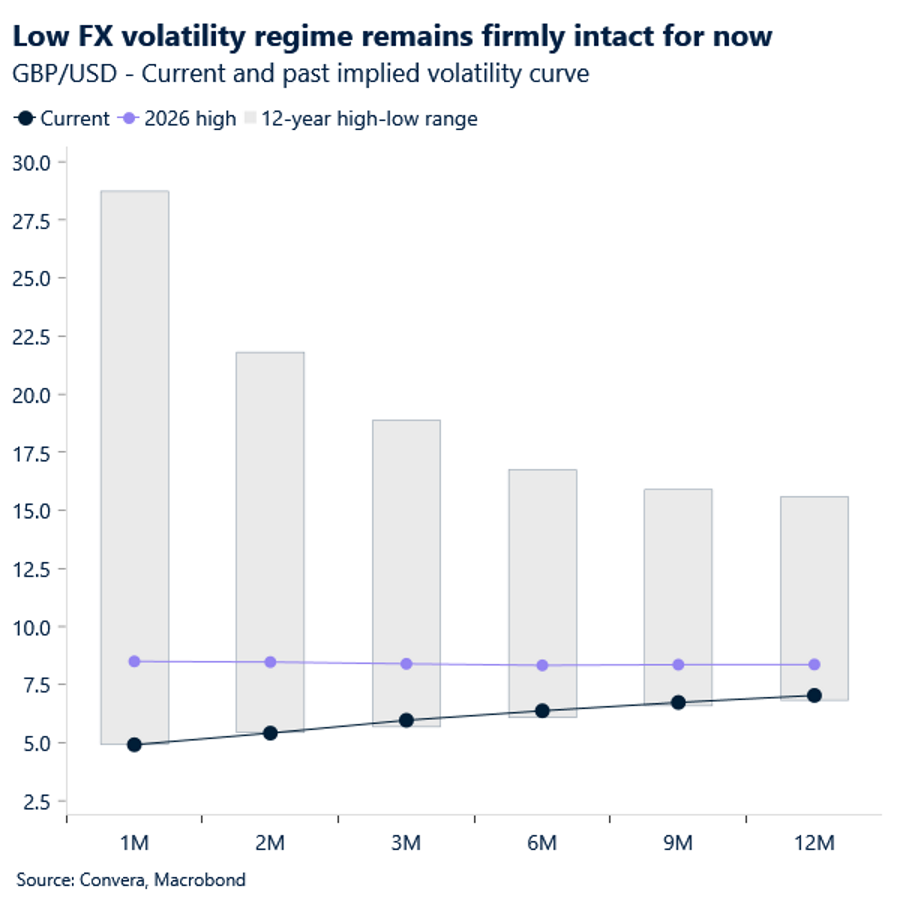
The key reason is that markets remain remarkably comfortable with risk. Despite simmering Middle East tensions and elevated oil prices, global equities continue to hover near record highs and volatility remains exceptionally subdued. GBP/USD realised volatility is roughly one-third below its 10-year average, whilst implied volatility across the curve remains near multi-year lows. Such conditions typically favour sterling’s carry appeal and high-beta characteristics.
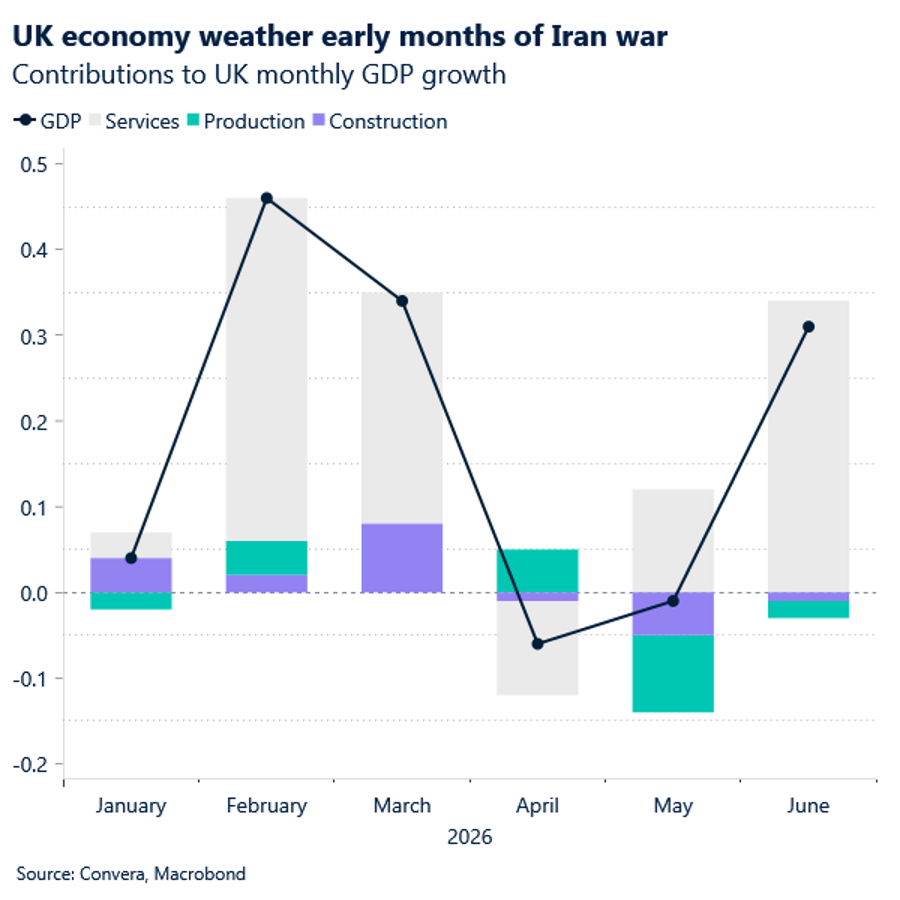
Taken together, these dynamics suggest sterling is currently trading more as a reflection of global risk and carry conditions than UK-specific fundamentals. Case in point, today’s GDP figures for June came in at 0.3%, much stronger than expected, meaning Q2 came in at 0.4% overall, yet sterling barely reacted. This reinforces the notion that external rather than domestic factors remain the primary driver of the pound.
Finally, UK politics will remain on the radar, with today’s Clacton by-election attracting attention beyond Essex as Nigel Farage faces a colourful field of challengers, including Count Binface.
Market snapshot
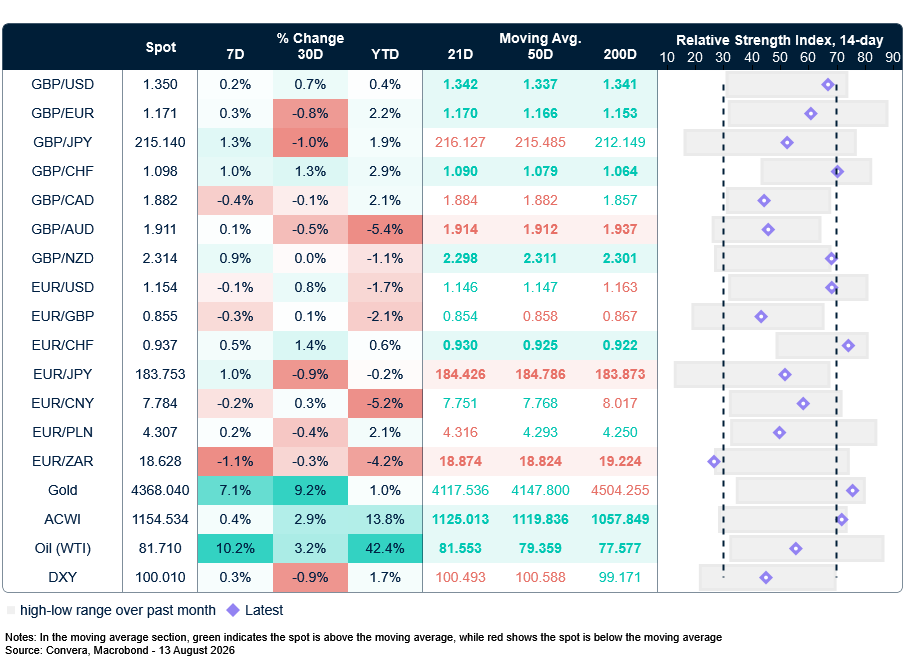
Table: Currency trends, trading ranges & technical indicators
Key global risk events
Calendar: August 10-14
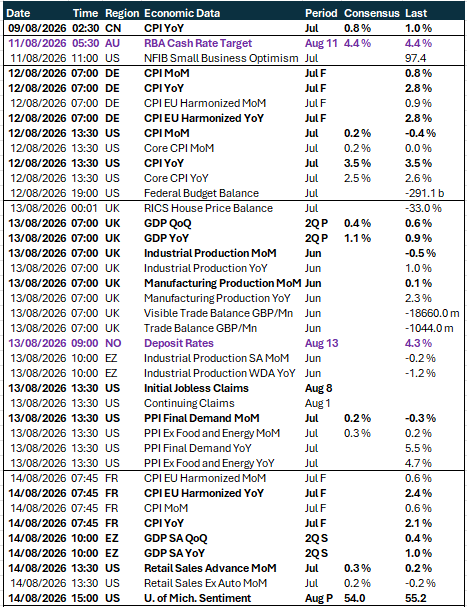
All times are in BST
Have a question? [email protected]
*The FX rates published are provided by Convera’s Market Insights team for research purposes only. The rates have a unique source and may not align to any live exchange rates quoted on other sites. They are not an indication of actual buy/sell rates, or a financial offer.