


Dollar stays soft as Fed easing bets grow
With the Fed decision just a week away, the first monthly decline in U.S. producer prices since April helped ease concerns that sticky inflation might derail the path to rate cuts. Markets reacted swiftly: equities hit fresh highs, two-year Treasury yields, most sensitive to near-term Fed policy, fell, and the US dollar edged lower as traders priced in three rate cuts for 2025.
August’s PPI fell 0.1% month-on-month, while July’s figure was revised lower. On a year-over-year basis, prices rose 2.6% – still elevated, but less threatening than feared. Beneath the headline, the picture is more nuanced. The drop was driven by softer services inflation, while goods-related cost pressures persist with core goods near the most elevated levels of the year.
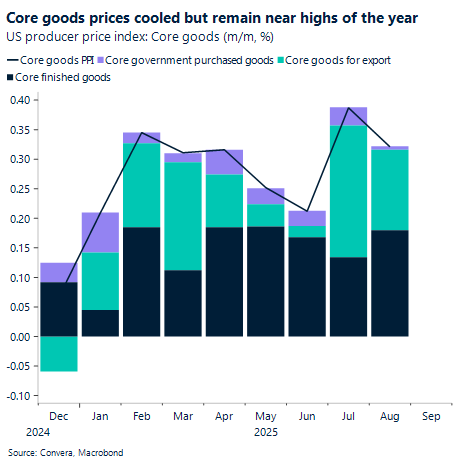
Moreover, the PPI miss is open to interpretation. Gradual tariff pass-through suggests inflation isn’t spiking yet – a welcome sign. But it may also reflect weakening domestic demand, raising questions about the broader growth outlook.
Today’s consumer price index (CPI) report will carry more weight and could induce more volatility. Survey data still points to underlying price stickiness, suggesting cost pass-through to consumers may accelerate. That could temper enthusiasm around the pace and depth of Fed easing. However, with last week’s labor data pointing to a slowdown and Tuesday’s sharp downward revisions, markets remain positioned for a resumption of the easing cycle. At this point, it’s no longer about if the Fed cuts – but how much and how fast.
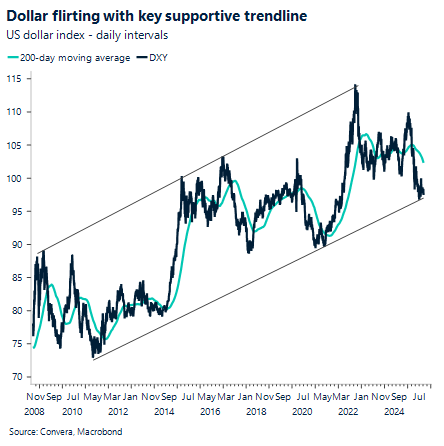
This sentiment shift also opens the door to renewed dollar weakness. Lower rates reduce hedging costs and could revive passive USD hedging flows – a theme that briefly dominated earlier this year. Taken together, softer data, dovish repricing, and structural flow dynamics – could see the dollar index break below a key supporting trendline and accelerating its decline.
Euro’s muted moves
As expected, EUR/USD remained subdued yesterday, despite a lower-than-expected PPI report suggesting the Fed may be more inclined to cut rates next week. With a Fed rate cut already fully priced in – and insufficient evidence (so far) to justify a larger 50 basis point move – there’s limited scope for further dovish pricing to support the euro. Barring significant surprises, we anticipate a similarly muted reaction following today’s CPI report.
Next comes the ECB policy meeting. In yesterday’s note, we outlined our expectations. Unsurprisingly, nothing appears poised to be materially market-moving.
We also believe that Tuesday’s reported Israeli strike on Doha, combined with Poland’s interception of drones – allegedly Russian – near its border with Belarus yesterday, adds a geopolitical layer that, via oil price channels, has capped euro’s upside. As a net importer of oil, the common currency remains vulnerable to energy-driven shocks.
While the Fed’s recent repricing of rate expectations may have helped EUR/USD establish a foothold above the 1.07 level – now a key support – the pair lacks clear catalysts to push higher this week. That said, We don’t rule out the possibility of minor dips into the now-familiar 1.16 territory.
Risk sentiment buoys sterling
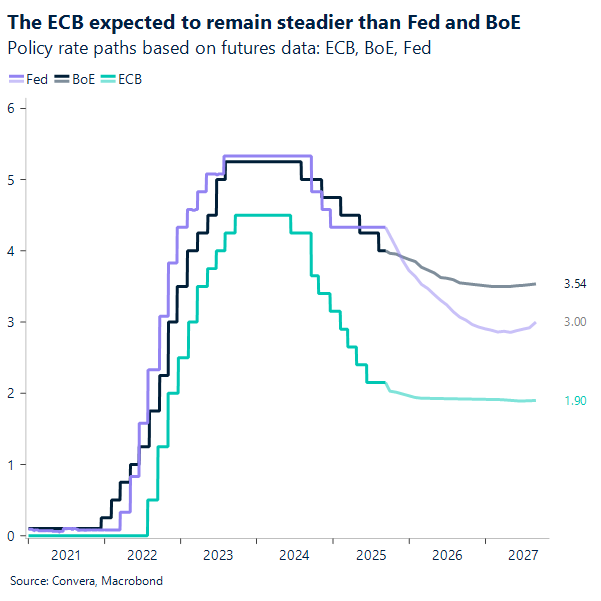
With few domestic catalysts, sterling continues to ride global risk sentiment as investors cheer prospects of Fed rate cuts. Gilt auctions have gone smoothly though this week, suggesting the UK can service its debt at the right price – helping calm nerves around elevated long-end yields.
Still, sterling remains caught between short-term optimism and deeper macro fragility. GBP/USD rebounded from fiscal-driven lows near $1.3333 last week, briefly testing $1.36 before reversing. The move was undermined by rising oil prices and wavering risk appetite amid renewed geopolitical tensions. However, soft U.S. PPI data reignited Fed easing bets, helping keep GBP/USD above $1.35. Technicals show neutral momentum, leaving room for further upside, but positioning data reveals a build-up in bearish GBP bets that price action has yet to reflect.
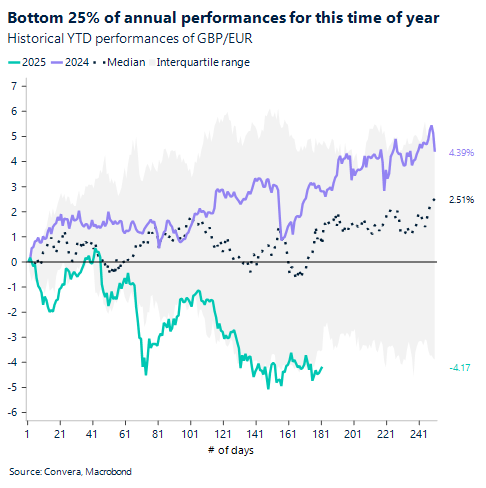
The UK’s stagflationary backdrop – marked by weak growth, sticky inflation, and fiscal uncertainty – continues to cap sterling’s appeal, even with its high-yield status. This dynamic is evident in GBP/EUR, which remains stuck below €1.16 and over 4% lower year-to-date despite recent BoE hawkish repricing.
CAD and AUD split paths versus the pound
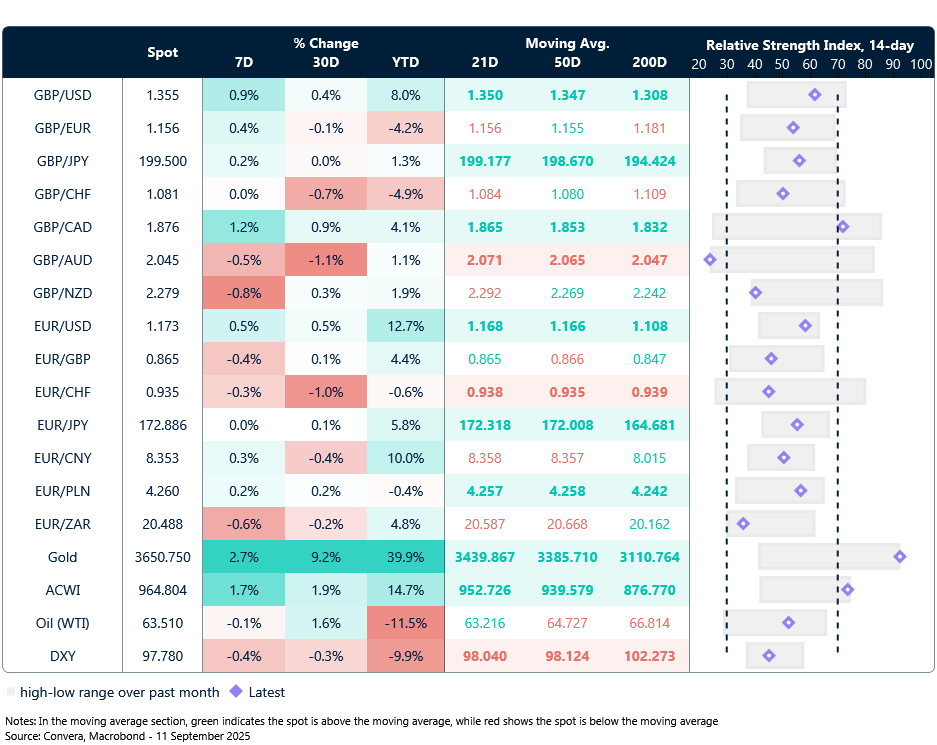
Table: Currency trends, trading ranges and technical indicators
Key global risk events
Calendar: September 8-12
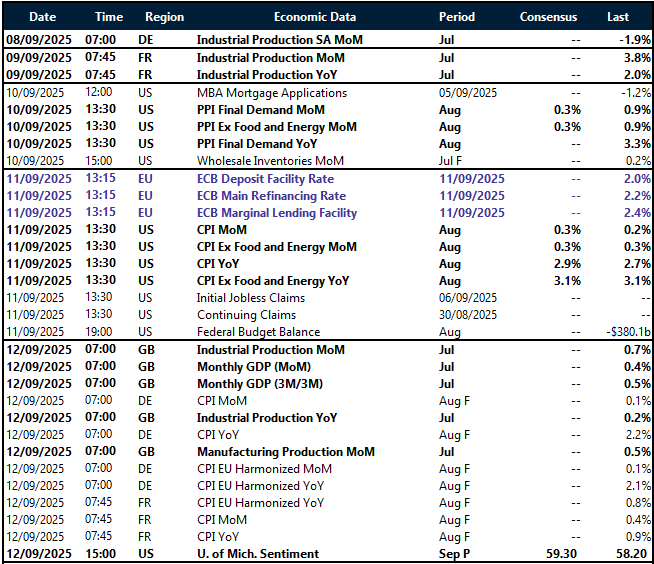
All times are in BST
Have a question? [email protected]
*The FX rates published are provided by Convera’s Market Insights team for research purposes only. The rates have a unique source and may not align to any live exchange rates quoted on other sites. They are not an indication of actual buy/sell rates, or a financial offer.