


Key Takeaways
- The dollar gains persist for five days amid rising oil prices and geopolitical tensions. Treasuries have moved higher through the week.
- The Canadian dollar hit a one-week low as US-Canada rate differentials widen, while investors watch tariff developments closely.
- Sterling corrects as fiscal policies under the new Burnham government impact market confidence, though inflation data shows cooling pressures.
- Oil prices remain a key factor; rising costs could influence the dollar’s strength and impact broader market sentiment.
USD: Dollar bid holds as geopolitics and rates keeps oil in focus
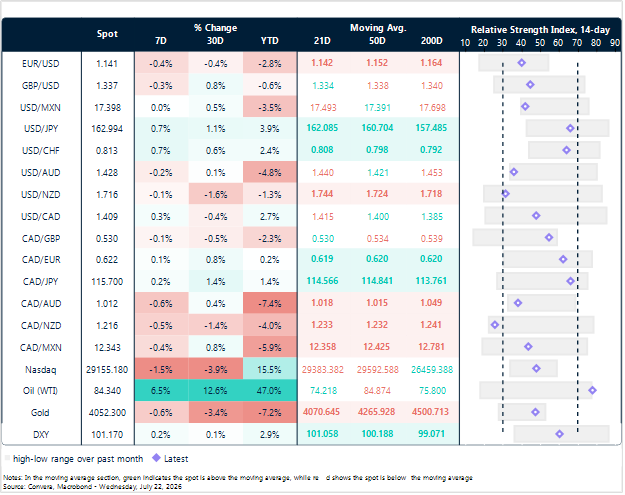
It’s been five consecutive days of dollar gains, as Brent and WTI move higher and the US–Iran relationship continues to deteriorate. Treasuries remain central to the dollar story. Yields have risen again this week, with breakevens, real yields, and term premia all contributing to the move. Last week’s dollar pullback was built on the idea that softer inflation would reduce near-term Fed hike risk and pull front-end yields lower, but Fed Chair Kevin Warsh’s pushback against a “mission accomplished” reading of the data has kept markets cautious. Inflation may still argue against additional tightening, but rates are not sending a clean sell signal for the dollar.
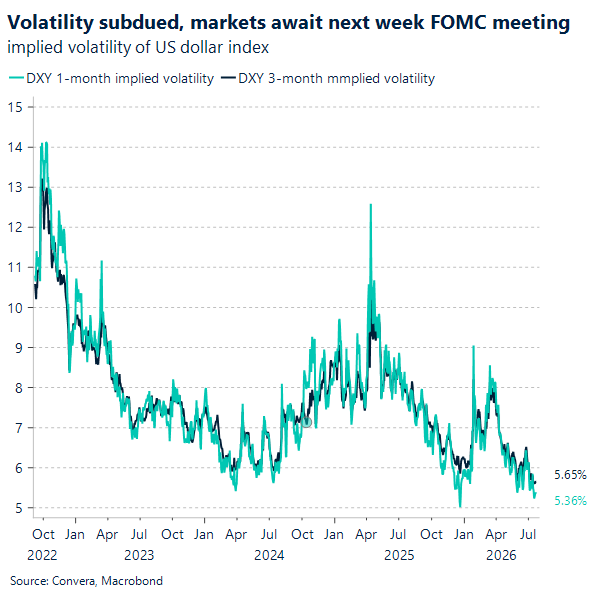
With little macro data and no Fedspeak this week, FX markets are taking more direction from the Middle East and energy markets than from the earnings tape, while volatility has remained subdued as expected. If geopolitical risks fade and crude stabilizes, softer inflation should leave the dollar more exposed as markets move further away from Fed tightening. But if oil keeps rising and stays above $90 a barrel, or if earnings trigger a broader risk-off move, the dollar could hold its bid through both inflation-risk repricing and safe-haven demand. For now, the data story points mildly lower for the dollar, but geopolitics are limiting the downside.
CAD: Loonie hits one-week low
The Canadian dollar’s move lower looks less like a clean tariff-premium story and more like a rates story for now. The 30-day window on the latest US tariff threat gives markets reason to treat this as another negotiating tactic rather than an immediate break in the trade relationship, particularly given the stop-start pattern we’ve seen around tariff threats over the past 17 months. Investors will likely wait for the next round of signals on whether Canada and the US move back toward dialogue or whether this hardens into something more durable.
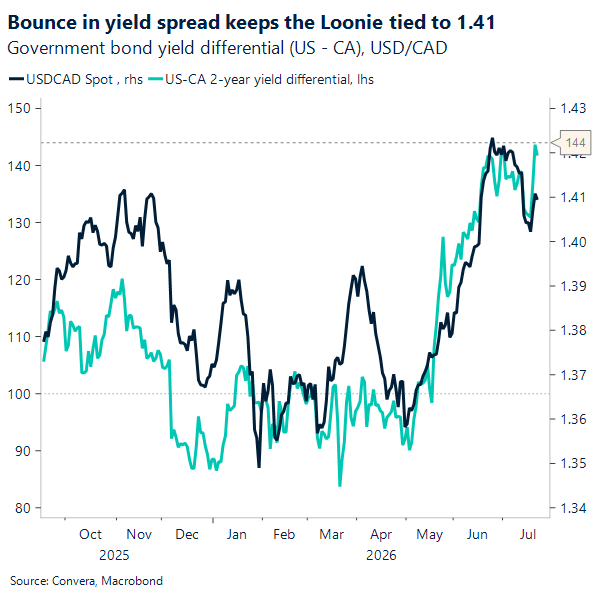
In the near term, the bigger driver for USD/CAD remains the rate differential. US yields have been more sensitive to the jump in WTI and Brent prices, lifting the front end of the curve and supporting the US dollar, while Canadian short-term yields have been comparatively quiet after a softer-than-expected inflation report. Canada’s June CPI cooled to 2.8%, below expectations, with the BoC’s preferred core measures also easing, which reduced the urgency for Canadian yields to follow the US move higher.
That fits the framework we laid out in our CUSMA report: CAD is still being traded less as a standalone trade story and more as a macro expression of rates, growth divergence, and policy uncertainty. Tariffs matter, but unless markets start to believe the 30-day threat will actually become a sustained policy shock, the currency is likely to keep taking its cue from yield spreads and the broader dollar tape.
GBP: Goodwill meets reality
Yesterday’s price action pointed to a sterling-specific correction rather than a broader macro regime shift. Equities were firm, volatility subdued, higher-beta currencies strengthened and gilt yields were broadly unchanged. That somewhat complicates the argument that markets are aggressively rebuilding a fiscal risk premium into UK assets. Instead, profit-taking following sterling’s strong run and a reassessment of how much goodwill has been extended to the new Burnham government appear the more likely drivers.
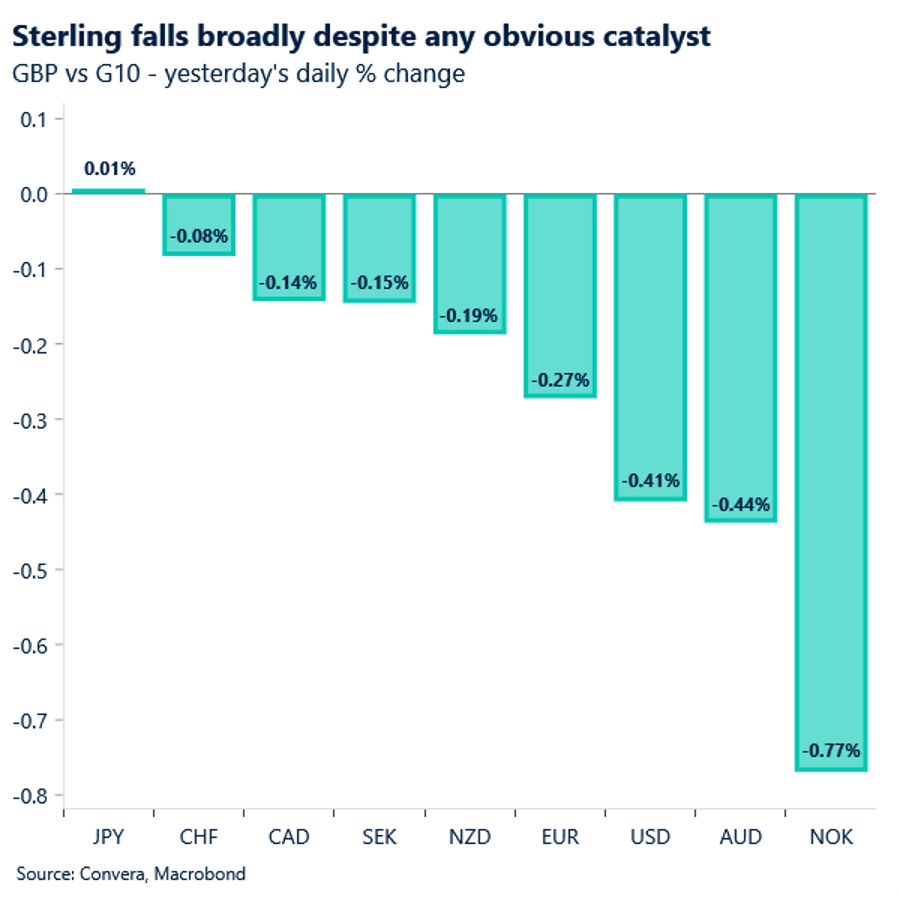
That said, if the move is indeed linked to Burnham’s unfunded spending pledge earlier this week, it offers an early reminder of how sensitive the pound may prove to fiscal policy under the new administration. GBP/EUR had recently reached a one-year high above 1.18 and looked increasingly stretched relative to rate differentials, leaving sterling vulnerable to a pullback. More importantly, the episode suggests that confidence in the UK’s fiscal trajectory remains conditional and could be tested much more forcefully should future policy announcements raise broader questions around borrowing, spending and fiscal discipline.
However, the UK’s fiscal credibility premium appears to have stopped widening since early 2025. In other words, markets still demand an additional premium to hold gilts, but they no longer appear to be treating the UK as an increasingly isolated fiscal outlier.
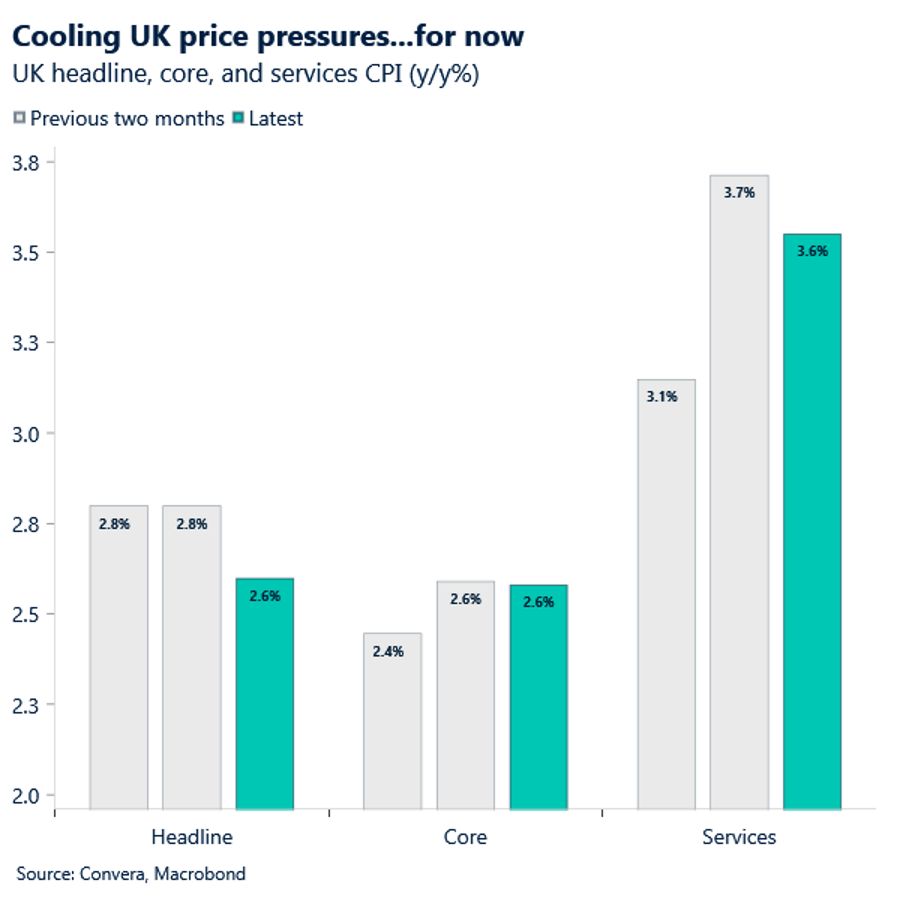
This morning’s inflation report offered some relief. Headline CPI slowed to 2.6% y/y from 2.8%, undershooting expectations, while core inflation steadied at 2.6%, a tick above forecast. Services inflation slowed to 3.6% but proved slightly firmer than forecast as well. Still, the broader message was one of cooling domestic price pressures. Under normal circumstances, such inflation figures would likely prompt a more meaningful reassessment of BoE expectations. However, the market’s attention remains firmly fixed on developments in the Middle East. Rising oil prices and the prospect of higher household energy bills from July mean investors are treating today’s data as more backward-looking than usual.
Indeed, although the BoE is expected to keep rates on hold next week, markets continue to price roughly one rate hike by year-end, with inflation expected to re-accelerate over coming months. With energy costs rising and geopolitical risks pushing commodity prices higher, investors continue to expect renewed price pressures in the months ahead. That should help anchor front-end gilt yields and preserve part of sterling’s yield advantage, even as growth momentum remains weak.
Market snapshot
Table: Currency trends, trading ranges & technical indicators
Key global risk events
Calendar: July 20-24
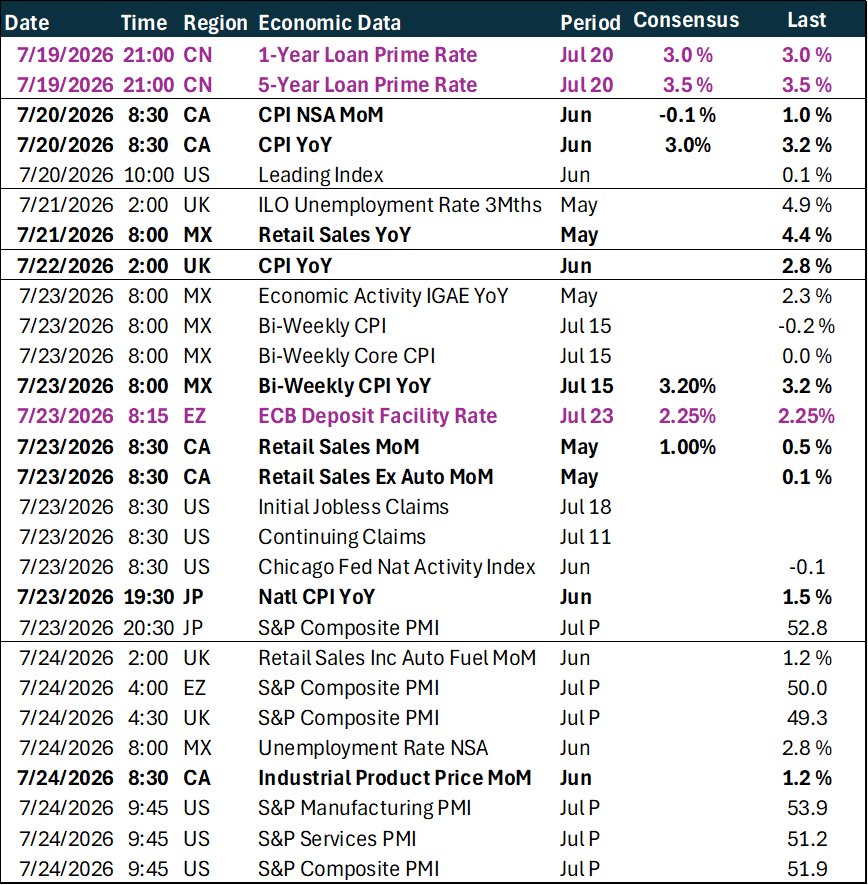
All times are in EST
Have a question? [email protected]
*The FX rates published are provided by Convera’s Market Insights team for research purposes only. The rates have a unique source and may not align to any live exchange rates quoted on other sites. They are not an indication of actual buy/sell rates, or a financial offer.