


USD: Data leaves room for both narratives
Finally, some data to play with: nonfarm payrolls increased by 119,000 in September, according to Bureau of Labor Statistics figures released yesterday, while the August and July figures were both revised lower, to ‑3k from 22k and to 72k from 79k, respectively. Meanwhile, the unemployment rate ticked up to 4.4%. The picture was mixed, giving both hawks and doves something to support their views. The dollar clearly leaned toward the latter, with the DXY edging lower before paring back losses, buttressed by haven flows as equity sentiment soured once more during the New York session.
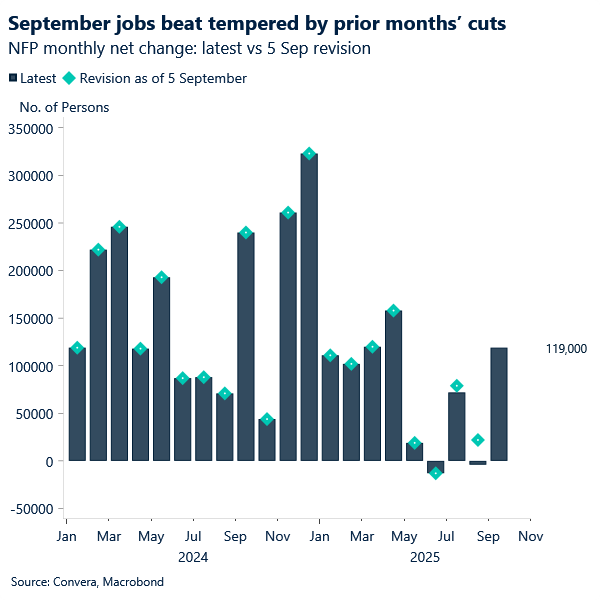
After all, the dollar has risen almost 1% week‑to‑date on a not‑so‑clear, data‑unfounded basis, so it made sense for the dollar’s push to exhaust itself at such elevated levels on the back of the less‑than‑convincing September jobs report.
Also, following Powell’s messaging at the October Fed meeting – stressing that the labour market was facing supply‑driven shocks tied to lower immigration rates – the weight naturally shifted more onto the unemployment figure. As a ratio, it can better capture such supply‑driven dynamics and offers a more “reliable” snapshot of the state of the US labour market.
That said, the participation rate also edged higher in September, to 62.4% (vs. 62.3% expected and prior). This rise tempers the severity of the higher unemployment print, since more people are “in the game” relative to the working‑age population. A larger labour force can mechanically lift the jobless rate when the pool of seekers expands faster than job creation itself.
The Fed will now have to rely on this report alone before the December 9–10 meeting, with the November release – incorporating parts of the October one – scheduled for 16 December, only after the Fed convenes.
Yesterday’s outcome can certainly amplify frictions within an already torn, hawkish‑leaning FOMC. From here, focus will shift to weekly claims reports and other indicators capturing broader aspects of the economy to help chart a more directional path ahead, and justify a more sustained exploration of above-100 waters.
CAD: Nothing but Dollar strength
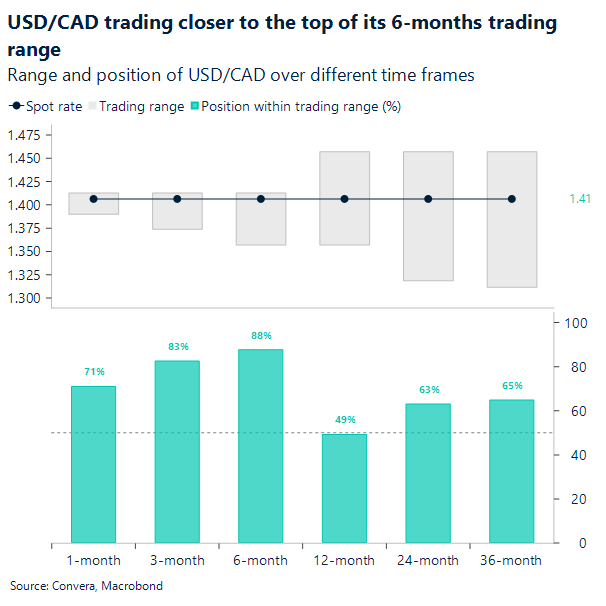
Broad US Dollar strength largely explains why the Loonie remains pinned near the upper edge of its six-month range. With the Federal Reserve’s next steps still shrouded in doubt, the Greenback’s path of least resistance has naturally been upward.
Frankly, the picture is murky, and the Fed is essentially flying blind into its final meeting of the year. Even strong jobs data and Nvidia beating expectations haven’t been enough to calm market jitters. Investors are desperate for clarity on the US labor market, but a clearer view is out of reach. Due to the government shutdown, the October employment report was canceled, and the November data isn’t scheduled for release until December 16, awkwardly, that is a week after the Fed meets on December 9–10. A market with no clear macro anchors has left investors deleveraging positions in the crypto market. After hitting an all-time-high at $126K just a few weeks ago, Bitcoin is trading at 81K.
Lacking this critical feedback loop, the central bank is navigating in the dark, which further lowers the odds of a December rate cut. Consequently, even though domestic macro data has stabilized, sheer Dollar strength is keeping the Loonie firmly above 1.40. Next week, Q3 GDP (Fri) will be on the spotlight.
GBP: Markets balk at full BoE cut
Sterling was up across the board yesterday. While not a textbook high-beta currency, GBP often benefits from risk‑on rebounds – such as yesterday’s brief equity rally following Nvidia’s earnings beat. GBP’s weaker performance against traditional safe havens this morning, JPY and CHF, clearly captures the shift in market mood.
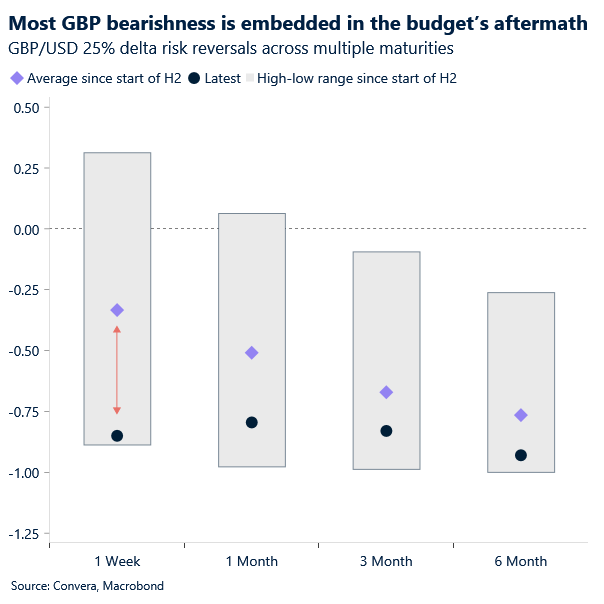
At the same time, amid sterling’s persistently bearish price action ahead of the budget, quieter sessions like yesterday often invite profit‑taking while leaving the broader bearish setup intact – a technical wash‑up that enables GBP sellers to re‑engage at better levels.
This morning, sellers were given additional evidence to bolster their bearish conviction: retail sales data came in below expectations. On a m/m basis, and excluding volatile auto fuel sales, the figure for October was ‑1% versus -0.5% estimated. That said, markets still seem unable to fully price a cut, even in light of recent days’ softer batch of data. Probabilities remain stuck around 80–90%. We believe that this week’s inflation easing was not convincing enough, given how critical it is for the BoE to justify more aggressive easing.
Also, clear connections have been drawn between BoE easing and the Autumn budget event, with investors waiting to assess the growth‑dampening potential of upcoming policies before recalibrating the significance of the soft data received – and, in turn, the BoE’s easing path.
JPY bears speak loudly
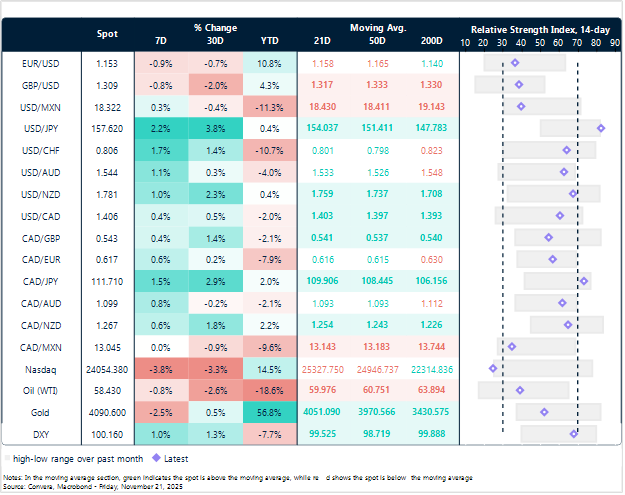
Table: Currency trends, trading ranges and technical indicators
Key global risk events
Calendar: November 17-21

All times are in EST
Have a question? [email protected]
*The FX rates published are provided by Convera’s Market Insights team for research purposes only. The rates have a unique source and may not align to any live exchange rates quoted on other sites. They are not an indication of actual buy/sell rates, or a financial offer.