
The first half of 2026 has been driven by global shocks rather than steady trends. Geopolitical tensions, oil price swings, political surprises, and AI-driven volatility left investors reacting to events, not fundamentals.
As we enter back half of the year, that may be shifting. Progress in US–Iran diplomacy and easing pressure in the Strait of Hormuz have pushed oil lower, reversing earlier trades. Is your business prepared for what’s next?
Download our Global FX Outlook for July now.
What are the key FX trends for June 2026?
Three critical factors are steering currency trends this month:
- Interest-rate differentials are driving FX, as markets shift away from oil and geopolitics toward policy, yields, and central bank expectations.
- US dollar strength dominates, supported by higher-for-longer Fed expectations, resilient growth, and widening yield advantages versus other G10 currencies.
- Oil and inflation pressures are easing, shifting central bank focus toward growth and making FX performance more selective and rate dependent.
Key market themes to watch
A stronger footing for the US dollar
After a difficult 2025, the US dollar has regained traction. While lower oil prices have reduced some of the earlier support linked to geopolitical risk, the greenback continues to benefit from solid US macroeconomic data and expectations of tighter monetary policy.
Recent developments at the Federal Reserve have reinforced this outlook. Markets have adjusted to a more persistent “higher-for-longer” rate environment, narrowing expectations for cuts and supporting the dollar through stronger real yields and improved policy credibility.
Oil moves back toward pre-conflict levels
The de-escalation of tensions in the Middle East is reshaping the energy outlook. A memorandum of understanding between the US and Iran, combined with ongoing negotiations, has helped restore supply confidence and reduce oil prices from their earlier peaks.
As oil retraces, its influence on FX is diminishing. This reduces support for commodity currencies and eases inflation concerns, encouraging central banks to rebalance their focus toward growth.
A more balanced central bank outlook
During the height of the energy shock, central banks prioritized inflation risks, maintaining a strong hawkish bias. With oil prices now materially lower, that balance is shifting. Policymakers are increasingly weighing inflation against softer growth dynamics, particularly in parts of the UK and Eurozone.
The result is a broad unwinding of hawkish expectations across several economies, leaving FX markets more dependent on relative rate dynamics rather than a synchronized policy stance.
How shifting rate expectations are impacting FX markets
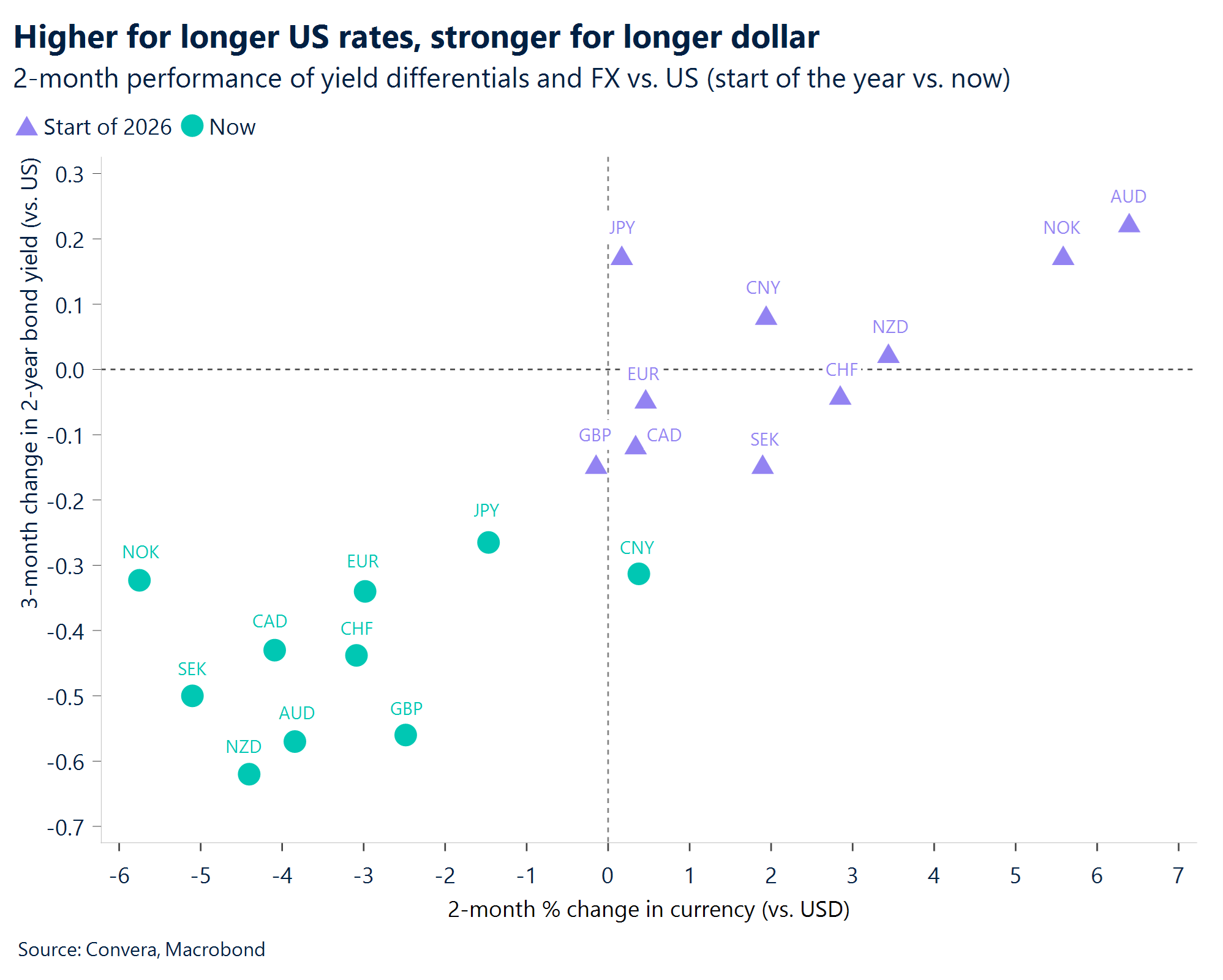
One of the clearest developments heading into July is the return of interest-rate differentials as the primary driver of currency markets. After a period where geopolitical events and energy prices dominated, FX behavior is realigning with relative yield movements.
Falling oil prices have helped ease inflation concerns, allowing central banks to adopt a more balanced approach. At the same time, softer growth signals in some regions are reducing the scope for further tightening. This combination has made currency performance more selective, with markets increasingly differentiating between economies based on policy outlooks and relative yields.
The US dollar has been a key beneficiary of this shift. Markets have repriced expectations for a more hawkish Federal Reserve, widening yield differentials in the dollar’s favor and reinforcing its position within the current FX cycle.
How Fed policy repricing is driving US dollar strength
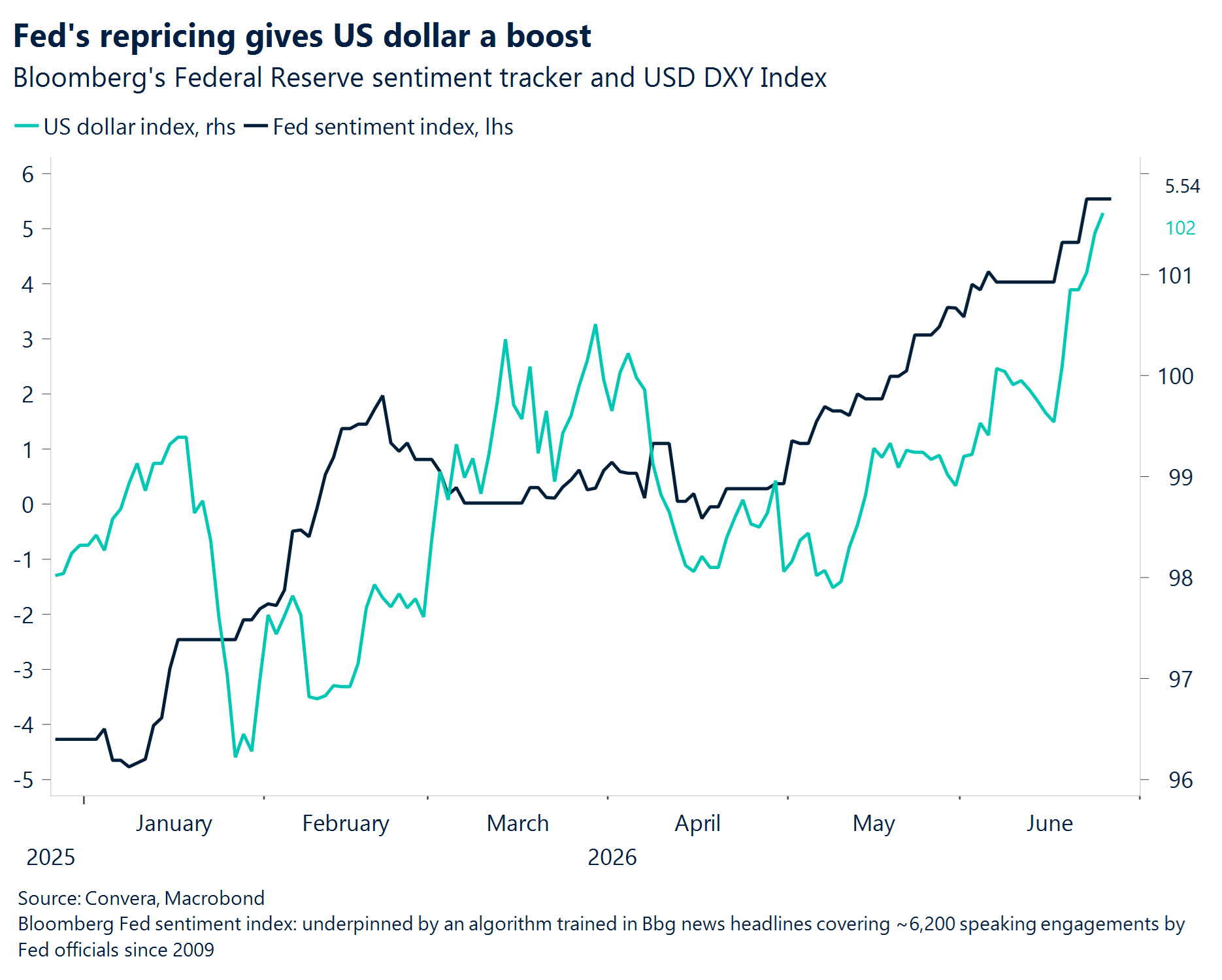
June marked an important turning point for the US dollar. Early in the month, the currency remained influenced by geopolitical developments and oil price moves. However, stronger US data, including firmer labor and activity indicators, began to shift expectations around monetary policy.
The pivotal moment came with the Federal Reserve’s latest policy meeting, where the removal of an easing bias and a more cautious policy tone forced markets to reassess the path for interest rates. This triggered a repricing at the front end of the curve, supporting the dollar through improved rate differentials.
By the end of June, the dollar had moved to new highs within its recent range, signaling that rates and policy expectations had overtaken oil and geopolitics as the dominant drivers of FX.
What is the US dollar outlook in July 2026?
The durability of the dollar’s recent strength will depend on whether current momentum can be sustained. The “higher-for-longer” narrative is gaining credibility, supported by resilient US growth, a still-solid labor market, and attractive returns on US assets.
However, risks are emerging. Investor positioning in the dollar appears increasingly crowded, and the supportive effect of higher oil prices is fading as the energy shock unwinds. There are also signs that the pace of positive US data surprises may moderate.
This suggests that while the broader trend remains constructive, further gains may require fresh catalysts rather than relying on momentum alone.
Navigating FX trends for July 2026
As FX markets move into the second half of 2026, the shift back to fundamentals is becoming clearer. Interest-rate differentials, central bank policy, and relative growth outlooks are once again shaping currency movements, while the influence of oil and geopolitics begins to fade.
While this creates a more structured environment for businesses, the situation is still evolving. The return of rate-driven FX dynamics brings greater clarity but also reinforces the need to stay agile as policy expectations and market sentiment continue to shift.
Download the Global FX Outlook for July 2026 for a deeper analysis of the trends shaping currencies and what they could mean for your cross-border strategy.