
Written by George Vessey – Lead FX Strategist
Relief that US President Donald Trump might delay tariff plans has sent equities in the US and Europe closing in on record highs. The US dollar has depreciated this week, but recent weakness may be a short-term correction as opposed to a sustained change in trend, as investors still mull over the timing of Trump’s tariffs. EUR/USD hit a 5-week high and GBP/USD hit a 3-week high on Wednesday, but further gains look limited in the near-term. Coming up, important preliminary PMI data from advanced nations will be published on Friday. Plus, the Bank of Japan is expected to raise interest rates, potentially supporting the struggling Japanese yen – down over 1% against GBP and EUR this week.
Trump targets China, markets yawn
There was little reaction across financial markets after US President Donald Trump made another threat to impose 10% tariffs against China at the start of next month and cited concerns about the US trade deficit with the EU. Although “actual” volatility may be restrained, “expected” volatility remains elevated, especially across the FX space, with traders betting against CNY, CAD and MXN.
Markets were on high alert for sweeping tariffs and this was arguably built into the price of the strong US dollar. Some might argue we’re seeing a typical case of “buy the rumour sell the fact”. Tariffs have been flaunted by Trump, sending ripples through the likes of the Canadian dollar and Mexican peso, but both are back at levels seen at the end of inauguration day. We think it’s more likely that investors were overestimating the aggressiveness of Trump’s trade policies so early on. Thus, with no immediate catalysts to drive a major shift higher in the dollar, the US currency could be a at risk of depreciating further if Trump continues to underwhelm with his tariff threats. But is this tactical correction of the dollar or the beginning of a changing trend?
Although many peers rose 1% or more versus the USD on inauguration day, they have room to climb much further given how much they are down since the US election in November last year. However, with tariffs merely delayed coupled with stalling disinflationary progress weakening the Fed’s bias to cut rates – favourable rate differentials should keep the USD supported for now.

Explaining the divergence
Kevin Ford – FX and Macro Strategist
Let’s pause on tariff talks. Since mid-2024, the 10-year US Treasury and the US DXY index have closely correlated. As the Fed’s cutting cycle began last year, the dollar weakened. However, since September 2024, the 10-year Treasury has surged by 100 basis points, and the dollar has followed suit. This movement wasn’t just driven by deregulation hopes from the Trump administration and a Republican sweep. The macro data supports this narrative: the US consumer is strong, the labor market is robust, and GDP growth remains solid. On top of this, corporate profits are near all-time highs as a share of GDP, and AI enthusiasm keeps US equity markets elevated. Economists now see only a 22% chance of a US recession in the next 12 months, the lowest probability since January 2022.
The key question for 2025 is whether the Fed will cut rates once or twice. However, there’s a risk that good news is no longer good news and the US economy’s growth could force the Fed to resume hiking rates. Wall Street CEOs, big corporations, and small businesses are excited about Trump’s economic agenda. If approved and implemented soon, it could significantly boost the economy and keep the USD strong, reinforcing the US exceptionalism narrative. Potential derailments, such as a China comeback or a resurgence in Germany and Europe, seem unlikely now.
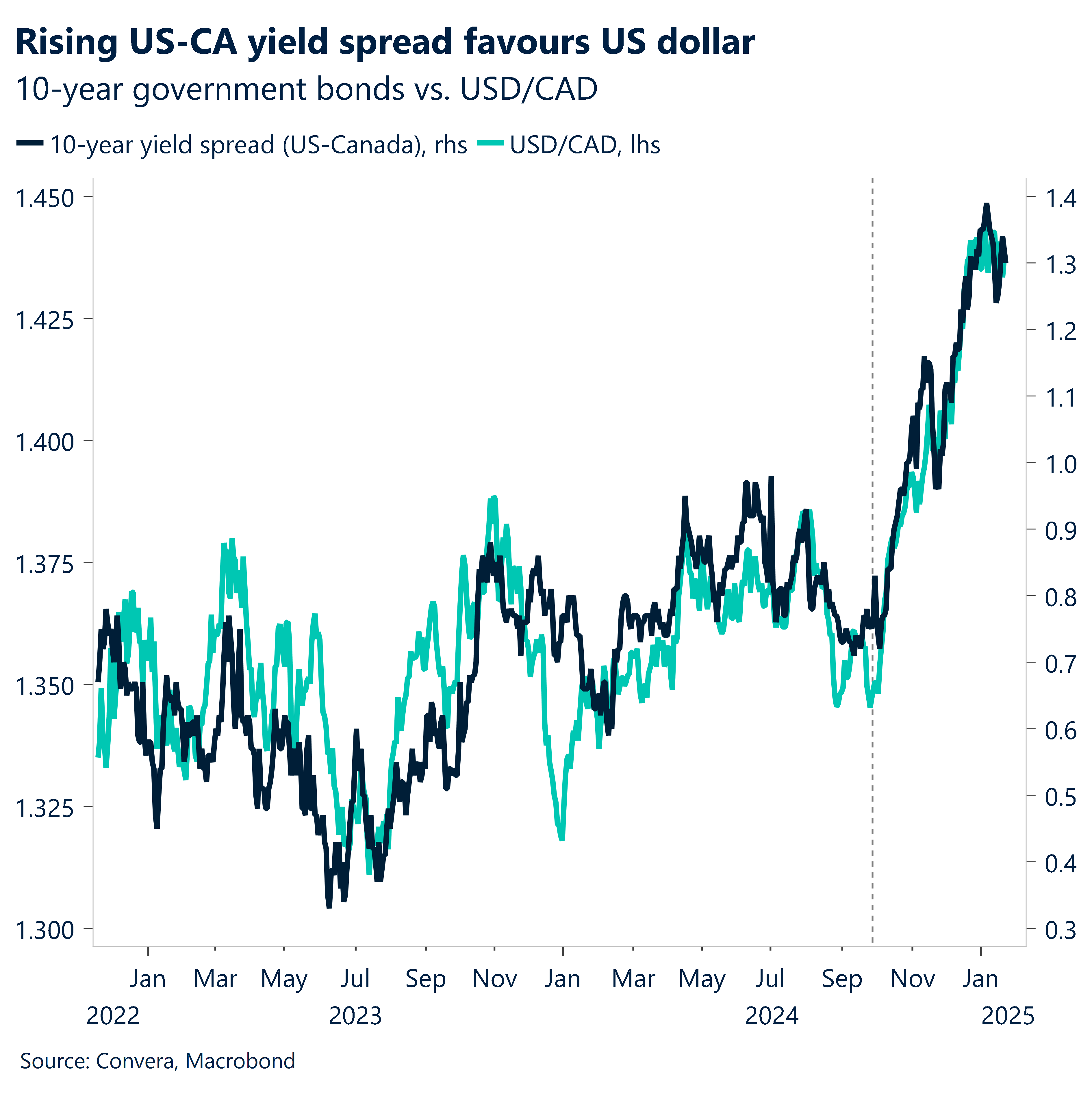
This partially explains the monetary policy divergence between the US and Canada, which has pushed the spread between the US 10-year Treasuries and the Canadian 10-year note to near all-time highs (130 basis points) and the Loonie to a five-year high. Canadian political instability, tariff threats and economic fundamentals contribute to a negative macro-outlook and monetary policy divergence, keeping the USDCAD on edge.
Euro hits 5-week high; has it broken downtrend?
EUR/USD has climbed almost 3% since hitting over 2-year lows last week. The currency pair is hovering near its level of 2025 and is on track for its biggest weekly rise in over a year.
From a wider lens, the euro is still around 7% lower than its 2024 high of $1.12. Whilst it appears to have broken out of its 4-month downtrend channel – a close above the 50-day moving average at $1.0436 will be key in determining whether the pair can extend towards $1.05 in the short term.
What’s driving this euro strength? It’s more to do with US dollar weakness at this stage, as investors react to President Donald Trump implying there is room to negotiate on tariffs. EU officials also responded with willingness to negotiate. This is helping to boost global risk appetite and reduce the trade risk premium in EUR/USD, allowing the pair to climb higher. But are market participants being too complacent given that the Eurozone remains vulnerable to potential US tariffs down the line?
The risk of the pair dropping below the parity level has certainly lessened, but we cannot state this with conviction given the unpredictable nature of Trump. Moreover, growth and rate differentials still favour the dollar, so it’s hard to bet on a meaningful reversal of the US currency’s fortunes.

Pound near 5-month low against euro
GBP/USD is over1% higher this week, but remains trapped in a downtrend channel, two cents below its 50-day moving average and five cents below its 100- and 200-day moving averages. GBP/EUR, down over 2% this year, continues to linger near its 5-month low of €1.18 having broken below its key aforementioned moving averages this month.
Due to the uplift in global risk appetite this week, amid ambiguity over Trump’s tariff plans, there has been increased demand for risk-perceived currencies. Hence, sterling has appreciated against the typical safe havens – USD, JPY and CHF. However, higher-beta FX like NOK, SEK, AUD and NZD have all outperformed the pound this week. The euro also remains defiant, but we’re sceptical about whether the downtrend has legs from here. Poor UK economic data of late means the Bank of England (BoE) is almost certain to cut interest rates by 25 basis points to 4.5% in its policy meeting in February, but the European Central Bank (ECB) is expected to cut next week too. We’re not concluding that rate differentials suggest GBP/EUR should be trading higher, rather, this should be more a supportive factor preventing much more downside risk for the pair.
As for GBP/USD, it’s trading about 7.5% below its 10-year average near $1.32, which is also close to where UK-US rate differentials suggest the pair should be trading. However, this isn’t enough at this stage to adjust to a more bullish-pound narrative, though it could help should the US (or UK) cyclical-narrative turn.

EUR outperformer across G10 FX this week
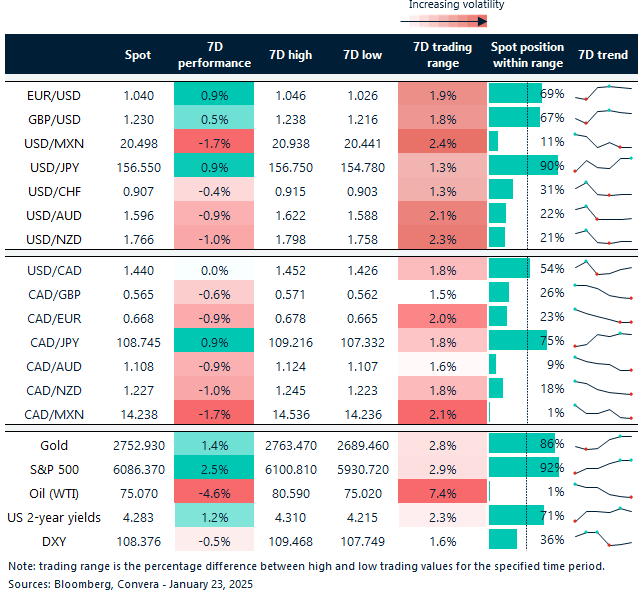
Table: 7-day currency trends and trading ranges
Key global risk events
Calendar: January 20-24
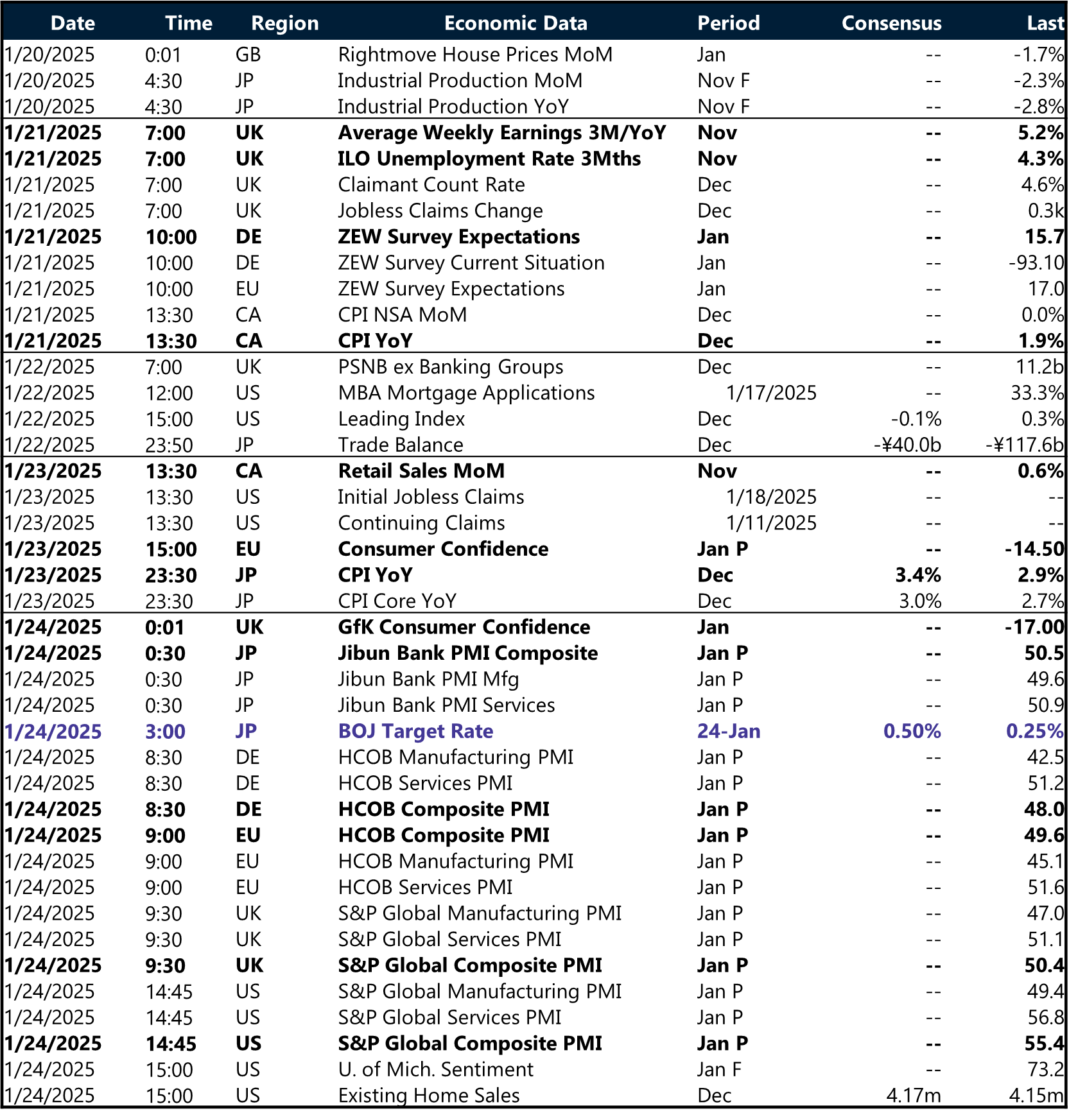
All times are in GMT
Have a question? [email protected]
*The FX rates published are provided by Convera’s Market Insights team for research purposes only. The rates have a unique source and may not align to any live exchange rates quoted on other sites. They are not an indication of actual buy/sell rates, or a financial offer.