
Check out our latest Converge | Podcast on Spotify covering the monumental shift in sentiment and Fed pricing caused by a string of better than expected US macro data. With volatility on the rise again and geopolitical risks looming, we explore what lies ahead in the coming weeks.
Written by Convera’s Market Insights team
Fed hawks roam free
Boris Kovacevic – Global Macro Strategist
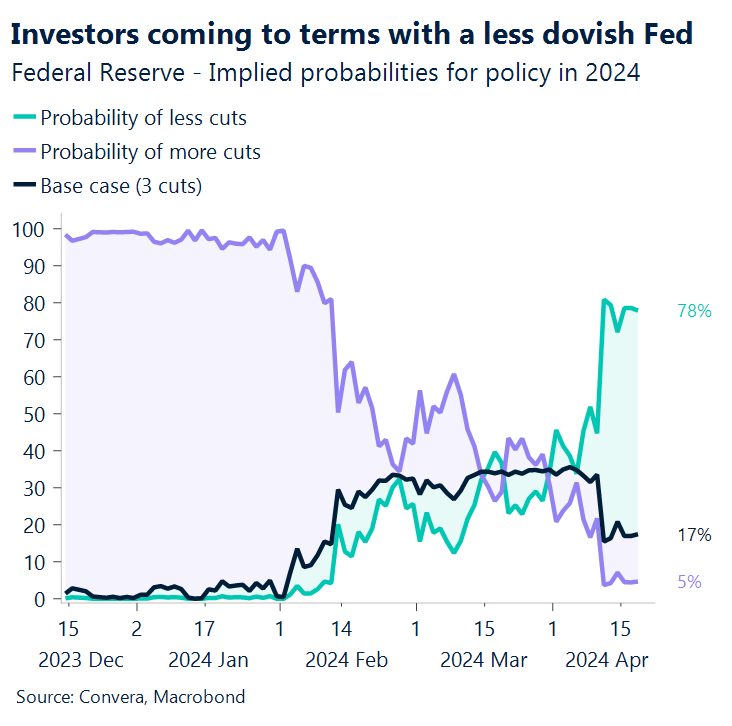
The US dollar gained against all but one G10 currency in yesterdays trading as better than expected tier two economic data and hawkish Fed speak supported the Greenback once more. The dollar has been able to rise in six of the last seven sessions and is up around 4,6% so far this year. The Philadelphia Fed Manufacturing Index was able to stay in positive territory (15.5) for a third consecutive time, rising to the highest level in two years in April. Another report showed initial jobless claims held steady at 212 thousand, suggesting low levels of firing.
While not market moving, both prints suggest that the themes of (1) the manufacturing sector bottoming and (2) labor markets remaining resilient continue to play out. They also fit nicely into the broader picture of a still robust US economy, which has caught the attention of policy makers. Fed officials have started embracing the string of surprisingly strong data in recent speeches by being more hawkish. Mester and Bostic said that rates can be higher for longer and that easing would be a possibility at the end of the year.
Fed Governor Williams went further and suggested that a hike is not out of question if inflation continues surprising to the upside. The rhetoric has changed within the Fed and markets are adjusting to this reality by supporting the dollar and selling government bonds. This is most visible at the front end of the yield curve with the 2-year yield likely to rise for a fourth consecutive week, trading just shy of 5%.
No data is scheduled to be released today and only one Fed official is expected to speak. Volatility should be driven by non-US events. Geopolitics remains front and center. Israel attacked Iranian targets overnight, leading to a brief spike in oil prices. However, the Iranian government downplayed the offensive as no major targets have been hit. The news flow surrounding the event will have to be watched today
Pound sets a new low for the year
Boris Kovacevic – Global Macro Strategist
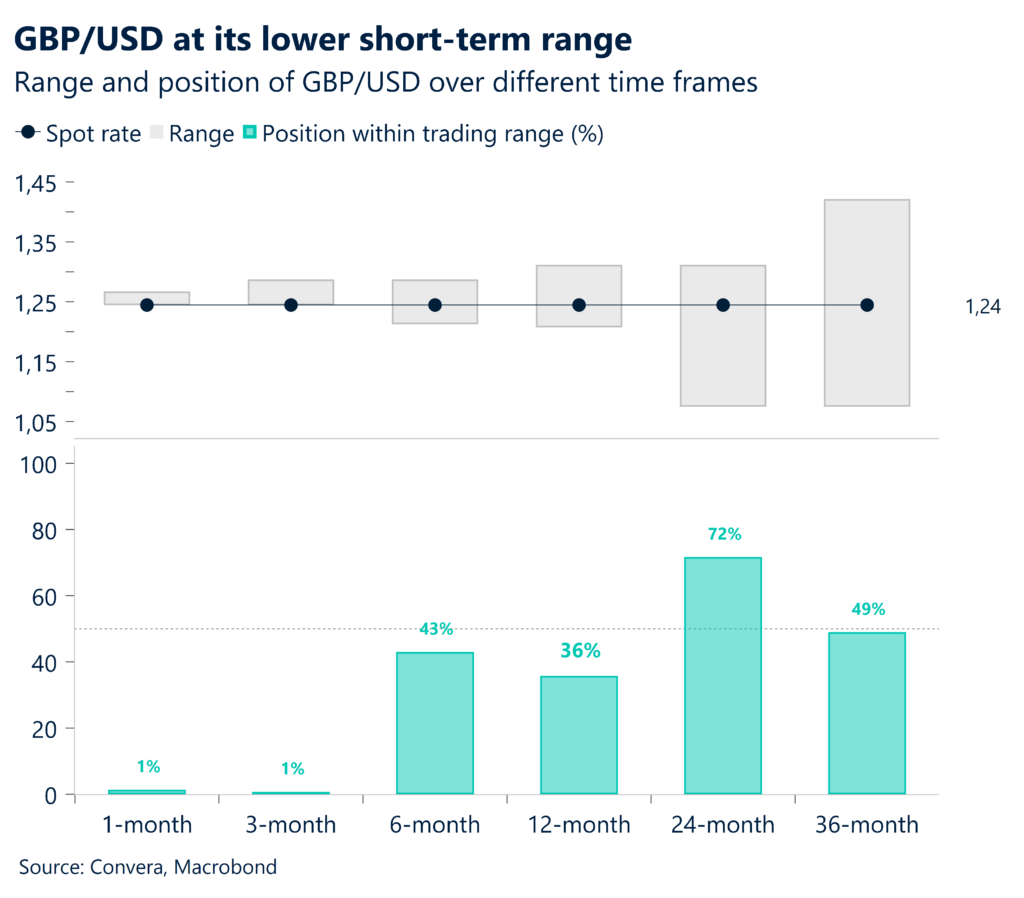
Retail sales in the United Kingdom for the month of February missed expectations as consumers pulled back on spending. Headline retail sales stagnated on a monthly basis, while the core figure, stripping out volatile auto motor fuel sales, fell unexpectedly by 0.3%. The British pound fell to its lowest level this year after the data miss and spiking geopolitical tensions in the middle east, breaking through the $1.24 level briefly. Still, the pound is holding up reasonably well against the dollar with a year-to-date loss of around 2.4%, while the US Dollar Index is up 4.5%.
As policy easing bets for both the Fed and Bank of England have been pared back in recent times, the pound faired better than other currencies. Flash PMIs and consumer confidence next week will be the main events on the UK macro front. However, the US inflation print next Friday will most likely overshadow any regional events.
Investors are still trying to gauge how much policy easing policy makers will deliver this year. The recent stickiness of wage growth in the United Kingdom has given officials a reason to communicate a delay of rate cuts. Nonetheless, the jump in unemployment left a bitter aftertaste as it highlights tight monetary policy working its way through the system and the labor market.
Euro derailed by ECB comments
Ruta Prieskienyte – FX Strategist
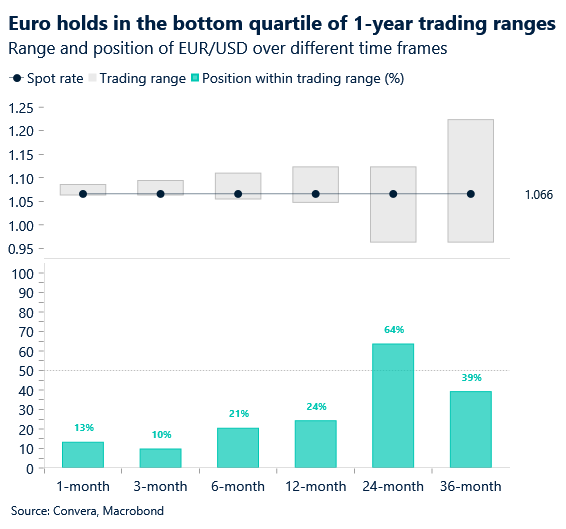
The euro was looking to stage a recovery on the back of revived risk sentiment during Thursday’s trading session, touching the daily high of $1.069 against the US dollar, but was stopped in its tracks after ECB’s Villeroy said bar a major surprise “we should cut rates at the next meeting.” EUR/USD swiftly erased the early gains and continues to trade close to its 5-months lows. As of early trading hours today, the pair is under bearish pressure on growing Middle East concerns with Israel launching a missile strike on Iran. The euro briefly plunged to $1.0611 tracking a global selloff in risk assets, but the move faded shortly after.
On the monetary policy front, the French policymaker expressed concern that there was a risk the ECB might be too late to stave off an economic slowdown if it waited too long before lowering interest rates. The comment contrasted the more subtle tones from other Governing Council member, who remain more concerned with the risk of easing rates too soon, rather than too late. A growing number of GS members flag rising oil prices as an emerging threat to reinflation. As a net oil importer, Eurozone is vulnerable to oil price shocks. Since the start of the year Brent crude futures climbed to $90/barrel early April on rising geopolitical tensions in the Middle East and continue to trade over 9% up on YTD terms. Lagarde’s attempt to keep her options open has not gone according to plan, with the markets positioned for cuts choosing to align more closely with the dovish rate outlook. The money market implied probability of a 25bps cut in June remains largely unchanged around ≈87%.
As the momentum in dollar’s April rally wanes, the key question now is whether this is a reversal or just a temporary pullback in an ongoing trend? The Relative Strength Index (RSI) has moved out of an oversold territory, giving a soft buy signal which saw EUR/USD appreciate from the floor of $1.0601. However, it is too early to draw conclusions as the near-term trend remains bearish. In the absence of further positive domestic macro news and with elevated geopolitical uncertainty supporting safe haven demand, we could see the pair drift lower with $1.0700 acting as a key short term resistance barrier.
Risk assets sell off on Israel-Iran conflict
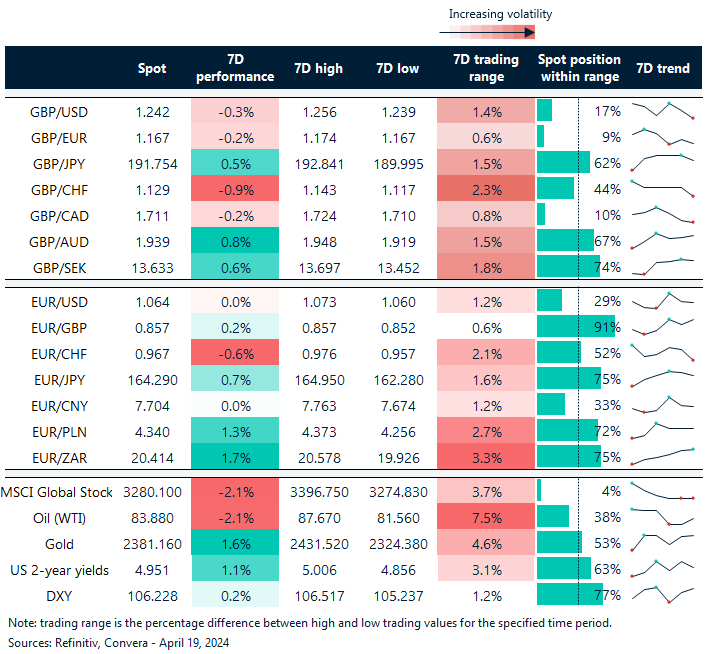
Table: 7-day currency trends and trading ranges
Key global risk events
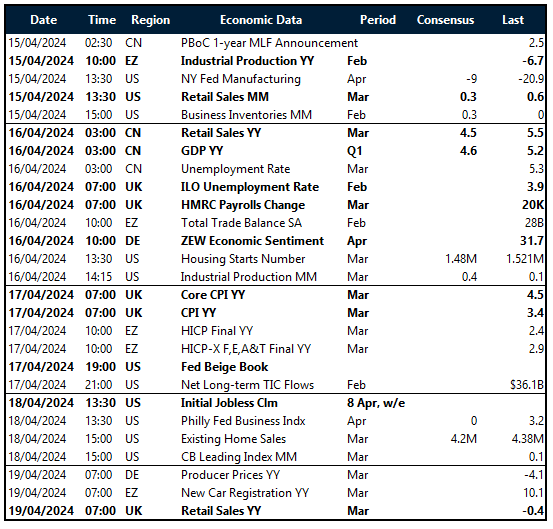
Calendar: April 15-19
Have a question? [email protected]
*The FX rates published are provided by Convera’s Market Insights team for research purposes only. The rates have a unique source and may not align to any live exchange rates quoted on other sites. They are not an indication of actual buy/sell rates, or a financial offer.