


Key Takeaways
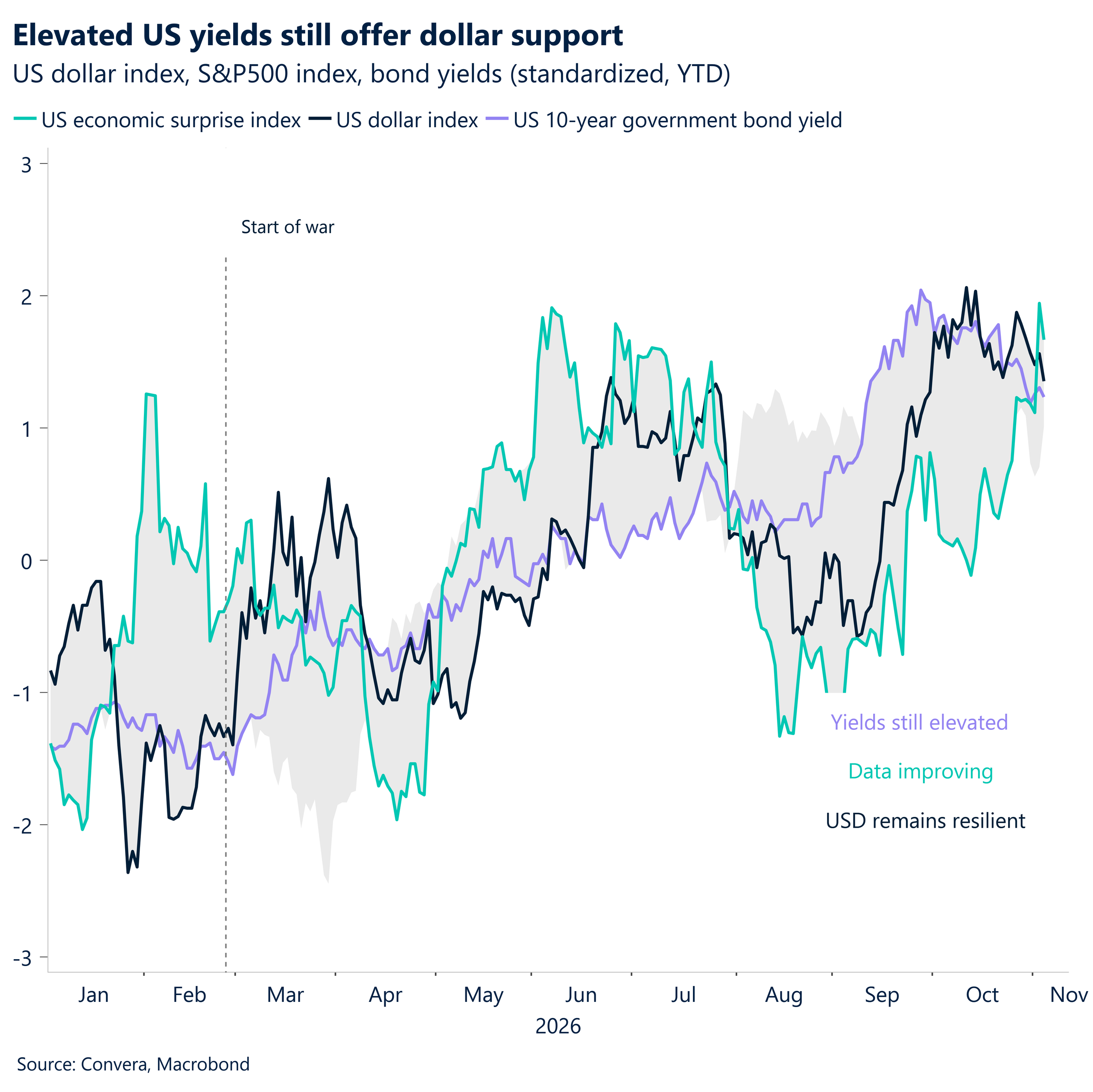
- The US dollar has stabilized near 101.5, but lower oil, AI investment risks and tighter fiscal constraints leave the post-midterm outlook unsettled.
- Foreign investors hold more than $20tn in US equities, making an AI-led correction a potential threat to both technology shares and the dollar.
- Eurozone inflation rose to 4.0%, yet EUR/USD remains capped near 1.125 as French fiscal stress limits the impact of ECB rate expectations.
- Falling oil has held back the Canadian dollar despite broad US dollar weakness, leaving USD/CAD near key support at 1.395.
- US payrolls and Canadian employment data will test Fed and Bank of Canada hike expectations, with relative rates set to drive the next FX move.
Seven post-midterm risks reshape the dollar outlook
The dollar has stabilized near support at 101.5 after its post-election decline. The Democratic sweep initially triggered an unwind of pre-election positions, but the implications extend beyond that move. Oil, AI investment and fiscal policy are the main near-term risks. Fed independence, foreign ownership of US equities, offshore dollar funding and the dollar’s reserve status will develop more slowly. These forces do not all point in the same direction, making it too early to call either a temporary correction or a structural decline.
AI investment and oil should drive the next move. Foreign investors hold more than $20tn in US equities, much of it unhedged. An AI-led correction could therefore weaken the dollar alongside technology shares rather than produce the usual haven demand. Greater scrutiny of data-center costs and approvals could also slow investment and weaken US growth expectations. Oil works through inflation and Fed pricing. Lower Brent reduces the case for further tightening, while renewed disruption in the Strait of Hormuz would restore support for both oil and the dollar.
Fiscal policy sends a more complicated signal. Democratic control limits the scope for additional tax cuts and spending, but it does not remove a deficit above $2tn or the need for heavy Treasury issuance. Less stimulus could pull short-term yields lower, while debt supply and debt-ceiling friction keep pressure on the long end. Higher yields are not always dollar-positive when they reflect fiscal risk rather than stronger real returns. Any renewed challenge to Fed independence would add to that concern.
The longer-term vulnerability lies in how the US finances itself. Foreign equity inflows have helped fund the current-account deficit, while overseas demand has not kept pace with Treasury issuance. A sustained technology correction could trigger selling of both US equities and the dollar, especially if foreign investors increase their currency hedges. Offshore funding stress would initially lift the dollar as borrowers seek liquidity, but repeated intervention by the Fed could raise questions about the system over time. Gold above $4,000 suggests some investors are already looking for alternatives.
Friday’s payroll report is the main scheduled test, but oil and foreign hedging behaviour may prove more important over time. Strong employment would support yields and preserve the case for a December hike. Another weak report would add to the pressure from falling oil and softer confidence in the AI cycle. Selling rallies toward 102 remains more attractive than chasing the dollar lower. A sustained decline would require weaker US growth, lower Fed pricing and continued foreign selling of US assets.
Inflation lands, euro gains elusive
Eurozone inflation rose to 4.0% in October, up from 3.8% in the previous month and in line with expectations. Meanwhile, the core component, which strips out food and energy, held steady at 2.5%.
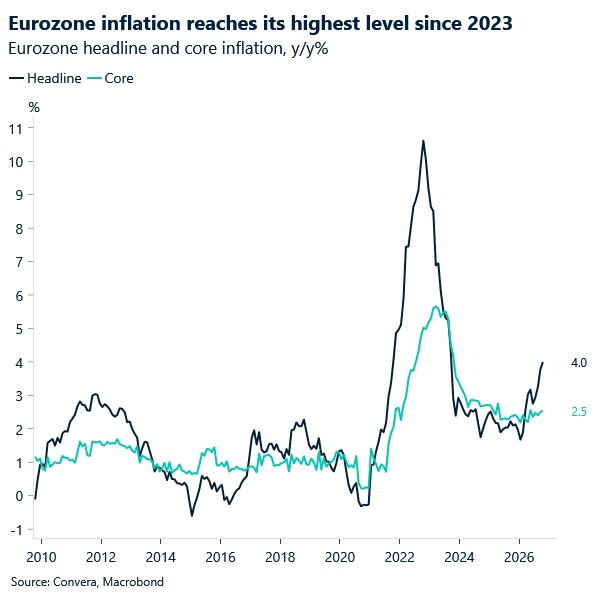
The report suggests inflation pressures continue to be driven by higher energy prices, with little sign of meaningful second-round effects.
The euro was largely indifferent to the outcome. That comes as little surprise, as the euro has largely stopped responding to ECB developments since the conflict in the Middle East began. France’s fiscal turmoil has only weakened the link further.
It was telling that market-implied expectations for the ECB’s next move in December were little changed after the release. Markets continue to price around an 88% chance of a hike, not quite confident enough to go the whole way. This clearly signals continued hesitation, as France-induced higher yields chip away at the need for further ECB-driven monetary tightening.
France-driven bearishness appears to have eased. We see that in EUR/CHF, which has found buying interest near 0.915. Remember, this pair remains the clearest expression of the fiscal woes facing the eurozone’s second-largest economy.
EUR/USD moved higher in the wake of the midterm election, although sellers continue to emerge around 1.1250. That resistance is likely to strengthen further if tomorrow’s NFP report delivers a strong upside surprise.
Oil retreat leaves CAD rally short of conviction
The USD/CAD has little moved since the Democratic sweep, the loonie’s gain has been modest compared with the broader dollar decline. Reduced concern about US trade policy helped, while Canada’s September goods surplus widened to C$5.35 billion, its largest since May 2022.
Oil moved sharply the other way. WTI fell almost $8 to $88 and Brent broke below $100, weakening Canada’s terms of trade and challenging the energy assumptions behind the Bank of Canada’s October hike. The dollar selloff supported CAD, but falling crude prevented a stronger move.
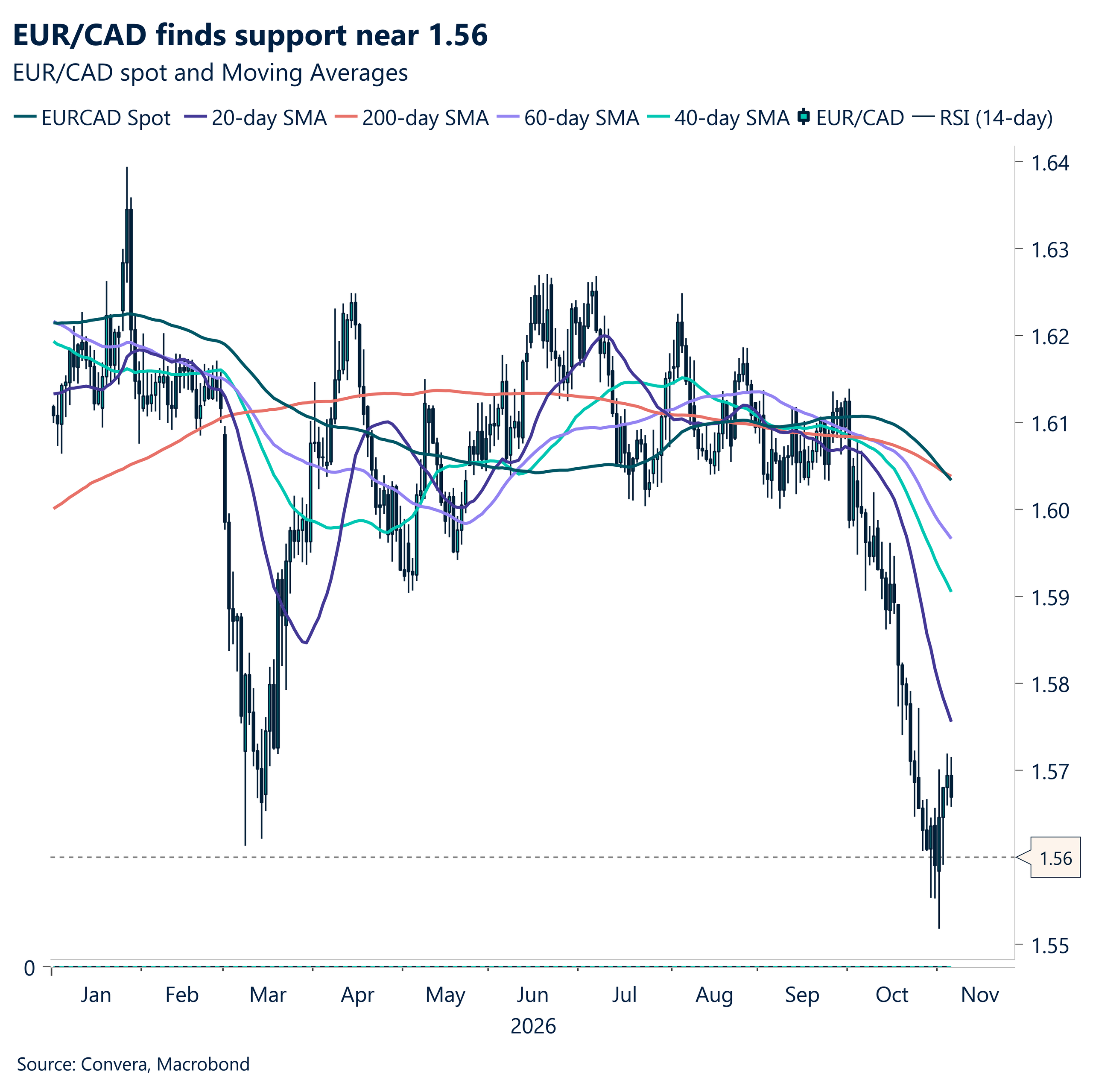
The same tension left EUR/CAD nearly unchanged around 1.569. The cross remains close to its 52-week low after falling more than 2% over the past month. Much of that decline followed the BoC’s hawkish pivot, which erased the ECB’s policy-rate advantage. Both policy rates now stand at 2.50%, making their expected paths and oil prices more important for the cross.
Further crude weakness could reduce the case for a December BoC hike and lift EUR/CAD toward 1.58. An oil rebound would restore Canada’s terms-of-trade support and bring 1.55 back into focus, although French fiscal stress would continue to weigh on the euro.
USD/CAD is holding near 1.395 after breaking below its 50-day moving average around 1.401. Friday’s employment report will show whether the decline can extend. A gain near the 15,000 consensus would preserve expectations for another BoC hike and could push the pair more decisively below 1.3950.
Another contraction would weaken the December case and return 1.4050–1.4100 to view, particularly if oil remains below the assumptions in the Bank’s latest outlook. The November 16 CPI report will then test whether lower energy prices are starting to erode the loonie’s broader rate support.
Market snapshot
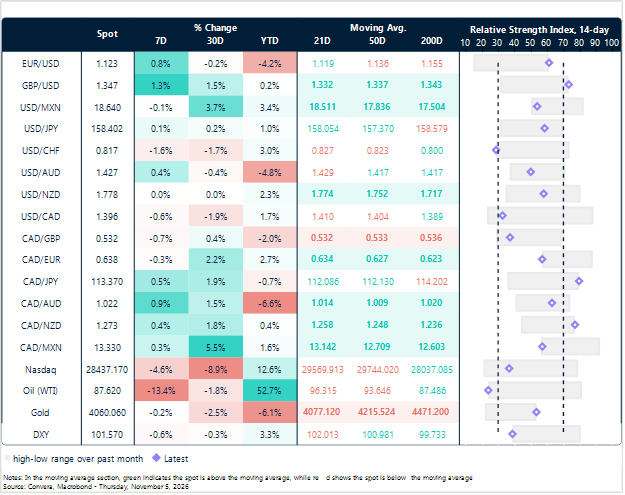
Table: Currency trends, trading ranges & technical indicators
Key global risk events
Calendar: November 2 – 6
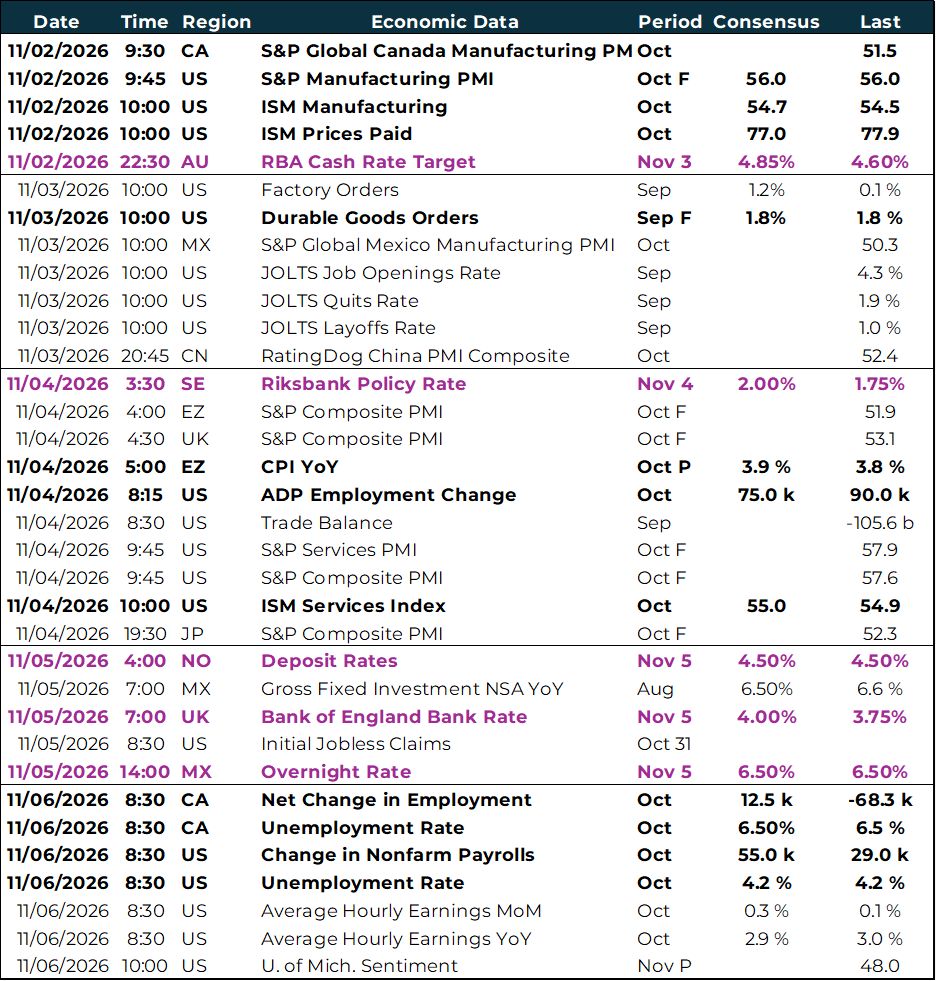
All times are in EST
Have a question? [email protected]
*The FX rates published are provided by Convera’s Market Insights team for research purposes only. The rates have a unique source and may not align to any live exchange rates quoted on other sites. They are not an indication of actual buy/sell rates, or a financial offer.