
China and US coming to the euro’s rescue
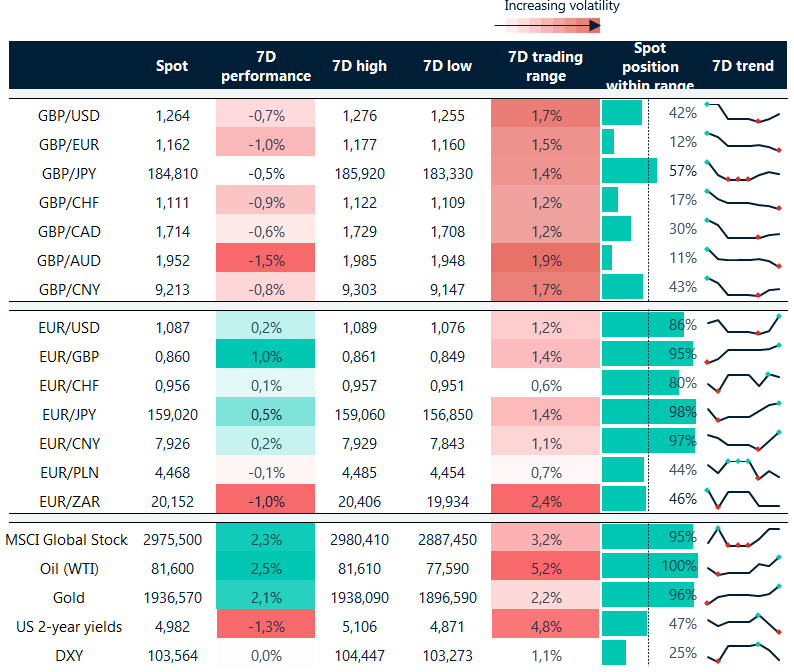
The euro has recorded a strong start to the week, rising by the most since the middle of July in the previous trading session. Everything came perfectly together for the common currency, which has been under a lot of pressure recently. However, yesterday’s surprising fall of US job openings, China’s announced stimulus measures and rising bets of an ECB rate hike in September were enough to lift EUR/USD by 0.78% this week to $1.0870. All eyes are on German inflation later today, which is expected to have fallen from 6.2 to 6.0%.
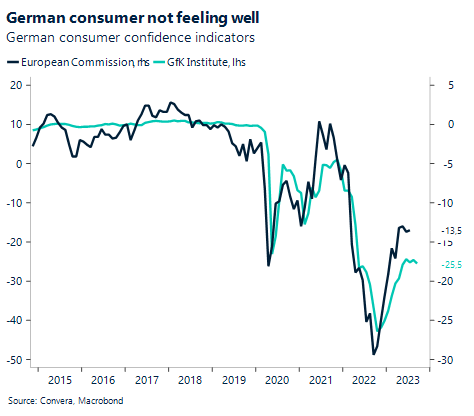
The day began with an unexpected miss from the German GfK consumer confidence, which has now remained in negative territory since the end of 2021. The rise in food and energy prices pushed the income expectations sub-index down by 6.4 points to -11.5, while the economic sentiment gauge hit the lowest level so far at -6.2. However, the announced rate cut on existing mortgages in China was enough to compensate for the continued macro weakness in Germany. The easing would affect most of the countries $5.3 trillion worth of outstanding mortgages and would be the first cut since the Global Financial Crisis. That was followed by major lenders announcing cuts to the deposit rates for the third time this year.
The China and US news lifted risk sentiment and pushed global equities higher. The euro has profited from falling US yields as well and is currently holding above $1.08 in early European trading. The global consensus continues to expect a higher EUR/USD in 12 months’ time based on 1. US inflation slowing and 2. the Fed cutting rates before the ECB. Even so, an appreciation beyond $1.12 must be induced by a growth uptick in Europe and China as the Fed cutting rated would be a necessary but not a sufficient condition for a move above that key level.
Yields, dollar plunge on weaker job openings
The US labour market had been quite resilient against the deterioration of the manufacturing sector and tightening of credit conditions so far this year. However, the overall picture has been complicated by first leading indicators starting to turn south. Metrics like initial jobless claims, the quits rate and hours worked have been moving against the strong headline job growth number. This intuition can be confirmed by the Kansas Fed Labor Conditions Index, which takes 24 monthly series into account. The barometer has been trending down since March 2022 and has clearly decoupled from US employment. This is why we have continued to expect weaker job growth going into the second half of the year.
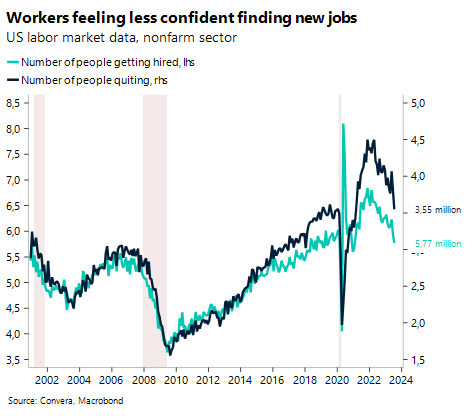
The latest US jobs number data suggests that some easing of the labour market has already begun. Job openings fell by 338 thousand to a two and a half year low at 8.82 million. The three months fall of job openings has also been the largest ever recorded outside of the pandemic included fall in 2020. The number of people quitting and getting hired fell to below pre-pandemic levels at 3.55 and 5.77 million. Investors are now cautiously waiting on non-farm payrolls, which will be released on Friday together with the unemployment rate, hourly earnings and hours worked. Later today, we will get the second GDP estimate for the second quarter, followed by pending home sales.
Markets now see an 85% chance of the Fed remaining inactive at its next meeting in September, but the odds of a November hike remain elevated at 43%. Short-term government bonds reacted heavily to the jobs data miss, with the 2-year yield falling by the most since the middle of July to below 5%. The US Dollar Index is now on track to record the first negative week in six. However, the remaining three trading days of the week feature multiple high level data releases, which could tilt sentiment once again.
Sterling awaits steer from BoE speakers
The British pound has started the week modestly stronger against the US dollar, helped by falling US treasury yields and hawkish comments by Bank of England (BoE) Deputy Governor Ben Broadbent at Jackson Hole, stressing monetary policy will need to remain in restrictive territory for some time as inflation is unlikely to slow down as fast as it emerged.
Money markets are currently betting on a more than 90% chance of another 25-basis point hike from the BoE at its next meeting later in September and BoE Chief Economist Huw Pill, who will be speaking on Thursday, is likely to echo the hawkish comments made at Jackson Hole. But UK rate expectation alone may not be enough to see GBP/USD reclaim $1.27. GBP/USD could find more support if markets scale back some bullish dollar positions before having confirmations from US payrolls, due this Friday. Moreover, the pound, a procyclical currency, also needs to be supported by improving global risk appetite. This morning, European equity markets are set for a higher open, tracking global peers higher as signs that the US economy may be cooling raised hopes the Fed would lighten its policy stance.
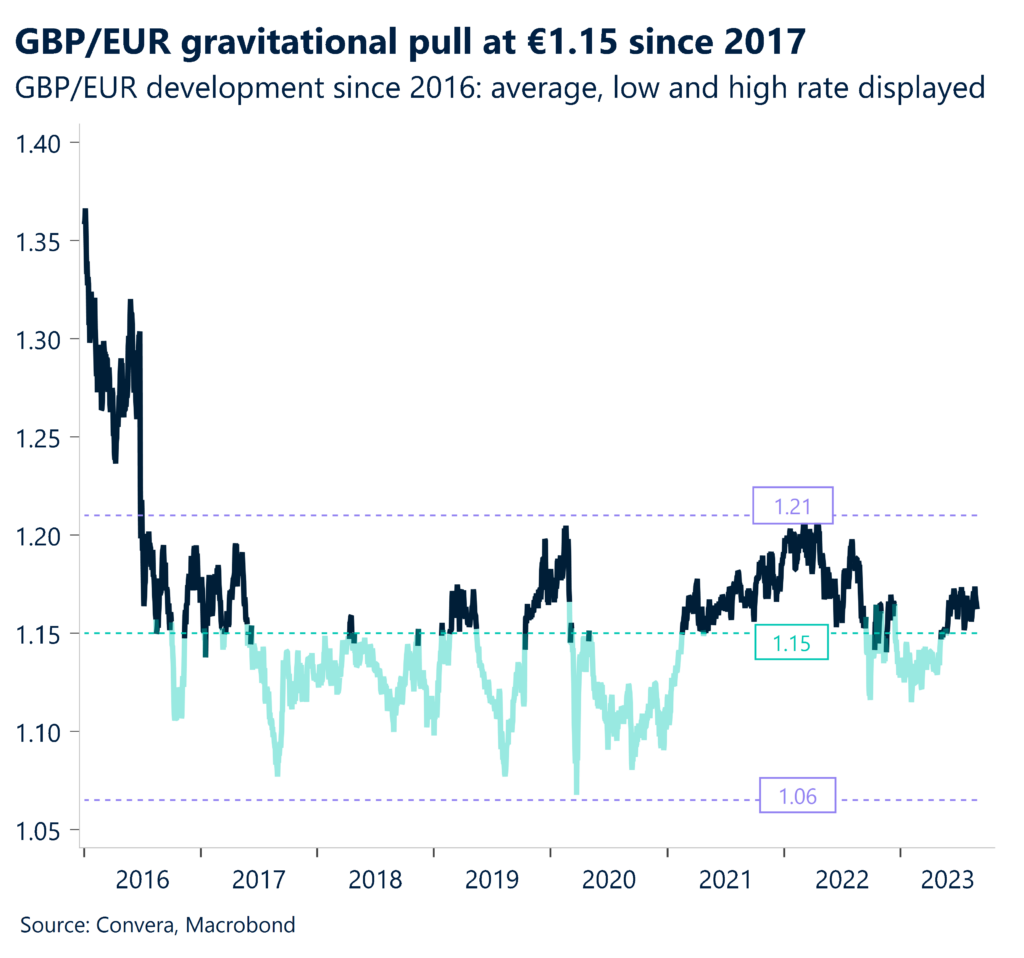
Against the euro, it will be all about Eurozone’s inflation numbers this week. GBP/EUR has slumped over 1.4% in the last five trading days, and €1.1570, its 100-day moving average, is the next downside target in the short term.
Euro main beneficiary of buoyant risk appetite
Table: 7-day currency trends and trading ranges
Key global risk events
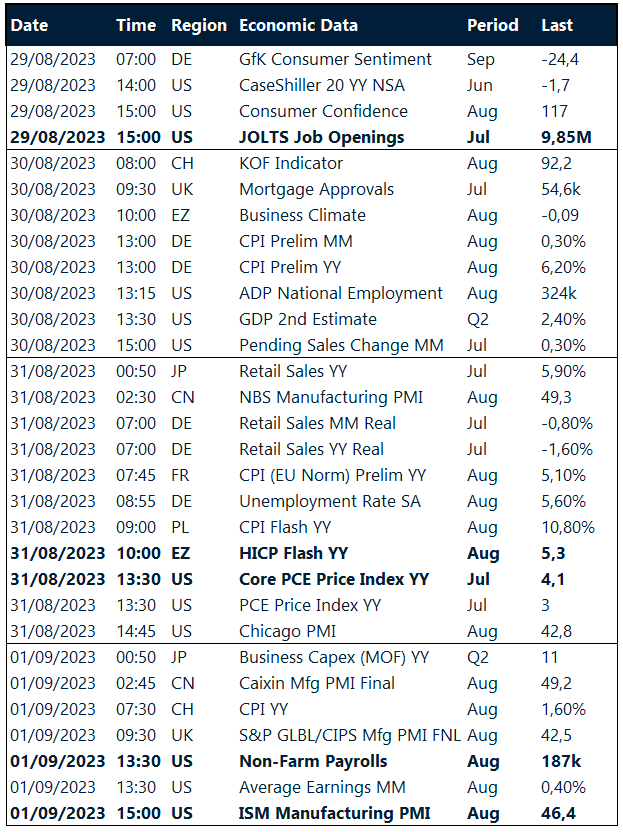
Calendar: August 28-Septemeber 01
Have a question? [email protected]
*The FX rates published are provided by Convera’s Market Insights team for research purposes only. The rates have a unique source and may not align to any live exchange rates quoted on other sites. They are not an indication of actual buy/sell rates, or a financial offer.