


US producer prices soar to 3-year high
U.S. producer prices surged 0.9% m/m in July, far exceeding expectations of 0.2% and marking the largest monthly gain since June 2022. On an annual basis, PPI rose 3.3%, up from 2.4% in June, while core PPI jumped to 3.7% from 2.6%. The data shattered forecasts across the board, underscoring the inflationary impact of recent tariff policy and justifying Fed caution regarding rate cuts.
Goods prices rose 0.7% (0.4% ex-food and energy), while services surged 1.1% – the strongest increase since March 2022. Notably, airfares climbed 1%, and portfolio management costs spiked 5.8%, suggesting uneven but persistent inflation pressures across sectors. At first glance, this points to one of two possibilities: either firms are absorbing cost pressures and seeing margins squeezed, or elevated producer prices haven’t yet filtered through to consumer inflation.
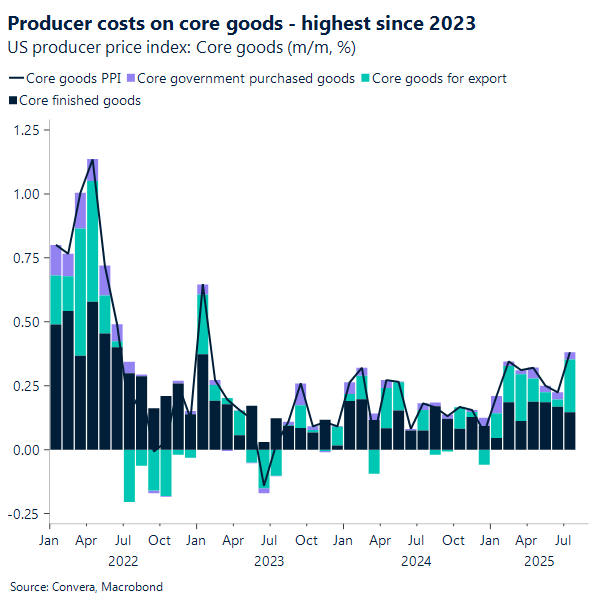
While this upside surprise complicates the Fed’s path, it doesn’t necessarily preclude a rate cut next month. Markets had only priced in 25bps of easing, and the data may not be enough to derail that expectation – particularly given recent softness in labour market indicators.
Still, the July PPI print reinforces the view that the full inflationary impact of tariffs has yet to fully radiate through the economy. With core consumer inflation also running at 3.1%, well above the Fed’s 2% target, the central bank faces a growing dilemma: ease to support growth or hold firm to contain price pressures.
For now, the dollar remains rangebound. The dollar index briefly firmed on the data but continues to struggle with a broader bearish trend, as fiscal concerns and policy uncertainty weigh on sentiment. Next up, US retail sales today – a hot number could reduce odds of a rate cut in September, strengthening the dollar, while a miss might cement expectations and drag on the dollar.
From speculation to validation: what the euro needs now
What does the euro need to navigate the 1.17 waters more comfortably and eventually revisit those early July highs? Firstly, a more assertively dovish Fed.
Recently, we haven’t seen a clear dovish tilt, only speculation. The disappointing labour market data on August 1st was the initial trigger, followed by a lukewarm CPI report that added fuel to bets on Fed cuts sooner rather than later. But the real surprise came with the PPI report, which showed a jumbo 0.9% month-on-month jump. Tariff-induced price hikes are beginning to ripple further up the value chain and may soon hit consumers.
As we await more concrete signals from the Fed about a dovish pivot, it’s no surprise that EUR/USD continues to swing wildly – like it did yesterday – especially as the PPI print challenged the growing view that rate cuts are imminent.
While the consensus still leans toward a Fed cut next month, persistent uncertainty, conflicting data, and mixed messaging from Fed officials have kept EUR/USD gains modest—just ~0.3% so far this week.
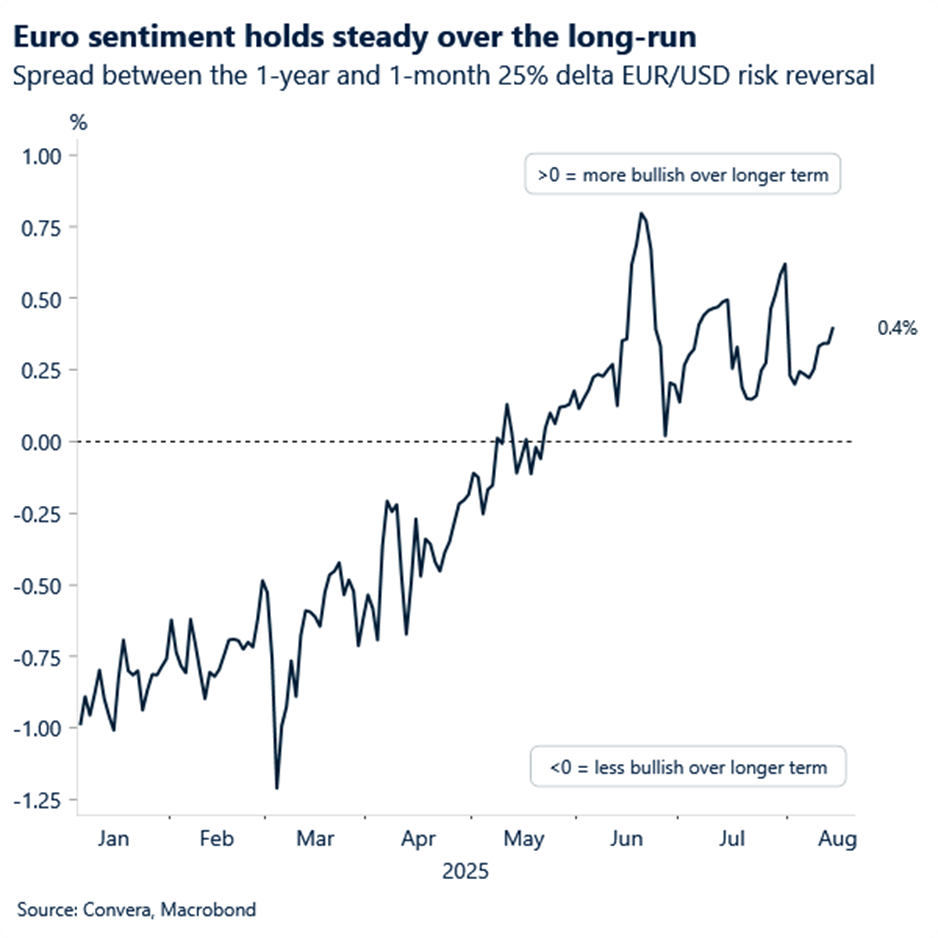
Beyond a more overtly dovish Fed, the euro’s upside now depends less on headline-driven sentiment and more on solid validation – namely, US macro data – to justify further decoupling from the dollar and renewed refuge in the common currency. In other words, trade-related noise out of Washington has lost its momentum in driving the euro higher. Meanwhile, investors have had time to digest the reality that tariffs – now past their deadlines – have become the new status quo. To sustain the euro’s rise, therefore, something more substantial is needed: a continuous stream of weak US macro data, driven by the lingering effects of those tariffs.
Look out for a test of the 1.17 resistance today if US retail sales surprises to the downside.
Pound to 1-month highs on pared BoE easing bets
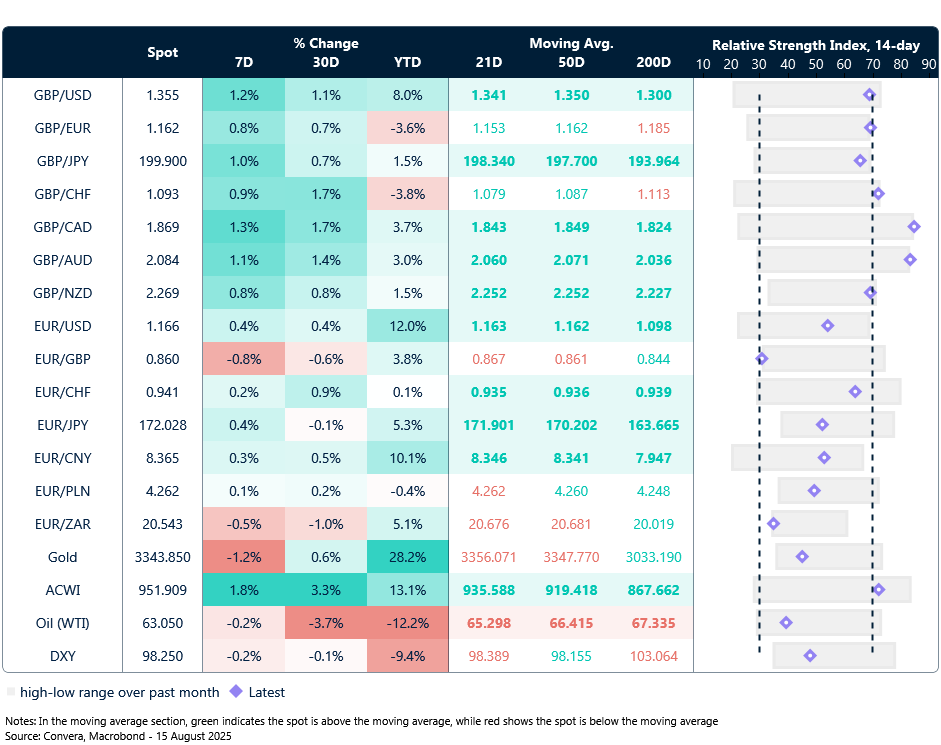
Sterling climbed to 1-month highs versus several major peers this week, including USD, EUR, CAD and AUD. Domestic data has led to a hawkish repricing of Bank of England (BoE) policy expectations, whilst global risk appetite remains upbeat – helping the UK currency via the yield and sentiment channels.
Focusing on GBP/EUR for today, the pair broke back above the €1.16 level and is testing its 50-day moving average for the first time since mid-June. The pair is on track for its third consecutive weekly gain, with a cumulative rise of approximately 2%.
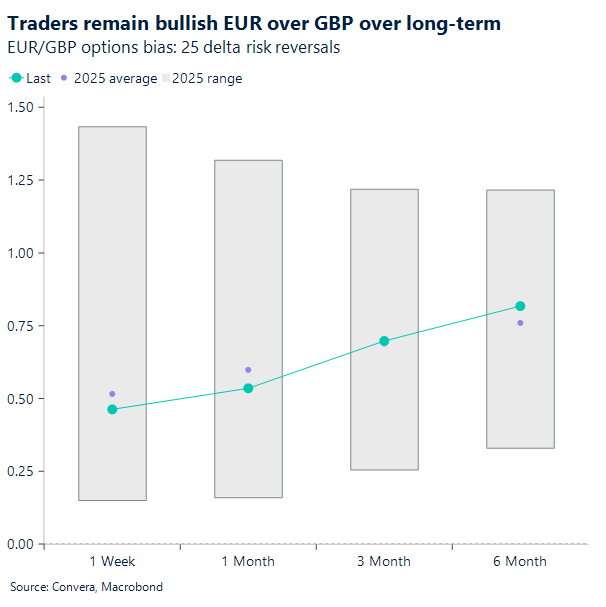
From a macro perspective, real rate differentials and low market volatility (as indicated by the VIX) suggest the pound could be trading closer to €1.18–1.19. However, the key headwind remains persistent capital flows into the euro, largely at the expense of the U.S. dollar. This euro demand is capping sterling’s upside for now. Options markets reflect this dynamic. While risk reversals have turned slightly less bullish on the euro versus the pound, they continue to favour euro strength over the longer term. In short, GBP/EUR may have room to grind higher near-term, but sustained gains will likely require a shift in eurozone inflows or a more hawkish tilt from the BoE.
The latter is unlikely given the hawkish repricing we’ve already seen of late, particularly following this week’s UK labour market data showing private wage growth still hovering around 5% and stronger-than-expected GDP figures. Looking ahead, next week’s July inflation print will be pivotal. While growth remains subdued, the bigger question for markets is how long inflation will stay elevated above the Bank’s 2% target. With wage pressures still strong, a meaningful drop in realized inflation will be needed to shift the stance of more hawkish MPC members who opposed a cut earlier this month.
In short, the BoE remains in a delicate balancing act – easing policy to support growth, while staying vigilant against entrenched inflation. Traders will be watching inflation and wage data closely for clues on the timing of any further rate moves.
Sterling outperforms commodity currencies
Table: 7-day currency trends and trading ranges
Key global risk events
Calendar: August 11-15
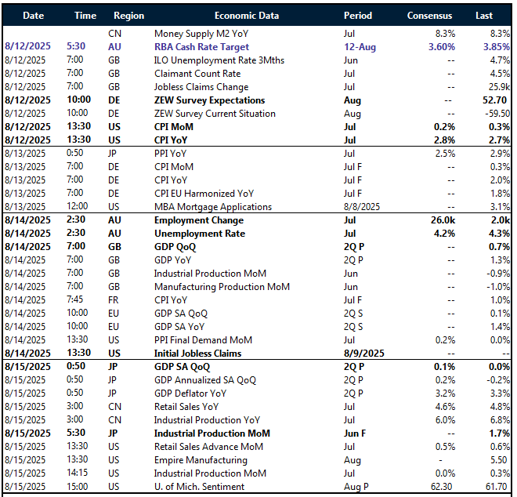
All times are in BST
Have a question? [email protected]
*The FX rates published are provided by Convera’s Market Insights team for research purposes only. The rates have a unique source and may not align to any live exchange rates quoted on other sites. They are not an indication of actual buy/sell rates, or a financial offer.