
Pound drops after BoE hike again
The Bank of England (BoE) opted for a more aggressive rate hike of 50-basis points yesterday, taking its key rate to 5% – the highest since 2008. Despite the attractive yield appeal this brings to the British pound, the “pop and drop” reaction in GBP reflected rising UK recession fears as well. GBP/USD has broken below its 10-day moving average and is flirting with $1.27, whilst GBP/EUR will suffer its biggest weekly loss in ten.
The more aggressive BoE hike follows the recent spike in services inflation and the pick-up in wage growth. Given that the link between high services wage growth and strengthening core inflation has become well established, it’s clear that until we begin to see some improvement in the official inflation statistics, the BoE won’t be content with pausing. Two more 25 basis point hikes seems like the most likely route after yesterday’s meeting, but another jumbo hike cannot be ruled out. The expected peak Bank Rate is above 6% by year-end according to the latest market pricing, and although this boosts the pound’s yield appeal, it also means we’re in a situation where overtightening policy and causing a recession may be the price that has to be paid to bring inflation back to heel. This factor is likely to weigh on the pound.
Sterling’s reaction has been a typical one during this tightening cycle, and GBP/USD looks set to remain trapped in its longest ever run below $1.30 for a while longer. In the meantime, data this morning revealed consumer confidence improved for a fifth month running and retail sales in May beat forecasts. June flash PMIs surveys are up next.

Dollar supported by hawkish Fed chair
Federal Reserve (Fed) Chair Jerome Powell continued to emphasis his commitment to bring down inflation to the central bank’s two-percent target at his second hearing before the Senate on Thursday. After having paused the tightening cycle following ten consecutive rate hikes, Powell highlighted the FOMC’s resolve to raise rates two more times if necessary, confirming the Fed’s internal rate projections published last week.
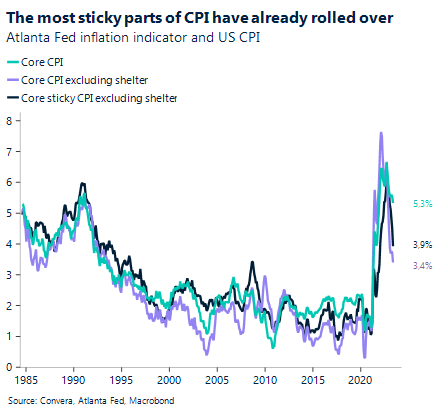
The hawkish message from the Chair has been reaffirmed by other members of the monetary policy board and has dampened risk taking on financial markets, which had pushed the Nasdaq to the highest level since March 2022 at the end of last week. While the Fed refrained from raising its benchmark interest rate last Wednesday, other policy makers in Europe continued their fight against inflation. In the case of the US, inflation today is driven primarily by shelter, not by services in general, as becomes clear once we look at the services ex. shelter component within the CPI and sticky CPI indices. This is why the recent optimism surrounding a bottoming of the housing market remains the largest upside risk for proponents of the sharp disinflationary thesis. We will keep this in mind going into next week, which will see both European and US consumer prices published on Friday.
The labour market will be closely watched as well. Initial jobless claims held at 264,000 in the week ending June 17, the highest level since October 2021. While yesterday’s print did confirm some weakness in the labour market spreading, it did not meaningfully impact market pricing. Two-year US government bond yields climbed to 4.79%, reaching the highest level since the beginning of March. The US Dollar Index benefited from broadly weaker equities in Europe and the increase in rates and is now flat on the week at 102.50.
Euro reverses from six-week high
EUR/USD climbed above $1.10 yesterday, its highest level in six weeks, supported by expectations of higher interest rates from the European Central Bank (ECB) and other major European central banks amidst ongoing concerns about elevated levels of inflation in the region. However, a bout of risk aversion amid rising global growth concerns, has pushed investors back towards the safe haven dollar.
Interestingly, Bloomberg Economics states Germany’s rollout of ultra-cheap public transport last summer is set to reverberate through its upcoming inflation readings, causing a headache for the ECB. This is due to it becoming a permanent fixture albeit with a larger price tag, hence some analysts forecast German inflation rising to 7% from 6.3%, putting upward pressure on overall Eurozone inflation, which would dash the ECB’s hopes of a pause in rate hikes. Additionally, along with the BoE yesterday, Norway’s Norges Bank surprised the markets with a larger-than-expected 50 basis point hike, while the Swiss National Bank raised its policy rate for the fifth time and hinted at further increases. Although many leading indicators point to disinflation speeding up later this year, many central banks continue to react to the latest lagging data, which seems risky. As a result, recession fears are resurfacing across the world.
The euro, which was being propped up mostly by risk sentiment amid the convergence in rate expectations, is feeling the brunt. The sour turn to end this week leaves markets in a delicate spot ahead of global PMI surveys due throughout the day. Disappointing prints could further fuel risk aversion and see EUR/USD drop back below $1.09.

Risk aversion fuels decline in stocks and riskier FX
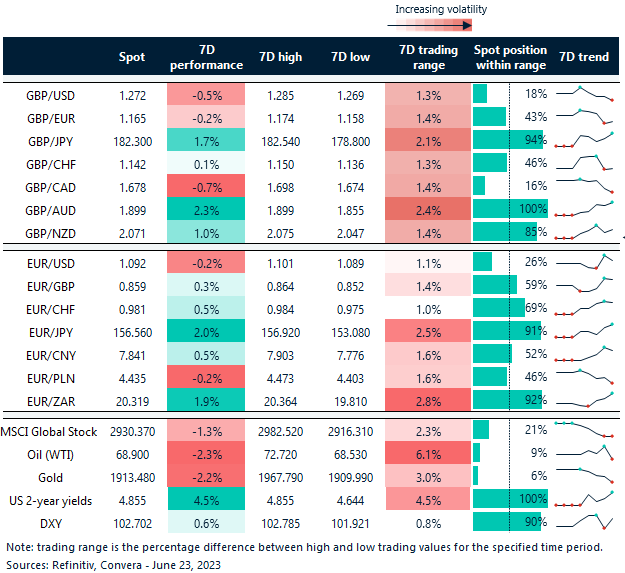
Table: 7-day currency trends and trading ranges
Key global risk events
Calendar: June 12- June 16

Have a question? [email protected]
*The FX rates published are provided by Convera’s Market Insights team for research purposes only. The rates have a unique source and may not align to any live exchange rates quoted on other sites. They are not an indication of actual buy/sell rates, or a financial offer.