
Euro follows the data, not the ECB
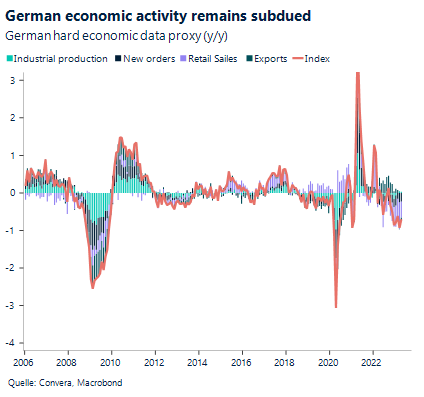
All four of our closely watched hard data points for Germany have now finally been released for the month of April. Retail sales and exports surprised to the upside, contributing to an uptick in our activity index for Europe’s largest economy. However, yesterday’s drop in new orders has dampened the optimism given its leading predictive value for the economy at large. And while industrial production did manage to increase by 0.3% on the month, the expansion disappointed expectations of a 0.6% surge.
Meanwhile, the ECB’s consumer survey showed inflation expectations eased significantly in April, adding to the disinflationary picture created by the latest CPI report. Inflation expectations for three years ahead slid from 2.9% to 2.5%, after they unexpectedly rose in the prior month. policymakers have recently argued for a continuation of the tightening cycle, and the ECB is still expected to raise interest rates at the meeting next week. However, the recent string of hard and soft data does suggest that inflation has peaked, contrary to what president Christine Lagarde might believe.
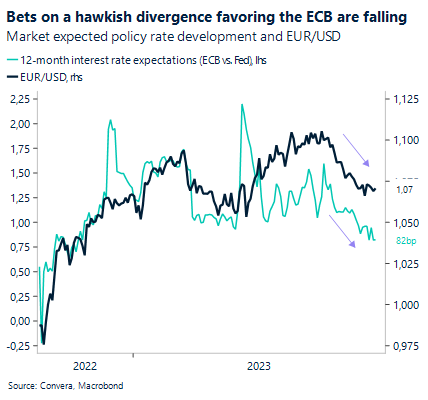
German 2-year yields fell slightly from 2.95% to 2.88% following yesterday’s data and dragged down EUR/USD back below $1.07. The euros’ sensitivity to ECB speak has decreased in recent weeks. This can be explained by the fact that the data is now partially contradicting the message central bankers want to send.
Dollar rises into a quiet session
Price action has been driven by European data releases yesterday, with the US enjoying a quiet economic calendar. Swap differentials have moved in favor of the dollar in the first two days of the week, despite the disappointing ISM services report. While markets have increased their probability that the Fed would not hike interest rates next week to around 80%, the falling inflation expectations in Europe have more than compensated for Monday’s fall in US yields.
The dollar is currently driven by rate differentials (Fed pricing), growth differentials (US vs. world) and liquidity changes. These three factors explain a majority of the upside movement the dollar has seen since the beginning of May. While markets don’t expect the Fed to move in June, rate hikes are priced in for July, with the Fed expected to end the year with a fed funds rate of 5.0 – 5.25%. Any upside surprise to this market scenario would embolden dollar bulls to push for higher levels against the euro and pound. However, one or two data disappointments like on Monday would already push rate cutting expectations for 2023 back up, putting the Greenback under pressure.
The data dependent stance of central bankers makes incoming data highly important, which will be effecting the rate and growth differentials. However, our last explanatory variable will start to play a larger role in terms of influencing FX volatility. With the debt limit postponed for two years, the US treasury will need to issue bonds to fill up its cash reserves again. This should decrease market liquidity in the medium term and could lead to some choppy trading going forward.0
Sterling to be wounded by mortgage time bomb?
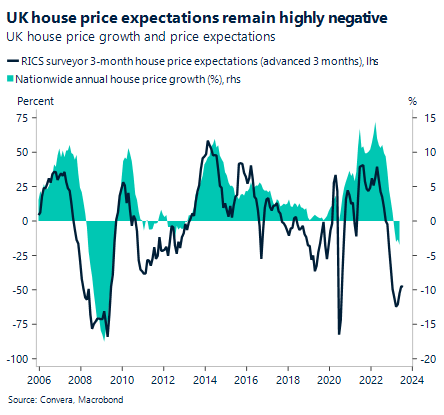
There was little price action in the pound yesterday as GBP/USD clung onto $1.24 and GBP/EUR gripped onto €1.16 where they both reside still this morning. There are no tier one data releases due today or scheduled speeches from central bankers, but housing data is starting to attract more attention as the rapid rise in UK interest rates leaves the market highly vulnerable.
The UK economy has held up better than expected in 2023, but inflation also proved stickier. Like other advanced central banks, the Bank of England (BoE) has responded with the fastest tightening cycle since the 1980s – increasing its policy rate from 0% in January 2022 to 4.5% today. Markets are even pricing in nearly another 100 basis points of hikes before year-end, sending UK gilt yields surging an attracting demand for the pound as a result. However, despite interest rate differentials favouring sterling, the very notion of more rate hikes increases the risk of recession, a credit crunch and a housing market correction, which would surely weigh heavily on the value of the UK currency. Over 1mln mortgage holders are due to refinance over the next few months and could find themselves paying 400 basis points more in interest on their mortgages. The scale of the knock-on-effects of this looming risk are highly uncertain but should be considered as a strong headwind for the pound.
On the one hand, a housing market correction and credit crunch could spook investors away from UK assets, including sterling, but on the other hand, the BoE may not deliver the priced in rate cuts as a result of this risk, especially amid the weaker global growth outlook, falling household spending and other central banks likely to start cutting rates in 12 to 18 months. Failing to match market pricing of rate hikes could therefore also leave sterling susceptible to steep declines from here.
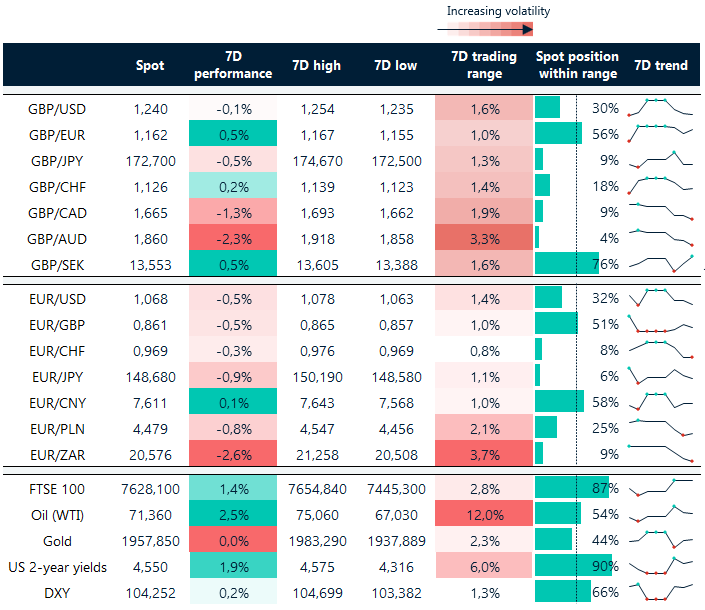
FX volatility started the week subdued
Table: 7-day currency trends and trading ranges
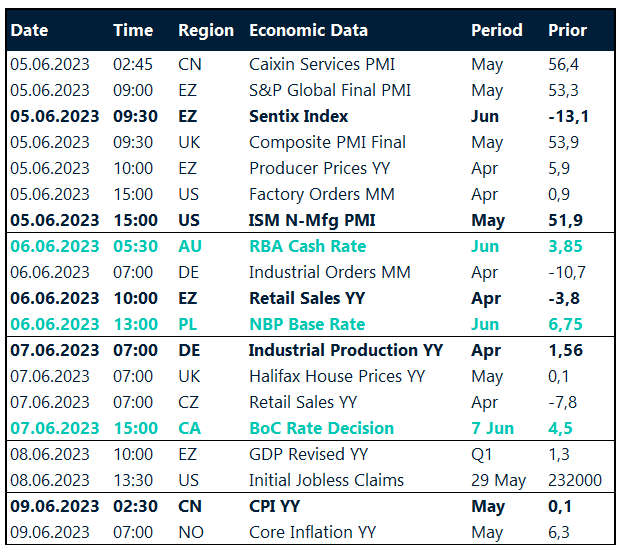
Key global risk events
Calendar: June 05- June 09
Have a question? [email protected]
*The FX rates published are provided by Convera’s Market Insights team for research purposes only. The rates have a unique source and may not align to any live exchange rates quoted on other sites. They are not an indication of actual buy/sell rates, or a financial offer.