


USD: CPI takes the wheel
The US dollar enters the CPI release in a more fragile position, but not without support. Last week’s payrolls report weakened the case for aggressive Fed tightening, especially after the negative headline print and large downward revisions. Still, the unemployment rate fell to 4.1%, and slower labour-force growth means the economy may need fewer jobs than usual to keep unemployment steady. That leaves markets with a softer dollar impulse, but not a settled Fed story.
The next test is inflation. Oil prices fell last week as Gulf risks eased, but the rebound since then shows the energy channel has not fully closed. Core services inflation is the bigger issue for the Fed, and that is where today’s CPI report will matter most. A softer print would make the case for a September hold easier to defend.
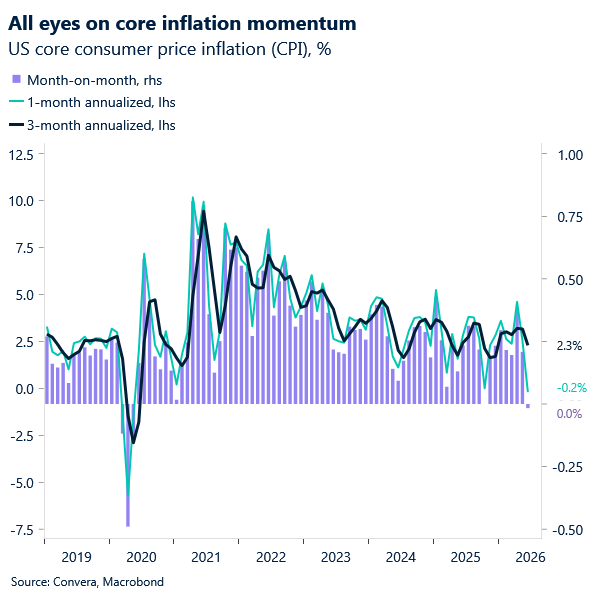
The risk for dollar bears is that inflation does not cooperate. A core CPI reading near 0.2% m/m would let markets keep leaning into lower yields and a less forceful Fed. A hotter reading would quickly challenge the post-payrolls repricing, especially with some Fed officials still uncomfortable with the inflation backdrop. In that scenario, the dollar could recover even if the labour data have softened.
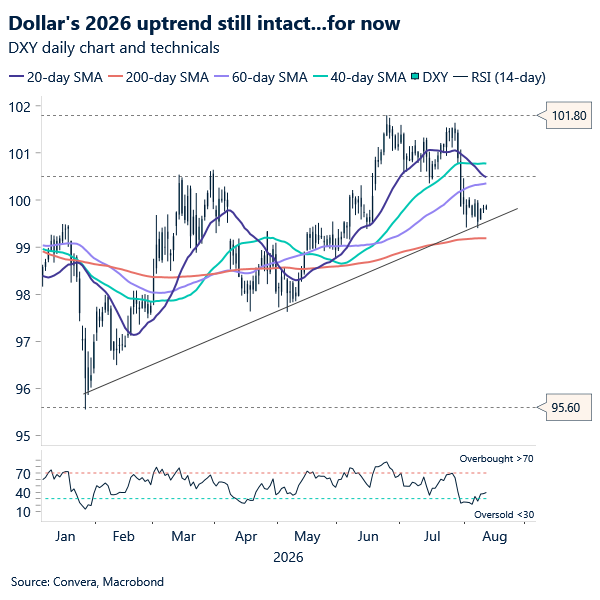
DXY is still trading in a narrow range near 99.8, below its June peak but not yet breaking down. The payrolls report cracked the dollar’s momentum by pulling front-end expectations lower. CPI will decide whether that move extends or stalls. If inflation cools, the May lows come back into view; if inflation firms, the dollar can rebuild support into the September Fed debate.
EUR: Markets expect minimal reaction today
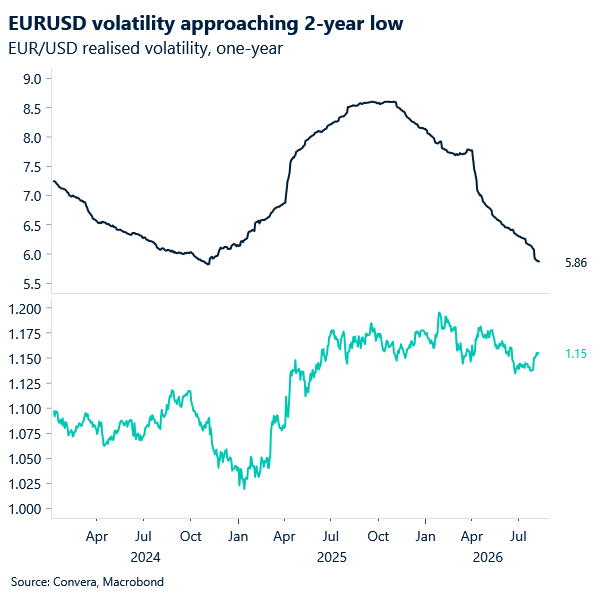
Options markets continue to signal a lack of conviction in EUR/USD ahead of today’s US inflation report. One-year implied volatility has fallen to 5.8%, matching the lows seen in late 2024, highlighting just how subdued expectations for major FX moves have become
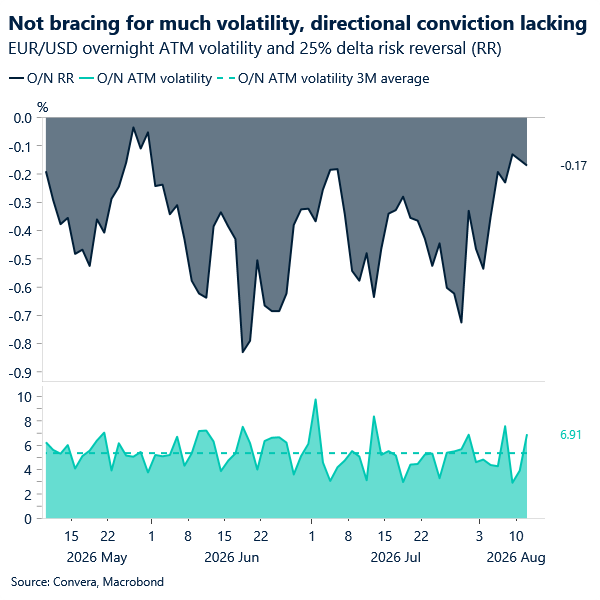
While overnight volatility has picked up to 6.9% ahead of CPI, the market is still only pricing a move of around 0.4% in either direction, suggesting investors see limited scope for a major surprise. Reinforcing that view, overnight risk reversals remain close to neutral, indicating there is little demand for protection against either significant euro gains or losses.
The message is clear: markets are largely expecting a benign outcome and for EUR/USD to remain trapped within its recent range. However, that also creates the potential for a sharper reaction should inflation materially surprise expectations. A weaker print would likely reinforce recent dollar softness and increase pressure on the Fed to remain patient, while a stronger reading could quickly revive tightening expectations and support the greenback.
For now, volatility remains compressed, but today’s CPI release may determine whether the current low‑volatility regime persists or finally gets challenged.
GBP: Rising yields, familiar warning signs
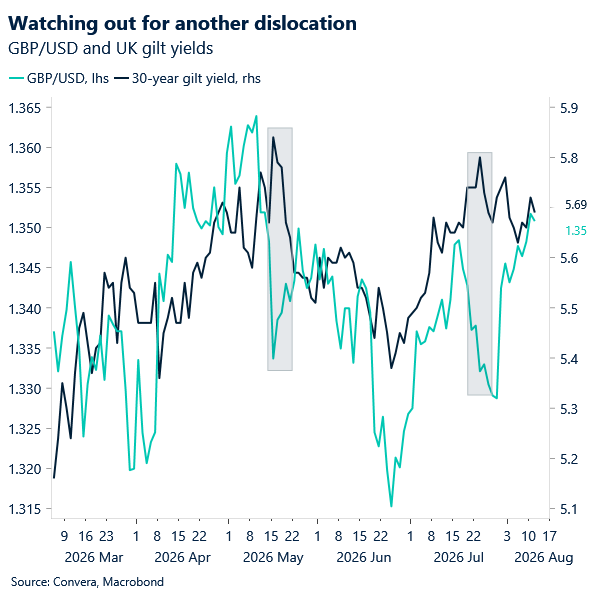
The latest rise in oil prices lifting yields across developed markets, but could prove particularly problematic for the UK given its sensitivity to energy-driven inflation shocks and lingering fiscal concerns.
The clearest signal is coming from the long end of the curve. Thirty-year gilt yields look to be moving back towards July’s highs and not far from the multi-decade peaks reached in May. That matters because recent history suggests sterling becomes vulnerable when long-dated yields rise for the wrong reasons. During the sharp gilt sell-off in the week ending May 15, cable fell more than 2% and underperformed most of the G10 complex as investors questioned the sustainability of the UK’s fiscal and macroeconomic backdrop.
The concern is not simply higher yields, but why yields are rising. If investors interpret higher oil prices as worsening the UK’s inflation outlook, growth prospects and borrowing requirements simultaneously, then gilt yields can become a headwind rather than a support for sterling.
For now, the pound remains relatively stable. However, if oil prices continue to climb and long-dated gilt yields challenge their recent highs again, the market may begin to reapply a fiscal risk premium to UK assets, which leaves sterling vulnerable.
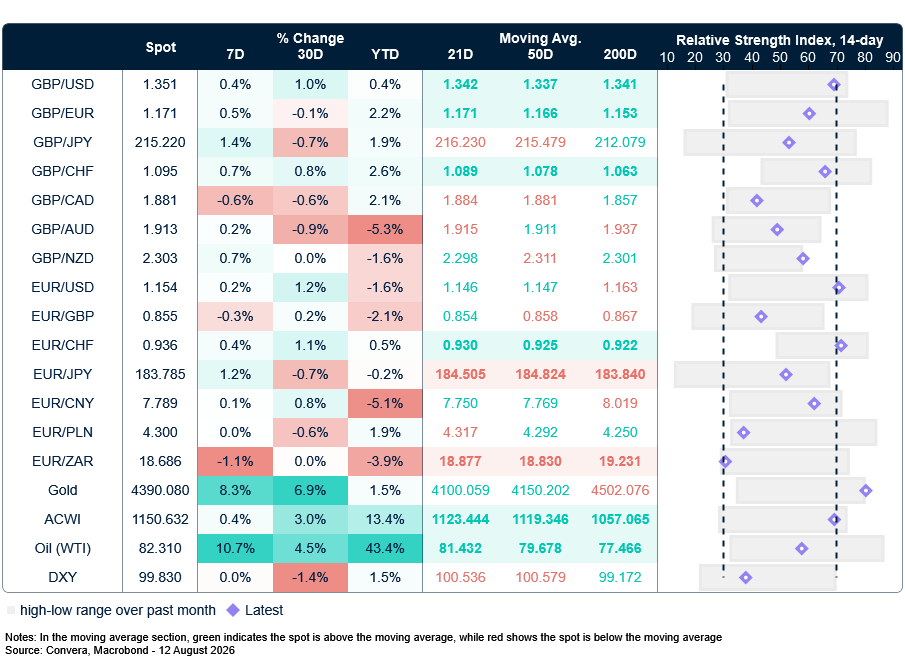
Market snapshot
Table: Currency trends, trading ranges & technical indicators
Key global risk events
Calendar: August 10-14
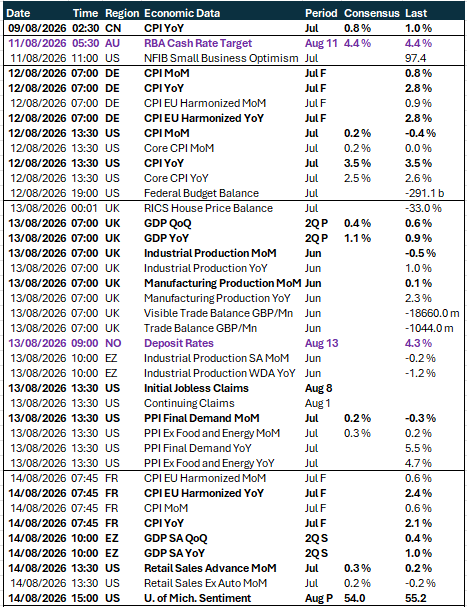
All times are in BST
Have a question? [email protected]
*The FX rates published are provided by Convera’s Market Insights team for research purposes only. The rates have a unique source and may not align to any live exchange rates quoted on other sites. They are not an indication of actual buy/sell rates, or a financial offer.