

USD: Written hawkishness
The Federal Reserve unanimously left rates unchanged at 3.50% to 3.75%, in line with market expectations, marking a fourth consecutive pause. In the post-meeting statement, officials signalled clearly that the balance of risks remains tilted towards price stability, highlighting still elevated inflationary pressures.
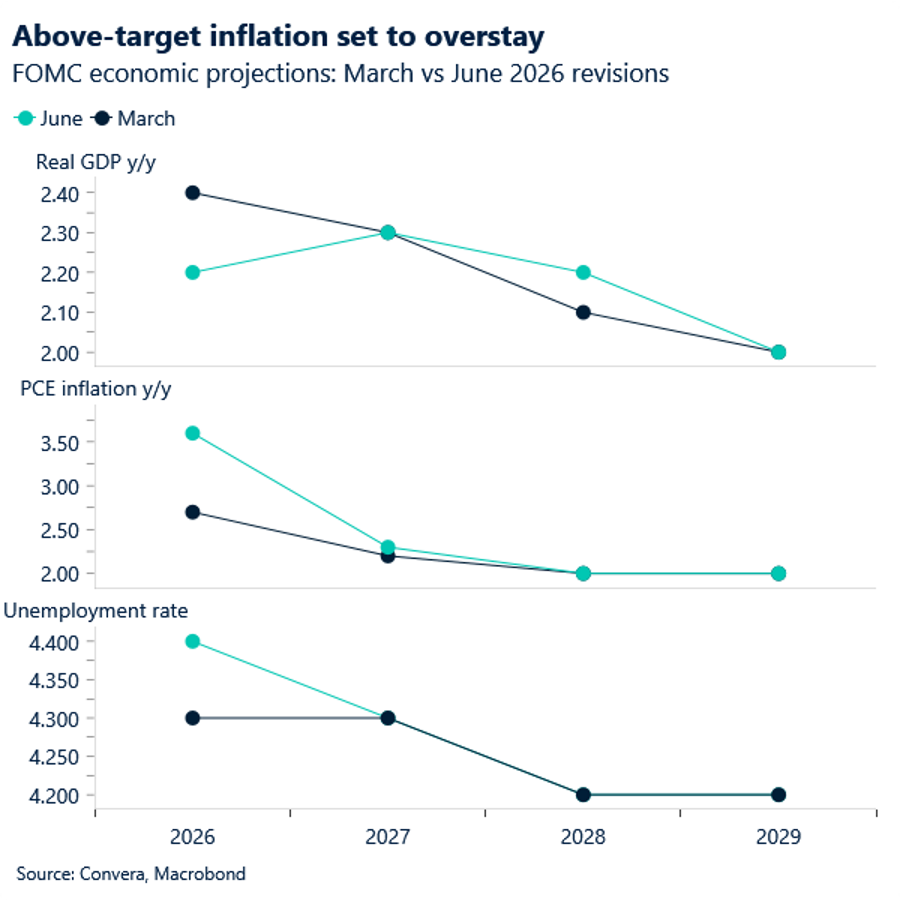
The updated projections indicated nine officials expect at least one 25 basis point hike this year, with six of those looking for at least two increases, while another nine anticipate either no change or a rate cut. The overall feel carried a clear hawkish tint, reviving momentum that had softened in the wake of a subdued May’s CPI print and the recent pullback in oil prices. The dollar caught a bid, while front-end yields moved higher by as much as 13 basis points.
Although markets were perhaps more focused on how Kevin Warsh would channel that hawkish bias in his press conference as Fed chair, his remarks largely echoed the tone of the statement. He pointed to solid activity momentum and building inflationary pressures without materially sharpening the message. What did stand out was in fact his continued emphasis on limiting forward guidance. Warsh reiterated his preference for a more restrained communication style, highlighting changes such as shorter post-meeting statements and his decision to step back from submitting individual projections to the Summary of Economic Projections (SEP).
In yesterday’s note, we argued that the bar for a hawkish lean was relatively low. Concerns had been building around the risk of politically driven dovishness, yet that outcome never materialised. Warsh was unlikely to open his tenure with an explicitly dovish tone, particularly against the backdrop of a still solid macro environment and firming inflation pressures that leave little room for an easing bias. At the same time, expectations for forward guidance were already restrained, as markets understood Warsh’s aversion toward forward guidance. Pricing such vagueness proved challenging, leaving investors to lean more heavily on the data flow, and the broader FOMC stance, which together continued to point to a distinctly hawkish policy stance. Coincidentally, a blowout retail sales release just hours ahead of the Fed had already begun to build momentum around this more data-dependent approach to forward guidance under Warsh.
Away from policy, President Trump has signed an interim agreement aimed at ending the conflict with Iran and reopening the Strait of Hormuz ahead of schedule on Friday. The move once again highlights his clear resolve to bring the months-long war to a close, even at the cost of abandoning several red lines that had previously been cited to justify the conflict, including Iran’s ballistic missile programme and uranium enrichment. It remains unclear whether Iran has begun taking immediate steps to reopen the strait. Even so, the announcement weighed on oil prices while lifting equities, which had been under pressure following a hawkish signal from the Fed.
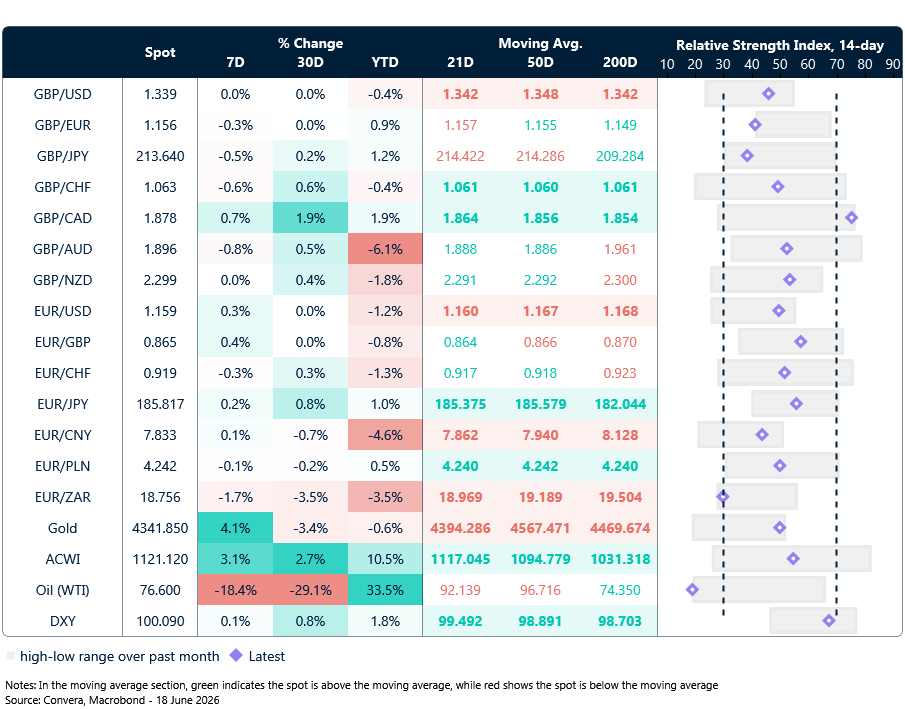
The US dollar index ended yesterday’s session 0.6% higher and is currently testing resistance near 100.250. Into the end of the week, the balance of risks leans modestly to the downside for the dollar, provided de-escalation momentum continues to build. That said, investors may still require more tangible progress, particularly confirmation of the strait’s reopening, before positioning for a clearer pullback away from the 100.250 resistance level.
EUR: Fed bites sends euro back to 1.15
EUR/USD dropped to lows near 1.15 yesterday, levels not seen since late March, following a hawkish Fed, while snapping a steady climb back toward 1.16. The pair had already come under pressure after a strong jobs report a couple of weeks earlier, with yesterday’s policy decision reinforcing that hawkish momentum. Such moves in fact highlight the renewed influence of rates on FX, after months in which geopolitics had been the dominant driver. Although Iran war headlines appear to have lost some of their sway in moving FX, we still expect further de-escalation momentum into the end of the week to support a modest retracement in EUR/USD, with the pair holding firmly above the 1.15 support area.

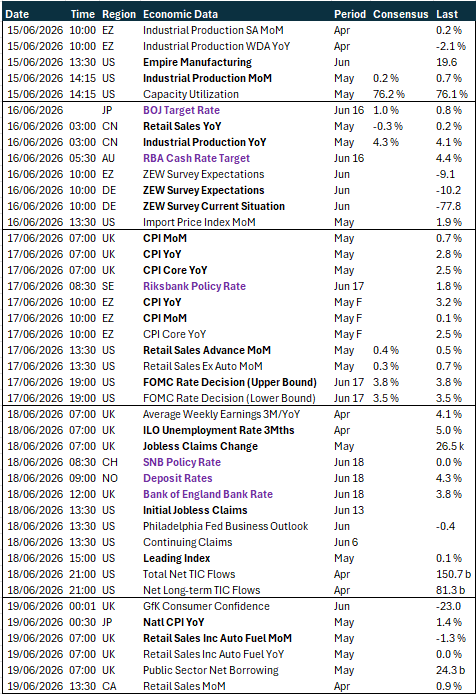
Meanwhile, GBP/EUR showed a muted reaction to this morning’s UK labour market report, which came in stronger than expected. Wage growth edged higher, while the unemployment rate declined to 4.9% from 5%. Markets largely looked through the more upbeat release as the broader trend still points to a cooling labour market, with the Bank of England’s reaction function remaining centred on inflation.
GBP/EUR in fact showed greater sensitivity to yesterday’s softer-than-expected headline inflation print, despite a surprise pickup in services inflation. The pair edged lower before holding support around 1.1550. Today’s Wakefield by-election is unlikely to generate a meaningful market response, while the BoE policy meeting remains the clearest downside risk for sterling, recent data strengthens that bias. Inflation has come in below the MPC’s forecasts so far this quarter. Against this backdrop, and with signs of progress toward de-escalation between the US and Iran, any hints of a more optimistic inflation outlook from the MPC today is likely to reinforce expectations of a softer policy stance, which in turn could weigh on the pound.
Market snapshot
Table: Currency trends, trading ranges & technical indicators
Key global risk events
Calendar: June 15-19
All times are in BST
Have a question? [email protected]
*The FX rates published are provided by Convera’s Market Insights team for research purposes only. The rates have a unique source and may not align to any live exchange rates quoted on other sites. They are not an indication of actual buy/sell rates, or a financial offer.