


Key Takeaways
- The US dollar rebounded as markets await the inflation report, reflecting changing rate expectations and geopolitical tensions.
- The euro’s prospects depend on ECB policy amid stagflation concerns, with markets already pricing in potential hikes.
- GBP held steady thanks to de-escalation momentum, but faces challenges from US inflation data and geopolitical risks.
- Today’s CPI report will influence future Fed policy and market dynamics, particularly in the context of inflation pressures.
- Overall, the evolving economic landscape highlights the challenge of balancing growth and inflation amid geopolitical uncertainties.
USD: Dollar rebounds ahead of CPI report
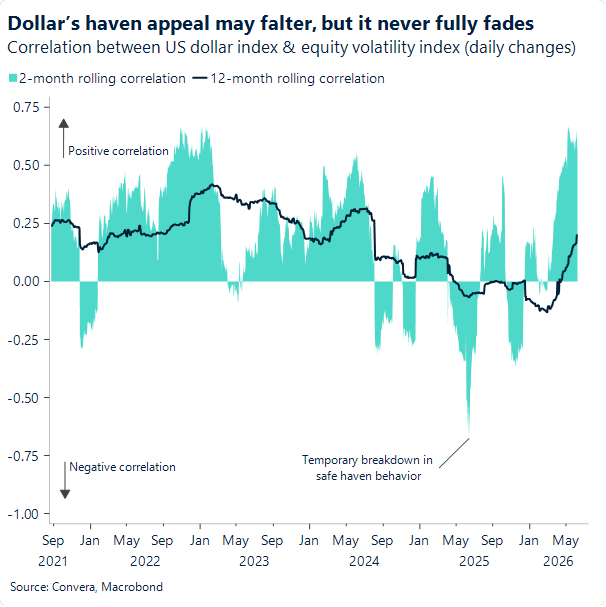
The US dollar has rebounded from its weekly low after equities came under pressure on a sharp rotation out of technology and semiconductor stocks, compounded by fresh concern over the latest US-Iran tensions. Although much of that selloff later reversed, the dollar held onto most of its gains. FX markets remain focused on the repricing in rates, while intermittent safe-haven demand continues to shape trading through the middle of the week. The US dollar Index is still holding near 99.7 even as it remains modestly lower on the week, with investors now waiting for today’s inflation report.
The latest shift in rate expectations followed a stronger US labor report, which reinforced the view that the Fed has room to stay on hold. The policy picture is less straightforward beyond that. Hiring remains firm, but softer wage growth and signs of slower consumer demand argue against any near-term move to tighten further. That leaves the Fed in a narrow range: in no rush to cut, but with little reason to hike. For markets, the main implication is that expectations for near-term easing have been pushed back, and today’s CPI report is the next test of that view.
At the same time, disruption risks around the Strait have brought oil back into focus. A renewed rise in crude would add another complication to the inflation outlook just as markets are reassessing the path of Fed policy. Oil has yet to break meaningfully higher, but the risk has been enough to keep volatility elevated heading into the data.
That caution is reinforced by stalled US-Iran diplomacy. Talks remain bogged down over sequencing and compensation, with Tehran seeking immediate financial relief and Washington resisting early concessions. The direct market impact has been limited so far, but the issue remains live. The next move in markets will depend in part on whether inflation keeps the recent hawkish repricing intact, or gives investors room to shift back toward a less restrictive policy path.
EUR: Asymmetry around the euro has shifted
Ahead of Thursday’s European Central Bank (ECB) meeting, the key question for the euro is no longer whether the ECB hikes, but whether additional tightening still offers meaningful support to the common currency in an increasingly stagflationary environment.
Markets have already priced much of the ECB story. Nearly three hikes are discounted by year‑end, limiting scope for further hawkish repricing unless policymakers deliver a materially tougher signal. At the same time, the eurozone economic backdrop continues to deteriorate. Growth indicators remain soft, energy prices elevated, and the ongoing Middle East conflict is feeding more directly into confidence and activity data.
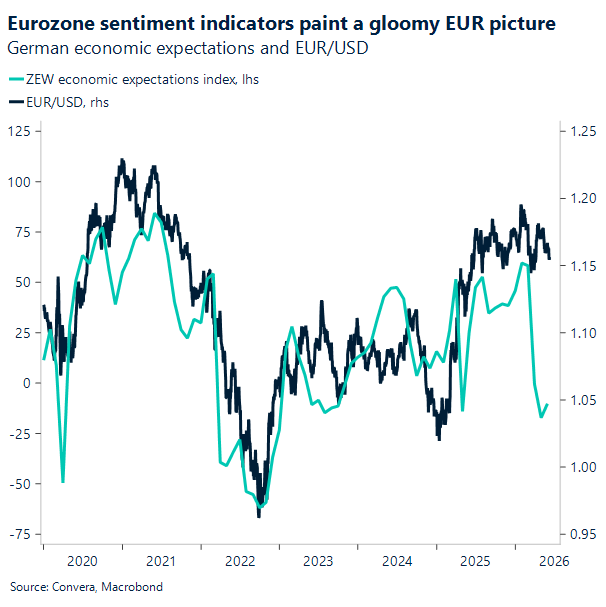
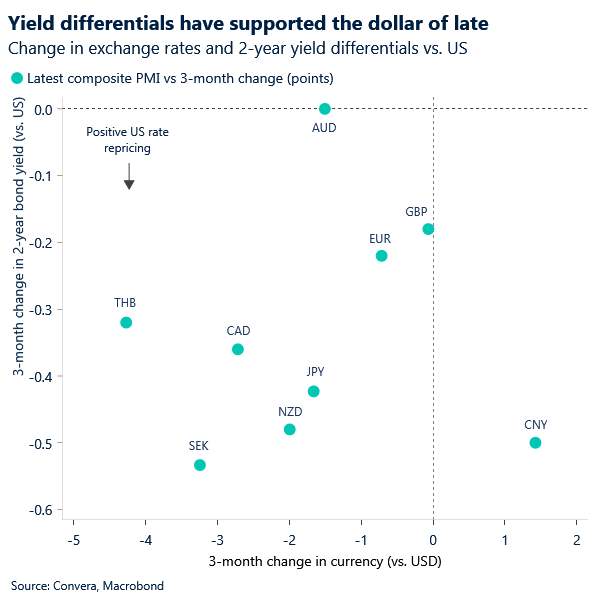
This is changing the balance of risks for EUR/USD. Earlier in the conflict, narrowing rate differentials helped underpin the euro as investors leaned toward a more hawkish ECB while fading the US dollar’s geopolitical premium. However, now, stronger US data and persistent inflation pressures have revived expectations that the Federal Reserve may need to remain restrictive for longer, reintroducing a more durable yield advantage for the dollar.
In addition, ECB tightening is no longer a straightforward euro positive. Thursday’s updated ECB staff forecasts will be closely watched for exactly this reason. Any upward revision to inflation projections alongside weaker growth forecasts would reinforce fears that the ECB is tightening into a stagflationary slowdown – a policy mix that is not historically supportive for a currency.
As a result, the asymmetry around the euro has shifted. An ECB hike may still generate a short‑term bounce, especially alongside any renewed Middle East de‑escalation headlines that temporarily improve risk sentiment and weigh on the dollar. However, such rallies are likely to lack momentum without an improvement in eurozone growth dynamics or a softer Fed outlook. Today’s US inflation data will test the latter.
GBP: Sterling holds firm before key US data
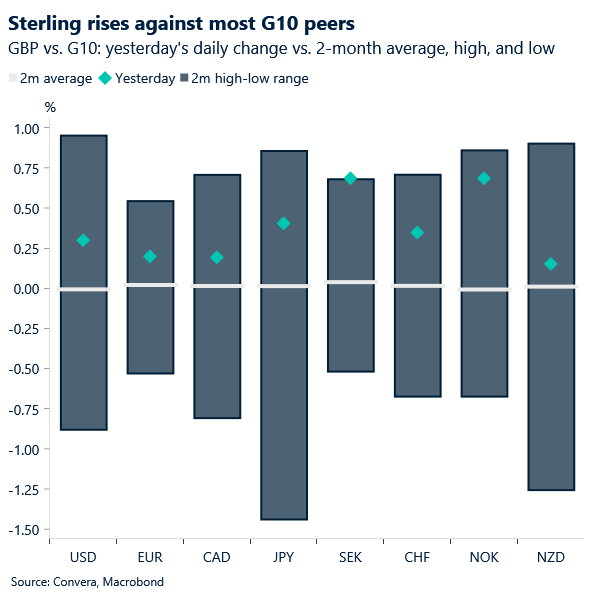
GBP showed broad-based strength yesterday as a revival of de-escalation momentum supported the pro-risk currency, even as the US and Iran exchanged further strikes overnight. Investors appear to be focusing more on the accompanying rhetoric than on the actions themselves, with the US in particular framing the moves as limited and defensive in nature. This has helped prevent a meaningful deterioration in risk sentiment.
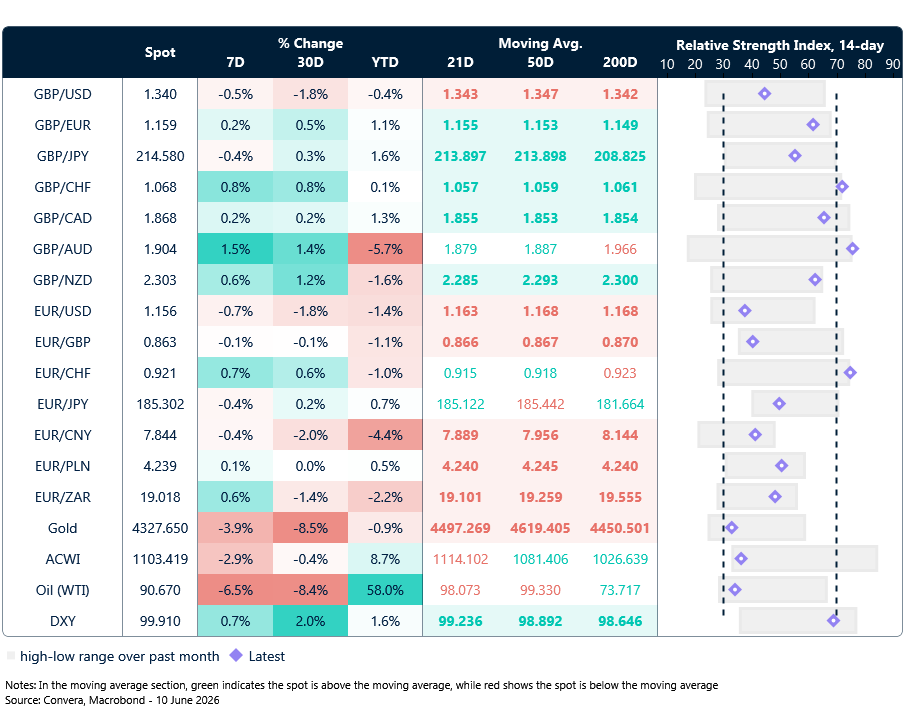
GBP/USD rebounded from the 1.33 lows following Friday’s selloff, while GBP/EUR edged closer to the 1.16 level. Meanwhile, a crowded short positioning environment, combined with attractive carry relative to G10 peers, continues to contain bearish pressure on sterling stemming from a deteriorating macro outlook and political uncertainty. A largely priced-in political risk premium adds to this more resilient tone.
Whether GBP/USD can reclaim the 200-day moving average near 1.3420 this week will depend on whether the Fed’s hawkish repricing narrative continues to dominate, with today’s US inflation release providing a key test. A headline print above 4% year-on-year would likely limit a more decisive move through the 1.34 level. This outlook will also depend on how the situation in the Middle East evolves. The market remains highly headline-driven, with several instances where an apparent breakthrough has quickly given way to renewed stalemate. Given this pattern, we lean cautiously and remain sceptical that geopolitics alone can drive meaningful upside in GBP/USD for now.
Market snapshot
Table: Currency trends, trading ranges & technical indicators
Key global risk events
Calendar: June 8-12
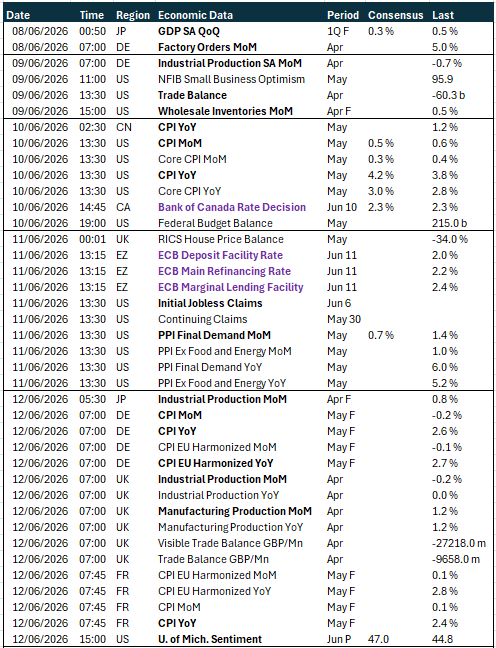
All times are in BST
Have a question? [email protected]
*The FX rates published are provided by Convera’s Market Insights team for research purposes only. The rates have a unique source and may not align to any live exchange rates quoted on other sites. They are not an indication of actual buy/sell rates, or a financial offer.