


USD: Retail strength vs. rate path reality
Antonio Ruggiero
Yesterday, US retail sales came in above expectations. The value of retail purchases – not adjusted for inflation – rose by 0.6% in August, following a similar gain in July (which was revised upward by 0.1%). Meanwhile, the control group – which excludes volatile categories such as food services and gasoline stations (heavily affected by price swings) – increased by 0.7%, beating expectations of 0.4%, and up from 0.5% in July.
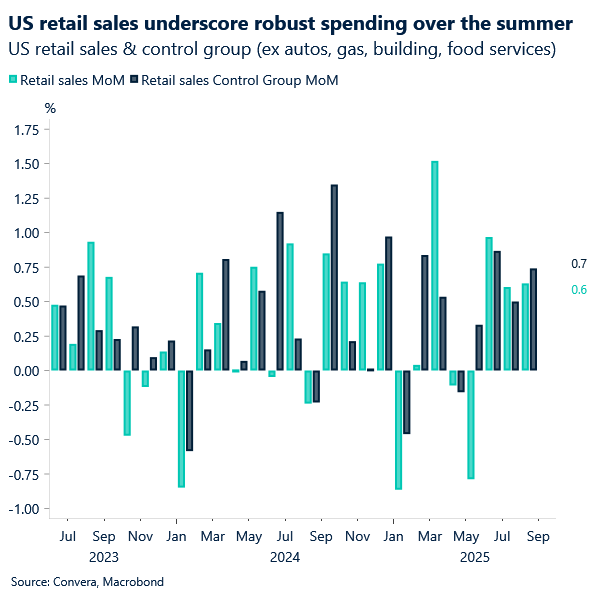
Despite tariffs, the data underscores robust consumer spending over the summer, even amid a subdued labour market and lingering price pressures. A buoyant stock market, with major indices hitting fresh highs, may have contributed to this resilience – boosting consumer confidence and spending habits, despite the gloomier tariff-related backdrop. The prospect of an easing Fed may also have helped brighten the outlook for both businesses and households.
As for the dollar, the upbeat retail sales data wasn’t enough to shift investor expectations for a rate cut at the much-anticipated Fed policy meeting today. One reason is that the retail figures are not inflation-adjusted, and with inflation having risen – albeit less than expected – partly due to tariffs, the data offers limited counterevidence for the Fed to delay cutting rates.
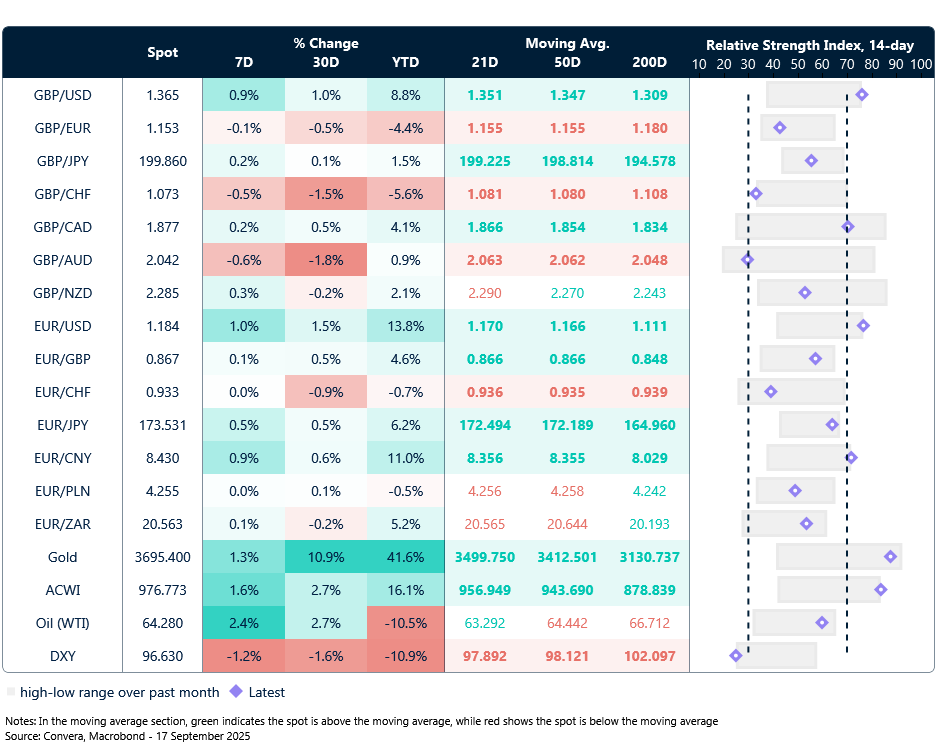
Pre-positioning ahead of the meeting has weighed on the dollar, with the DXY falling roughly ~0.7% yesterday, nearing year-to-date lows of 96.377. In the current environment, investors interpret the potential start of the Fed’s easing cycle as more bearish for the dollar than usual. Concerns over Fed independence – with Powell’s possible replacement in May by a dovish Trump appointee – suggest a longer and more aggressive easing path. Also, the still-fragile sentiment toward the greenback is likely to keep investors hedging against further dollar weakness. With rates coming down and reducing the cost of hedging, that protection becomes even more attractive. These forces compound the bearish pressure that expectations of lower rates alone exert on a currency.
We don’t expect DXY to breach support at 96.600 today. The greenback has fallen nearly 1% week-to-date on expectations that the easing cycle will begin this week. However, with little direct commentary from Powell confirming the dovish tilt, the speculative nature of this re-pricing may face a reality check. A more dovish – yet grounded and cautious – speech today could lift the dollar back above the 97.000 level.
EUR: Euro extends to 4-year high
George Vessey
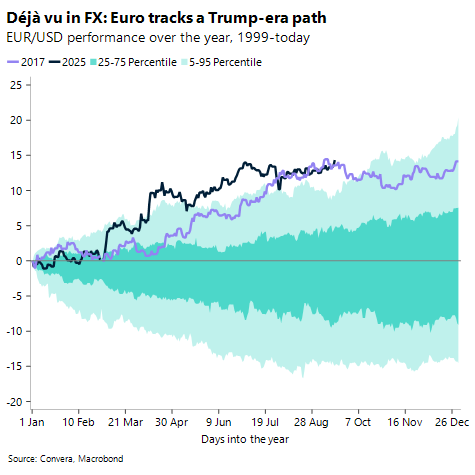
The euro climbed to its strongest level in four years against the US dollar as traders prepared for an interest-rate cut from the Fed this week that will cement its diverging trajectory from the European Central Bank (ECB). The common currency is up over 14% in 2025, and although the path this year isn’t a repetition of 2017, the resemblance is unmistakable – suggesting that structural forces in FX often re-emerge under new guises.
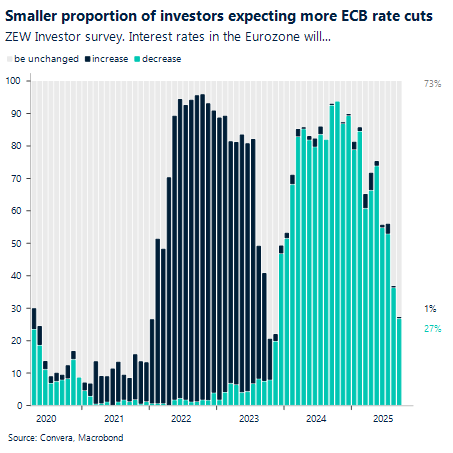
Support for the euro continues to stem from expectations that the ECB has reached the end of its easing path, while the Fed is widely expected to deliver three 25bp cuts by year-end. This contrast in policy trajectories has re-anchored EUR/USD to rate differentials, especially following last week’s dovish repricing of Fed expectations after softer U.S. labour market data.
German investor sentiment added another layer of support, with the ZEW expectations index rising to 37.3 in September from 34.7, suggesting cautious optimism about the economic outlook. While current conditions deteriorated as expected, forward-looking indicators point to a potential recovery, aided by fiscal expansion and accommodative ECB policy. Still, concerns linger over the delayed impact of higher U.S. tariffs on Germany’s export-heavy economy, which could temper the rebound narrative.
Technically, EUR/USD has breached a key resistance zone that could open the door to a test of the psychologically significant $1.20 threshold. Option markets appear to be positioning for such a move, with one-week risk reversals showing a steady uptick in demand for euro calls since the ECB signalled its pause.
However, euro bulls face a structural headwind: the fading rotation into European assets. According to Bank of America’s latest fund manager survey, enthusiasm for EU equities has waned, with the overweight position narrowing and the gap to U.S. equity underweights shrinking to its lowest since February. If equity inflows were a key tailwind for the euro in the first half of the year, their reversal could imply a more laboured path higher for EUR/USD in the months ahead.
GBP: Sterling breaches 1.36 – but can it hold?
Antonio Ruggiero
GBP/USD has been testing the key resistance level at 1.36 throughout this year’s sterling rally, climbing ~9% year-to-date amid persistent USD weakness. The pair had only managed to break above it once – briefly at the end of June – until yesterday, when GBP/USD reached a two-month high of 1.3672.
Along with the widely expected dovish turn by the Fed, yesterday’s jobs report, and the just-released inflation data have further diminished the likelihood of easing by the Bank of England, supporting sterling. Markets are currently pricing in just a 0.1% probability of a cut at Thursday’s meeting. While headline inflation, both month-on-month and year-on-year, came in as expected, rising 3.8% from the previous year, it remains at its highest level in over 18 months – still well above the Bank’s 2% target.
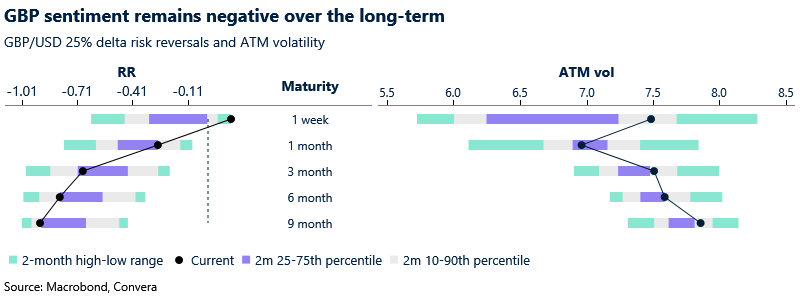
Having said that, the pound’s grip on these highs appears fragile. Structural headwinds remain, and risk reversals – a gauge of sentiment toward a currency – continue to point to GBP-negative positioning further out. Only the 1-week tenor, reflecting this policy-heavy window, shows a preference for GBP over USD.
GBP/USD has its sights set on early-July highs above 1.37, with no major resistance thresholds standing in the way. Still, we remain skeptical about this target for now. Market expectations for the Fed have been highly speculative, with little concrete guidance from Powell himself – allowing a tone, perhaps more dovish than reality, to gain traction rapidly.
It’s likely that his tone today, while clearly more dovish, will reaffirm a Fed that is willing to cut, but still uncertain about the path ahead, with price pressures remaining a very real concern. In that case, GBP/USD could once again slip below 1.36.
GBP/USD on upbeat momentum
Table: Currency trends, trading ranges and technical indicators
Key global risk events
Calendar: September 15-19
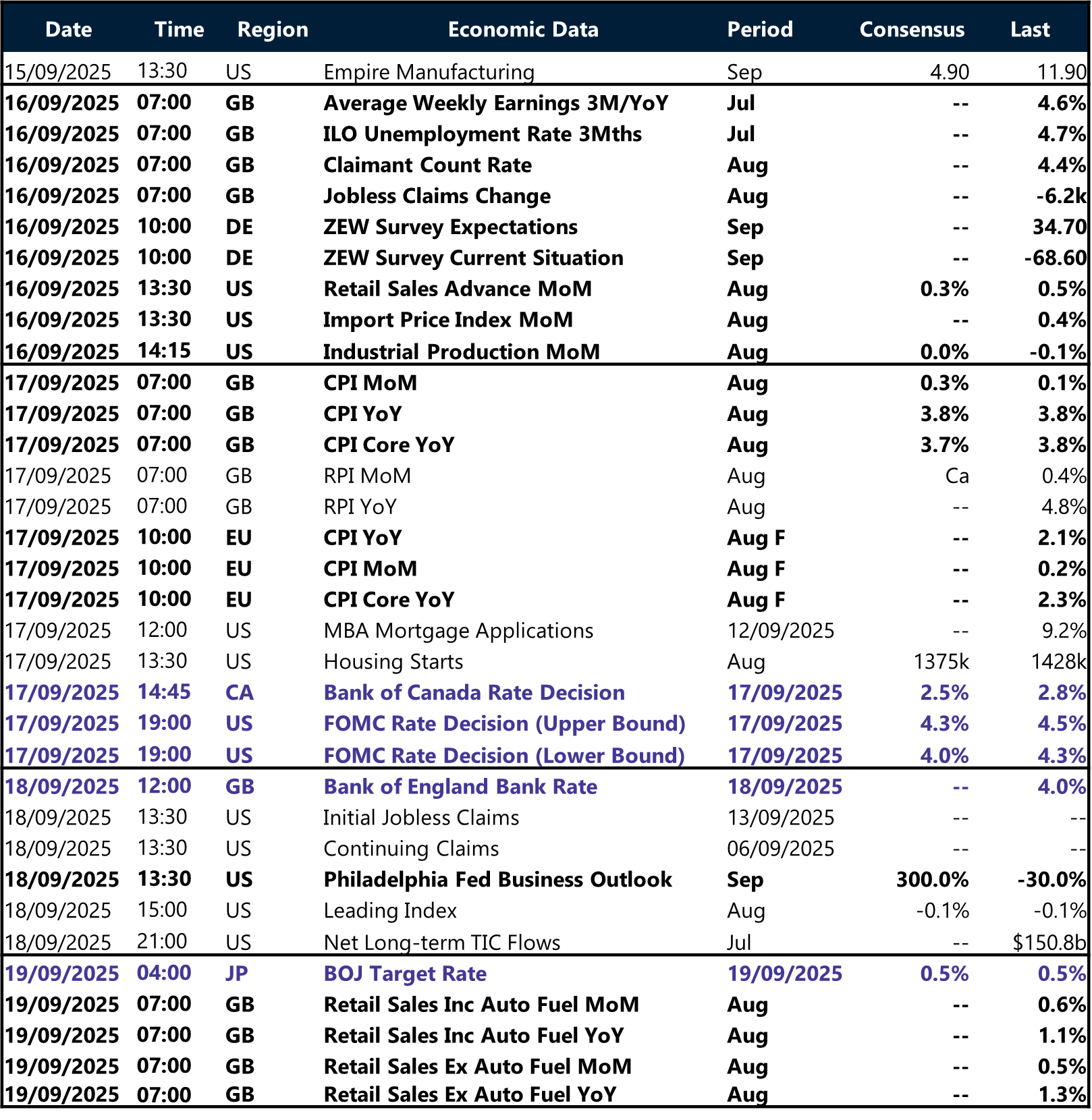
All times are in BST
Have a question? [email protected]
*The FX rates published are provided by Convera’s Market Insights team for research purposes only. The rates have a unique source and may not align to any live exchange rates quoted on other sites. They are not an indication of actual buy/sell rates, or a financial offer.