


USD: Powell’s farewell, Fed fractures deepen
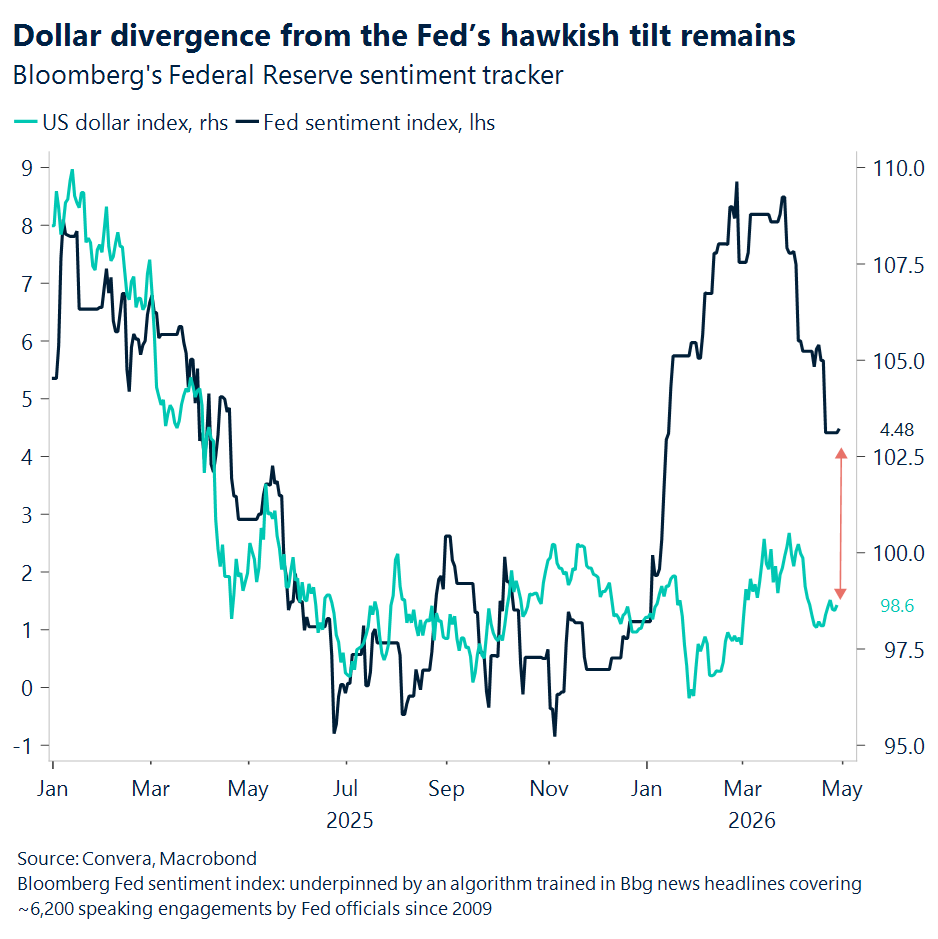
The Federal Reserve (Fed) held the funds rate at 3.50%–3.75%, exactly as expected, but the statement felt less like a routine hold and more like an acknowledgement that the risk balance has become more complicated. Policymakers explicitly elevated the geopolitical backdrop, noting that the Middle East conflict is driving a high level of uncertainty, while also upgrading inflation language to “elevated,” explicitly tying part of that to higher global energy prices. The growth description stayed broadly constructive, activity “solid,” unemployment “little changed,” job gains “low on average”, but the energy channel has clearly moved from a risk footnote to something closer to the policy narrative.
The surprise didn’t come from the decision, but the dissent. The decision landed 8–4, the most dissents in a single meeting since 1992, and the split wasn’t even pointing in one direction. One member wanted an immediate cut, while three others supported holding rates but rejected the statement language that preserves an easing bias, effectively arguing the Committee shouldn’t be pre‑signaling cuts when energy and uncertainty are rising again. Powell’s press conference put some shape around that debate: he suggested the center of the Committee is edging toward a more neutral posture and emphasized that changing guidance is itself “signaling,” implying the majority didn’t feel compelled to send that signal yet, even if the conversation is clearly getting more “vigorous.”
The presser also leaned into a “wait-and-see” stance that is quietly firmer than the easing-bias line might imply. Powell argued tariff-driven inflation should fade as a one-time effect and begin to subside soon, while also acknowledging that the oil impulse is still in front of the data and could bleed into core depending on how long disruptions last. That combination, tariffs fading, energy uncertain, basically validates patience: policy is near the high end of neutral / mildly restrictive, no one is calling for hikes “right now,” but the bar for cuts is higher than it was a few months ago. Markets briefly flirted with a sharper front-end repricing, but the bigger driver on the day was energy: oil surged, with WTI settling around $105 and Brent around $115, reinforcing the sense that crude is still the macro shock absorber, and it’s still leaking into rates and risk sentiment.
The other storyline, impossible to ignore, was the transition. Powell framed his decision to stay on the Board (for now) as institutional rather than political, warning the Fed is being “battered” by legal assaults and stressing that independence is fundamentally about making policy without political considerations. He also tried to pre-empt any “shadow chair” narrative, signaling he intends to keep a low profile once the handoff occurs, while publicly wishing Warsh well and saying he’ll take him at his word on resisting political pressure. In that light, the hawkish dissents can be read two ways at once: a genuine debate about guidance under supply shocks, and an early glimpse of how hard it may be for the next chair to rebuild consensus, especially if energy stays high and the market keeps expecting “calming” headlines that don’t actually restore physical flows.
CAD: Oil shock raises BoC’s reaction function
The headline still reads like a non‑event, the Bank held at 2.25%, but the April package did more work than a standard hold. The MPR is formalizing a “two‑shock” framework and then stress‑testing the tail risks. Tariffs and trade uncertainty keep the growth track on a lower path, while the Middle East conflict is showing up as an oil-driven inflation pulse that is immediate and visible, but still highly conditional beyond the next few prints, assuming oil gradually eases in the Bank’s base case. In that sense, the hold is the easy part; the message is that the forecast is only as good as the geopolitical and trade assumptions underpinning it.
What matters for markets is that the Bank continues to treat this as an energy-and-confidence shock, not a demand boom. The MPR leans into the idea that Canada’s status as a net energy exporter lifts national income when oil rises, but it also stresses the offset through the household squeeze from gasoline and higher costs, which keeps the aggregate growth impulse modest even if the composition shifts. That maps neatly onto the published profile, growth improves only gradually, slack is absorbed slowly, and the economy doesn’t suddenly look like it needs a restrictive policy response unless inflation dynamics broaden.
On inflation, the Bank is now drawing a clearer line between looking through first-round energy effects and leaning against persistence, and the press conference added a hawkish edge to that distinction. The statement and MPR both frame the near-term run-up as gasoline-led, inflation rises because oil rises, and the base case still has inflation returning toward target as oil assumptions do the heavy lifting. But the presser sharpened the reaction function: Rogers’ point that Canadians have little tolerance for inflation, and that the Bank would have no issue adjusting rates if oil stays high long enough to create second-round effects, makes the conditionality feel more binding than it reads on paper. At the same time, Macklem’s emphasis that the required “adjustments” shouldn’t be substantial if the Bank’s scenarios play out is an important qualifier, it reinforces that the Bank is not hunting for hikes, it is guarding against a regime shift.
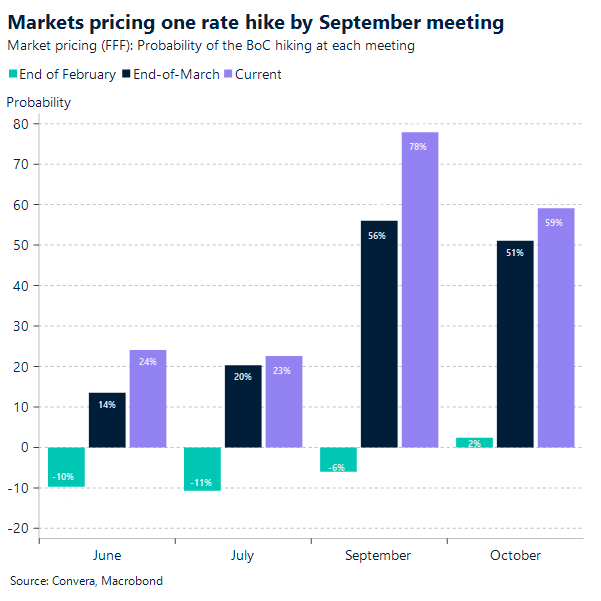
Put together, that’s why this came across as slightly hawkish under the hood even though the policy rate didn’t move. The trigger framework is clearer now: the risk isn’t one uncomfortable headline CPI print; it’s evidence that higher energy costs are leaking into broader prices and expectations in a way that threatens persistence, and the Bank explicitly says it’s watching that closely while standing ready to respond. Against that backdrop, it’s not surprising to see market pricing shifting toward a non-trivial chance of at least one hike later this year, even if the Bank’s base case still supports a hold as long as core stays contained and slack continues to do its job.
EUR: ECB caution, limited FX impact
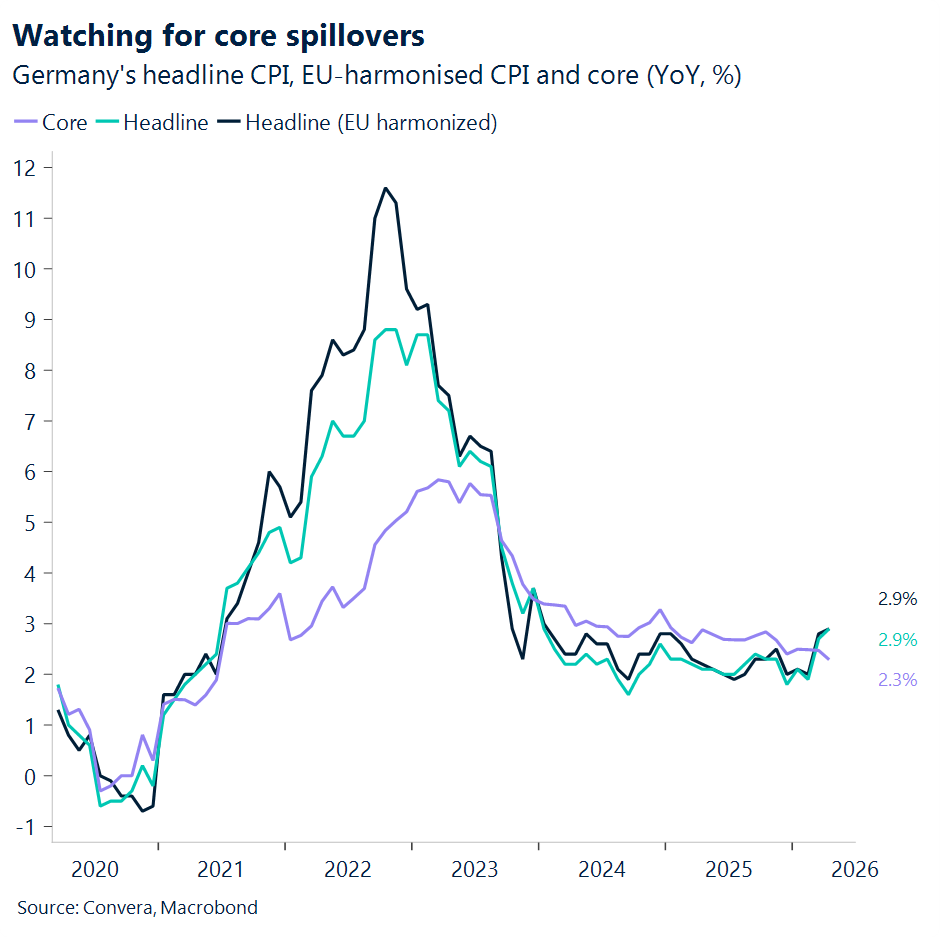
Yesterday’s data showed that Germany’s inflation rose in April, but by less than feared – suggesting the inflationary shock remains, for now, largely confined to higher energy prices, with knock‑on effects still limited. The national CPI rose to 2.9% y/y from 2.7% in March, while the harmonised European measure also stood at 2.9% y/y (est. 3.1%). Core inflation eased to 2.3% y/y from 2.5% previously.
In this context, we expect the ECB to strike a cautious tone while preserving full optionality. With the bar set high for any hawkish lean – amid an insufficient data backdrop to justify a firmer stance – we anticipate limited FX pass‑through. Beyond policy, today’s focus includes Q1 GDP, unemployment data for Germany and the euro area, and April CPI for the bloc.
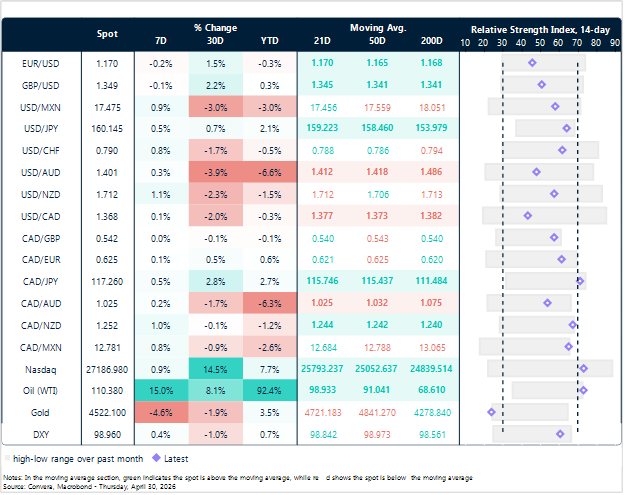
EUR/USD’s re‑assertion above the 200‑day moving average near 1.1680, following earlier de‑escalation hopes, is now being tested. The pair has hovered tentatively above this level in recent days amid fading de‑escalation momentum, before coming under firmer pressure yesterday after the Fed struck a hawkish tone at its policy meeting and President Trump rejected Iran’s interim deal aimed at reopening the strait.
Market snapshot
Table: Currency trends, trading ranges & technical indicators
Key global risk events
Calendar: April 27 – May 01
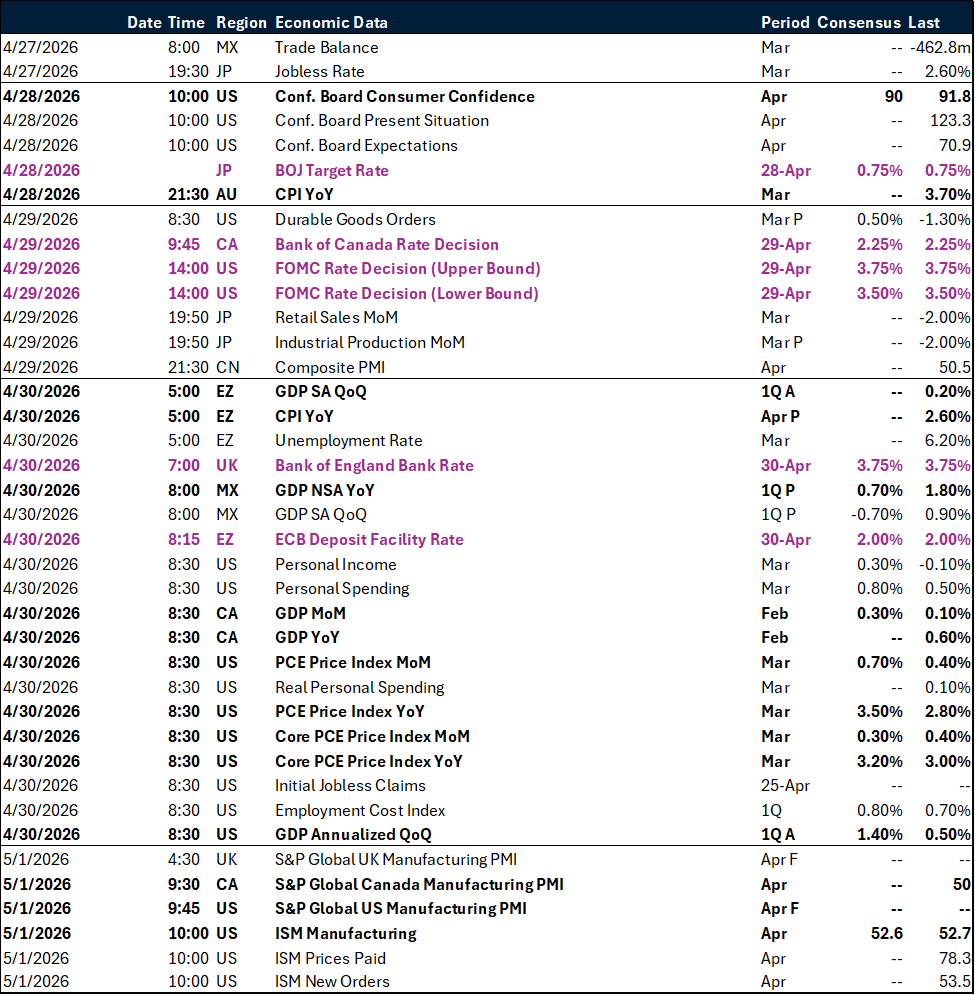
All times are in EST
Have a question? [email protected]
*The FX rates published are provided by Convera’s Market Insights team for research purposes only. The rates have a unique source and may not align to any live exchange rates quoted on other sites. They are not an indication of actual buy/sell rates, or a financial offer.