


USD: Inflation lands, Fed cut locked in
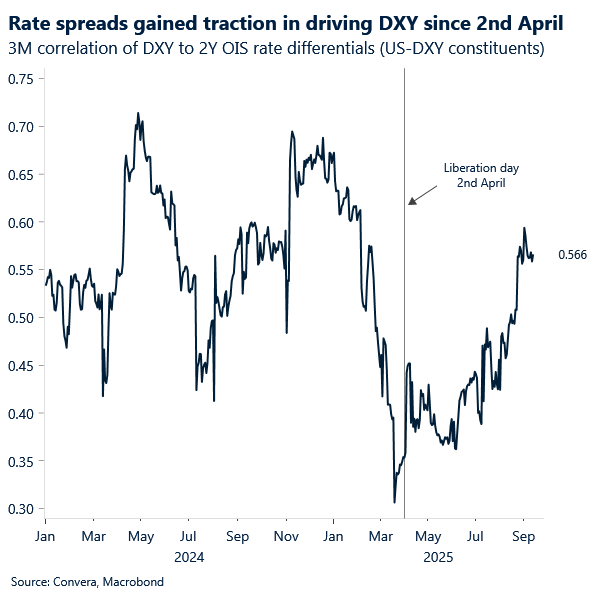
The dollar index (DXY) enjoyed a moderate uptrend yesterday until a broadly in-line inflation report cemented expectations of a Fed rate cut next week, and had the dollar close in loss. While the CPI print wasn’t exactly soft – its breakdown revealed pockets of persistent price pressure – the “orderly” has become the new “soft” in a market primed for tariff-induced inflation, especially over the summer.
Those pressure points, however, were less about tariffs. Key contributors to core inflation (+0.3% as forecasted) included airline fares, used cars, and shelter. Tariff-linked components – best represented by core goods excluding autos – rose just 0.1% month-on-month.
Adding to the case for easing was another rise in weekly initial jobless claims, climbing to 263k from 236k – the highest level since October 2021.
Still, the dollar’s downside remains contained, with short-term easing expectations largely priced in. A more dovish-than-expected Powell next week would be needed to exert further downward pressure on the greenback.
EUR: ECB optimism lifts the euro
There was more optimism in Lagarde’s remarks at the ECB policy meeting press conference than many had expected. While holding rates steady came as no surprise, what stood out was her firm stance on reduced trade uncertainty, which she linked to a more balanced outlook for growth and inflation. Growth and inflation projections for 2025 were revised upward compared to the June forecast.
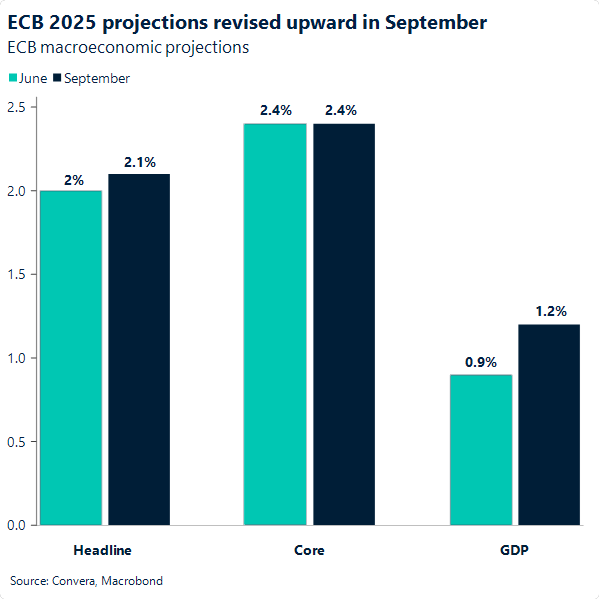
This clarity reinvigorated the hawkish tone: markets further priced out expectations of another rate cut this year, increasingly convinced that the easing cycle has ended. Adding to that conviction were remarks such as “the deflationary trend is over” and confirmation that the decision to hold rates was “unanimous.”
The euro saw a meaningful rebound, cementing itself more firmly in the 1.17 territory – a level the pair had struggled to hold throughout the week. This meeting solidifies the euro leg of the rate differential (vs. the U.S.), reducing the likelihood of further euro upside based solely on ECB policy (unless a hike unexpectedly comes into play, which seems unlikely for now). Instead, it’s the USD leg that still holds sway. Despite most dovish expectations already priced in, it retains the potential to drive EUR/USD higher.
For this week, given the lack of fresh catalysts, the pair is likely to end in the lower end of the 1.17–1.18 range – up a mere 0.1% against the dollar week-to-date.
GBP: UK economy flatlines in July
Sterling remains well-supported this week, underpinned by its high-yielding status thanks to hawkish tilt in Bank of England (BoE) expectations. Elevated front-end rates have helped the pound outperform major peers, particularly in a backdrop of resilient risk appetite. Gains have been most pronounced against safe-haven currencies like JPY, CHF, EUR, and USD.
However, as previously flagged, rising long-end gilt yields – driven by fiscal sustainability concerns and sticky inflation – pose a structural headwind, especially in risk-off conditions. The bullish technical setup had us eyeing a potential retest of the $1.36 August high, but conviction remains low in the absence of fresh catalysts.
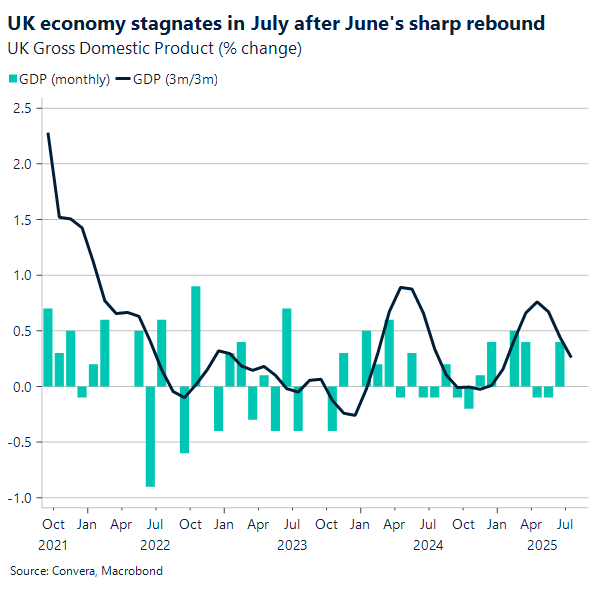
Fundamentally, the pound still faces challenges. UK growth is stalling, and inflation remains a drag. This morning’s data confirmed zero monthly GDP growth in July, matching expectations and following a 0.4% rebound in June. While H1 2025 saw relatively strong expansion – 0.7% in Q1 and 0.3% in Q2 – boosted by government spending and pre-tariff export flows, momentum is fading. The second half is likely to underwhelm as U.S. tariffs bite and labour market conditions soften.
Looking ahead, sterling faces key domestic tests. The BoE is expected to hold rates at 4.00% next Thursday, in line with consensus. But the labour market and inflation reports – both due ahead of the meeting – could heavily influence the tone of forward guidance. The vote split will also be closely watched, given its surprise impact last time.
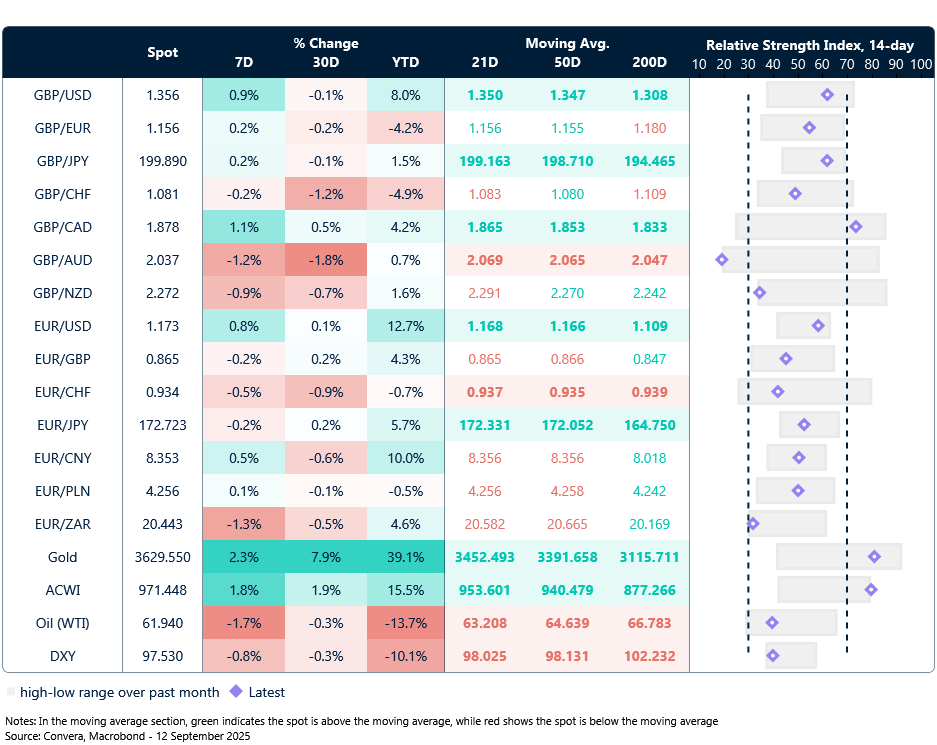
EUR/CHF has more room to fall, as the RSI remains moderately bearish
Table: Currency trends, trading ranges and technical indicators
Key global risk events
Calendar: September 8-12
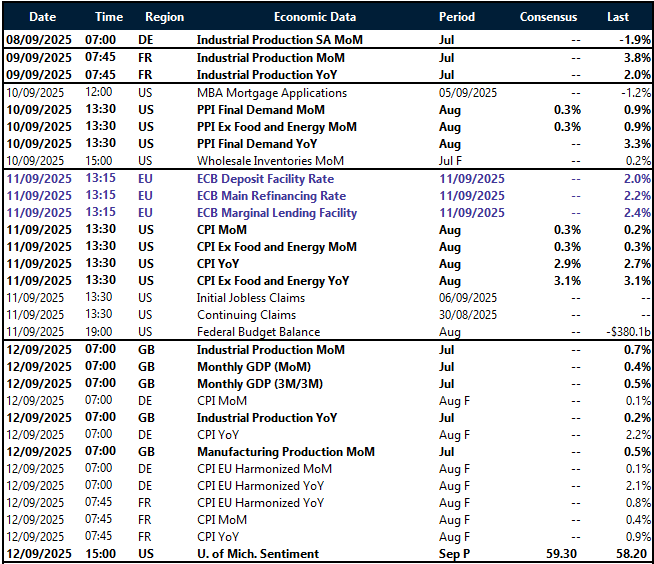
All times are in BST
Have a question? [email protected]
*The FX rates published are provided by Convera’s Market Insights team for research purposes only. The rates have a unique source and may not align to any live exchange rates quoted on other sites. They are not an indication of actual buy/sell rates, or a financial offer.