
Written by Convera’s Market Insights team
Dollar pares post-payrolls gains
George Vessey – Lead FX Strategist
Another stellar US jobs report last Friday further calls into question whether rate cuts by the Federal Reserve (Fed) will commence in June. However, market pricing didn’t shift too much, with odds of a June cut still a coin toss and full year easing steady at 67 basis points. The US dollar pared its gains and ended the week in the red against a basket of currencies as focus shifts to Wednesday’s US CPI data.
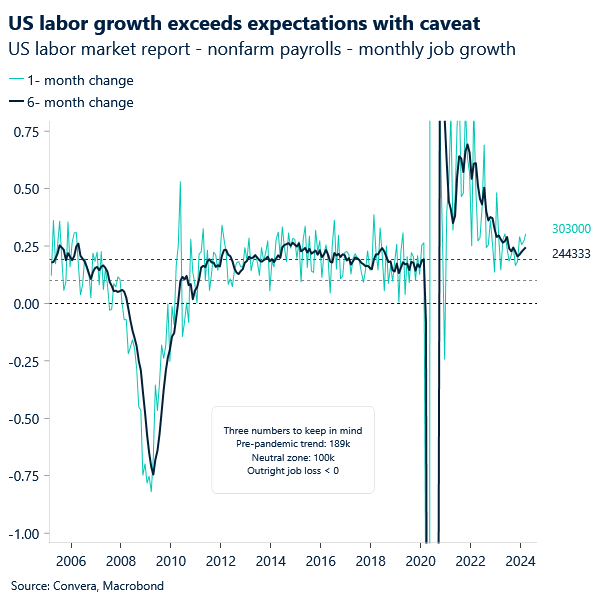
American employers added 303,000 jobs in March, much higher than the 214,000-consensus forecast. It was the fourth consecutive print above 200 thousand as the health care sector and government contributed just shy of 50% to the overall number. The labour market continues to defy expectations of a slowdown and is currently in its 5th longest expansion in US history. Bond yields rose on the news and the dollar spiked higher, but the rally fizzled out in a sign that the dollar’s asymmetric reaction function still stands – stronger US data isn’t strengthening the dollar as much as softer data is weakening it. The 105 level proved a resistance barrier to the dollar index once again, and unless the Fed reneges on its signal to cut rate three times starting from June, we think upside could be limited from here. Most soft US indicators have started turning south, supporting our call for a Fed cut in June, but risks to our base case still linger amidst the rise in oil prices from tensions in the Middle East fuelling investor expectations that rates are likely to stay higher-for-longer. The incoming macro data and developments in financial markets will therefore be closely watched.
Inflation in the US has hovered around the 3% – 4% range since the middle of last year, showing how the disinflationary impulse has slowed. However, markets took comfort in the continued fall of core inflation, which has eased to 3-year lows in February. This trend must continue to support risk assets and for the probability of a June rate cut to be maintained.
UK GDP in focus this week
George Vessey – Lead FX Strategist
The British fell to a near 2-month low last week before jumping back above its 200-day moving average and eking out a weekly gain against the US dollar despite the strong US jobs growth figures. Elsewhere sterling struggled though, recording its sixth weekly decline in a row against the euro, but finding support at its 100-day moving average at €1.1646. Key UK macro data is in the spotlight this week, which could influence BoE pricing and thus the pound’s direction.
Revised PMI data last week revealed the UK manufacturing PMI jumped to a 20-month high in March, signalling a modest rise in activity. The print rose above the break-even 50 level – finally in an expansion territory for the first time since July 2022. This bodes well for the GDP figures for the UK this week. The UK economy entered a technical recession at the end of last year, albeit a shallow one, but a rebound in monthly GDP in January is expected to be followed by a small 0.1% gain in February, suggesting the UK is heading for positive overall first quarter growth. The UK’s economic outlook is likely to modestly improve through 2024, but with inflation expected to fall below the Bank of England’s (BoE) 2% target over the next month or two, this puts pressure on the BoE to cut interest rates sooner, which could weigh on sterling.
Sterling’s yield advantage has deteriorated against many major peers, weighing on the pound, but we note seasonality has been strong for GBP/USD in April, which has rallied in 16 out of the last 20 years. Most gains tend to arise towards month-end due to strong dividend repatriation flows so we could see the pair trending closer towards $1.28 before the month is out.

Euro stumbles to a best Q2 start since ‘15
Ruta Prieskienyte – FX Strategist
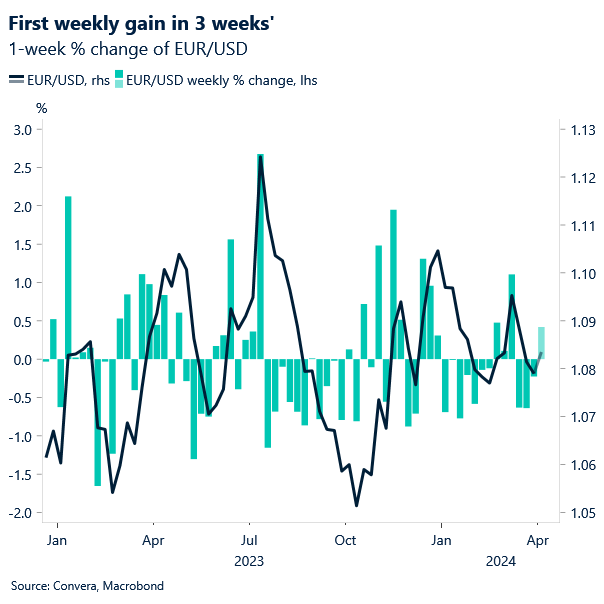
The start to Q2 delivered mixed, but net positive results for the euro. Having opened near 7-week lows of around $1.075 against the US dollar, luck turned to favour the common currency thanks to disappointing mid-week US data. The pair managed to close higher for the first time since mid-March, marking the best start to Q2 since ‘15, albeit from a depressed starting point. Meanwhile, the Swiss franc has depreciated against the euro for 9 consecutive weeks, marking its longest weekly losing streak in almost 21 years.
Last week’s data confirmed two key narratives: the Eurozone economy is bottoming and inflation across the bloc is edging closer to the ECB’s 2% target. The preliminary March Eurozone inflation report matched November’s 28-month low at 2.4% y/y, with the core rate cooling to an over 2-year low. The decline was driven by the goods sector, while the services component remained sticky, potentially posing a slight concern for the ECB. On the economic growth front, buoyant services PMIs reports were followed by disappointing retail sales and slugging growth in German factory orders. Although, the picture is pointing to a sluggish economic performance for Q1, the bloc does appear to be bottoming.
The calendar this week is front loaded, with US events dominating the agenda on Tuesday, and the ECB April rate decision scheduled for Thursday. The ECB is expected to hold rates unchanged at record highs but is likely to initiate preparations for a shift in monetary policy in June. We could see some dovish signals at this week’s meeting, which may weigh on the euro from an already vulnerable position. However, the impact is likely to be short lived as there is not much more room for the markets to price in additional easing, with the swap implied probability of a June rate cut already around 90%.
CAD slides as labour market weakens
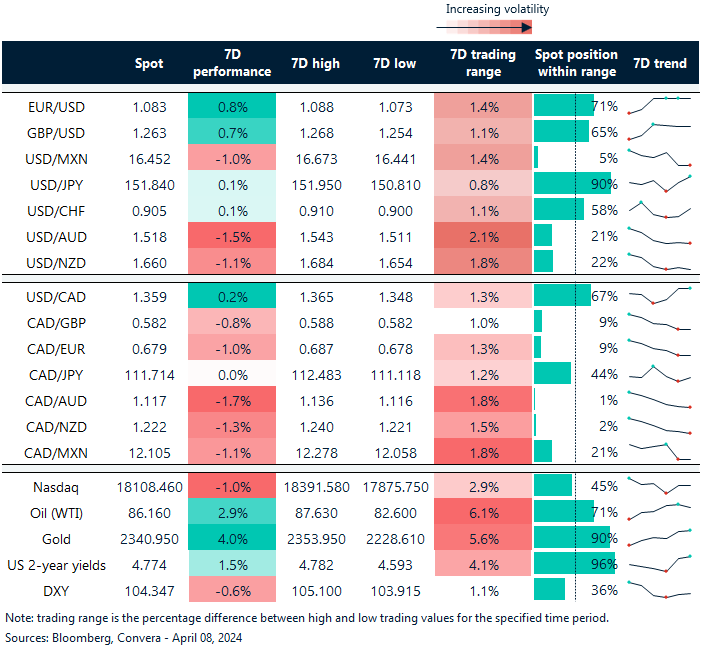
Table: 7-day currency trends and trading ranges
Key global risk events
Calendar: April 8-12

Have a question? [email protected]
*The FX rates published are provided by Convera’s Market Insights team for research purposes only. The rates have a unique source and may not align to any live exchange rates quoted on other sites. They are not an indication of actual buy/sell rates, or a financial offer.