


Key Takeaways
- The Dollar remains strong due to geopolitical risks and a resilient US economy, yet struggles to gain upside amid softening inflation and labor data.
- EUR/USD faces hesitation with no clear trend, even as oil prices rise, highlighting uncertainty in the eurozone economy.
- GBP sees a stable reaction despite UK inflation reaching a four-month high, with markets focused on external energy pressures rather than domestic demand.
- The bond market’s sell-off reflects broader inflation worries, impacting perceptions of the euro and sterling.
- Upcoming FOMC minutes could challenge current Fed narratives, influencing market expectations regarding interest rates.
USD: A two-sided story
The US dollar sits at an interesting juncture. On the one hand, several factors continue to support the greenback. Geopolitical risks remain elevated, oil prices are still well above pre-conflict levels, and the US economy continues to outperform many of its peers. Higher energy prices also support the dollar through both terms-of-trade dynamics and the Fed’s inflation reaction function. Long-end Treasury yields remain elevated, reinforcing the view that markets are not pricing a significant deterioration in US growth.
However, since peaking in June, the dollar has struggled to generate sustained upside despite ongoing tensions in the Middle East. Markets appear increasingly focused on the Fed rather than geopolitics. Softer inflation data, weaker payrolls and a declining US Economic Surprise Index have weighed on the dollar of late. Coming on the heels of softer retail-sales data, July’s industrial production report also saw weakness in consumer goods production. All this suggests growth is becoming increasingly uneven rather than accelerating broadly across the economy.
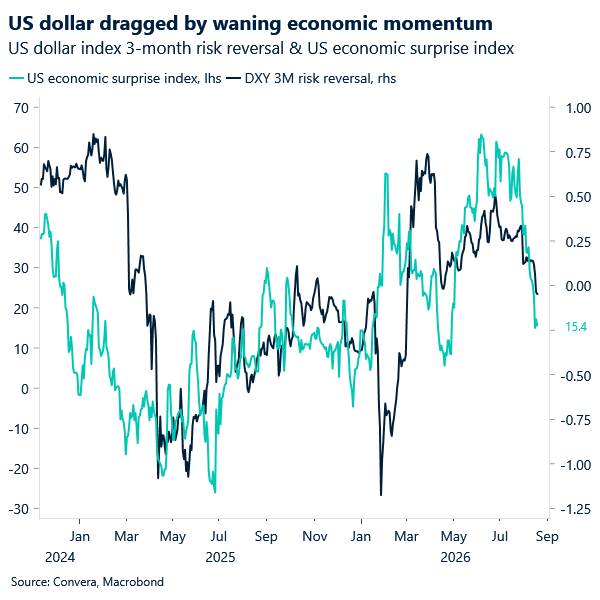
This has eroded Fed tightening wagers. September hike odds have fallen from around 70% to closer to 40%. With the rates channel doing a lot of heavy lifting in FX of late, this has weakened the dollar. Questions around Fed credibility have also not disappeared. Chair Warsh’s reluctance to provide clear forward guidance and reports of regular contact with President Trump have revived concerns about Fed independence, an issue that weighed on the dollar earlier this year.
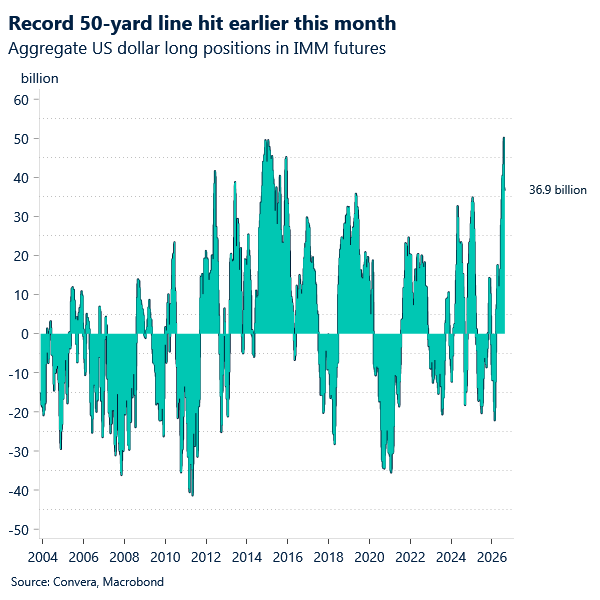
Positioning also warrants attention. Speculative dollar longs remain substantial, even after recent reductions, leaving scope for further unwinds if the data continue to disappoint. Japanese intervention remains another risk. While USD/JPY has rebounded, the relatively modest yen rally following coordinated action from Tokyo and Washington suggests additional intervention may be required to force a sustained reversal in the long-running yen-short trade. Any renewed intervention could weigh on the broader dollar given the yen’s importance within the dollar index.
The next major test is today’s the release of the July FOMC minutes. The meeting itself delivered a confusing message, with a 9–3 vote to leave rates unchanged followed by a press conference that triggered a sell-off in longer-dated Treasuries. Given the softer inflation and activity data seen since then, it may prove difficult for markets to fully re-embrace a hawkish Fed narrative.
EUR: Stuck in neutral
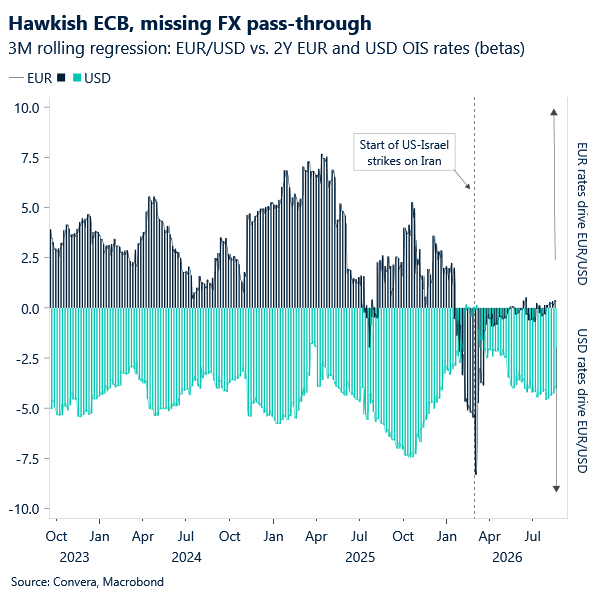
EUR/USD remains stuck in a pattern of hesitant price action. EUR:USD 2-year swap spreads appear to have crystallised for now amid a lack of clear data catalysts.
Oil prices have edged higher this week, with Brent crude up 3% and trading near $90 a barrel. That’s hardly positive news for the euro, but investors seem increasingly comfortable with this higher-oil environment. Markets are therefore looking through modest swings in energy prices and letting the data do the talking. The recent run of upbeat eurozone macro releases has only reinforced that sense of complacency.
That is not to say positive euro developments are translating into meaningful upside for the currency either. A strengthening ECB tightening bias has offered little support to the euro, nor has the recent flood of encouraging data. The backdrop suggests investors are still unsure how to feel about the common currency. On the one hand, rate differentials have become more euro-supportive. On the other, concerns about weaker growth stemming from the Middle East conflict continue to linger.
Elsewhere, attention is increasingly turning to France’s 2027 budget and presidential election, with the 30-year yield at its highest level since 2008. Political uncertainty was already a key theme in 2025. That said, pressure at the long end is becoming a cross-border phenomenon and is likely to remain a recurring theme as we head towards 2027.
The recent bond sell-off, which has pushed long-end yields to multi-decade highs, is the latest example of investors growing more concerned about inflation uncertainty and fiscal spending in an increasingly conflict-ridden world. Against this backdrop, we are sceptical that the euro will be uniquely punished for challenges that are becoming increasingly global in nature.
GBP: UK inflation jumps to four-month high
Sterling remains broadly stable after a busy UK data week has so far delivered few surprises for markets. Labour market cooling and a largely in-line inflation report have left Bank of England pricing little changed, with only a muted reaction across both gilts and FX markets.
This morning’s UK inflation report revealed headline CPI rose to 2.9% y/y from 2.6% – a fresh four-month high. This largely reflects July’s 13% increase in the household energy price cap, amid surging commodity prices. Services inflation, a gauge of domestic pressures watched by the BoE, fell to 3.4% from 3.6%. Core inflation held steady at 2.6%. Markets largely looked through the rise in headline inflation, recognising that it reflects external energy pressures more than a reacceleration in domestic demand.
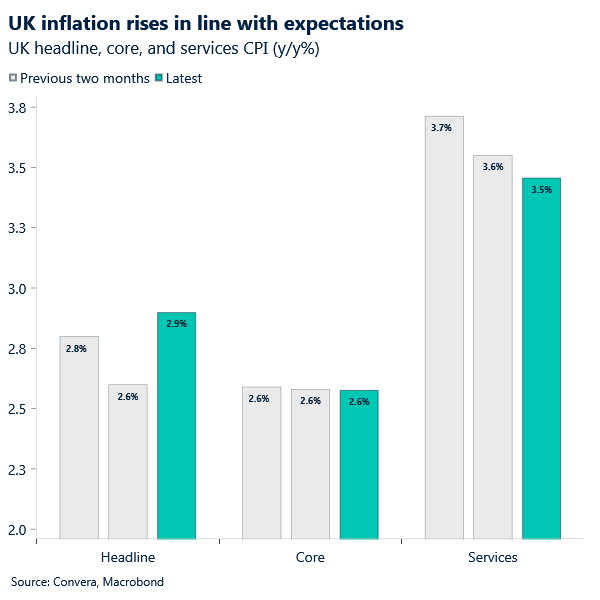
Taken together, the data support the Bank of England’s current wait-and-see approach. The combination of softer wage growth and a cooling labour market argues against further tightening, even as higher energy prices keep inflation above target. Our base case remains that rates stay on hold through 2026.
For sterling, the reaction has been muted, reinforcing a broader theme of recent weeks: global drivers continue to matter more than domestic ones. GBP/USD continues to hover in the mid‑1.35s, looking somewhat rich relative to real-rate differentials in our view. Resilient risk sentiment and an exceptionally low-volatility backdrop remain key sources of support for the risk-sensitive pound. These same forces are helping sustain GBP/EUR, which also appears stretched relative to underlying rate dynamics. In a world of buoyant equity markets, compressed FX volatility and ongoing demand for carry, sterling continues to attract support.
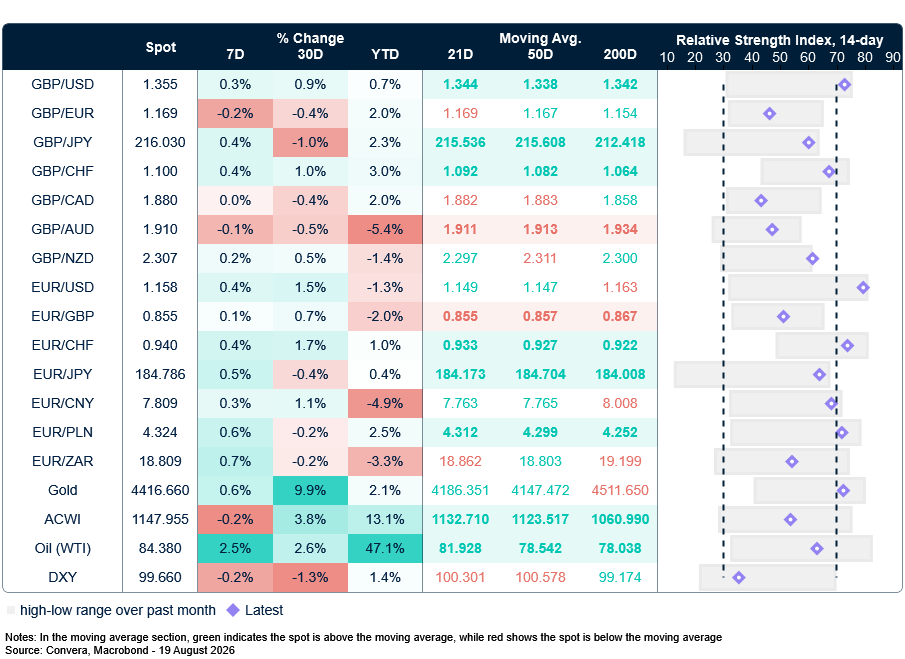
Market snapshot
Table: Currency trends, trading ranges & technical indicators
Key global risk events
Calendar: August 17-21
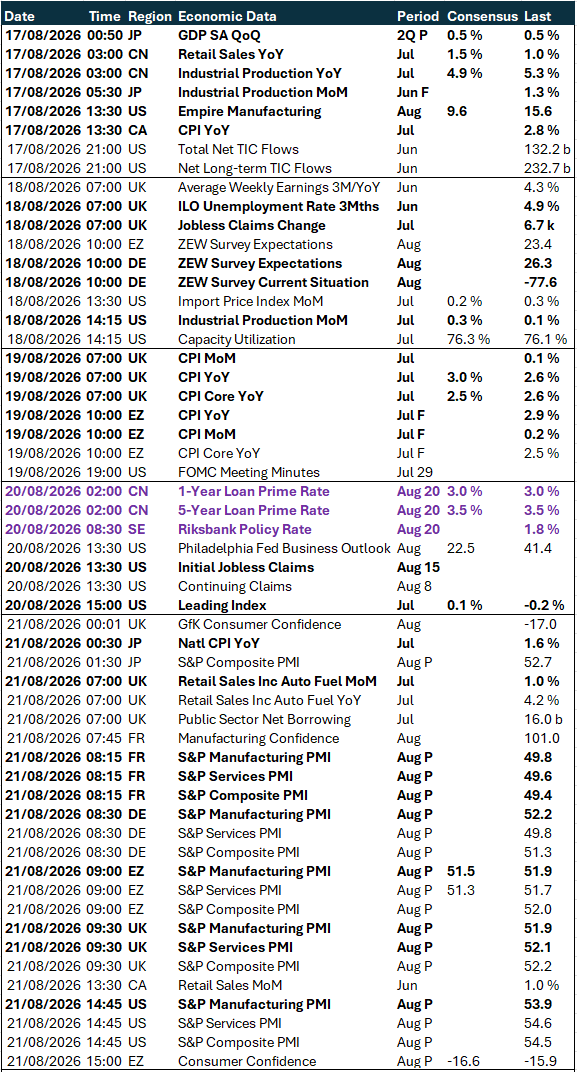
All times are in BST
Have a question? [email protected]
*The FX rates published are provided by Convera’s Market Insights team for research purposes only. The rates have a unique source and may not align to any live exchange rates quoted on other sites. They are not an indication of actual buy/sell rates, or a financial offer.