
CAD: Five sessions of gains as geopolitical fears subside
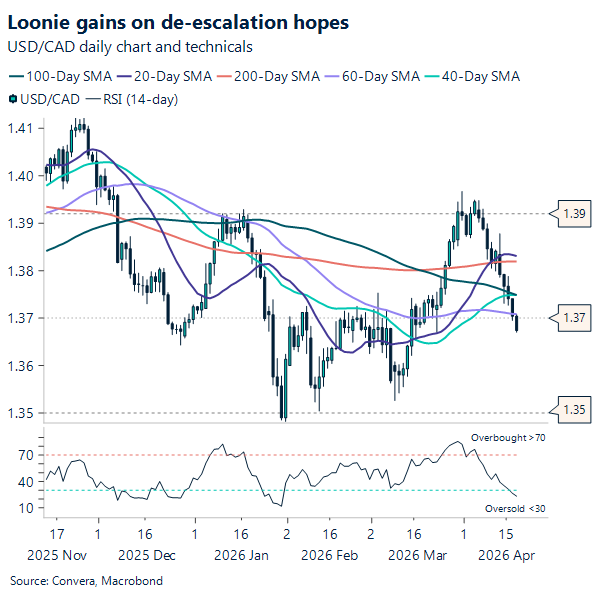
Riding a five-day winning streak, the Canadian dollar has found strong momentum this week as the USD/CAD pair retreated from 1.3878 and broke below the key 1.37 level. The pair is currently trading at a weekly low of 1.367, a shift driven largely by the ceasefire agreement that cooled geopolitical fears and stripped the US dollar of its recent safe-haven premium. Since these de-escalation hopes were confirmed, the Loonie has gained roughly 1.5% against the Greenback. While these gains are more modest relative to its G10 peers, the performance remains consistent with the currency’s typical low-beta profile during broad dollar declines. Looking ahead, the extension of this move will likely depend on whether US dollar softness persists as the global oil war premium steadily unwinds.
Domestic sentiment is also showing signs of life as the CFIB Business Barometer Index climbed to a reading of 58.5. This rebound in the twelve-month outlook suggests that independent businesses are feeling more optimistic after a period of intense volatility. However, a sense of cautious positioning remains prevalent among entrepreneurs across the country.
Looking ahead to next week, the focus shifts to critical macro data that will test this newfound stability. Monday’s March CPI release is the most significant point, with expectations of a 1.0% monthly jump that could bring yearly inflation to 2.5%. Investors will also monitor Friday’s retail sales to see how the economy performed just before recent regional conflicts began to register. These figures will ultimately provide the clarity needed to determine if the Loonie’s current upward trajectory is sustainable.
EUR: Resilient, but still waiting for conviction
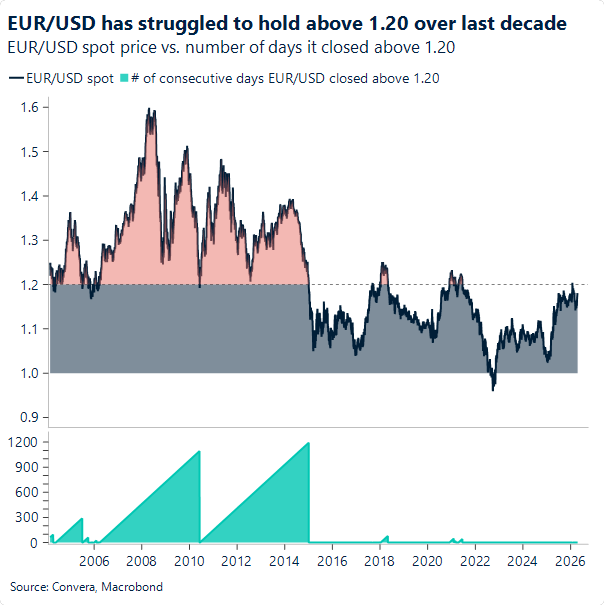
Despite snapping an eight‑day winning streak yesterday, EUR/USD is on track for a third consecutive weekly gain, up more than 3% from the war‑driven March low near 1.14. The broader signal remains constructive. The pair is trading above its key daily and weekly moving averages, reinforcing the view that bullish momentum has been rebuilt after the initial conflict shock – even if progress has slowed near the top of the recent range.
That slowdown is telling. EUR/USD continues to struggle to sustain moves beyond the 1.18–1.19 area, and it has not closed above 1.20 since 2022. This reinforces an important distinction that has defined euro price action throughout April: resilience should not be confused with conviction. The euro has recovered, but that recovery has been driven more by fading USD war premium than by a decisive improvement in Europe’s own fundamentals.
Markets have increasingly leaned toward a de‑escalation narrative, with both the US and Iran refraining from renewed strikes and keeping channels for talks open. That has helped keep risk sentiment supported and capped haven demand for the dollar. However, investors have also grown more selective. Headline‑driven optimism now requires clearer confirmation, particularly progress toward reopening the Strait of Hormuz, before EUR/USD can justify a clean upside break.
From a macro perspective, the outlook remains conditional. Europe’s structural exposure to energy prices means any renewed escalation would quickly tighten financial conditions and revive growth–inflation trade‑offs. By contrast, a sustained easing of tensions would likely allow EUR/USD to test higher levels, supported by narrowing US–EU rate differentials and a softer dollar bias.
Whether EUR/USD can attempt a durable move above 1.20 in the coming month will depend squarely on one factor: the conflict staying contained.
MXN: Regaining its carry allure
Rising risk sentiment has stalled the dollar rally for now. The US dollar index has stayed soft this week as investors lean into the classic de-escalation trade after the ceasefire was confirmed and geopolitical fears subside. Since last Tuesday, the greenback has given back nearly all its March gains, suggesting the conflict premium is fading fast. Positioning is shifting out of safe havens and back into growth-heavy sectors and emerging markets.
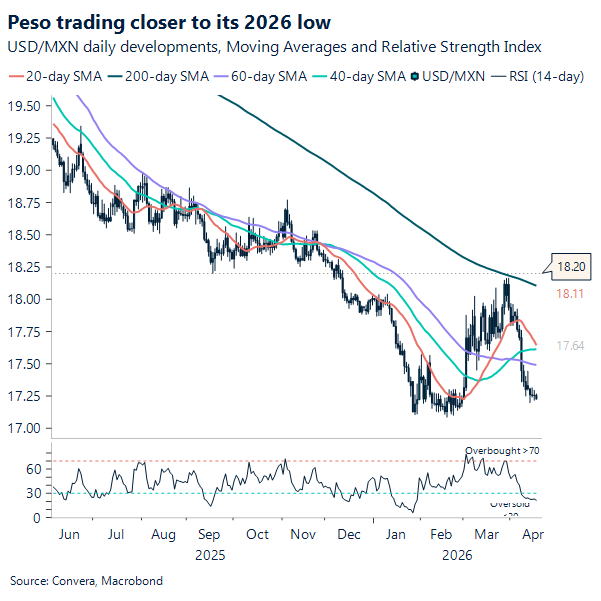
Against this backdrop, the Mexican peso has staged a strong comeback as a relief rally sweeps through the currency markets. The USD/MXN pair has moved sharply from its February peaks, moving back toward the 17.25 area, close to its year-to-date lows. Essentially, the recent spike in volatility has faded, which allows the peso to reclaim its standing among high-yielding emerging market peers. The sustainability of this move will be tested by a very busy economic calendar next week. Thursday will be particularly important, as we receive fresh updates on bi-weekly inflation and retail sales performance. Investors will also be watching Friday’s unemployment and economic activity data to assess Mexico’s underlying growth momentum.
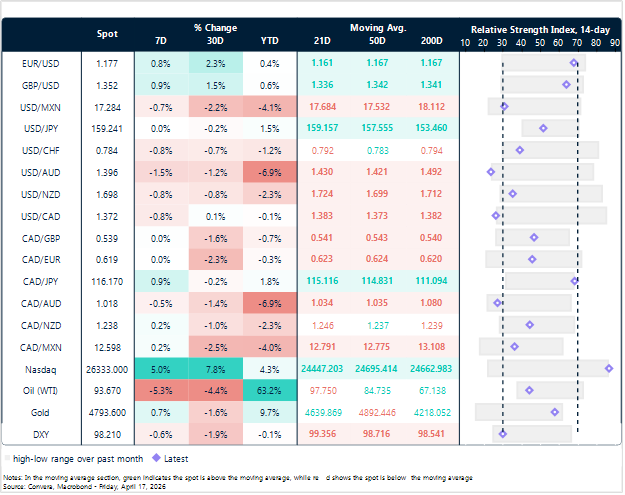
Market snapshot
Table: Currency trends, trading ranges & technical indicators
Key global risk events
Calendar: April 13-17
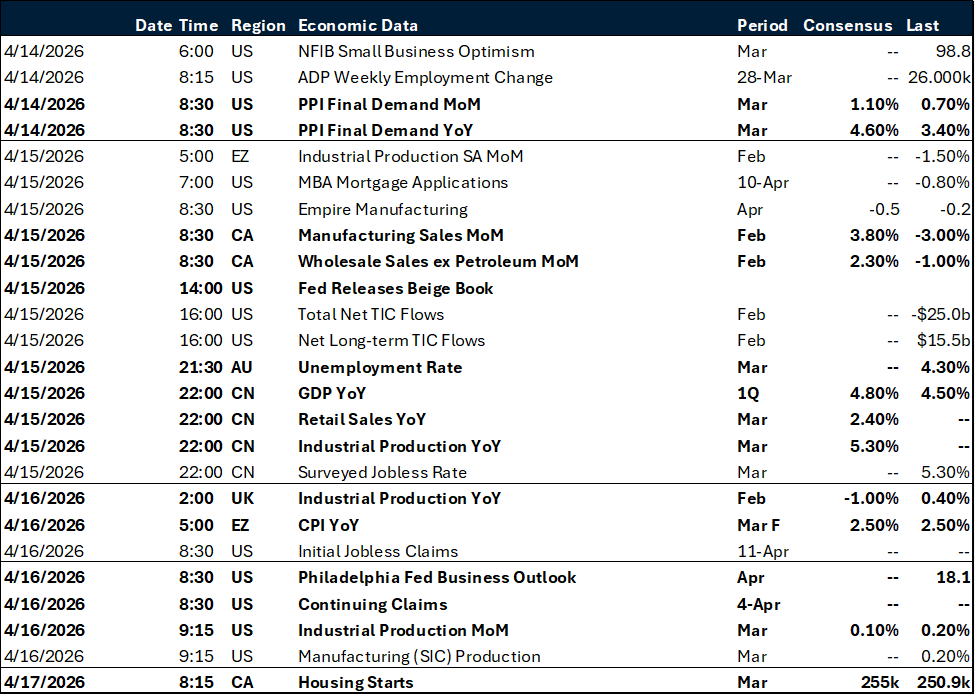
All times are in EST
Have a question? [email protected]
*The FX rates published are provided by Convera’s Market Insights team for research purposes only. The rates have a unique source and may not align to any live exchange rates quoted on other sites. They are not an indication of actual buy/sell rates, or a financial offer.