
Markets cheer US debt limit extension
The US government has made the first step in resolving the debt ceiling debate and averting a default of the world’s largest economy. President Joe Biden and House Speaker Kevin McCarthy have agreed on a deal that would suspect the debt limit until 2025. While the most difficult part of the bipartisan discussions has been solved, both the House and Senate have to pass the bill before June 5. That is the estimated date, when the government is expected to not be able to cover its expenses with the existing cash reserves, according to Treasury Secretary Janet Yellen.
Risk assets have positively reacted to the news of the bipartisan agreement, even if market volatility remained contained due to US, UK and most European markets staying closed for a holiday on Monday. The overall underperformance of US assets seems to have turned in recent weeks. Thin liquidity has helped the US dollar continue its three-week ascent against most G9 currencies, while the Nasdaq index rose the most since March on Friday, snapping a 5-week winning streak. This development has been even more surprising against the backdrop of rising expectations that the Federal Reserve would raise interest rates for the 11th consecutive time in June. Implied probabilities of a 25 basis point hike have increased from 25% a week ago to currently 58%.
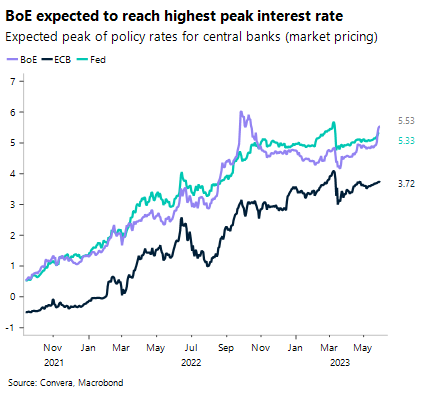
The lack of negative news on the banking front and upside surprise on the latest PCE core inflation number (4.4% vs. 4.2% previously) on Friday have revitalized the hawks within the Fed to push for further tightening. This has opened up the June meeting to another hike and has shrunk rate cutting expectations for 2023 to only 25 basis points, a multi-month low. This development has pushed EUR/USD down to levels not seen since the middle of March, with the currency pair trading just below $1.07. The upcoming release of the US purchasing manager index and nonfarm payrolls on Thursday and Friday will be closely watched.
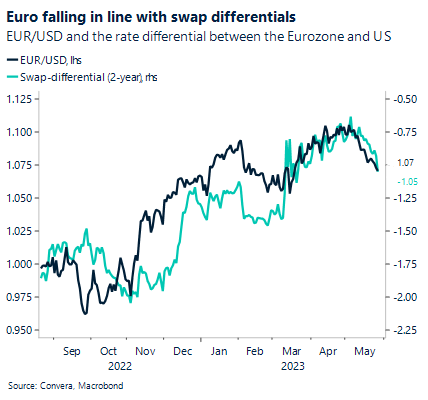
Euro now negative year-to-date
The last two trading weeks have been dominated by US centric market events. And while the upcoming US PMI’s and the labor market report remain the two major risk events for the next few sessions, European inflation numbers will be closely watched as well. With Germany now officially in a recession, it will be up to core inflation rates to determine the ECB’s policy path.
The release of first quarter GDP confirmed the recent macro data deterioration and our suspicion, that Germany has been in a recession, following two consecutive quarters of negative economic growth. Over the last 12 months, the German economy shrunk by 0.5%, recording a 0.3% contraction in Q1 alone. Europe’s largest economy and the world’s third-largest exporter has been hit by a global demand slump. Both hard and soft data have recently weakened, in line with EUR/USD falling below $1.08.
In addition to that, we have seen a significant repricing of Fed policy compared to Germany during the last couple of weeks. Yields on 2-year government bonds have risen by around 27 basis points more in the US – up ten days in a row – compared to Germany during the last three weeks. EUR/USD has fallen 2.7% in the same period. The same cannot be said about the British pound. While both EUR/USD and GBP/USD are down on a 1- and 2-month basis, sterling has profited partially from higher yields and is still positive (2.5% vs. USD) year-to date.
UK shop inflation hits another record
The British pound’s development has become a bit more idiosyncratic over the past few weeks as the currency has held up better against the Greenback’s strength than the euro. Still, GBP/USD has fallen by 2.75% since reaching a one-year high at the beginning of May. During the month, the banking turmoil has faded into the shadows and inflation surprises from the United States have supported the notion, that the Federal Reserve is not done raising interest rates.
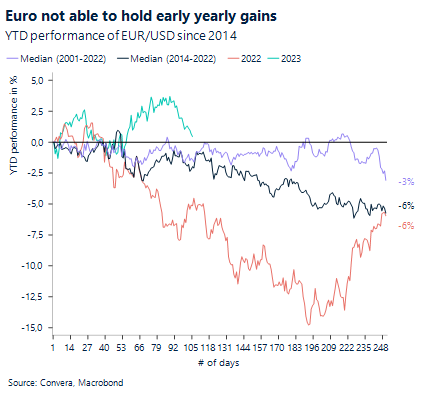
The biggest data upsets have taken place in the United Kingdom in recent weeks. However, the pound has been a bit less reactive to positive data surprises than expected. Core inflation jumped from 6.2% to 6.8% in the month of April, reaching the highest level in 30 years. British store prices increased by 9% over the last twelve months, setting another all-time record for UK shop inflation, according to the British Retail Consortium. These signs of underlying price pressures becoming more entrenched in the system have fueled bets on more policy tightening from the Bank of England. Markets expected British policy makers to raise interest rates to 5.5%, compared to 5.3% for the Fed and 3.7% for the ECB.
The lack of volume has been responsible for the range bound movement of the pound in yesterday’s session. And while today’s agenda will include the release of Eurozone and US consumer confidence, investors look ahead to Eurozone inflation numbers tomorrow morning. In the United Kingdom, some secondary data points like housing prices, mortgage approvals and the BRC retail sales monitor will be of some importance as well. GBP/USD continues to hover around the trend line that has begun in September, which places the first support level at around $1.23.
EUR/USD falls below $1.07
Table: 7-day currency trends and trading ranges

Key global risk events
Calendar: May 29- June 02

Have a question? [email protected]
*The FX rates published are provided by Convera’s Market Insights team for research purposes only. The rates have a unique source and may not align to any live exchange rates quoted on other sites. They are not an indication of actual buy/sell rates, or a financial offer.