


USD drops as June inflation cools
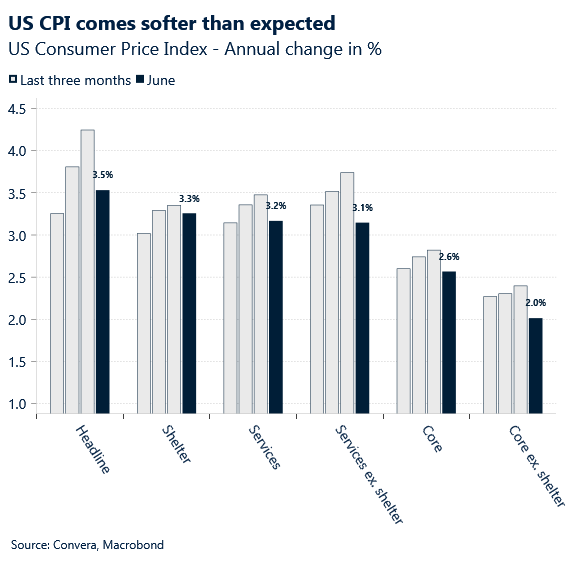
The US dollar tumbled overnight as annual inflation cooled and the monthly measure recorded a rare decline.
Annual headline inflation eased to 3.5% from 4.2%, while the core measure fell to 2.6% from 2.9%.
Monthly headline CPI actually fell 0.4% in June as lower oil prices weighed on the index. It was the first monthly decline in six years.
The US dollar fell on the news.
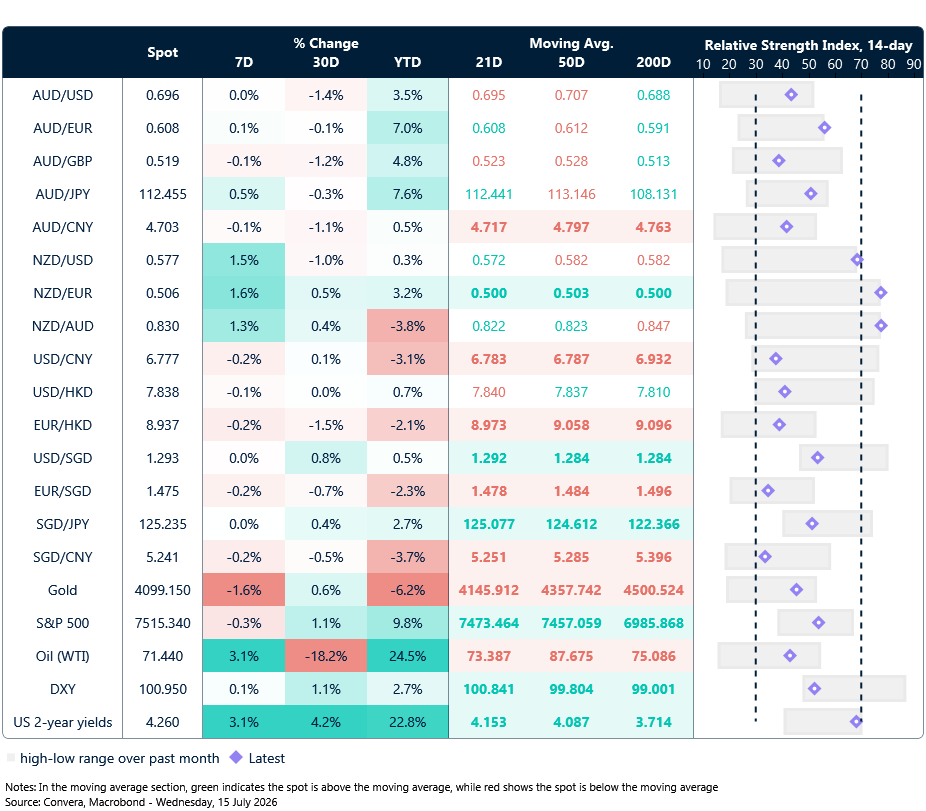
The Aussie jumped, with AUD/USD up a whopping 0.8% overnight to reach its highest level since 23 June.
NZD/USD performed even better, rising 1.1% to reach a one-month high.
In Asia, USD/JPY fell 0.1%, USD/CNH declined 0.2%, while USD/SGD lost 0.3%.
However, markets are likely to remain sceptical about these figures after last week’s escalation of tensions in the Middle East and the associated jump in oil prices.
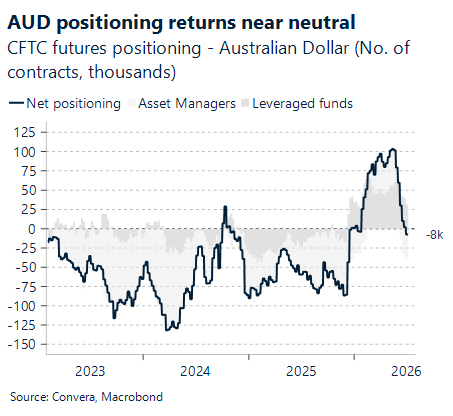
Aussie helped as consumer confidence shows signs of relief
AUD/USD has extended its recent rebound and moved back towards 0.7000.
Australia’s consumer mood improved in July, with the Westpac-Melbourne Institute Consumer Sentiment Index rising to 83.9 from 80.6. Lower fuel costs and easing concerns about interest rates and employment helped lift confidence.
Even so, sentiment remains weak, with pessimists continuing to outnumber optimists and the index still sitting near the lowest levels seen in the survey’s 50-year history.
Households remain under financial strain, keeping views on family finances, major purchases and the broader economy subdued. Expectations for mortgage rate increases eased, with 60% of respondents anticipating higher rates, down from 66% previously.
At the same time, expectations for house prices fell 8% to their lowest level in three years. Overall, the data points to reduced fears of worst-case outcomes rather than a sustained recovery in household confidence.
Singapore growth cools
Singapore’s economy expanded at a slower pace in the second quarter, with GDP growth easing to 1.1% q/q from 1.3% and to 5.7% y/y from 6.3%, according to advance estimates from the Ministry of Trade and Industry.
Manufacturing remained the standout performer, with growth accelerating to 12.2% from 8.0%, supported by stronger electronics and precision engineering output linked to AI-related semiconductor demand. However, chemicals and biomedical manufacturing contracted during the quarter.
Other sectors lost momentum. Construction growth slowed to 6.2% from 12.9%, while wholesale and retail trade, together with transportation and storage, eased to 6.3% from 9.3%.
While Singapore’s economy continues to grow at a healthy pace, much of the strength is being driven by the technology cycle. Ongoing geopolitical uncertainty could still weigh on external demand in the quarters ahead.
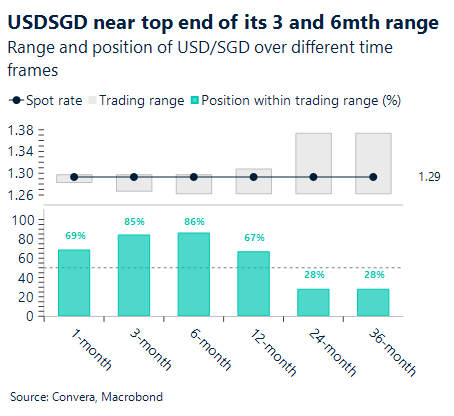
In Asia, USD/SGD is trading around 2.7% above its 28 January low of 1.2586. Near-term support is located at the 21-day EMA at 1.2915, while the 50-day EMA at 1.2870 provides additional support below.
With USD/SGD trading near the upper end of its three- and six-month ranges, current levels may present an attractive opportunity for USD sellers.
Aussie, kiwi rebound after CPI
Table: seven-day rolling currency trends and trading ranges
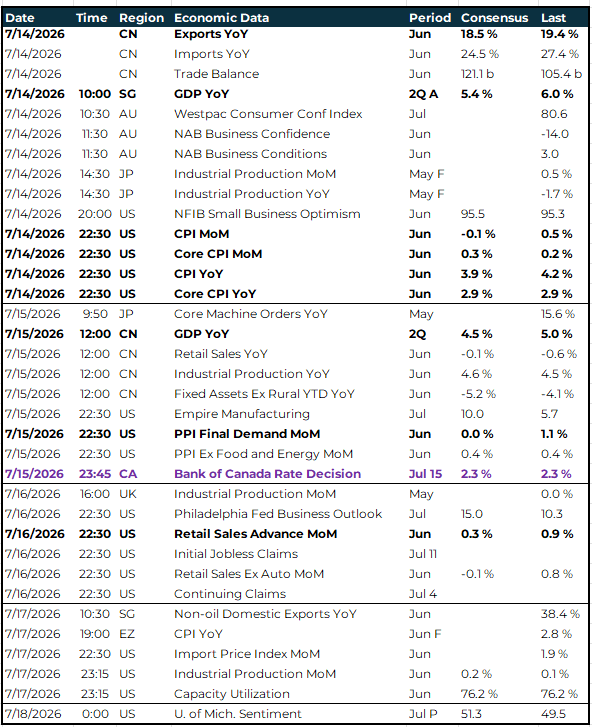
Key global risk events
Calendar: July 13-17
Have a question? [email protected]
*The FX rates published are provided by Convera’s Market Insights team for research purposes only. The rates have a unique source and may not align to any live exchange rates quoted on other sites. They are not an indication of actual buy/sell rates, or a financial offer.