
US CPI falls at a faster pace than expected
The Australian and New Zealand dollars were both sharply higher overnight after the key US monthly inflation report came in lower than expected.
US annual headline inflation plummeted from 6.0% in February to 5.0% in March in a larger than expected drop. The market was looking for a fall to 5.2%.
However, core inflation climbed, up from 5.5% to 5.6%, as expected, in a sign that “sticky” inflation might persist for some time.
Despite the big drop, markets still expect the Federal Reserve will continue to hike rates, with the probability for a 25-basis point hike at its next meeting hovering around 75%.
The Fed remained in focus with the minutes from the US central bank’s most recent meeting – released overnight – suggesting further rate hikes are required.
However, the Fed did suggest that further impact from the banking crisis might push the US economy into recession in the second half of this year, sending US equities lower near the end of US trading.

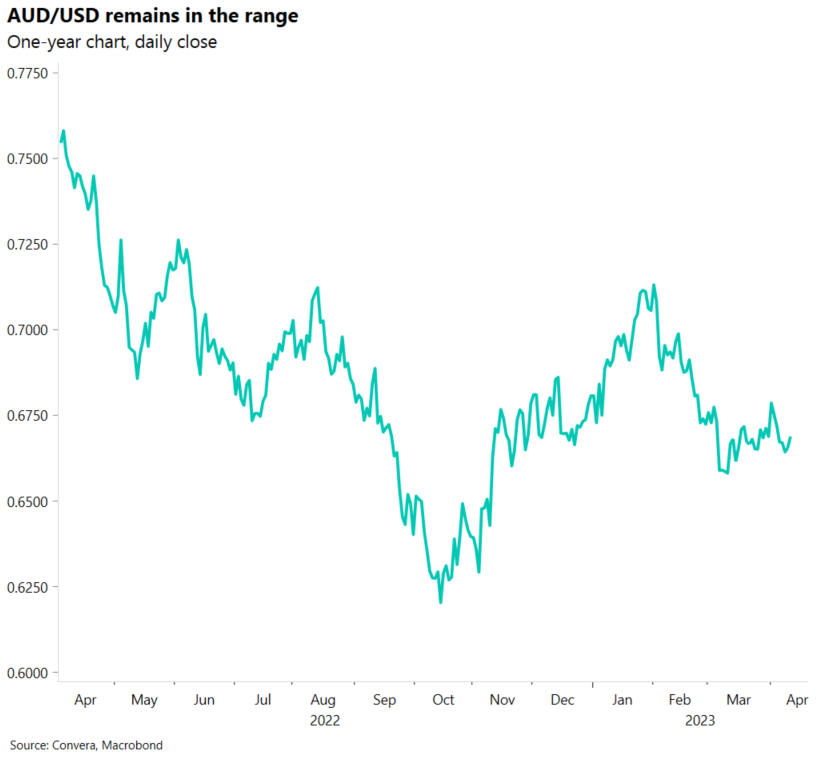
Aussie remains stuck in the range
The Aussie and kiwi were higher after the CPI numbers but eased on the Fed minutes.
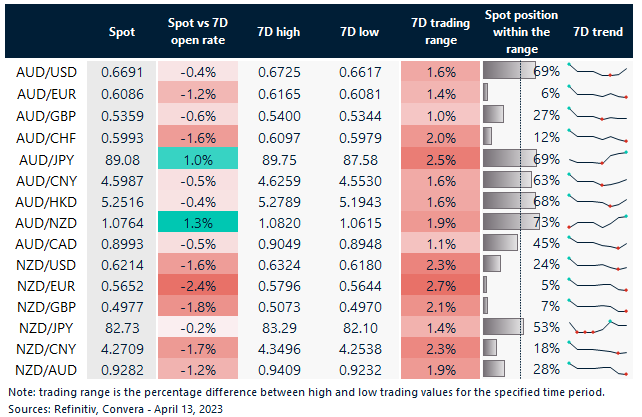
The AUD/USD finished 0.6% higher after trading up as much as 1.1% on the initial reaction to the inflation numbers.
The AUD/USD remains stuck in a broad trading range with support seen at 0.6550 and resistance seen between 0.6750 and 0.6800.
The AUD was broadly steady in other markets.
The NZD/USD also eased after early gains with the pair up 0.5% by the close of New York trading.
Australian jobs in focus
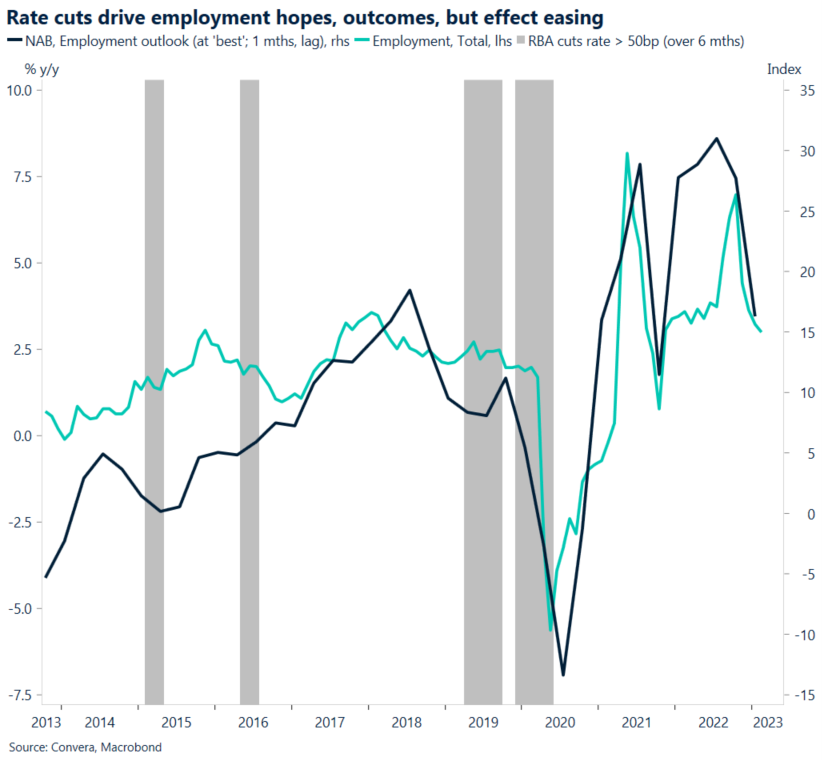
Australian monthly employment is the highlight today with the Australian labour market bouncing back in February after producing negative results in December and January.
The February result saw 64.6k jobs added to the economy with the unemployment rate falling from 3.6% to 3.5%.
The market consensus is looking for 20k new jobs in March with the unemployment rate tipped to climb from 3.5% to 3.6% (source: Refinitiv 13 April). Australian employment is due at 11.30am AEST.
The decision might not have too much impact on the Reserve Bank of Australia, however, with the central bank seemingly in “wait-and-see” mode for the moment.
Aussie eases from overnight highs as resistance
Table: seven-day rolling currency trends and trading ranges
Key global risk events
Calendar: 10 – 15 April

All times AEST
Have a question? [email protected]