
written by Steven Dooley, Head of Market Insights
Global overview
US equities shook-off last week’s losses and started the new week strongly. The Aussie and kiwi both climbed from lows. NZ inflation and Singapore exports are today’s key releases.
Greenback lower as US shares jump
Global markets were unexpectedly higher on Monday despite last week’s sell-off that was driven by a higher US inflation report that sparked fears of further rate hikes from the US Federal Reserve.
US shares started the week with a strong session with the S&P 500 up 1.1% and the Nasdaq climbing 1.2%.
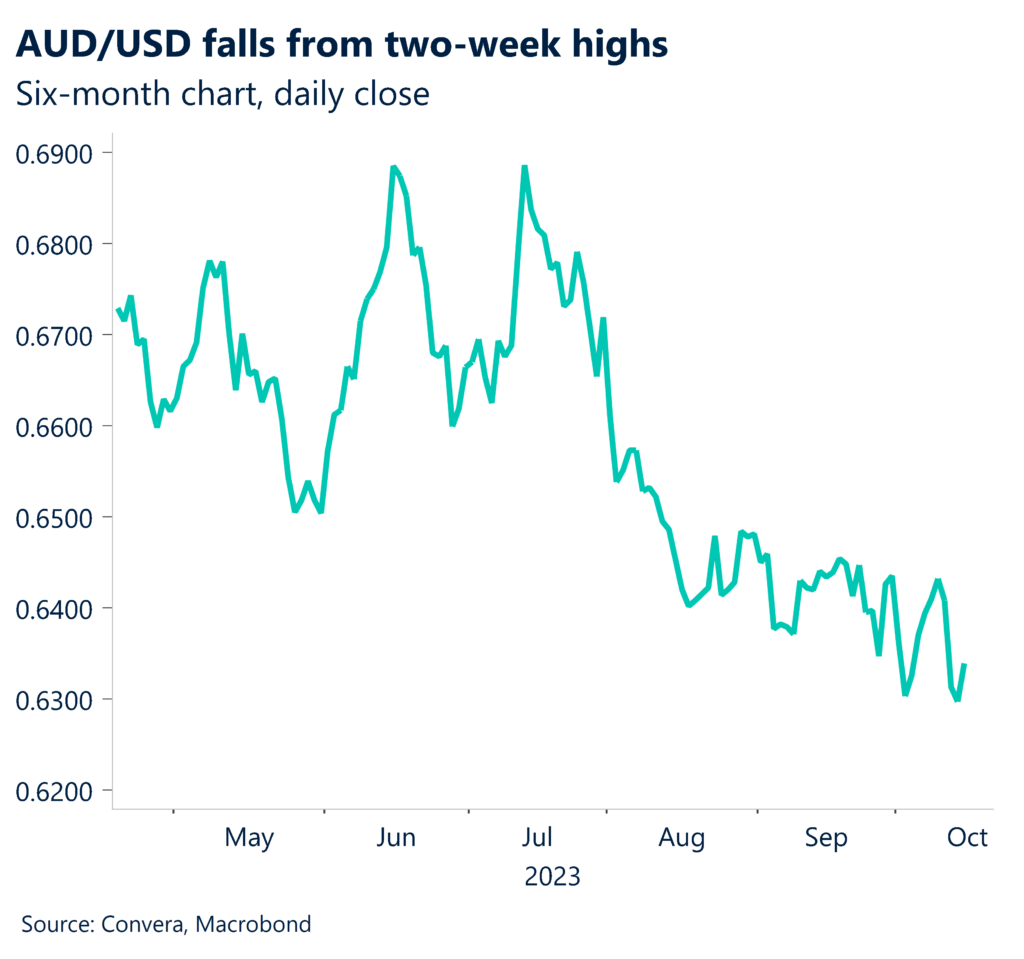
The greenback was lower with the AUD/USD up 0.8% and the NZD/USD up 0.9% as both markets climbed from 11-month lows.
US dream data run to be tested
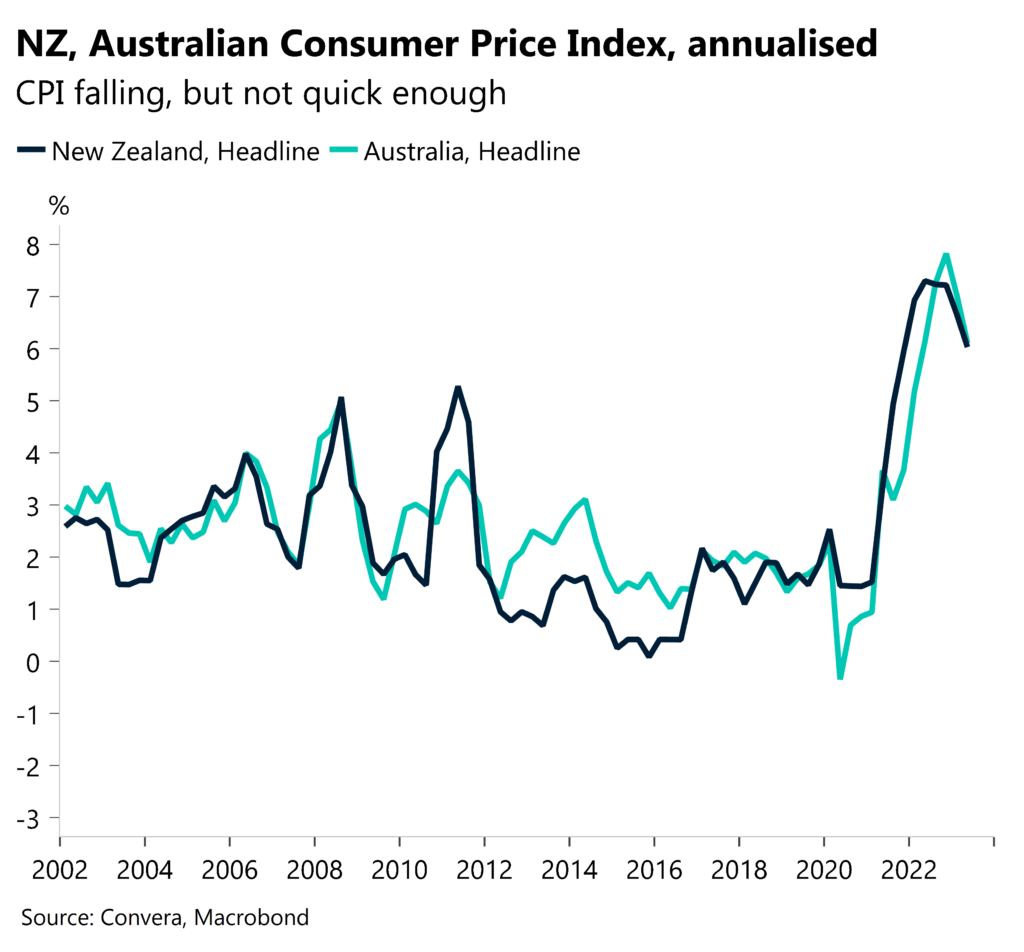
The New Zealand inflation number might be an early driver of FX moves.
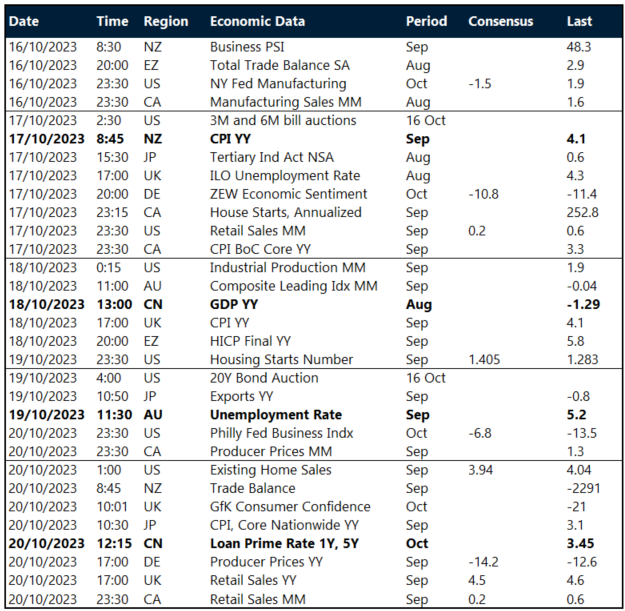
The September-quarter inflation reading due at 8.45am AEDT with headline quarterly inflation expected to rise from 1.1% in the June quarter to 2.0% in the September quarter. The annual rate is forecast to fall from 6.0% to 5.9%.
Tonight, US industrial production is due, after a year that has been mostly dominated by US economic outperformance. For September industrial output, which increased by 0.4% in August, the market anticipates a flat reading of 0.0%.
A reduction in volatile components like utilities and mining likely offset growth in core manufacturing, manufacturing output excluding high-tech, and the auto industry.
The UAW strike probably had some negative effects on the motor vehicles subcomponent, but as the strike goes on, we’ll probably see a bigger drag in the October report.
Asian FX in focus ahead of Singapore export data
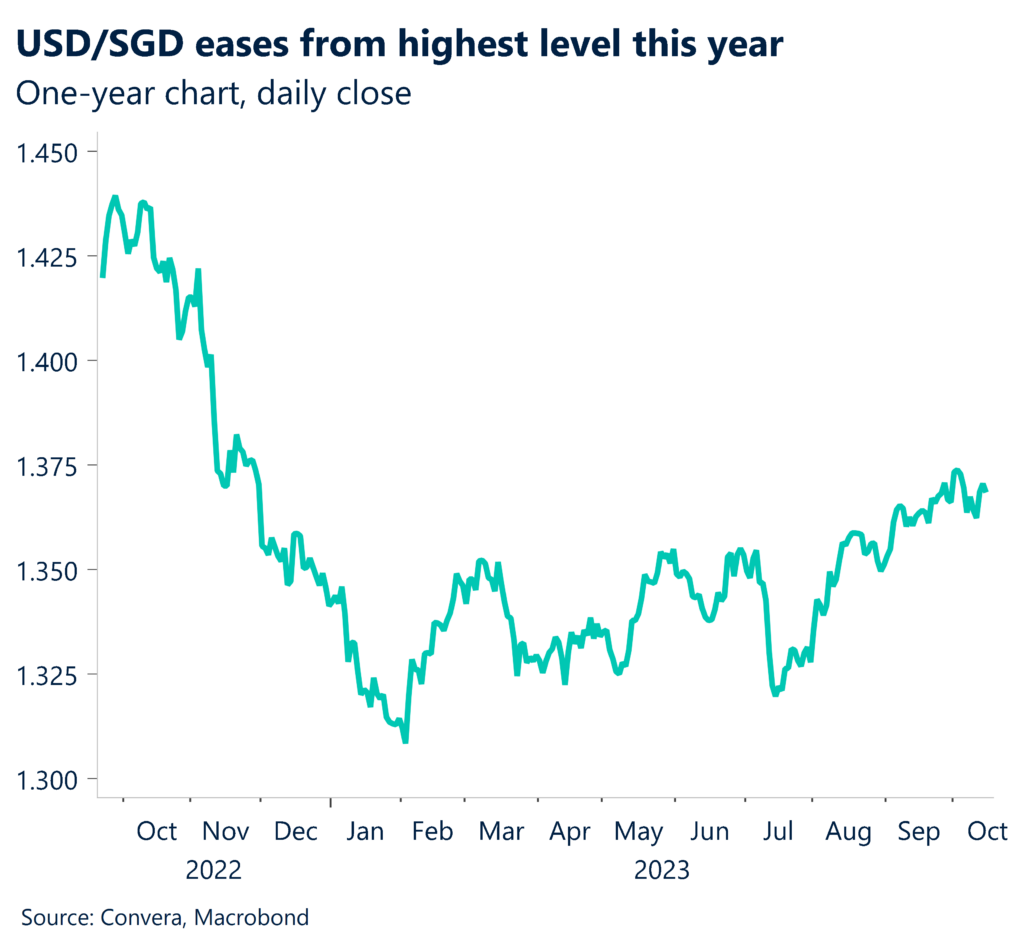
Otherwise, Asian FX markets are in focus today ahead of Singapore’s non-oil domestic exports (NODX) growth, likely to improve from recent lows, up from -20.1% in August to -15.4% YoY in September.
This suggests that NODX growth recovered sequentially from -3.8% to 3.2% MoM seasonally adjusted, aided by a further uptick in electronics exports and in line with the bottoming out of the global tech downturn.
More broadly, there is a common misconception that rising oil prices should be correlated with EM FX depreciation, particularly for importers from small open Asian economies.
Surprisingly, the Indian rupee has the biggest propensity toward appreciation. A portion of the INR’s durability may be attributed to India’s more stable current account deficit, which accounts for 1.2% of GDP and Reserve Bank of India FX policy that leans against deprecation pressure.
Greenback falls from highs
Table: seven-day rolling currency trends and trading ranges

Key global risk events
Calendar: 16 – 20 October
All times AEST
Have a question? [email protected]
*The FX rates published are provided by Convera’s Market Insights team for research purposes only. The rates have a unique source and may not align to any live exchange rates quoted on other sites. They are not an indication of actual buy/sell rates, or a financial offer.