
Written by Steven Dooley, Head of Market Insights, and Shier Lee Lim, Lead FX and Macro Strategist
Greenback lower after CPI, retail miss
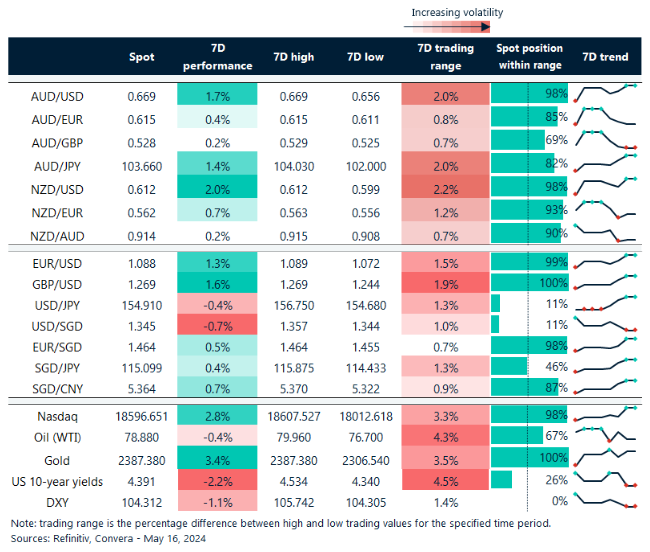
The AUD/USD hit new four-month highs and the NZD/USD reached two-month highs after last night’s slowdown in US inflation pushed the US dollar sharply lower.
US annual headline inflation fell from 3.5% in March to 3.4% in April. The core annual reading fell from 3.8% to 3.6%.
The USD was also hit by a weaker than expected retail sales number with a flat result in April versus the 0.4% forecast.
Financial market pricing now sees the Federal Reserve as most likely to cut interest rates in two 25-basis point increments by the end of the year (source: CME Fedwatch).
In Asia, the greenback was also substantially lower, with the most notable move a 1.0% fall in USD/JPY.
The USD/SGD lost 0.4% and fell to the lowest level since 9 April.
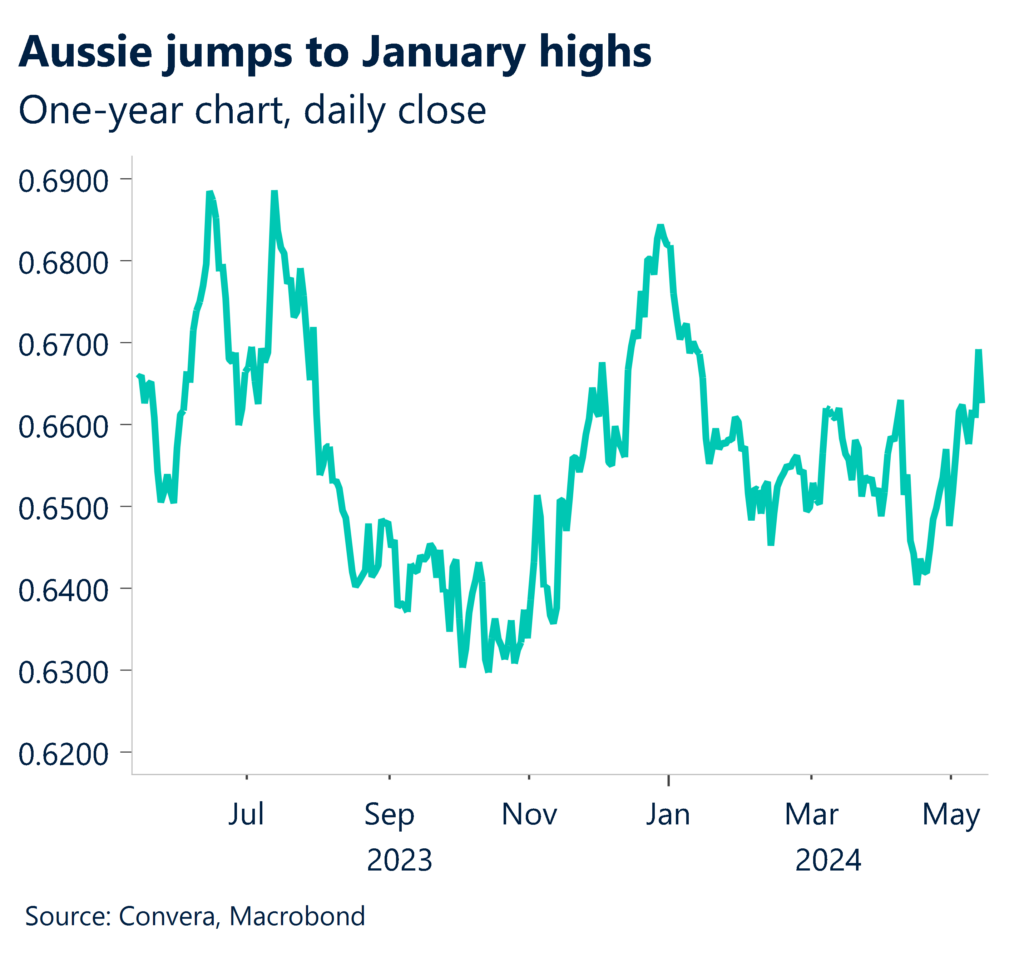
Aussie jobs key for RBA’s balancing act
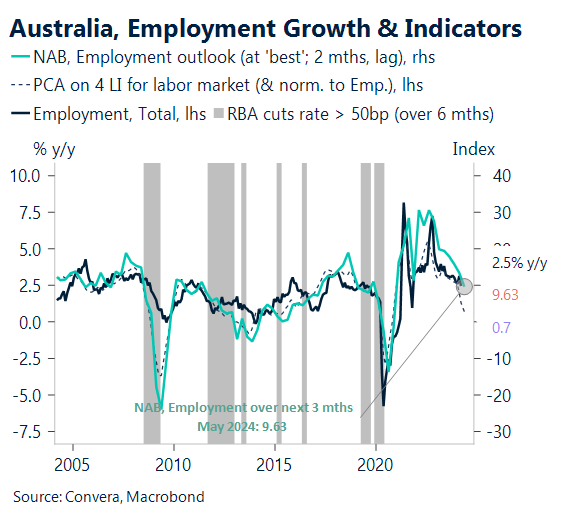
The Aussie could face pressure in the near term with the potential for the jobless rate to rise from 3.8% in March to 4.0% to reflect the economy’s sub-trend pace of growth.
Also, lead indications, such open positions and reported hiring intentions, have decreased, and weekly payroll data has also slowed.
As a result, we see the risk that employment growth can be flat (0k) in April; we anticipate that this estimate will be lower than the consensus.
That said, over the medium term, sticky services inflation and historically slow-moving changes in wages growth means the Reserve Bank of Australia might be forced to keep interest rates higher for longer.
PHP weak despite inflation risks and BSP’s hawkishness
We anticipate that the Bangko Sentral ng Pilipinas (BSP) will maintain its policy rate at 6.50%, citing the current inflation outlook as justification for the “tight” and “appropriate” monetary settings. The BSP decision is due at 3.00pm local time (5.00pm AEST)..
The BSP is expected to maintain its assessment that the balance of risks to its inflation forecasts is tilted to the upside, citing similar factors like higher food and oil prices as well as potential wage adjustments that could have knock-on effects.
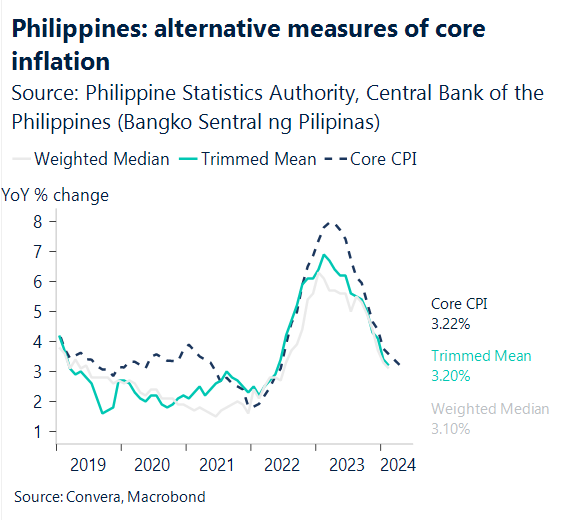
The headline CPI inflation rate increased further in April, rising to 3.8% y-o-y from 3.7% in March.
Because of this, we anticipate that the policy statement and the remarks made during the press briefing would be equally as aggressive as they were at the previous meeting, with BSP promising to be watchful of these risks.
Because of the ongoing significant trade imbalance and the growing demand for foreign exchange deposits, there is still a high level of risk associated with the USD/PHP topside.
USD/PHP is currently near all-time highs as the Philippines peso remains weak despite ongoing inflation risks and the BSP’s hawkishness.
Aussie, kiwi leap to highs
Table: seven-day rolling currency trends and trading ranges
Key global risk events
Calendar: 13 – 18 May
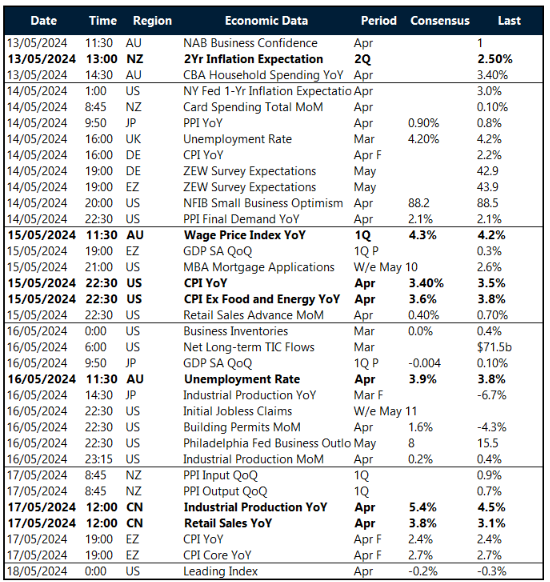
All times AEST
*The FX rates published are provided by Convera’s Market Insights team for research purposes only. The rates have a unique source and may not align to any live exchange rates quoted on other sites. They are not an indication of actual buy/sell rates, or a financial offer.
Have a question? [email protected]