


USD: US shutdown begins, dollar wobbles
George Vessey
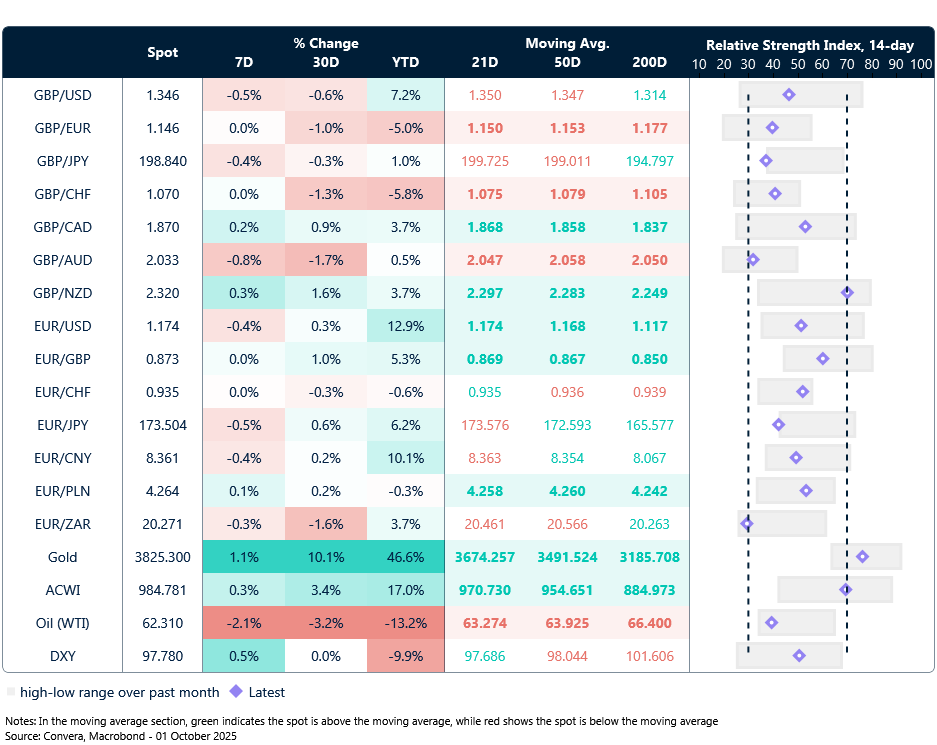
The U.S. government has entered its first shutdown in nearly seven years and the third under President Donald Trump. The news is already rippling through global markets. Asian equities and U.S. futures declined, reflecting investor caution, while European equity contracts edged higher, suggesting some regional divergence in sentiment. Gold, the classic safe-haven asset, is seeing renewed demand, as investors seek shelter from rising uncertainty.
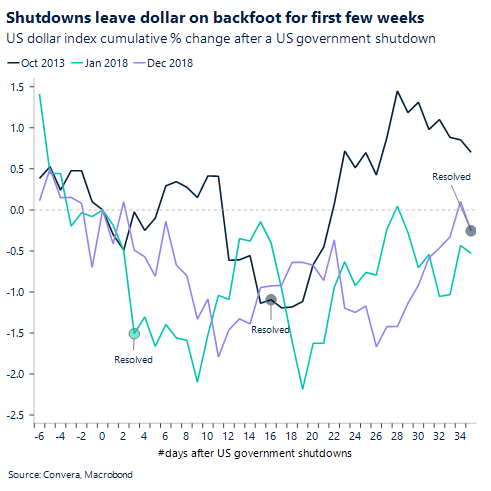
In currency markets, the U.S. dollar is under pressure, weighed down by concerns over institutional credibility and the potential delay of key economic data, including Friday’s jobs report. Historically, shutdowns have had a mixed impact on the dollar. In 2013, the greenback saw brief volatility before strengthening post-resolution. During the 2018–19 shutdown, the dollar index fell roughly 2% before rebounding once a deal was struck. While past episodes offer no clear playbook, they underscore how sensitive the dollar can be to news flow.
The shutdown means non-essential services have been halted, affecting hundreds of thousands of federal workers. Trump has suggested this could be used to enact permanent layoffs, potentially deepening its economic impact. With Democrats and Republicans still locked in a stalemate, there’s no immediate sign of resolution. The shutdown also threatens to delay key economic data, including Friday’s jobs report from the Bureau of Labor Statistics – critical for the Federal Reserve as it weighs future rate decisions. Without this data, policymakers face greater uncertainty heading into their late-October meeting.
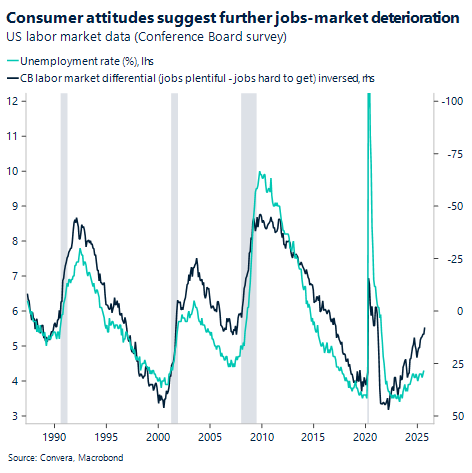
Tuesday’s macro data added to the complexity. August job openings came in stronger than expected, suggesting resilient demand. However, hiring slowed, unemployment ticked higher, and the rise in openings hasn’t translated into stronger payroll growth. Consumer confidence fell to a five-month low in September, with the Conference Board’s survey showing a sharp drop in the share of Americans who believe jobs are “plentiful.” This metric—often a leading indicator of unemployment—suggests workers are sensing a cooling labor market before it shows up in official data.
The disconnect between upbeat headline figures and weakening sentiment points to a labor market losing momentum beneath the surface. That could weigh on growth and reinforce expectations that the Fed will maintain an easing bias through year-end—potentially undermining the dollar’s recent rebound.
EUR: Eyes on $1.18 in the short term
George Vessey
The euro ended September and Q3 slightly lower against the U.S. dollar, but remains up over 13% year-to-date – marking its strongest nine-month start to a year since 2017. Near-term momentum has softened, with EUR/USD continuing to trade in the shadow of U.S. macro developments. However, with the U.S. government shutdown now underway, a test of the $1.18 level is possible this week if dollar sentiment continues to deteriorate.
In the eurozone, inflation data is the key focus. Preliminary September figures from France and Germany showed headline inflation rising to 2.4% year-on-year, the highest since spring, while German core inflation edged up to 2.8%. These readings should keep the ECB comfortably on hold, reinforcing its cautious stance. That said, broader German macro data suggests inflation may not be the economy’s biggest challenge ahead. With a stronger euro and favourable energy base effects, inflation is expected to drift back toward – and potentially below – 2% in the coming months.
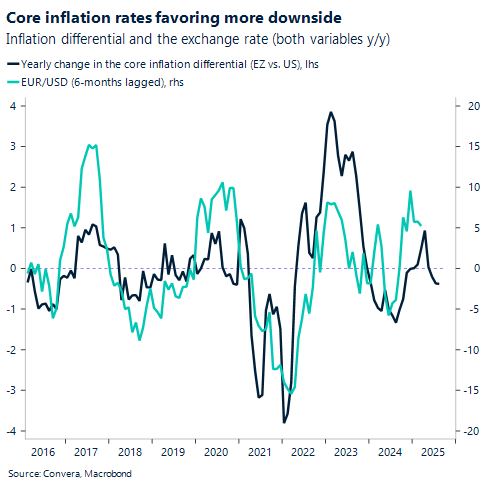
Looking at the gap between eurozone and U.S. core inflation, and overlaying the year-on-year change in EUR/USD with a six-month lag, there’s a case to be made for a sharp reversal in the currency pair over the next few months. For now, though, the immediate focus is whether the $1.18 barrier will be breached this week.
In short, while the euro’s year-to-date performance remains impressive, its short-term trajectory is increasingly tied to U.S. developments, with eurozone data offering only limited support.
GBP: GBP steady above 1.34 as shutdown shadows dollar
Antonio Ruggiero
Sterling consolidates above 1.34 against the dollar, as mild bullish support from US government shutdown risks more than offsets the underwhelming JOLTS data. Sentiment was further dampened by weaker-than-expected US consumer confidence.
No major market-moving developments emerged from the ongoing UK Labour conference, which remained focused more on politics than policy. The conference concludes today. Nonetheless, Reeves reiterated that income tax, VAT, and employee national insurance will not rise in the forthcoming budget, while affirming a strong commitment to the fiscal rule. This may be welcome news, as higher taxes – already shown to dampen growth prospects – could make adherence to the fiscal rule even more challenging by constraining organic tax revenue growth and increasing reliance on higher-rate measures instead.
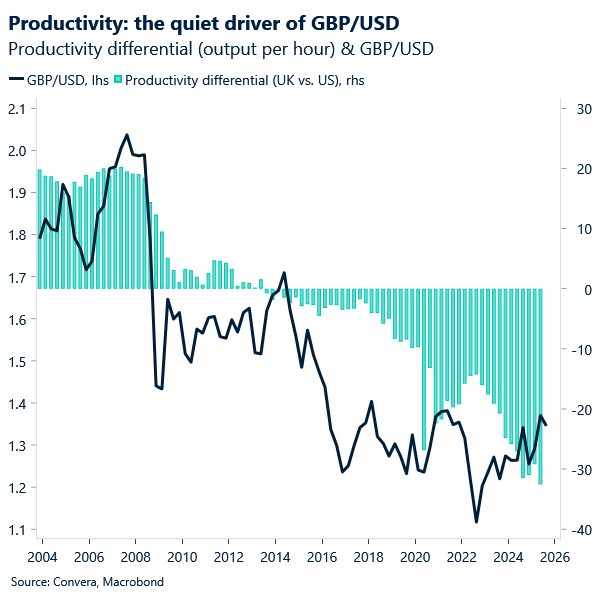
Still, this outlook is far from settled. The Office for Budget Responsibility (OBR) is expected to present its latest economic forecast to the Chancellor later this week, with reports suggesting a downgrade to long-term UK productivity growth from the current 1.1%. Even a modest revision could significantly widen the fiscal gap, complicating Labour’s pledge to fund day-to-day spending solely through tax revenues. Such a shift may force the government to reconsider tax increases in the upcoming Autumn Budget, weighing on fiscal credibility and GBP sentiment.
Today, the S&P Global final September manufacturing PMI is due, which may confirm the provisional figure of 46.2 – the sharpest contraction since April.
Gold roars
Table: Currency trends, trading ranges and technical indicators
Key global risk events
Calendar: September 29 – October 3
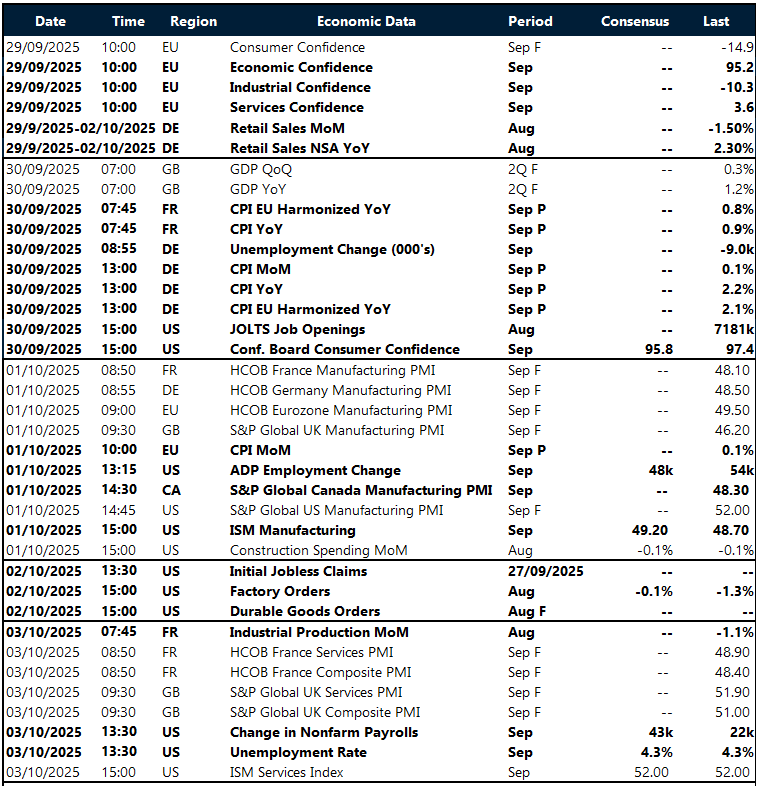
All times are in BST
Have a question? [email protected]
*The FX rates published are provided by Convera’s Market Insights team for research purposes only. The rates have a unique source and may not align to any live exchange rates quoted on other sites. They are not an indication of actual buy/sell rates, or a financial offer.