GBP soars on narrative change
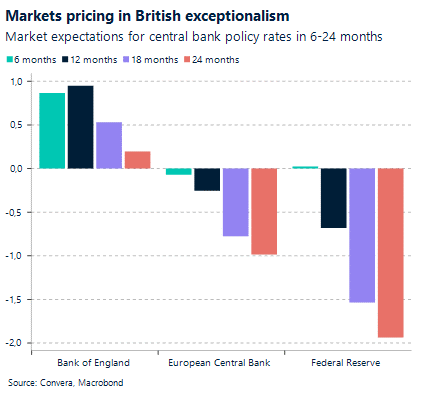
Narratives shape market behavior. This is even more true in times of uncertainty near the end of every monetary policy cycle. And whilst the narrative of sticky inflation in the Eurozone and a committed inflation fighting ECB have shielded the Euro from any downside pressure related to the weakening of the global economy so far, investors now see the Bank of England as the primary hawk in Europe.
Markets have added two further rate hikes by the Bank of England in the next 12 months to their expectations since the last CPI report showed core inflation rising to a 30-year-high. While policy easing expectations for the Federal Reserve have been cut in half as well, the divergence between the BOE and Fed/ECB continues to persist. It will definitely be difficult for the Bank of England to deliver four rate hikes against the backdrop of a weaker global growth outlook, falling household spending and other central banks likely starting to cut rates in 12 to 18 months.
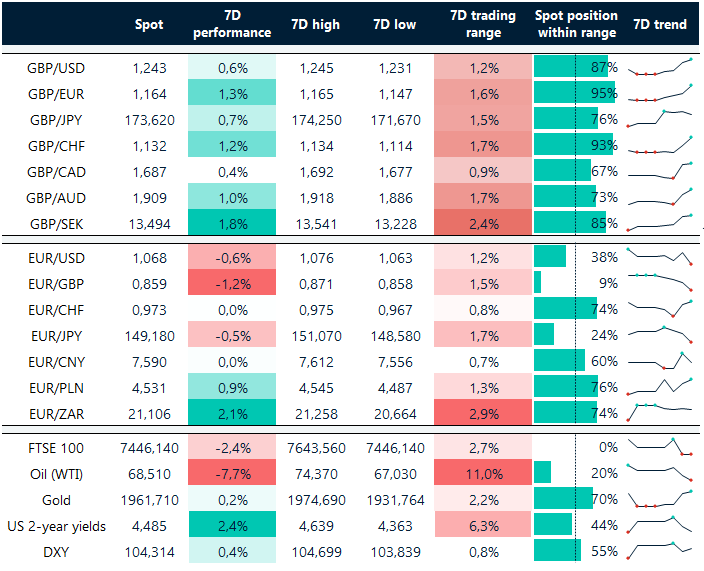
However, in the short-term, the divergence in favor of the BoE has comforted the British currency. This strength has mainly manifested itself in a higher GBP/EUR exchange rate. The pair rose the most since early May in yesterday’s trading, topping $1.1650 and reaching a new high for the year. GBP/USD is lagging behind but has successfully defended the trend line at $1.23, that has been in place since September 2022.
Disinflation shifts pressure from ECB to Euro
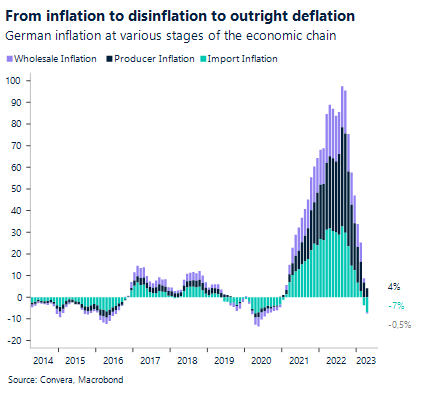
After Spanish, Italian and French inflation cooled more than expected in May, price pressures in Europe’s largest economy followed suit. German consumer price inflation declined to 6.1% on a yearly basis, from 7.2% the month prior. While these levels continue to be high from an historical standpoint and unacceptable for the European Central Bank, broad inflation indicators have already rolled over and are suggesting further disinflation is in the pipeline. Some inflation measures like import (Germany) and producer prices (Italy) have already entered deflationary territory and are contracting on a year-on-year basis.
The hawkish policy makers within the ECB headed by Bundesbank president Joachim Nagel are hesitant to declare an early victory over inflation. However, his peers have started opening up to the idea of hiking less aggressively than expected going forward. French governor Villeroy sees inflation in the Eurozone’s second largest economy very likely past its peak and said that there was a notable decrease in elements of underlying (core) inflation. Add to that reports from the ECB, that financial markets remain vulnerable to negative shocks from the higher rates environment, and markets start questioning the consensus, that policy makers would hike rates two more times in June and July.
The story hasn’t changes for the Euro. Weak macro data and falling inflation has seen a repricing in European compared to US interest rates. This has put EUR/USD under pressure with the currency pair falling below $1.0680 and on track to record the fourth weekly depreciation in a row. The common currency might remain pressured today as the regional inflation numbers suggest a downside surprise on Eurozone CPI later today. A fall of inflation from 7% to 6.3% is expected, while the aggregated numbers from Germany, France, Italy and Spain point to a number closer to 6.1%.
Fed’s June meeting plagued by uncertainty
Fed officials have started opening up to the idea of pausing the hiking cycle at the next meeting in two weeks. Philadelphia Fed president Patrick Harker continues to favor skipping the June meeting, whilst continuing to consider further rate hikes at future meetings if necessary. This “pause with a hawkish bias” scenario became the consensus on markets some weeks ago, but had been pushed aside by surprisingly sticky inflation and stronger than expected macro data in May.
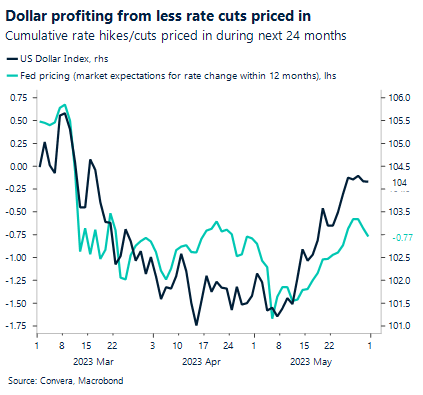
At the beginning of the week, fed funds futures showed a 67% probability of a rate hike in June. After some disappointing macro data and several Fed speakers cautioning against raising rates further since then, the probability reversed to just 33%. Terminal rates pricing remains highly volatile, but if we would to ignore the last two weeks, not much has changed. The base case remains a pause in June and a hike in July, followed by a cut at the meeting in September. This “pause, hike, cut” scenario that we outlined last week might limit the downside pressure on the dollar, as the market is lacking conviction to short the Greenback while the question of when the Fed will end its tightening cycle remains unanswered.
Some policymakers like governor Philip Jefferson made the effort to separate the question of whether to hike or pause in June from the question of when interest rates will peak. This supports the thesis that June might see a pause, while hikes might continue in July or September.
Euro weaker against dollar and pound
Table: 7-day currency trends and trading ranges
Key global risk events
Calendar: May 29- June 02

Have a question? [email protected]
*The FX rates published are provided by Convera’s Market Insights team for research purposes only. The rates have a unique source and may not align to any live exchange rates quoted on other sites. They are not an indication of actual buy/sell rates, or a financial offer.