


USD: Dollar steady ahead of Warsh
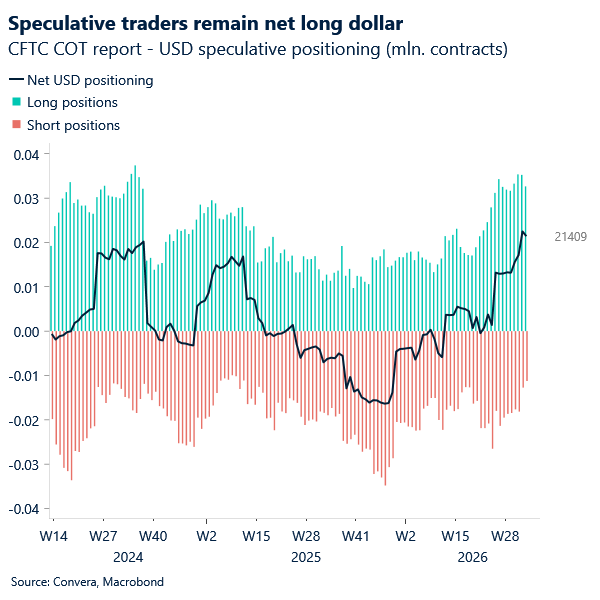
The US dollar finished near 99.24 as traders waited for Kevin Warsh’s Jackson Hole speech. Initial jobless claims fell to 203,000, while continuing claims dropped to 1.78 million. Combined with firmer PCE inflation, the data reinforced the case for tighter Fed policy. Fedspeak from Schmid and Hammack added to the hawkish tone, while Collins offered a more cautious view. Treasury yields rose, with the 10-year closing near 4.67% and the 30-year approaching its highest level since 2007.
Hormuz developments pulled markets in both directions. Talks involving Iran and Qatar raised hopes for a temporary shipping corridor and joint mine clearing, while regional crude flows continued to recover. Oil initially fell as the diplomatic push eased supply concerns. However, another tanker attack, fresh sanctions and resistance from Washington exposed the limits of that progress. WTI reversed higher toward $84, restoring part of the inflation premium that had faded earlier in the session.
DXY has recovered about half of the losses triggered by Bessent’s expanded Treasury buybacks. Strong labor data and persistent inflation keep the probability of a September rate increase near 42%, but Warsh now faces the communication test. A hawkish signal could lift DXY toward 99.50 and then 100.00. A vague or cautious speech could send the index back toward 98.80, with 97.96 below that. If Warsh declines to clarify the policy path, payrolls and CPI will decide the dollar’s next move.
EUR: Constructive bias but conditional upside
The euro has fallen over 0.5% from its recent three-month peak above 1.17 versus the US dollar, shedding about a third of the gains made last week. Options markets suggest that euro strength may have been more tactical than structural, with bullish positioning at the front end retracing sharply even before the long-end had a chance to catch up.
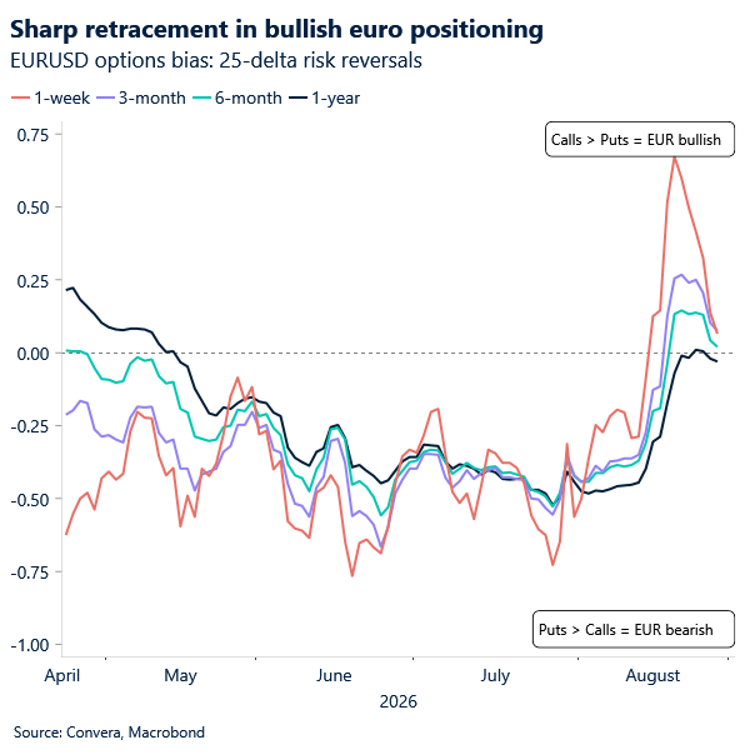
The euro’s challenge is that much of the good news is already priced in. Recent Eurozone data have generally surprised to the upside, while markets continue to expect a September ECB rate hike and another move by year-end or early 2027. That has helped underpin the currency, but leaves limited scope for additional euro-positive repricing.
Instead, attention remains firmly on the US side of the equation. Mostly dovish US data and a softer Fed narrative and has been the primary driver of EUR/USD’s move back above 1.15 and 1.16. Today’s Jackson Hole remarks from Kevin Warsh will be closely watched for clues on the timing and necessity of future tightening. A lack of urgency on rates could reignite dollar selling and support another attempt at the 1.17 area.
Technically, EUR/USD appears to be consolidating rather than reversing. The 200-day moving average near 1.1630 remains an important support level, while a cluster of moving averages in the high‑1.15s should also help contain downside moves.
For EUR/USD to mount a sustained push toward 1.18–1.20, we believe the euro needs a more durable easing in energy prices that improve the eurozone’s terms of trade, reduce inflation pressure, and ease concerns that ECB tightening comes at the expense of growth.
GBP: Sterling’s Autumn challenge
Seasonality may be turning against sterling heading into H2, a period that recent history suggests tends to deliver weaker growth. This is especially relevant given the UK’s fiscal and political backdrop.
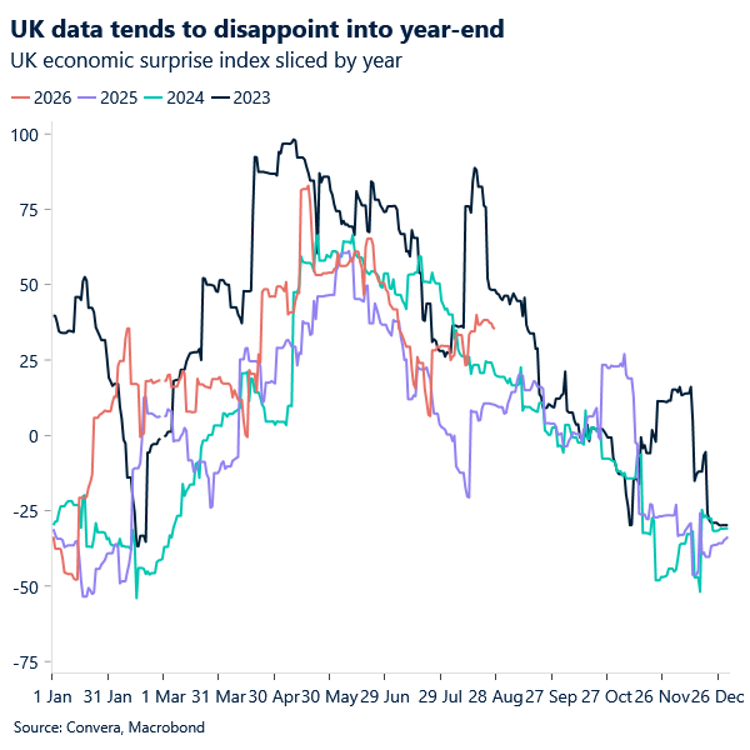
A stronger economy would help ease fiscal pressures through higher tax revenues, reducing investor anxiety around the UK’s fragile fiscal position. Should history repeat itself, sterling could weaken beyond what macro fundamentals alone would justify as sentiment deteriorates. That is more a story for later in the year, however. For now, Burnham’s honeymoon face seems to be lasting.
A nearer-term catalyst is next month’s BoE meeting, with markets assigning only around a 10% chance of a rate hike. By contrast, investors are largely convinced the ECB will tighten.
GBP/EUR has traded sideways around 1.1650-1.17 for several weeks, and we see little reason for that to change ahead of the meetings next month.
A hawkish BoE hold alongside an ECB hike could offer modest support to sterling. While expectations for a September BoE hike have faded since early August, markets remain reluctant to fully price out a 25bp increase by December.
With November only partially priced, that leaves scope for tightening expectations to be brought forward if August data and MPC communication surprise on the hawkish side.
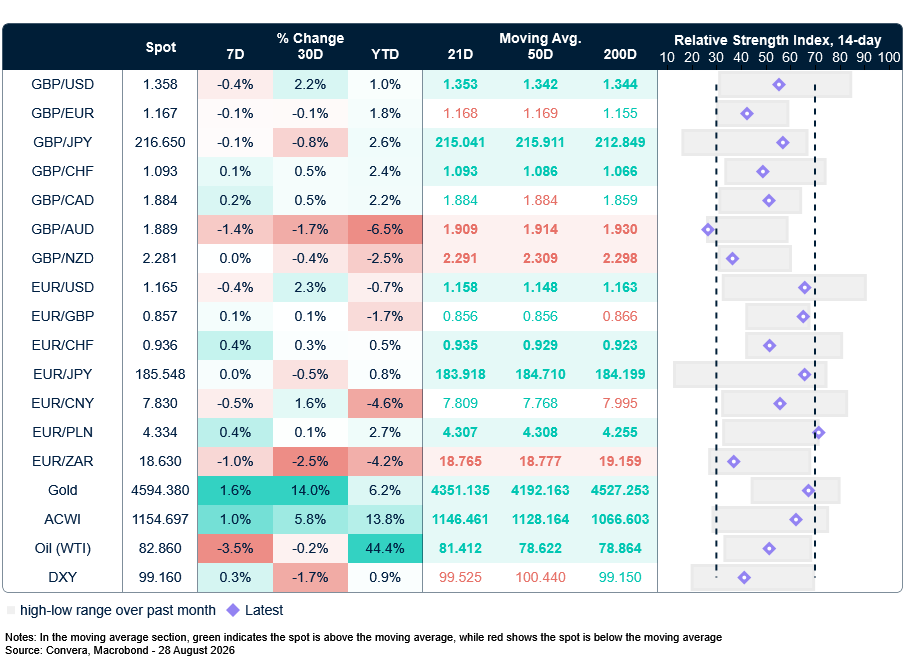
Market snapshot
Table: Currency trends, trading ranges & technical indicators
Key global risk events
Calendar: August 24-28
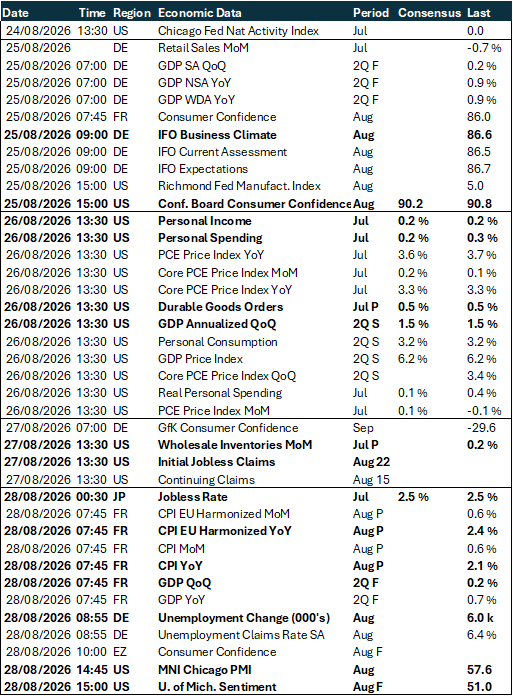
All times are in BST
Have a question? [email protected]
*The FX rates published are provided by Convera’s Market Insights team for research purposes only. The rates have a unique source and may not align to any live exchange rates quoted on other sites. They are not an indication of actual buy/sell rates, or a financial offer.