

USD: Hawkish BoJ, hesitant Fed
USD/JPY extended its decline for a second consecutive day yesterday after BoJ officials doubled down on their hawkish rhetoric. Markets are pricing in a full 25bp hike at the 18 September meeting with near certainty, with two additional hikes priced in by April 2027.
The pair is currently consolidating near 156, after declining by 2.4% so far this week.
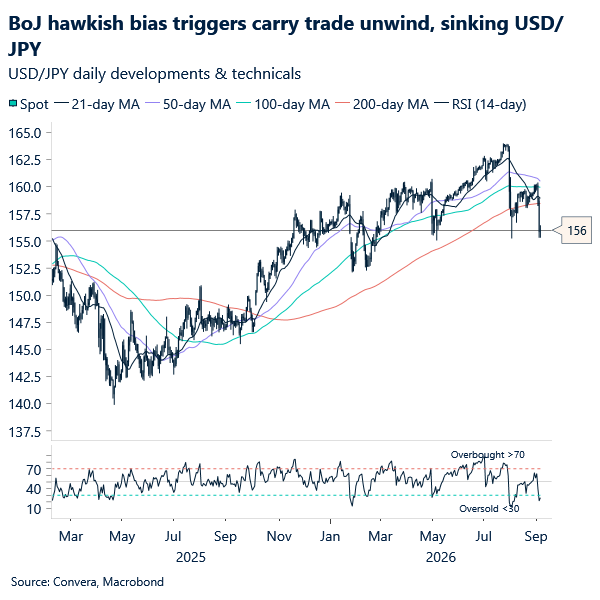
The move has been amplified by a rush to unwind carry trades funded in yen. Amid growing hawkish rhetoric, investors appear to be gradually abandoning the view that the yen, with its historically low borrowing costs, is the go-to funding currency to borrow and sell in favour of higher-yielding alternatives. If borrowing costs rise or the yen strengthens, returns are no longer as attractive.
That said, the path to further yen strengthening from here is far from clear. For starters, the Fed may well deliver on its hawkish signals, but the challenge for the yen may extend beyond economic fundamentals altogether.
A steadier pace of rate hikes may not sit comfortably with PM Takaichi’s pro-stimulus policy agenda, which would instead favour a more accommodative monetary policy backdrop. As such, further yen gains may hinge less on how much the BoJ can tighten and more on the degree of political friction tighter policy creates. Credibility is at stake.
Elsewhere, Fed Governor Christopher Waller spoke yesterday. Echoing comments from New York Fed President John Williams earlier this week, Waller signalled a more benign underlying inflation backdrop outside energy prices. The remarks added to yen-induced dollar weakness.
That makes two influential policymakers hinting that staying on hold may be their preferred option this month. Markets are currently pricing around a 50% chance of a Fed rate hike later this month, down from roughly 70% earlier in the week.
The Fed enters its blackout period this Saturday, 5 September, after which policymakers will remain largely silent until the FOMC announces its decision on 16 September.
Whether expectations for a rate hike are revived or continue to fade will depend heavily on today’s jobs report and inflation data next week.
EUR: The euro’s Fed problem
EUR/USD pushed higher yesterday, finding firmer footing in the 1.16 handle as the dollar softened on growing doubts that the Fed will deliver a hike in two weeks’ time.
Markets continue to price a full 25bp ECB hike next week with near certainty, with recent hotter-than-expected eurozone headline inflation data adding further support to the case for tightening.
And yet sentiment towards EUR/USD has shifted back to negative. Risk reversals, which gauge investor demand for protection against euro strength versus dollar strength, have slipped below zero across tenors. The move suggests that markets continue to favour hedging against further EUR/USD weakness.
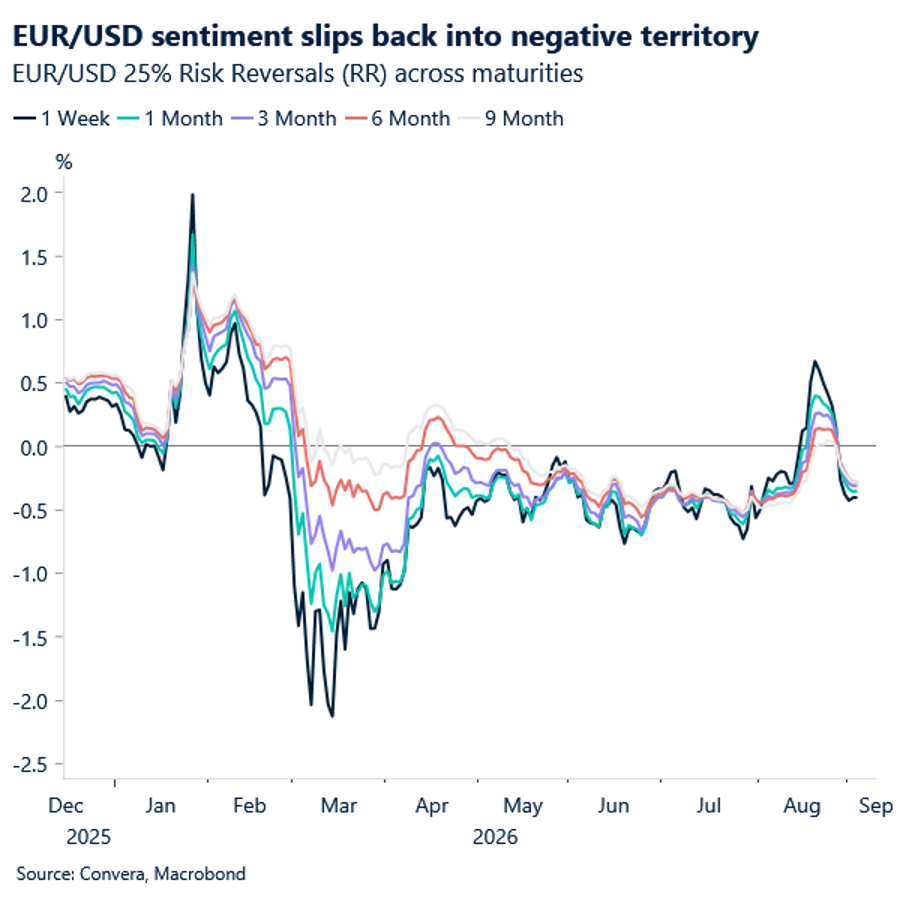
It’s hard to argue with that view. US treasury-related concerns that have fuelled the debasement trade and hurt the dollar continue to linger. But the clearest story for markets to price remains a hawkish Fed, and that remains dollar-positive.
Unfortunately for euro bulls, an even more hawkish ECB has struggled to provide meaningful support to the single currency.
The balance remains delicate, however, a Fed hold this month could quickly turn the picture on its head. Such an outcome would likely hurt the dollar from both a yield and credibility perspective, which is why we would not read too much into the recent deterioration in EUR/USD sentiment.
Today’s direction of travel hinges heavily on the jobs report. A strong print would bring the 1.1570-1.16 support zone back into focus, although a decisive break may have to wait until next week’s US inflation release, which remains the Fed’s primary concern at this stage.
GBP: Sterling’s edge narrows
GBP/EUR fell to a two-month low yesterday, breaking more convincingly below the tight 1.1650-1.17 range that had held since late July.
There was no obvious catalyst behind the move. However, we have argued for some time that, with the Autumn Budget drawing closer and hawkish repricing gathering pace across major developed-market central banks, the “it’s not so bad” mindset that has supported demand for high-carry sterling may be starting to lose momentum.
Shorting GBP becomes less costly (or longing less appealing) when alternative currencies start offering more attractive rate levels, and, perhaps, less worrisome fiscal backdrops.
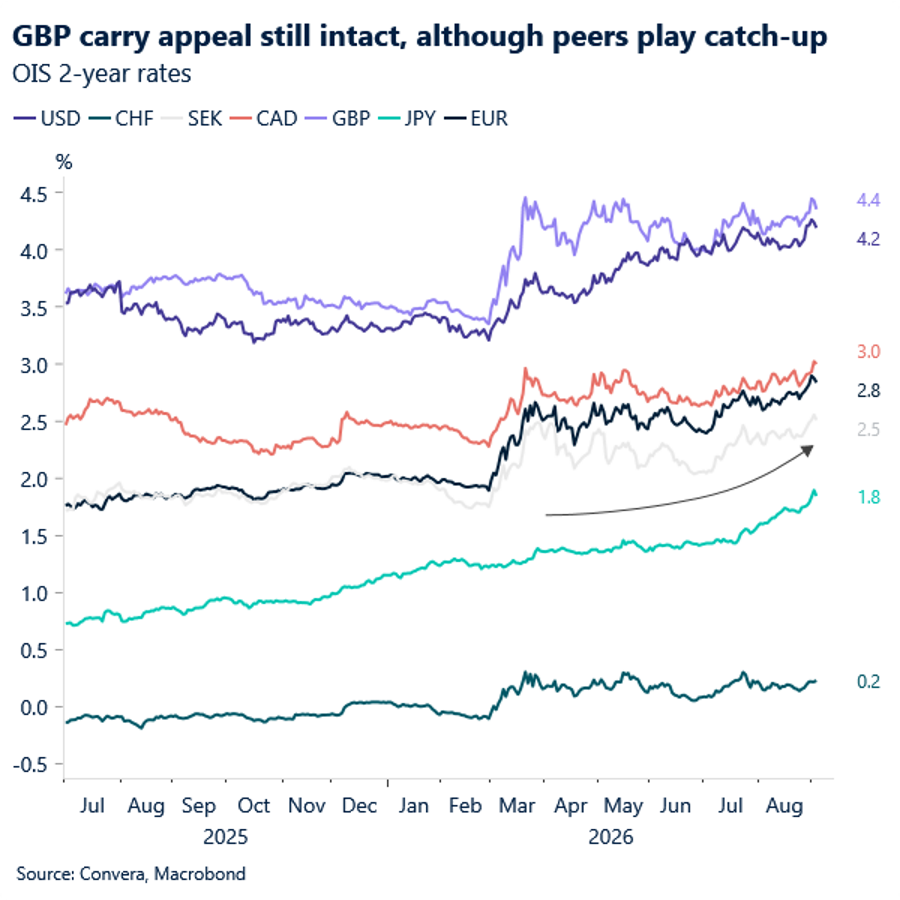
Meanwhile, the BoE appears the least likely among its major peers to hike this month. Markets assign just a 15% probability of a move in September, although they still price a full rate hike by year-end.
A key test remains August inflation, due a day before the BoE decision on 17 September. A softer-than-expected print would only strengthen the case for an extended pause, adding further pressure on the pound.
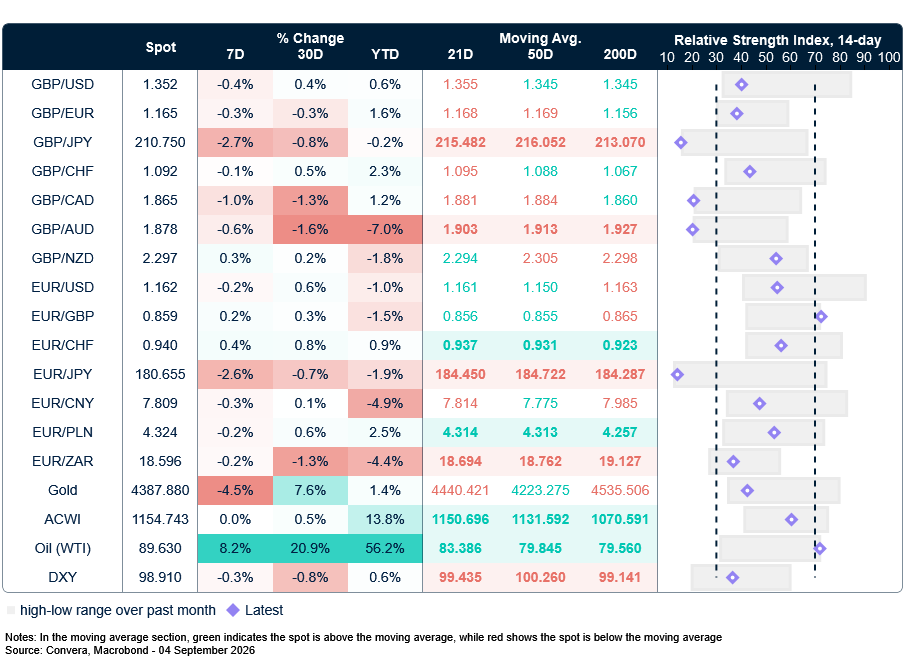
Market snapshot
Table: Currency trends, trading ranges & technical indicators
Key global risk events
Calendar: August 31 – September 4
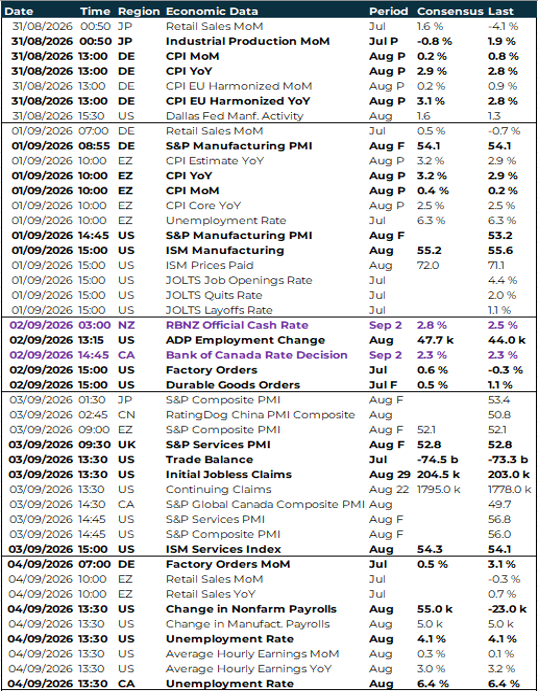
All times are in BST
Have a question? [email protected]
*The FX rates published are provided by Convera’s Market Insights team for research purposes only. The rates have a unique source and may not align to any live exchange rates quoted on other sites. They are not an indication of actual buy/sell rates, or a financial offer.