
Written by Convera’s Market Insights team
10-week peak as tax cuts beckon
George Vessey – Lead FX Strategist
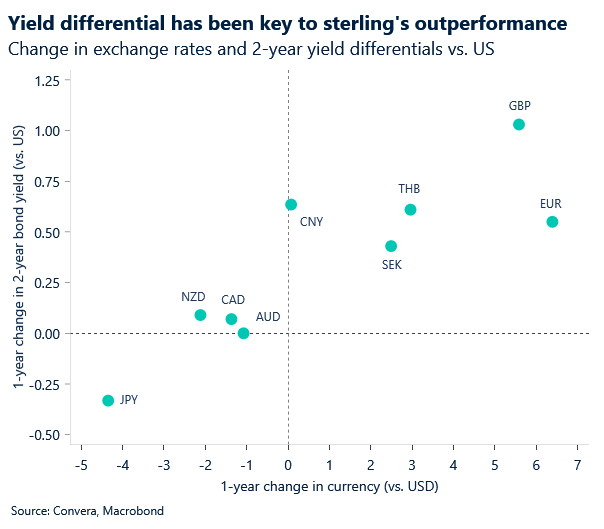
As we noted at the start of the week, GBP/USD upside looks promising so long as the currency pair stays above its 100- and 200-day moving averages. The pound recorded fresh 10-week highs above $1.2550 yesterday and also rebounded sharply from 6-month lows against the euro, helped by a widening in the spread between UK-German two-year bond yields. The yield differential has been and remains a key driver of sterling volatility.
Money market pricing of the Bank of England’s (BoE) interest rate outlook has turned increasingly ‘dovish’ over recent weeks, with markets expecting a first cut coming as early as May following last week’s inflation numbers. However, more rate cuts by the Fed and ECB are also being priced in. Plus, attempting to delay markets pre-emptively pricing any easing, yesterday, BoE policymakers, including Governor Andrew Bailey, reiterated that it’s too early to be talking about rate cuts and that rates would remain high for a sustained period due to upside inflation risks. Attention now turns to the Autumn Statement today, where UK Chancellor Jeremy Hunt is scheduled to announce changes to fiscal policy aimed at boosting the stagnating economy. Substantial fiscal loosening at this stage risks raising inflation and interest rates, still, Mr Hunt is expected to cut national insurance contributions and make a business investment tax relief permanent.
While the chancellor seeks to appease Tory MPs fearful of a 2024 election defeat, there is a possibility that tax cuts will trigger some GBP gains, as it may lead some market participants to expect less BoE easing next year as a result.
Last data patch before Thanksgiving
Boris Kovacevic – Global Macro Strategist
The Federal Reserve kept its policy rate at a 22-year high of 5.25% – 5.50% for a second consecutive time at the November meeting more than two weeks ago, igniting a risk rally that is still going on. However, yesterday’s release of the meeting minutes emphasized how careful policy makers have been in their considerations of inflation and the US economy. The Fed remains data dependent and continues to watch inflation closely. Still, we think that the strong effect of the cumulative monetary tightening and the incoming weakening of economic data will be enough for the Fed to consider the job done. Markets tend to agree with this view and have priced in rate cuts worth 100 basis points for the whole of 2024 since the last meeting.
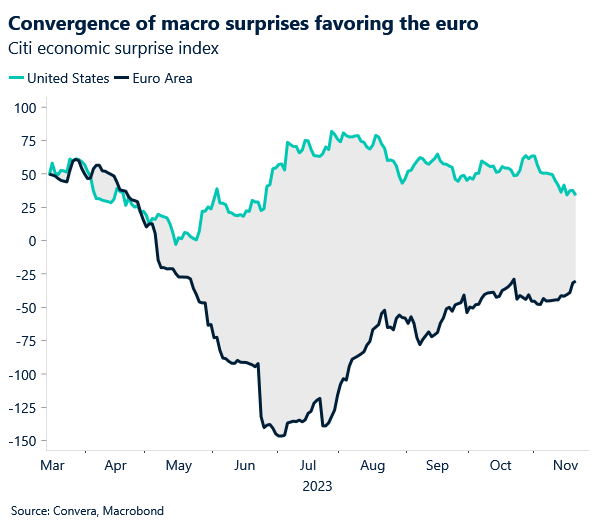
This comes against the backdrop of some secondary US macro data starting to disappoint expectations. Existing home sales fell by 4.1% on a monthly basis in October to the lowest level since August 2010 at 3.79 million. Weaker demand for housing has been mainly due to mortgage rates sitting near 23-year highs at 7.4% and the persistent lack of home inventory. At the same time, the Chicago Fed National Activity Index fell to its lowest in seven months. The string of weaker data has pushed the US economic surprise index to its lowest level since June.
The equity rally still took a slight breather after having entered highly overbought and therefore stretched territory in the short-term. US stock indices are still on track to record their fourth weekly gain in a row, even though momentum seems to be losing some steam. The US dollar bounced back from a 2 ½ month low and is now looking for new catalysts to indicate the directional bias. Today will see the release of weekly mortgage applications, durable goods and initial jobless claims before the US enters the holiday break on Thursday with most markets being closed.
Germany’s highest court puts a brake on debt plans
Boris Kovacevic – Global Macro Strategist
The European Central Bank is not giving up on its promise to continue fighting inflation and keep monetary policy at restrictive levels. The string of speeches from ECB policy makers over the past few weeks has made that more than clear. However, the somewhat hawkish rhetoric will have to face the reality of continued economic weakness and falling inflation rates, which is why markets have placed less emphasis on comments from policy makers in recent time. Investors expect the ECB to be done raising interest rates after their ten consecutive hikes brought the policy rate to an all-time high of 4.5%. With Germany likely to enter a recession in Q4, investors and companies have shifted focus to ask for support from fiscal policy.
This European domain, however, is as contested, if not more so, than monetary policy. Most Eurozone members will reduce fiscal stimulus going into 2024, according to the European commission, with the aggregate budget deficit falling from 3.2% to 2.8% next year. However, countries like France and Italy are still planning to break the EU’s recommendations. Germany has gone the other way and is currently embroiled in a budget crisis following an emergency spending freeze. Germanys constitutional court ruled that the allocation of unused pandemic debt to climate and transformation projects would not be allowed. This has put the government’s 2024 budget into jeopardy and could see spending expectations fall by €60 billion. With Germanys constitutionally enshrined debt brake limiting the budget deficit to just 0.35% of GDP being enforced by the highest court of the country, less spending could mean a longer and slower economic recovery overall.
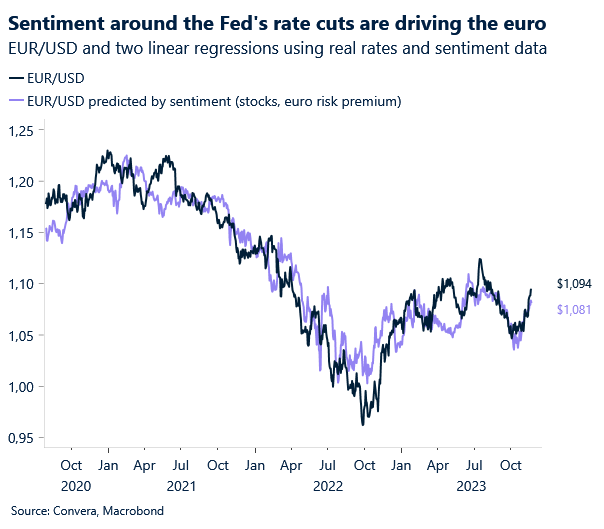
EUR/USD pushed slightly lower following yesterday’s price action due to falling global equities and some risk off momentum. The currency pair is now trading at around $1.09 after having reached a 2 ½ month high at $1.0970. We are now positioned in the middle of the recent trading range between $1.0450 (Oct) and $1.1270 (July) with the consensus forecast for 2024 having shifted to $1.11-$1.12. We are still waiting on confirming the bottoming of the European business cycle. In this context, the November purchasing manager indices releases tomorrow will be a highly watched and likely market moving event.
Yen and yuan on the offensive
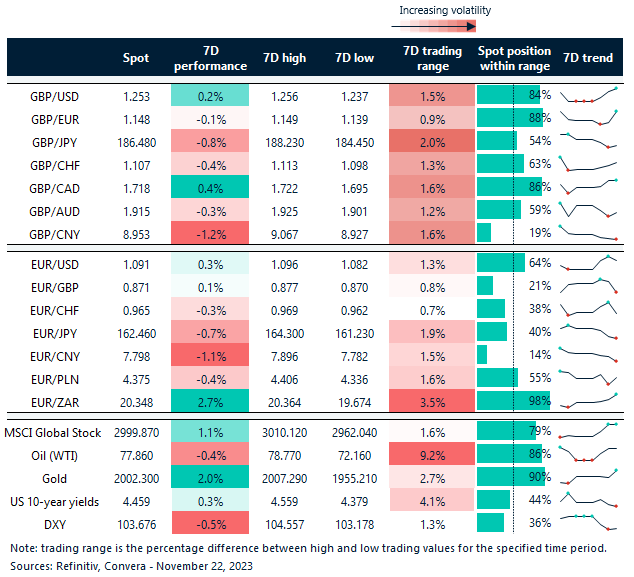
Table: 7-day currency trends and trading ranges
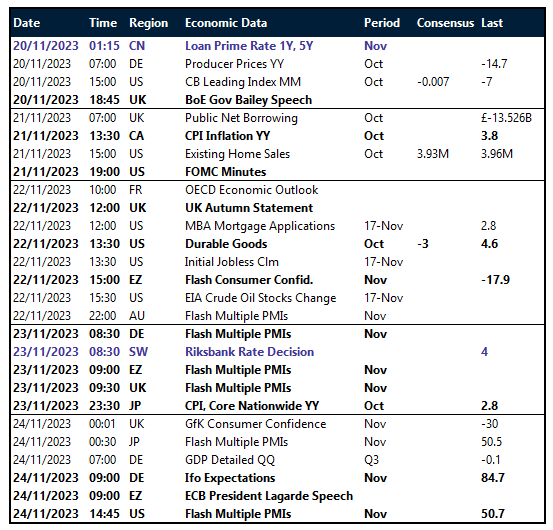
Key global risk events
Calendar: November 20-24
Have a question? [email protected]
*The FX rates published are provided by Convera’s Market Insights team for research purposes only. The rates have a unique source and may not align to any live exchange rates quoted on other sites. They are not an indication of actual buy/sell rates, or a financial offer.