
Written by George Vessey & Boris Kovacevic
Global assets pull back from extremes
The first half of last week was marked by multiple financial assets breaching short-term technical levels, increasing market volatility in the process – from the euro falling below the important $1.05 mark, to oil prices rising above $95 a barrel and the US 10-year government bond yield topping the 4.65% level for the first time since 2007. However, with investors in Asia looking ahead to a boost in consumption during China’s Golden Week holiday and inflation moderating further in Europe and the US, some of the anxiety eased just before the weekend. The euro is now trading back above $1.05 with oil prices at $93 and the US 10-year yield at 4.55%.
European data continued to disappoint last week, as the Ifo Business Climate and Gfk Consumer Confidence both came in weaker than economists had expected. The most aggressive tightening cycle by the ECB on record has led the money supply to fall at the fastest rate in the Eurozone’s history, leading many institutions to revise down their German GDP forecast for this and next year. At the same time, European inflation moderated to a two-year low, growing by 4.5% on a yearly basis. This should give policymakers some comfort and could mean that the tightening cycle is finally over.
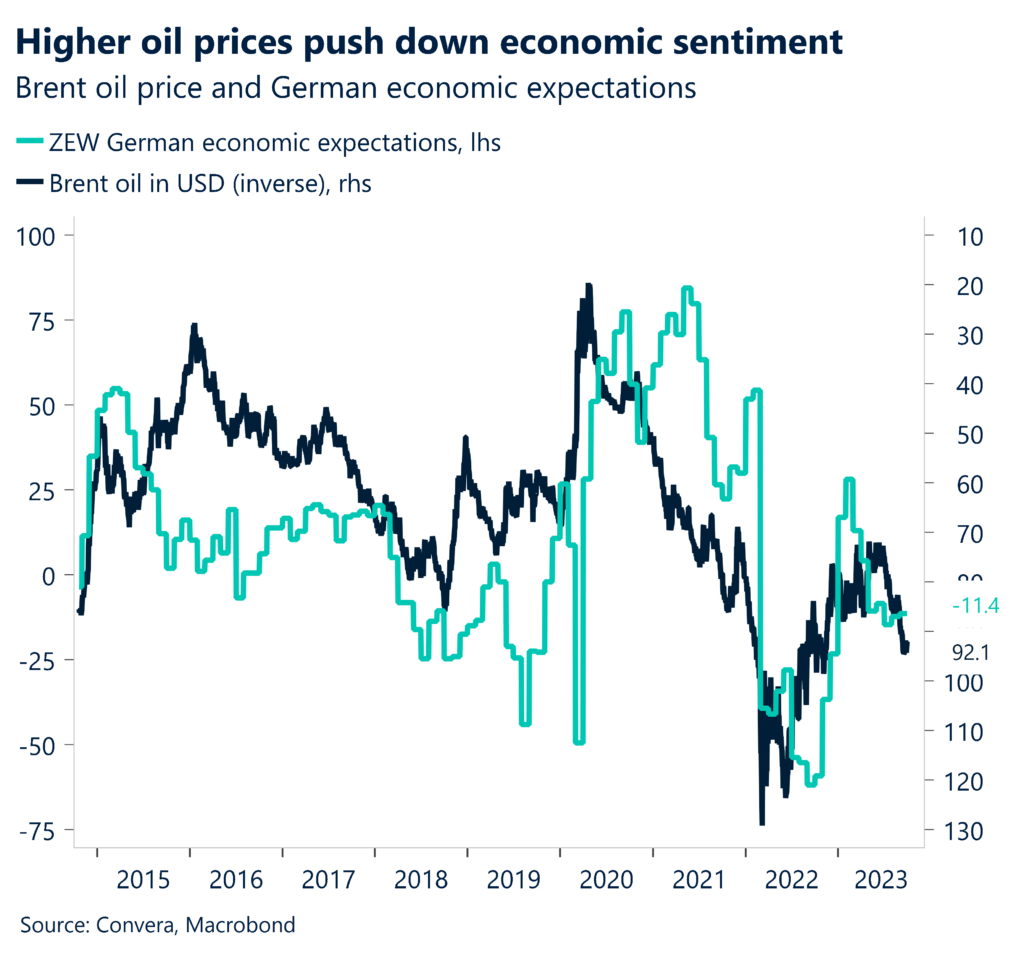
We still think that the euro at around $1.05 is consistent with current soft data and real rates. A short-term push lower remains possible on a global growth scare or (a) US yields rising above 5% (b) crude oil rising above $100. We will continue to watch the developments on the global oil market very carefully, as the euro’s correlation to the price of oil has increased in recent weeks. On the macro side, final readings of European PMIs, producer prices, retail sales and German industrial orders will have our attention as well.
US avoids shutdown as big data looms
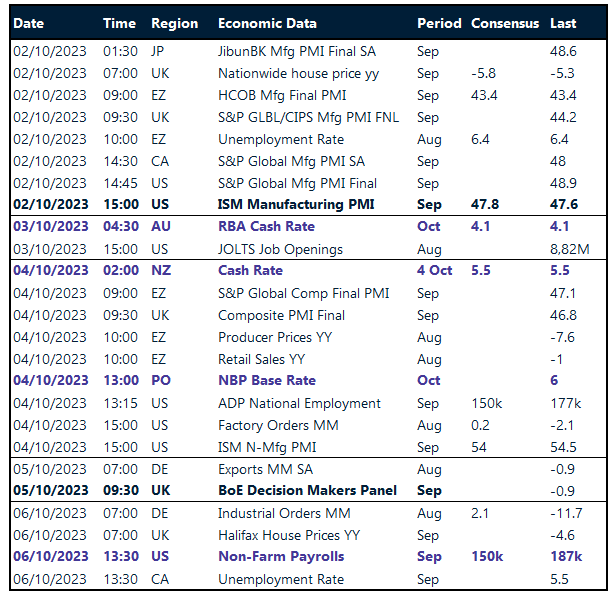
The US narrowly avoided a government shutdown on Saturday that would have left many federal workers without paychecks and investors and economists with less economic data to look forward to this week. The bill passed both chambers and was signed by President Joe Biden on the same day, extending the government’s finances until November 17th. This will set the tone for the upcoming economic week, which is already filled with important data releases such as JOLTS job openings, the Purchasing Manager Indices (PMI), and the US jobs report.
The US 10-year government bond yield is currently the most watched markets indicator in the world. Although the looming fear of a temporary shutdown has been eased, or at least postponed into November, faced with hawkish Fed members communicating a higher for longer rates regime and heavy auction sales of US treasuries, investors continued their relentless selling of US government bonds last week. With fears of oil prices going to push beyond a $100 per barrel and inflation not returning to the Fed’s 2% target, yields have continuously been pushed higher in recent weeks. The 10-year yield reached the highest level since 2007 at 4.68% on Thursday and has since then fallen back a bit to 4.55%.
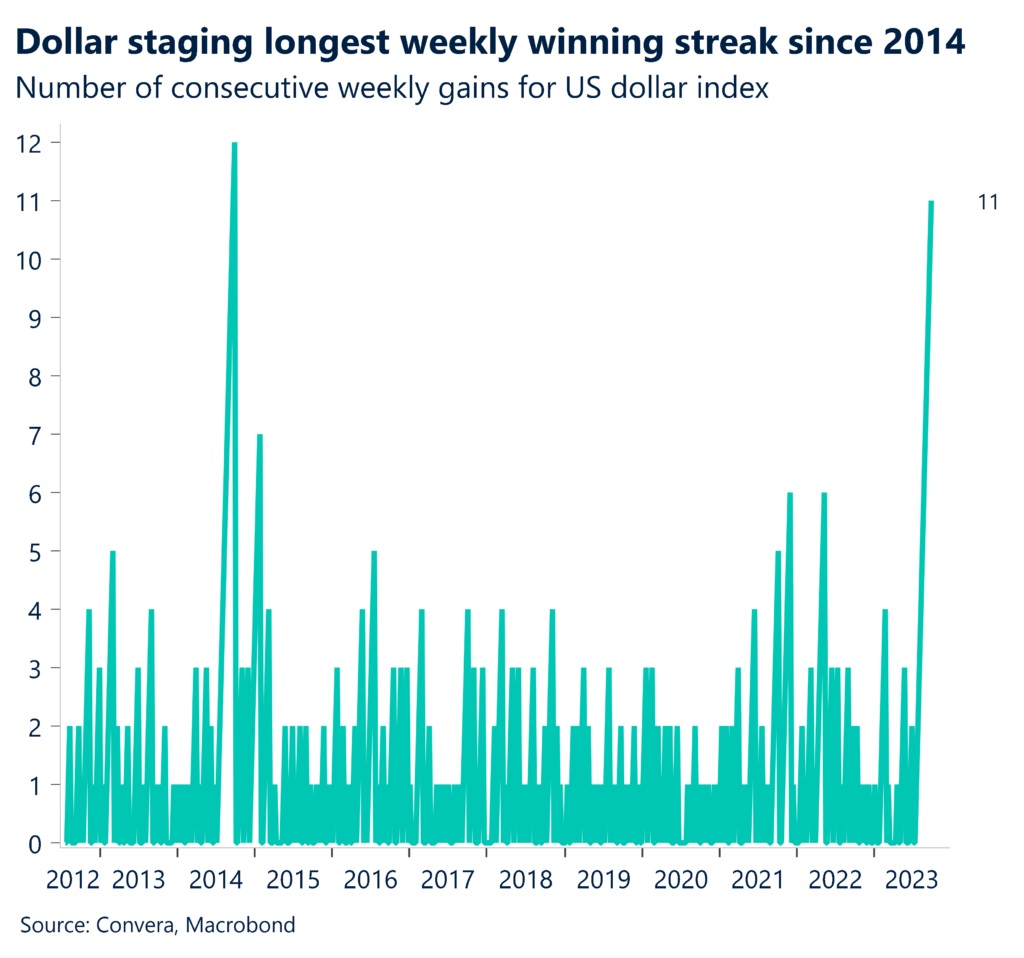
Hard data released last week like durable goods orders, initial jobless claims and GDP paint a picture of a still robust economy, supporting the Fed’s assumption of a soft landing. However, we have had some smaller downside surprises to US economic data as well last week. Consumer confidence, new home sales and both the Dallas and Chicago Fed indicators failed to meet consensus expectations in the previous month. The divergence between (weak) leading and (strong) lagging indicators therefore remains. The US dollar is following the latter and has now appreciated for the 11th consecutive week, the second longest streak on record. The trade weighted dollar is up 6% from July and is only 7% away from its 22-year high.
Pound’s rebound may be short-lived
The pound suffered its worst month against the US dollar in a year, falling almost 4% in September, or almost 5 cents, as widening US-UK rate differentials favoured the USD. GBP/EUR also snapped an 8-month winning streak, falling over 1% last month to test the €1.15 handle.
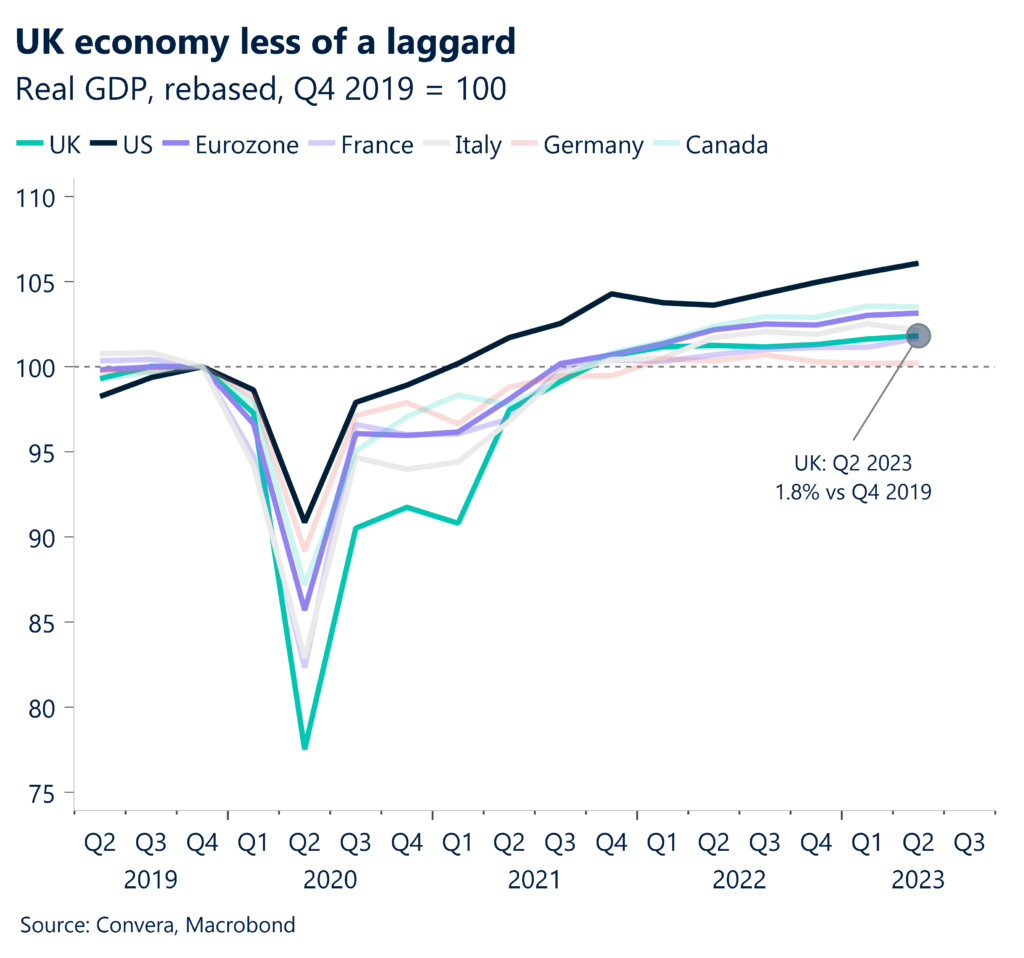
Last Friday, we saw month- and quarter-end flows stifle the dollar’s relentless run of late, in conjunction with traders scooping up pounds from oversold territory. This was also helped by data revealing UK GDP was 1.8% above pre-pandemic levels at the end of the second quarter this year, stronger than Germany and France. However, based on current inflation and rate expectations, the bleaker outlook for GBP/USD in the near-term is unlikely to change. Speculative positioning data also backs this up with the net GBP long position more than halving in the week to September 26 as the Bank of England’s (BoE) dovish shift hurt the pound. This week, final PMI prints for September are set to confirm private sector output in the UK is at its lowest since the pandemic lockdown in January 2021, which could further deter traders from supporting sterling.
We will keep an eye on US yields and oil prices as mentioned above, but domestically, the BoE’s Decision Maker Panel survey this Thursday should also be closely watched as this is something policymakers pay attention to. It’s been pointing to less aggressive price and wage rises among firms over recent months, which has assisted sterling’s circa 8% fall from its mid-July peak.
Buoyant dollar supported by rising US yields
Table: 7-day currency trends and trading ranges

Key global risk events
Calendar: October 2-6
Have a question? [email protected]
*The FX rates published are provided by Convera’s Market Insights team for research purposes only. The rates have a unique source and may not align to any live exchange rates quoted on other sites. They are not an indication of actual buy/sell rates, or a financial offer.