
Volatility risk could spoil rebound in sentiment
Although financial markets have stabilised as banking fears ease, the plunge in US Treasury yields over the past couple of weeks has weighed heavily on the US dollar, with both GBP/USD and EUR/USD climbing towards 2-month highs again this week. But volatility risks remain elevated as we approach the end of the tightening cycle.
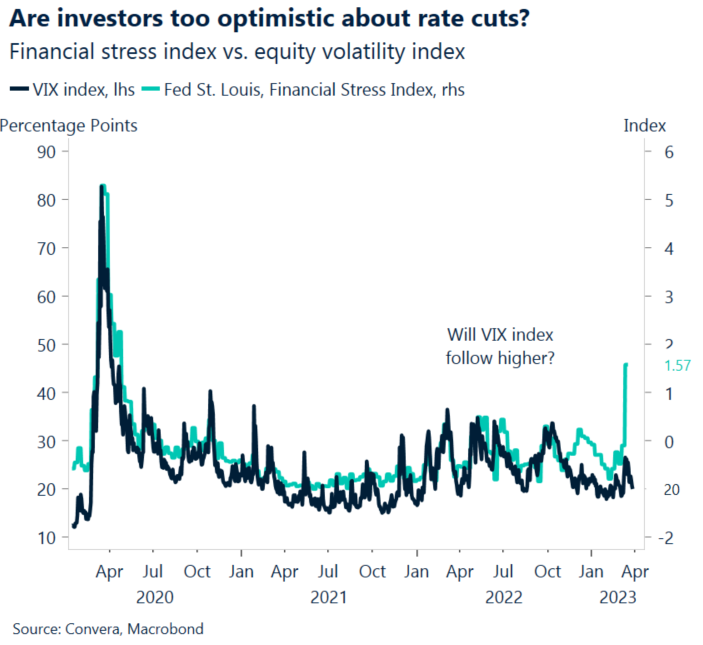
The Fed and other central banks have made clear that banking troubles would not stop them from further tightening, but markets believe instead that rate cuts are coming as central banks balance price stability against financial stability and stress amongst regional banks. Stocks have held up due to hopes for rate cuts, which is why the VIX index, which measures investors’ expectations of future volatility over the next 30 days in the S&P 500, remains relatively stable. The VIX shot above the 30 level last week, but historically, when the St. Louis Fed Financial Stress index rises to 1.575, as it has done this week for the only fourth time in 30 years, the VIX usually spikes much higher than 30. There is still an underlying risk of this occurring, and such an extreme upside VIX spike will usually accompany a huge down day in stocks, which could in turn hurt riskier currencies and support safe havens like the US dollar and Japanese yen.
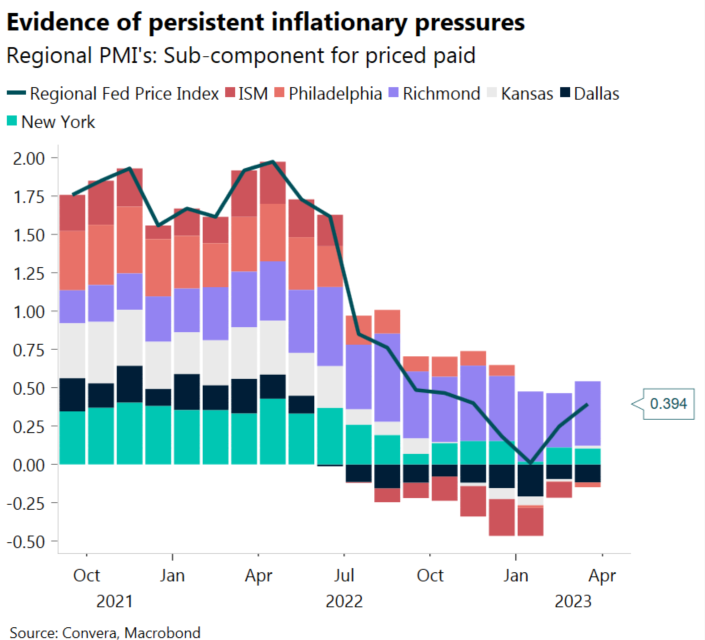
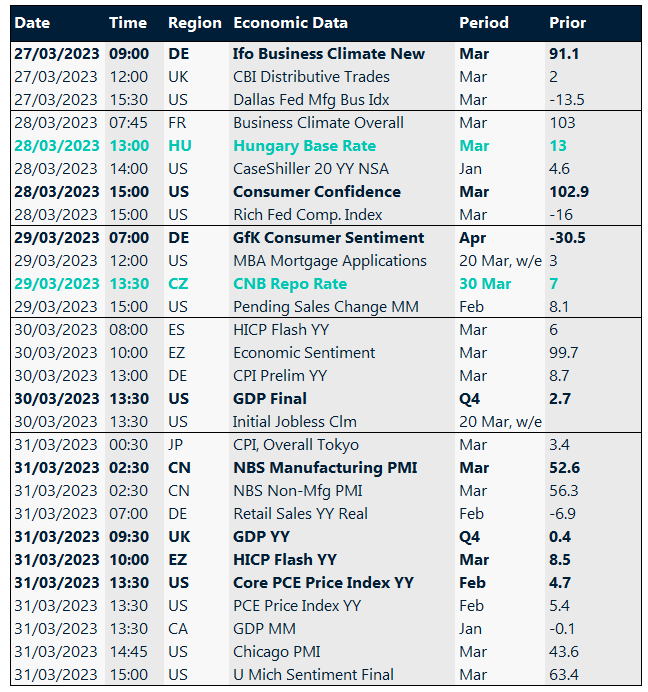
Moreover, stubbornly high inflation suggests market expectations of rate cuts (positive for equities and riskier currencies) are too optimistic. The regional Fed price index has risen for a second month in a row, and Friday’s personal consumption expenditures data – the Fed’s preferred inflation gauge – could confirm inflation’s stickiness and spoil the recent rebound in risk appetite.
Pound rebound with risk appetite
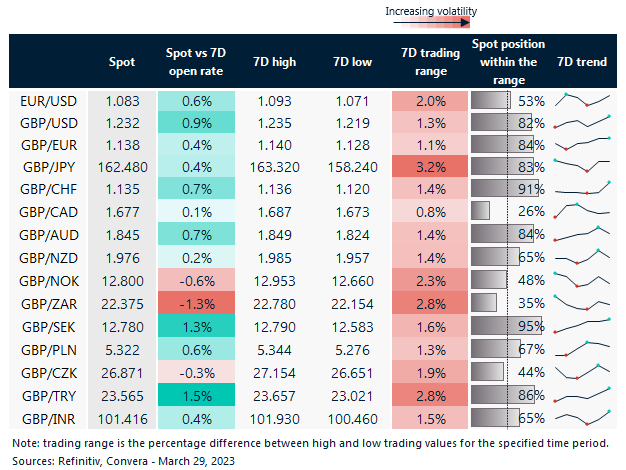
The British pound is holding above $1.23 versus the US dollar today, hitting a new 8-week high of $1.2349 yesterday after Bank of England (BoE) Governor Andrew Bailey repeated that further monetary tightening would be required if signs of persistent inflationary pressure became evident.
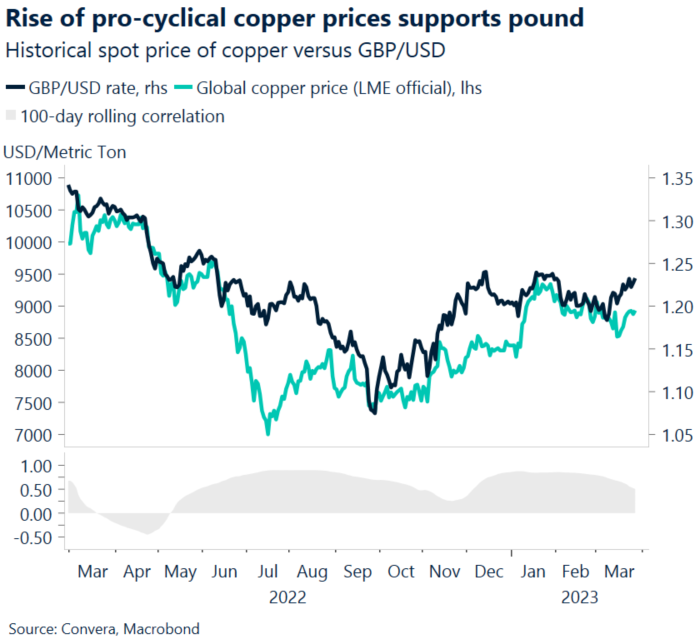
Governor Bailey also set out to reassure markets over the UK banking system during his testimony to the Treasury Select Committee yesterday, stating banks in Britain were resilient and able to support the economy despite the recent strains in the global banking system. Will GBP/USD extend towards $1.24 or even $1.25 over the next few months? If risk aversion doesn’t resurface and narrowing US-UK rate differentials persist, then this upside scenario is certainly plausible. The pound is a risk sensitive currency, meaning it has also been supported by the rebound in risk appetite amidst cooling concerns about the banking sector turmoil. Sterling tends to have a positive correlation with global equities and also copper prices, which are a key proxy for global growth. The rebound in both equities and copper prices have helped GBP/USD climb higher lately, but this optimism may be overstretched in the short term.
Meanwhile, against the euro, the 100-day moving average at €1.1389, where the currency pair currently resides, continues to be a strong resistance barrier. The hawkish ECB rhetoric recently is capping sterling’s gains against a slightly more attractive common currency.
Euro benefits from calming markets
The last couple of trading sessions have been muted, and the euro has so far benefited from the “no news is good news” mantra. The longer we go without another banking failure, the more markets will start to move on economic data and monetary policy divergences again.
German consumer confidence improved for a sixth straight month in March, continuing the recent trend of better soft data. The turmoil in the banking sector has still to show up in the economy. However, as we noted previously, the expected tightening of lending conditions will impact the real economy with a lag. Putting too much weight on data releases for March might be misplaced. Nonetheless, optimism around Europe remains a theme on markets and has helped push European banking stocks higher by 7.2% since the lows reached on Monday morning.
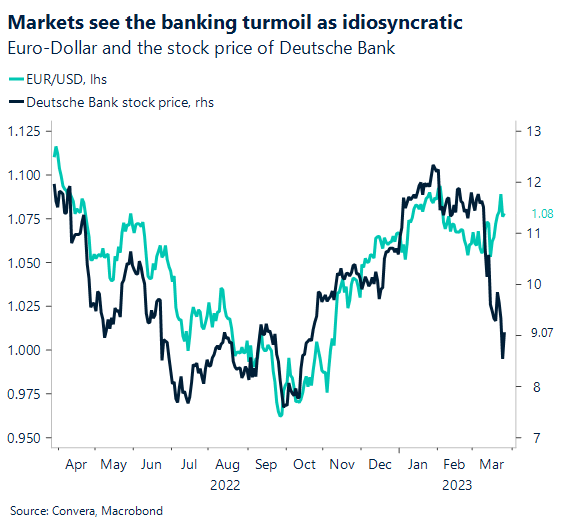
Markets have so far perceived the recent development surrounding the European banking sector as driven by idiosyncratic factors, and have not deemed the crisis of Credit Suisse and the Deutsche Bank stock sell-off as a systemic issue. Investors have therefore allowed the euro to benefit from the continued divergence of interest rates against the US dollar, pushing EUR/USD above the $1.0820 mark once again today.
Sterling shines with risk sentiment
Table: 7-day currency trends and trading ranges
Key global risk events
Calendar: Mar 27 -Mar 31
Have a question? [email protected]
*The FX rates published are provided by Convera’s Market Insights team for research purposes only. The rates have a unique source and may not align to any live exchange rates quoted on other sites. They are not an indication of actual buy/sell rates, or a financial offer.