
Dollar erases gains as data in focus
The US dollar briefly benefited from surging oil prices yesterday after an unexpected production cut by OPEC+. Why? Because investors got spooked that oil prices would continue rising, causing further inflationary pressures and force central banks like the US Federal Reserve (Fed) to keep raising interest rates. However, bond traders appear to have shrugged off the jump in oil prices – suggesting economic growth concerns are taking precedence over inflationary fears.
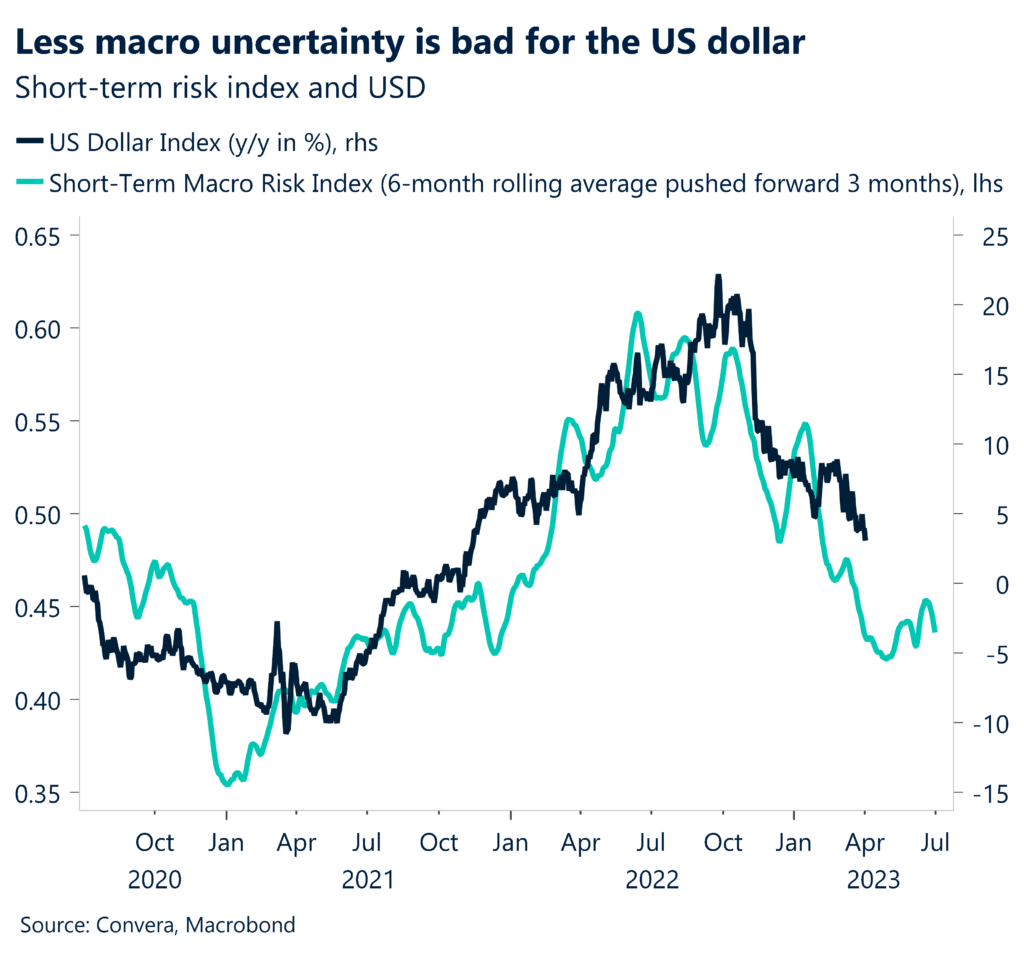
The US dollar’s safe haven appeal amidst a volatile macro and market environment means its expected decline in 2023 will be gradual and far from linear. At the macroeconomic level, higher volatility is simply a reflection of the wide range of possible scenarios, from disinflationary recession to inflationary economic rebound and markets are nervous of banks remaining hawkish in the face of a recession. However, the expectation of a shift in Fed policy later this year remains a heavy weight on the world’s reserve currency. The dollar erased its early gains yesterday, helped by a fall in the ISM manufacturing PMI to the lowest since May of 2020, implying that rising interest rates and growing recession fears are starting to weigh on businesses.
Today, focus turns to job openings data and the Fed wants to see signs of easing constraints in the US labour market. A sharp decline in job openings would likely be negative for the dollar, adding support to the expected rate-cutting cycle in the second half of the year.
Sterling usually appreciates in April
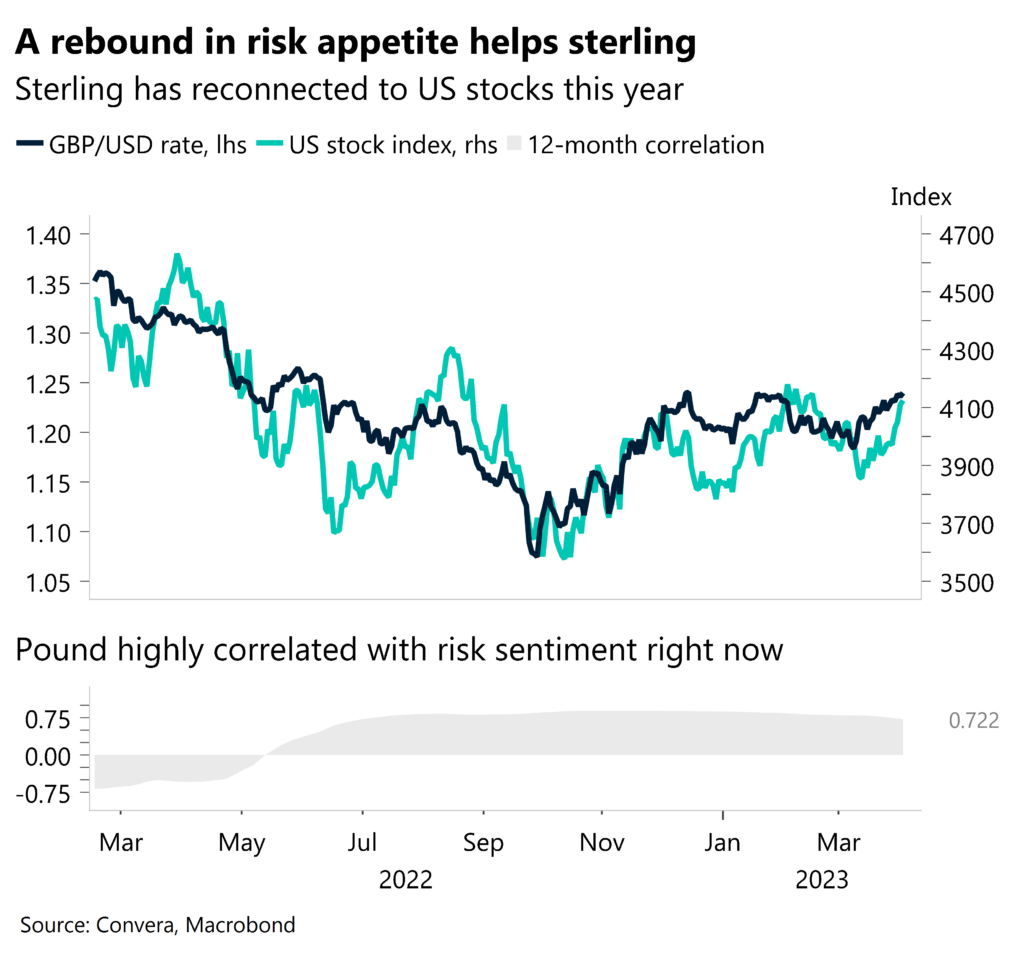
The British pound is the best performing currency of the year so far, supported by better-than-expected economic data, bets that the Bank of England will keep interest rates higher for longer and more recently thanks to improving global risk sentiment. But sterling may also benefit from seasonal patterns in April, with records showing this is a traditionally strong month for the UK currency.
With GBP/USD trading above its key moving averages on a track for its fourth weekly rise in a row, the stage looks set for another typical rise in April, buoyed by favourable investor sentiment and flows associated with the FTSE 100. Research shows GBP/USD has risen in nine out of the past twelve Aprils, mostly because the pound has a positive correlation with equity markets and the US dollar has a negative correlation. But the extent of any seasonal gains could be influenced by sterling’s performance in March and as March was the best month for sterling since November, the follow through in April could be limited. Nevertheless, GBP/USD is on the cusp of clinching fresh 2023 highs this morning and could soon be testing the key $1.25 handle.
Meanwhile, GBP/EUR remains rangebound, but at the top end near €1.14. This currency pair’s trajectory will largely be influenced by monetary policy divergences which will be data-driven unless the banking turmoil becomes more systemic.
The silent rise of European equities
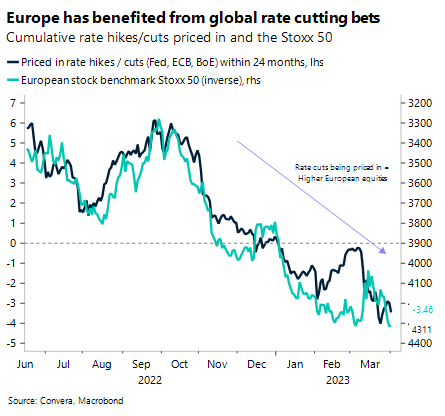
The European Stoxx 50 had shortly risen to a 14-month high in yesterday’s trading session and has extended its gains from the lows reached in October to 30%. The benchmark is now just 2% shy of reaching a 15-year-high.
The banking turmoil and increased stress level have so far not negatively impacted European equities on a benchmark level, mainly because of the continued fall in energy prices and the rapidly increased speculations about central banks starting to cut interest rates again. Optimism towards the old continent has lifted the Euro as well, which is still on track to record its sixth consecutive weekly gain in a row against the US dollar.
Continued hawkish talk from the European Central Bank (ECB) has cemented the expectations for a 25-basis point rate increase at the May meeting in investors’ minds, with the Austrian central bank governor being the latest member of the governing council calling for a continued tightening path. While Robert Holzmann, who is seen as one of the most hawkish policy makers within the ECB, even suggested that a half-point increase in borrowing costs may still be on the cards, other members have called for a step down to 25 basis points. This has helped EUR/USD stay above $1.0880 in yesterday’s trading and reclaim $1.09 this morning.
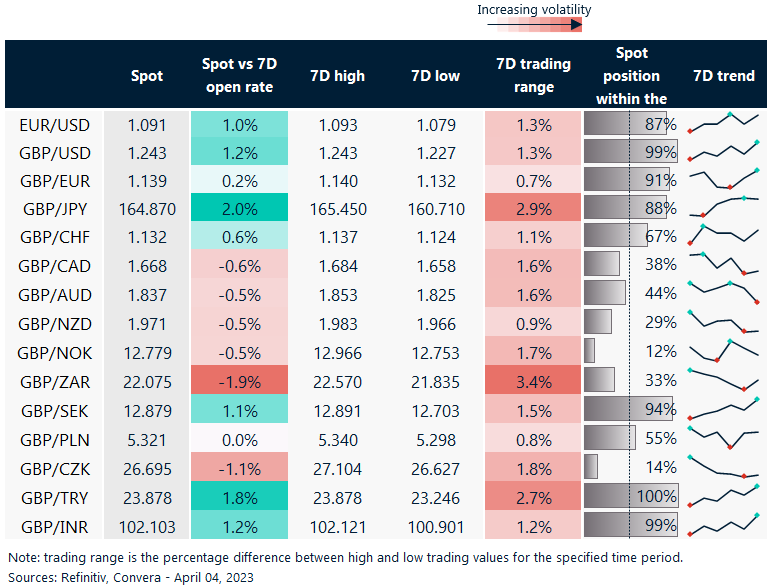
GBP/USD up 1.2% in a week
Table: 7-day currency trends and trading ranges
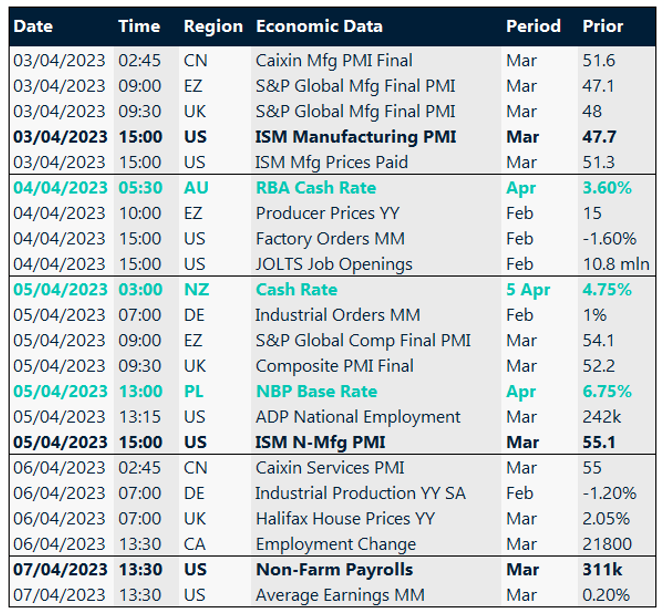
Key global risk events
Calendar: Apr 03 -07
Have a question? [email protected]
*The FX rates published are provided by Convera’s Market Insights team for research purposes only. The rates have a unique source and may not align to any live exchange rates quoted on other sites. They are not an indication of actual buy/sell rates, or a financial offer.