
Check out our latest Converge Podcast episode : The consumer sets the bar: How B2C innovation is pushing B2B finserv into the future.
Inflation or growth – What will the ECB choose?
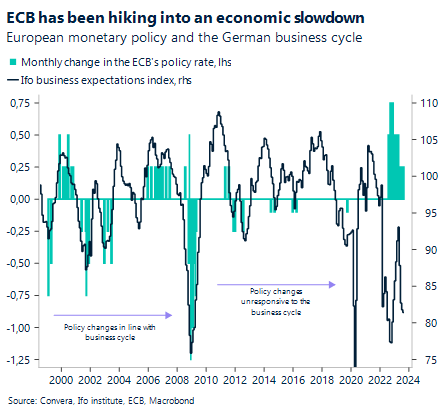
Weak economic data continues to plague the Eurozone without impacting its financial markets too much. The front-loading of the European economic downtrend versus the US has led investors to price in a lot of pessimism in recent weeks. This has made the euro, European government bonds and equity markets more indifferent to the incoming data. The news flows surrounding the medium-term monetary policy of the ECB and the immediate rate decision today is driving markets more forcefully now.
The Reuters headline about an internal source within the ECB saying that the institution’s inflation projection will be revised up led to German and French yields rising across the board. This has in turn supported the euro versus the US dollar, which is trying to record the first weekly appreciation in more than two months. The upside inflation surprise in the US yesterday was not strong enough to change the still dovish picture for the Fed and has had a limited impact on FX markets. The same can be said for the release of industrial production in the Eurozone, which fell more than expected, by 1.1% in July.
The Reuters report has pushed up market expectations of a rate hike today from below 40% to 68%, making the meeting a very interesting one. Policymakers will have to decide on how to communicate a potential hike against the backdrop of a deteriorating economic outlook. Alternatively, a rate pause would have to be accompanied by a clear hawkish message against speculations of rate cuts in 2024.
Dollar muted after mixed inflation report
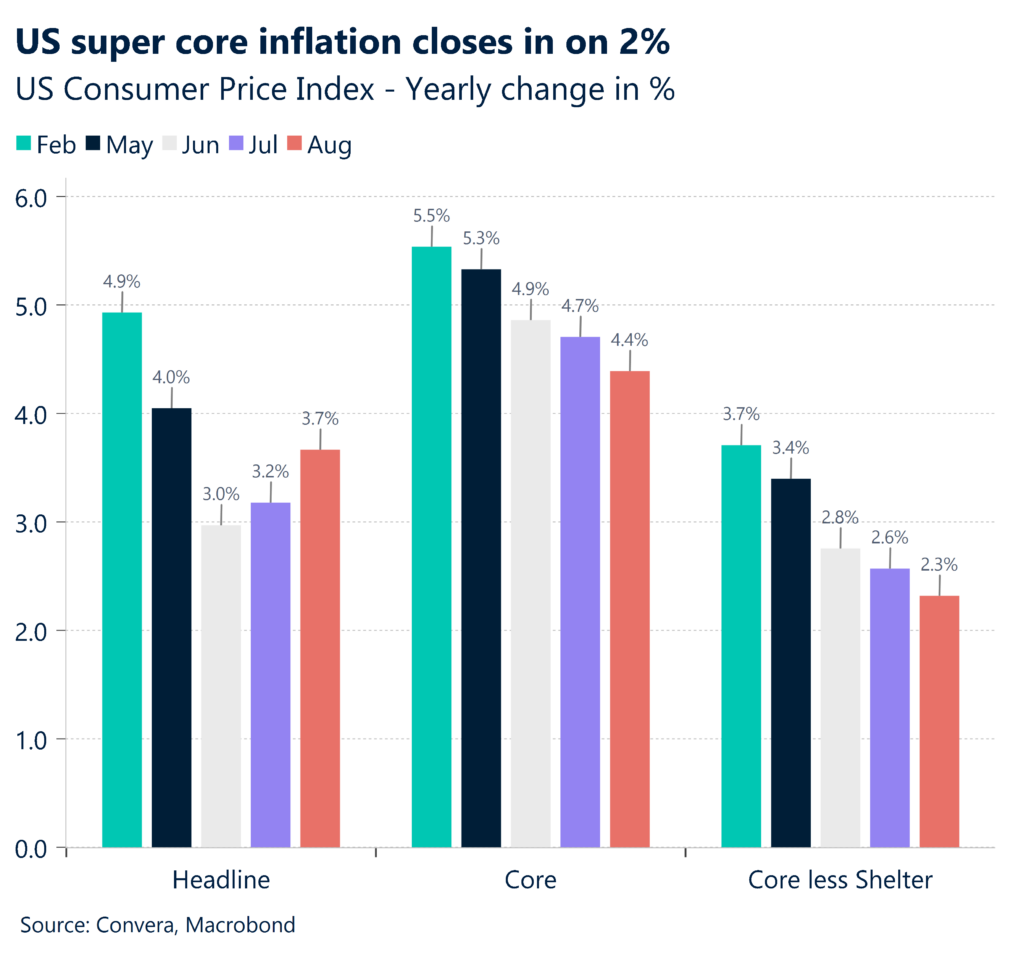
The US dollar index is holding steady as investors continue to digest the latest US consumer inflation report, which had no significant impact on the outlook for Federal Reserve (Fed) monetary policy. Traders see a 97% chance of the Fed holding rates in September, and a 58% likelihood of a pause in November.
Overall, it was a mixed US inflation report. Headline inflation came in at 0.6% m/m and 3.7% y/y, slightly higher than the 3.6% forecast due to base effects and higher energy prices. Core CPI rose slightly more than expected on the month, but the annual core rate continued to decline as expected from 4.7% to 4.3%. Super core inflation, which the Fed pays close attention to, dropped closer to the 2% target. All-in-all, a Fed hike is doubtful next week, but it will be the updated economic and rate projections that will move the market. A big dovish revision of the 2023 dot plot seems unlikely given the evidence of US economic resilience since the last projections in June. Therefore, any dollar weakness in the near-term may be short-lived until we see US economic data start to disappoint.
EUR/USD remains caught in a narrow trading range this week, unable to break below $1.07 but lacking upside momentum. Could a hawkish ECB hike today trigger a sustainable EUR/USD rally? It’s questionable given the weaker economic backdrop of Europe and China.
Pound rebounds but has work to do
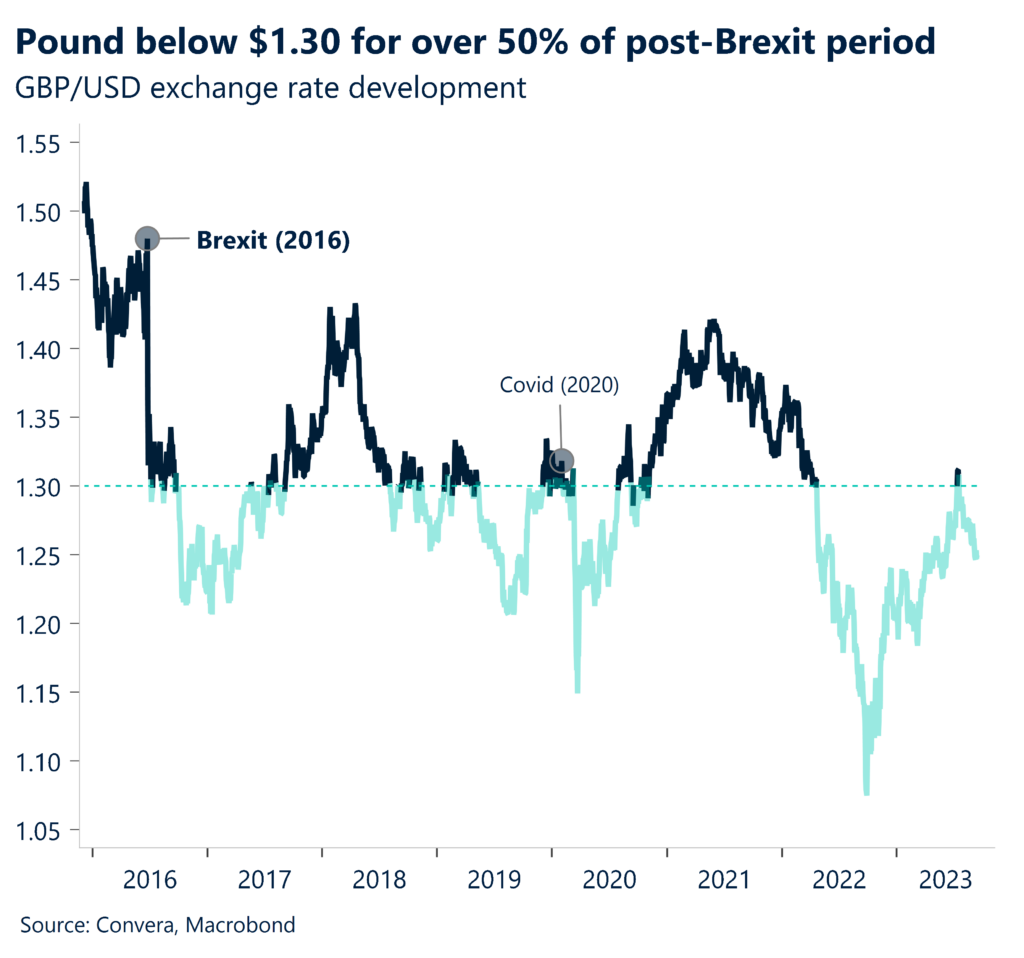
GBP/USD rebounded off its 200-day moving average support yesterday following the US CPI report. The pound remains vulnerable, however, if it fails to meaningfully recapture the $1.25 handle. Meanwhile, GBP/EUR is back above €1.16 after closing above its 100-day moving average in a sign that investors aren’t eager to buy the euro ahead of the ECB meeting today.
A sparse data UK calendar today means the pound will likely take cues from external events, with GBP/USD traders focussing on US jobless claims and retail sales, and GBP/EUR traders bracing for the ECB decision. Looking ahead to next week, sterling traders await UK inflation data the day before the Bank of England’s (BoE) meeting on Thursday. A dramatic drop in UK inflation could provide cover for the BoE to address mounting UK growth concerns, lowering rate expectations and pushing GBP/USD to lows seen in May of $1.23. Alternatively, persistent stickiness of core and services inflation remains a risk, especially given wages excluding bonuses are still rising at a record pace. This could prompt money markets to reprice a second rate hike by year-end once again, providing a boost to the pound.
Either way though, with the economy slowing, signs of the labour market weakening and the BoE estimating that much of the hikes to date have yet to hit the economy, the tone has shifted to the dovish side. Thus, the likelihood of GBP/USD climbing back above $1.30 before 2024 has, in our opinion, significantly diminished.
Oil prices nearing 10-month highs
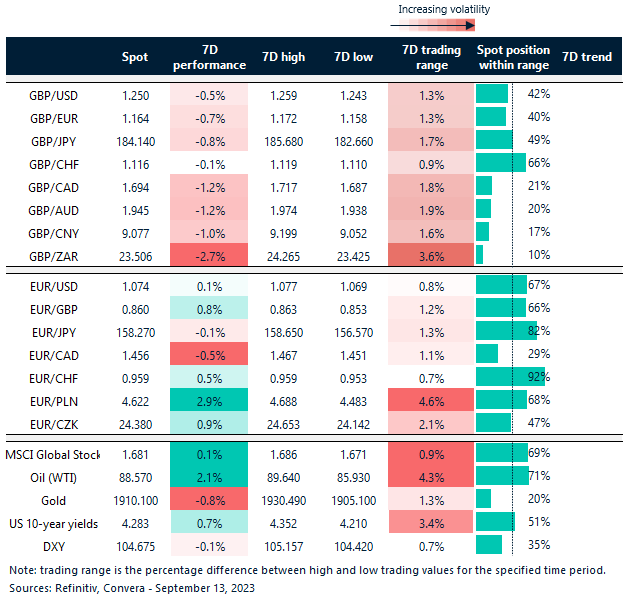
Table: 7-day currency trends and trading ranges
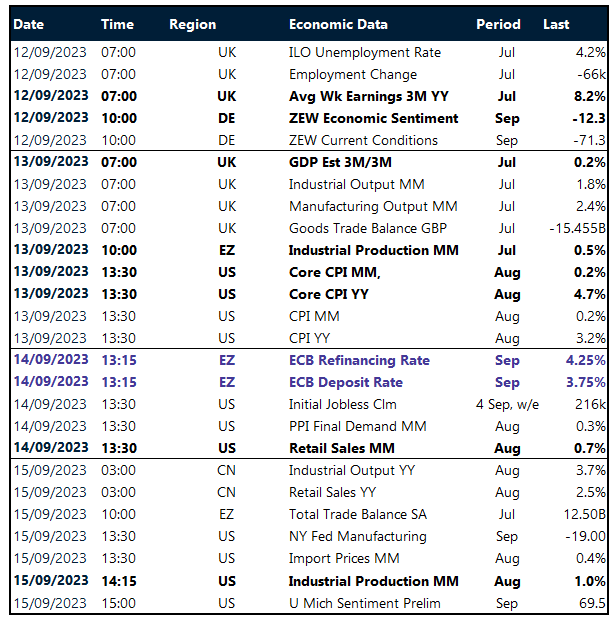
Key global risk events
Calendar: September 11-15
Have a question? [email protected]
*The FX rates published are provided by Convera’s Market Insights team for research purposes only. The rates have a unique source and may not align to any live exchange rates quoted on other sites. They are not an indication of actual buy/sell rates, or a financial offer.