
Written by the Market Insights Team
The persistence of tariff risks is underscored by frequent headlines, illustrating that these concerns are far from abating. Beyond the immediate implications of tariffs, it is imperative to maintain a vigilant focus on underlying fundamentals, which on aggregate, point to robust US dollar performance. But even if we witness softer inflation or retail sales figures from the US this week, we would be inclined to fade any dollar weakness, particularly against currencies more vulnerable to the resumption of tariff noise.
Dollar well bid post-NFP
Boris Kovacevic – Global Macro Strategist
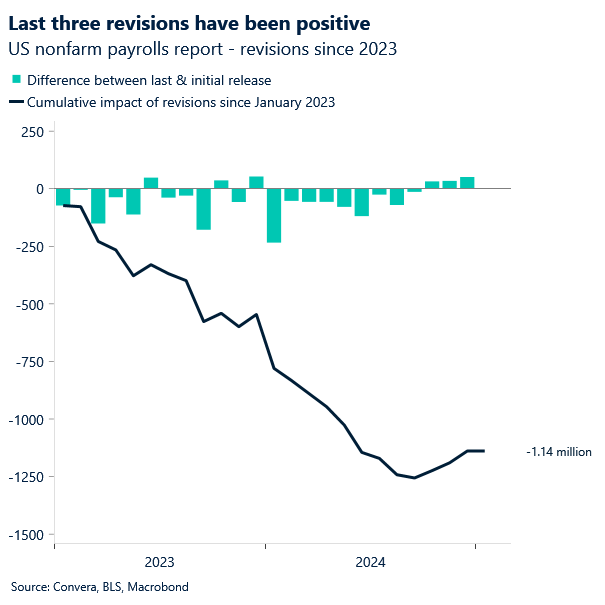
January’s US jobs report delivered a mixed bag for investors. Hiring slowed but wage growth ticked higher and continued the theme of “heightened inflation anxiety” driven by the tariff war and rising inflation expectations. The macro and geopolitical ambiguity was enough to drive the dollar higher before the weekend, but the gains were unable to turn the overall week green.
Headline payrolls came in at 143k, below the 175k consensus. However, upward revisions to the past two months added 100k jobs, and the unemployment rate held at 4.0% versus the expected 4.1%. Wage growth remained strong, with average hourly earnings rising 0.5% month-over-month, but the average workweek fell to 34.1 hours, matching pandemic lows. These factors support the case for the Fed to hold rates steady for now. Options markets now reflect only two rate cuts from policy makers during the current easing cycle.
Markets will navigate a packed economic calendar this week, with critical inflation readings, industrial production data, and retail sales figures set to shape the macro-outlook. In the US, both the CPI and PPI number will get some attention, due to the current narrative that inflation is accelerating again. A stronger-than-expected print could fuel concerns that inflation remains sticky, potentially affecting Fed rate-cut expectations.
Euro dips after rising to resistance
Boris Kovacevic – Global Macro Strategist
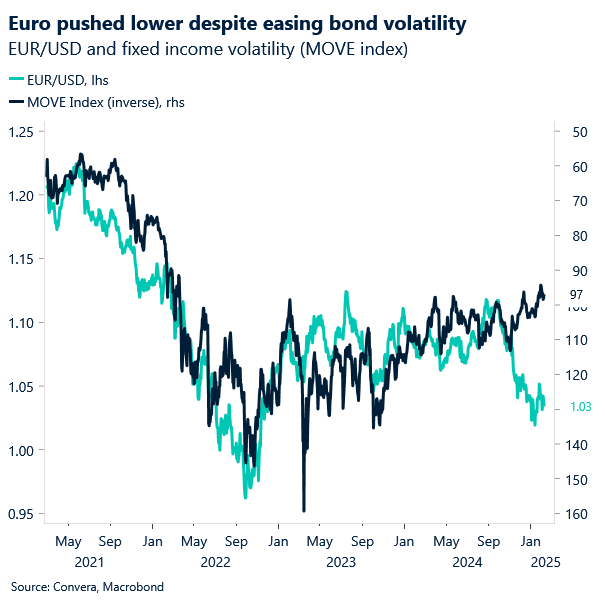
The euro faced downward pressure against the US dollar on Friday but the loses were not enough to reverse the gains from the previous trading sessions. Still, the immediate decline upon ascending to the 50-day moving average at $1.0410 reflected investor concerns over the potential economic repercussions of escalating trade tensions on the Eurozone economy.
The US dollar’s strength was further bolstered by its status as a safe-haven asset amid global uncertainty. Overall, the week’s developments underscored 1. the fragility of global markets in the face of policy shifts but also, 2. the fact that equity markets can continue rising as long as earnings keep outperforming expectations.
The upcoming week will be about survey data and investors gauging if the European economy has bottomed. The spotlight will fall on the ZEW surveys for Germany, the Eurozone, and the EU’s cross-country flash consumer confidence indicators. Friday will conclude the week with the most important leading indicator: the Flash Purchasing Manager Indicator. EUR/USD needs a positive domestic impetus amid escalation trade tensions to keep trading above the $1.03 mark and to define a clear bottom.
Tariff resilience and conflicting BoE signals
George Vessey – Lead FX & Macro Strategist
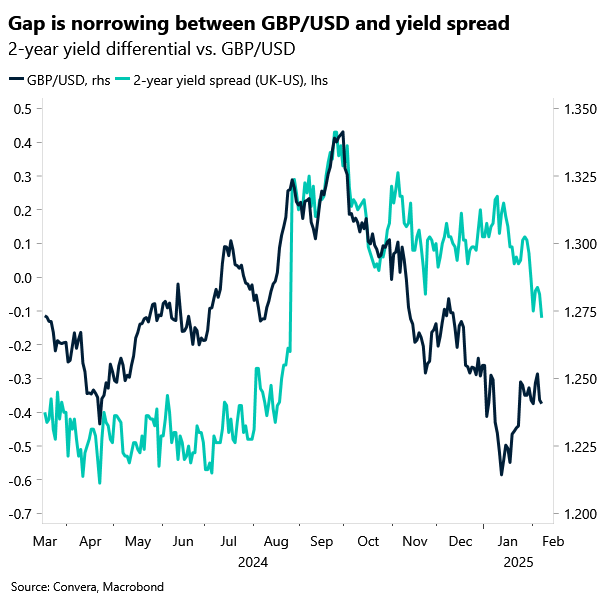
While tariff risk premia are driving the market, the British pound looks like an attractive bet given its low beta to tariff risks thanks to the UK’s goods trade deficit with the US. Trade war scares are still bad for sterling versus traditional safe haven peers via the risk sentiment channel, but they have generally proven to be good for other sterling crosses. Meanwhile, the negative GBP impact of the Bank of England’s (BoE) dovish vote split was offset by hiked inflation projections. UK GDP data will be crucial for the next directional move in sterling crosses this week.
It was all about tariffs at the start of last week, with sterling volatility elevated due to its sensitivity to global risk sentiment. It appears to be holding up stronger than other risk-sensitive G10 peers though, in sign that investors view the UK of something of safer bet given its not in the direct firing line of US President Trump’s threats. GBP/EUR is building on recent gains, rising to its highest level in three weeks, reclaiming the €1.20 handle – four cents above its 5-year average. Attention returned to the fundamentals in the second half of the week. Surprisingly, arch-hawk Catherine Mann joined arch-dove Swati Dhingra in voting to accelerate the pace of BoE rate cuts, which sent GBP/USD sharply toward $1.23. The BoE also revised its growth outlook downward, now expecting UK GDP to expand by only 0.75% in 2025, a significant reduction from its previous forecast of 1.5%. However, it raised its near-term inflation expectations, which supported sterling via a rise in UK gilt yields.
The downtrend remains intact as long-term moving averages point lower but given its recent break north of a descending trendline – we’re looking for a hold above $1.24 to provide a platform for further gains towards $1.26. Other than the UK growth and industrial figures, due on Thursday, Wednesday’s US inflation data holds relevance for GBP/USD in the upcoming week.
Safe haven Japanese yen is top performer
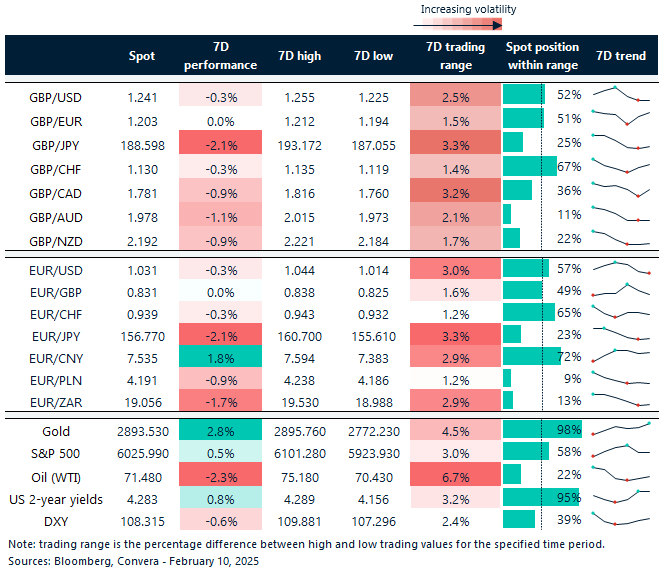
Table: 7-day currency trends and trading range
Key global risk events
Calendar: February 10-14

All times are in GMT
Have a question? [email protected]
*The FX rates published are provided by Convera’s Market Insights team for research purposes only. The rates have a unique source and may not align to any live exchange rates quoted on other sites. They are not an indication of actual buy/sell rates, or a financial offer.