
Check out our latest Converge Podcast episode : The consumer sets the bar: How B2C innovation is pushing B2B finserv into the future.
Global overview
The EUR/USD fell to six-month lows after the ECB hiked rates, but signaled a potential end to their tightening cycle. The USD benefited from the euro’s weakness with the USD index back at six-month highs. The Aussie outperformed after China cut bank reserve ratios to boost lending.
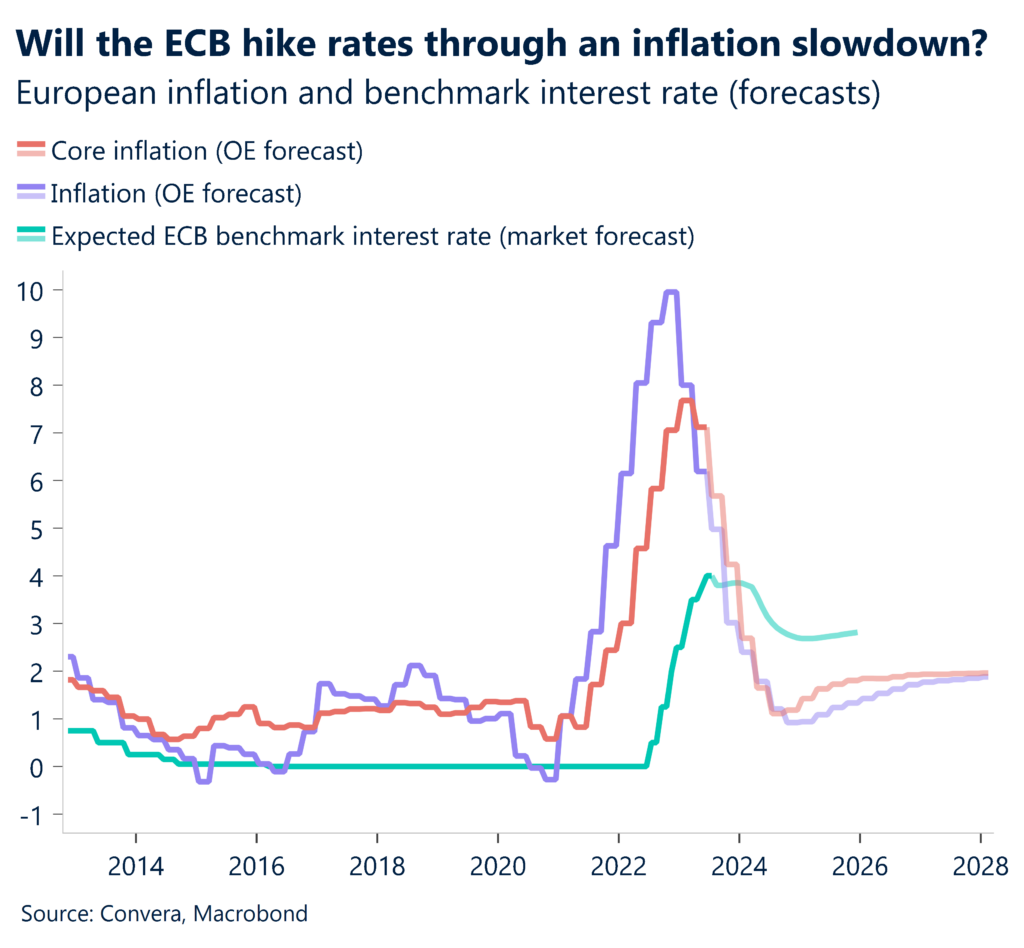
Euro hit after ECB
The euro was sharply lower across markets overnight as the European Central Bank lifted official interest rates by 25 basis points but signaled that it might have reached the end of its rate hiking cycle.
Most notably, the ECB said: “ECB interest rates have reached levels that, maintained for a sufficiently long duration, will make a substantial contribution to the timely return of inflation to the target”.
ECB president Christine Lagarde said further hikes were possible if inflation remains persistent, commenting that, “We are not saying we are now at peak…[but]…we have made sufficient contributions under current assessment to returning inflation to target.”
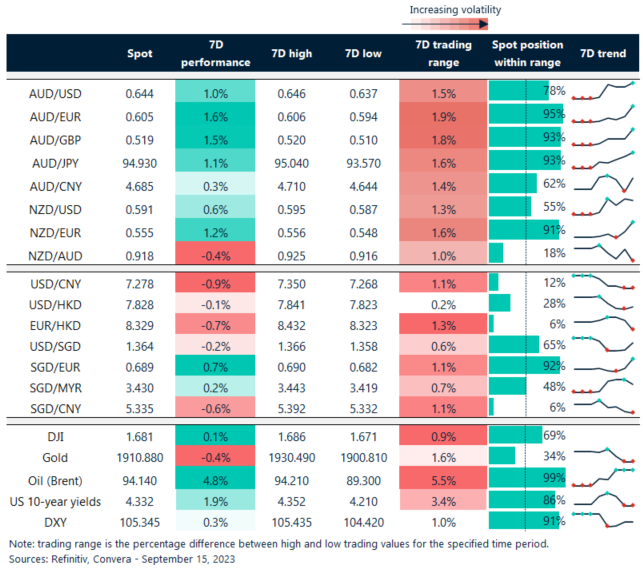
The EUR/USD tumbled with the pair down 0.8% to fall to six-month lows. The British pound fell in sympathy.
The ECB’s increase sees the deposit rate at 4.00% and the main refinancing rate at 4.50% — the highest levels since the establishment of the ECB in 1999.
Greenback boosted by retail sales
The euro’s weakness boosted the US dollar with the USD index jumping back to six-month highs.
The greenback was also helped by stronger US data with August retail sales beating expectations.
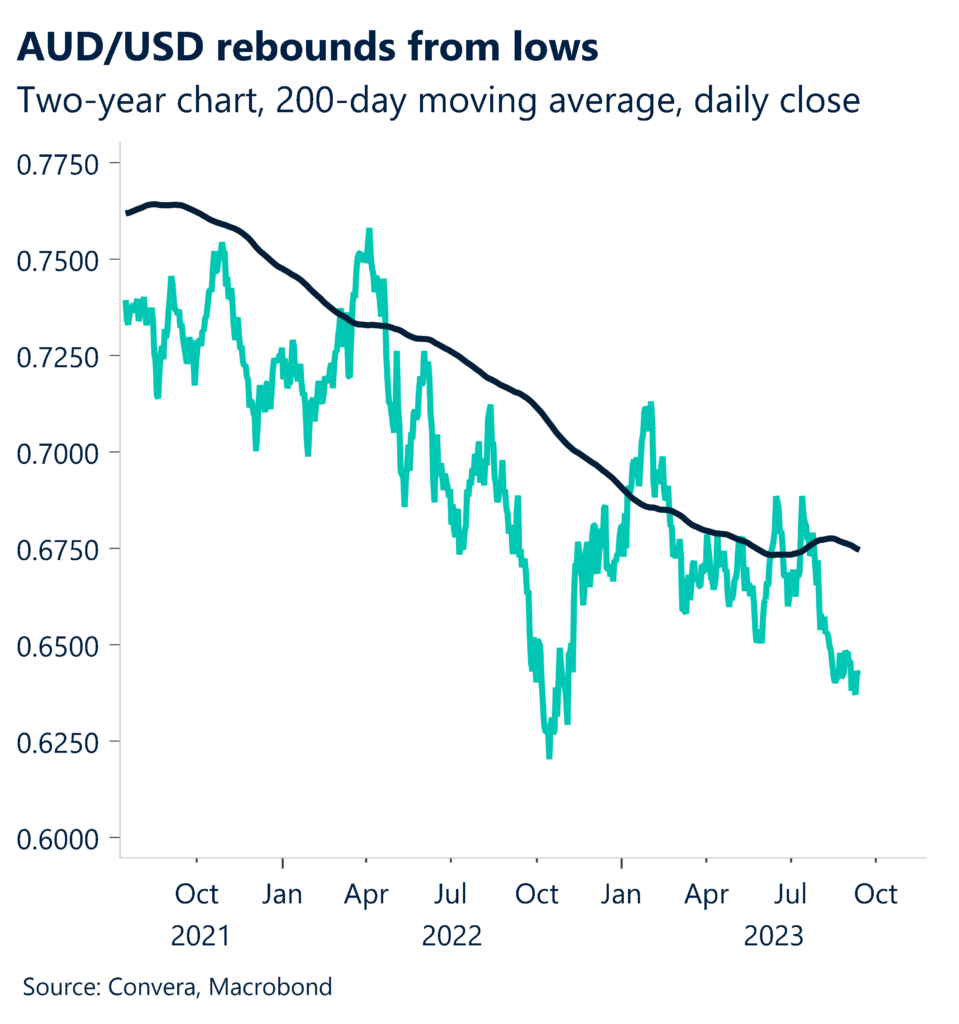
The Australian dollar outperformed, up 0.3%, helped by a better result from Australian jobs.
August employment grew by 64.9k – well above the 23k forecast – although the majority of these jobs were part time. That said, the participation rate climbed to an all-time high of 67% in a sign that the Australian labor market remains very strong.
China data in focus
The Aussie was also helped by positive news from China with the People’s Bank of China announcing a cut in banking reserve ratios in a move driven to encourage further lending.
China’s reserve ratio requirement (RRR) was cut by 25 basis points to a weighted average of 7.4% in the second such move this year.
China remains in focus with industrial production, retail sales and fixed asset investment due today. Over the last week, Chinese data has surprised to the upside – a rarity over the last six months. The better data has seen the Chinese yuan climb from 16-year lows.
Aussie at short-term highs after jobs, RRR cut
Table: seven-day rolling currency trends and trading ranges
Key global risk events
Calendar: 11 – 16 September

All times AEST
Have a question? [email protected]
*The FX rates published are provided by Convera’s Market Insights team for research purposes only. The rates have a unique source and may not align to any live exchange rates quoted on other sites. They are not an indication of actual buy/sell rates, or a financial offer.