
Global overview
Major currencies were little changed and kept to tight ranges ahead of fresh data on the world’s biggest economy. The U.S. dollar has been buoyed this week as signs of a resilient American economy have lent traction to the Federal Reserve’s higher for longer interest rate outlook. Consequently, the dollar has stabilized above last week’s two- and 10-month lows versus the loonie and sterling, respectively, and its weakest in a year against the euro. The yield on the benchmark U.S. 10-year government bond slipped below 3.60%, slowing the dollar’s recovery. On tap today are U.S. numbers on weekly jobless claims and the Philly Fed’s monthly survey of business conditions along the mid-Atlantic region. Jobless claims are forecast to inch up from last week’s 239,000. A print around or below 250,000 would still be consistent with the labor market firing on all cylinders. Improvement is in the cards for the Philly Fed index. The dollar would tend to need further signs of a sturdy U.S. economy to help it snap a five-week losing streak, its longest since mid-2020.
Euro has sentiment on its side
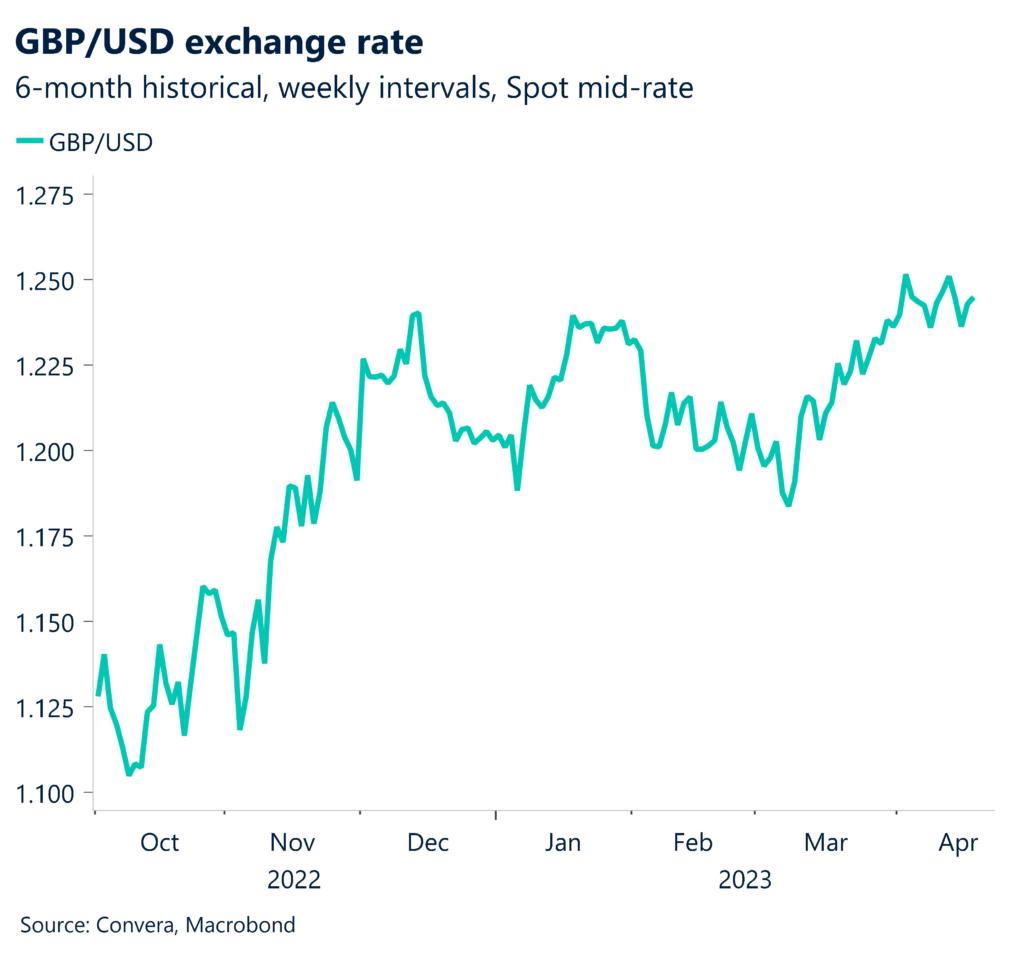
A steady euro Thursday kept to a slender range against the greenback. After last week’s burst to one-year highs, EUR/USD has spent recent sessions consolidating its advance. Underlying sentiment remains positive for the euro, given the more hawkish outlook for interest rates in Europe compared to the U.S. Inflation running hotter and just below 7% in Europe has markets betting on several more rate increases by the European Central Bank this year. But contrast, the Fed has forecast it has only one more rate hike to go in its most aggressive tightening cycle in decades.

UK growth worries put a lid on sterling
The UK pound moved sideways Thursday as markets continued to absorb another stubbornly hot reading of British inflation which spent a seventh consecutive month above 10%. On the bright side for sterling, hot inflation could mean that the Bank of England needs to hike rates to around 5% from 4.25% currently. Still, the downside of higher rates means that the already fragile British economy could suffer if more expensive borrowing hinders consumer and business spending. For now, worries about higher rates slowing growth have put a lid on the pound.
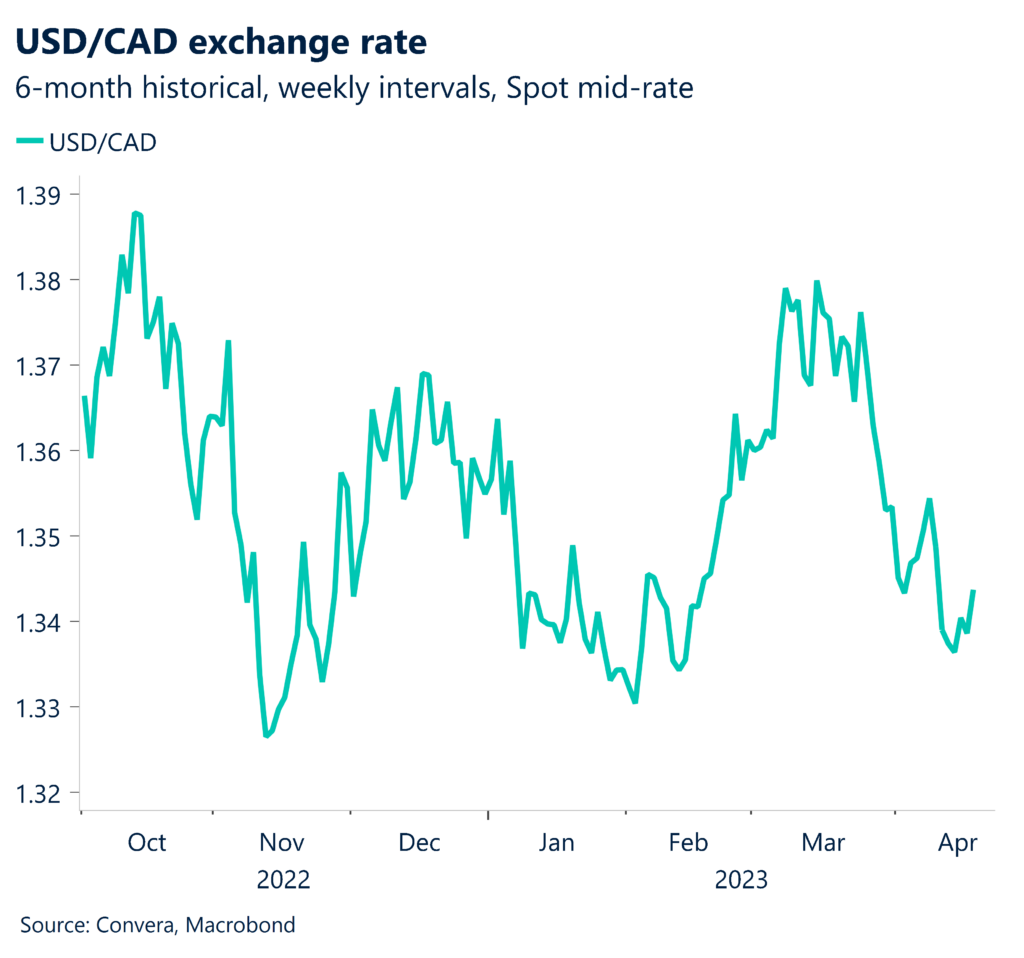
USD/CAD rises to 1-week highs
Subdued risk sentiment and lower oil weighed on the commodity-backed Canadian dollar which slipped to one-week lows for a second straight day. Worries about elevated global inflation returned to the surface this week, leading markets ramp up rate hike expectations. Higher borrowing rates threaten to slow global growth which is bad for commodity-linked currencies like Canada’s dollar. Growth concerns pushed the price of oil further below $80 and to the lowest level in two weeks.
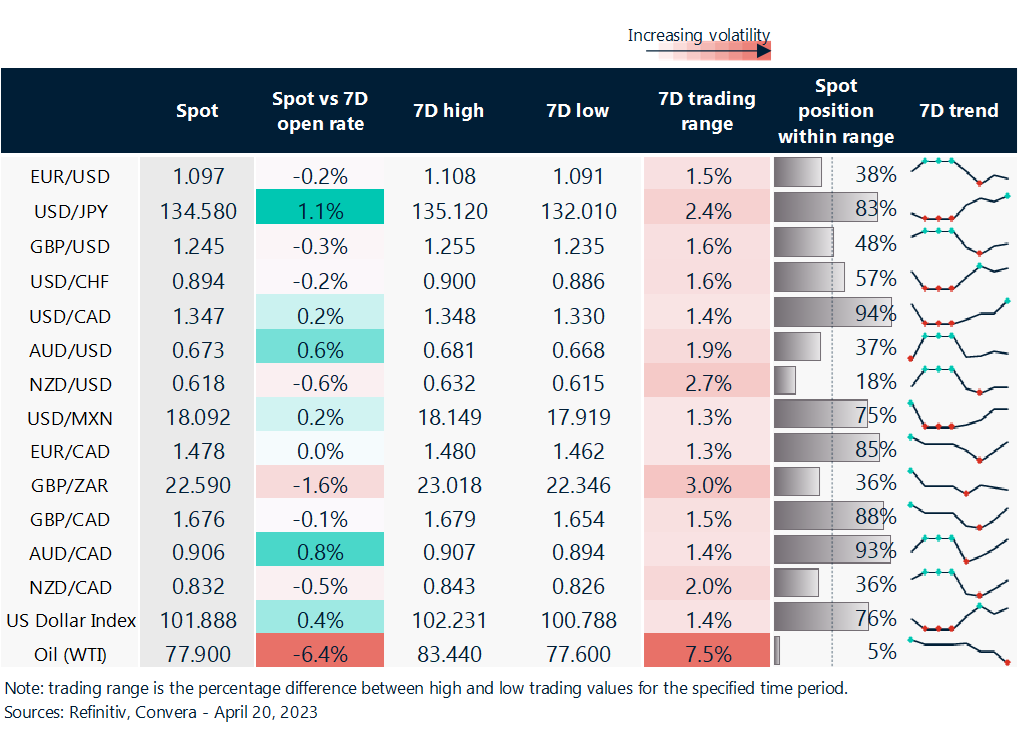
Dollar index treads water above 1-year lows
Table: rolling 7-day currency trends and trading ranges
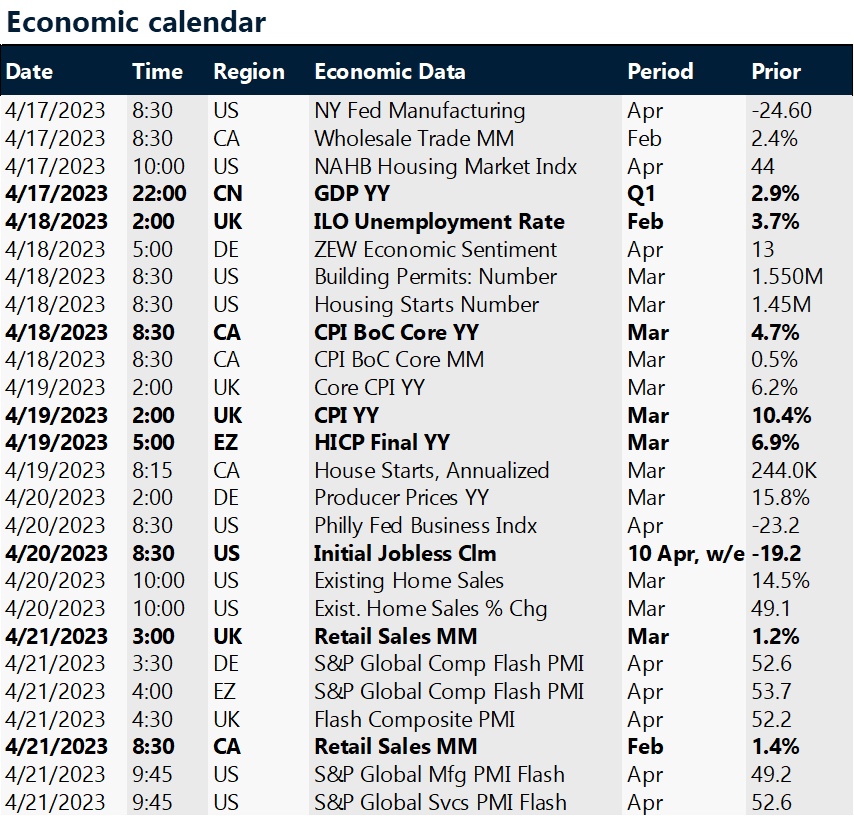
Key global risk events
Calendar: Apr 17-21
Have a question? [email protected]
*The FX rates published are provided by Convera’s Market Insights team for research purposes only. The rates have a unique source and may not align to any live exchange rates quoted on other sites. They are not an indication of actual buy/sell rates, or a financial offer.