

USD: Higher yields keep the dollar in demand
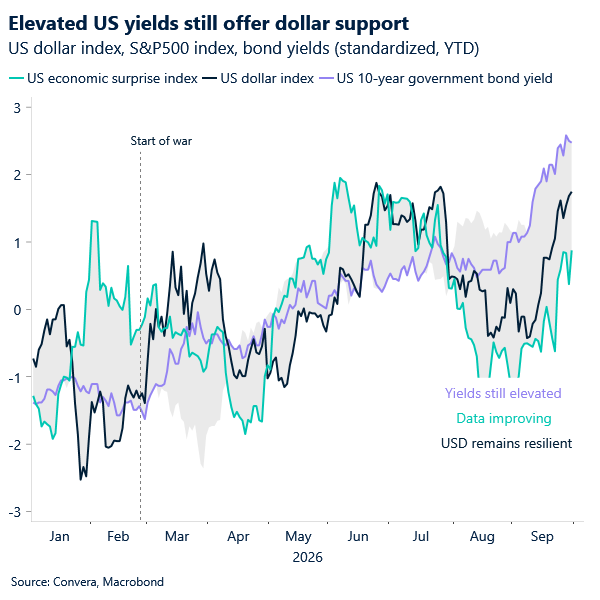
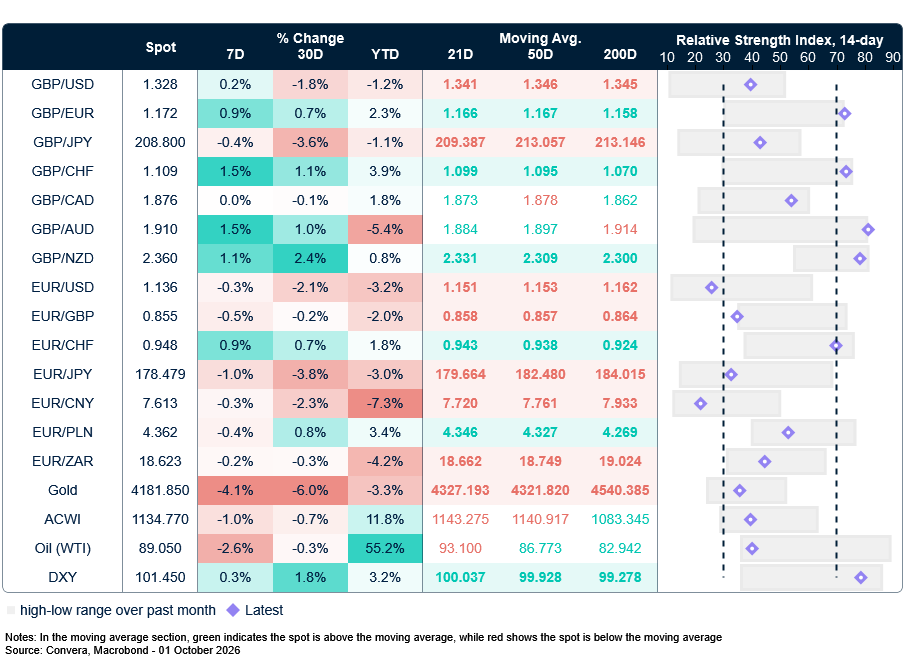
The US dollar is back on the front foot with the DXY holding near 18-month highs as higher Treasury yields continue to underpin demand. While August’s PCE data came in slightly softer than expected, the broader market reaction suggests investors remain focused on the bigger picture: persistent inflation risks, resilient growth and the prospect of further Fed tightening.
The most notable move has been in bonds. Ten- and 30-year Treasury yields have climbed to roughly 5.3% and 5.6% respectively, levels not seen since 2002. Importantly, this is not just an inflation story. Elevated energy prices, robust AI-related investment, deteriorating fiscal dynamics and heavy debt issuance are all contributing to higher term premia and keeping pressure on the long end of the curve.
Oil remains a key part of the narrative. Although Brent has eased back towards $97/bbl, prices remain elevated as US-Iran talks show little sign of meaningful progress despite some improvement in regional energy flows. That continues to sustain inflation concerns and limits the scope for a significant dovish repricing of the Fed.
Markets have pared October hike expectations somewhat following the softer PCE release, but strong recent activity data and a resilient labour market leave tightening risks firmly alive. Attention now turns to jobless claims and, more importantly, Friday’s payrolls report.
Bottom line: softer inflation data has taken some heat out of near-term Fed expectations, but elevated yields, resilient growth and persistent energy risks continue to provide a supportive backdrop for the dollar.
EUR: Three quarters in the red
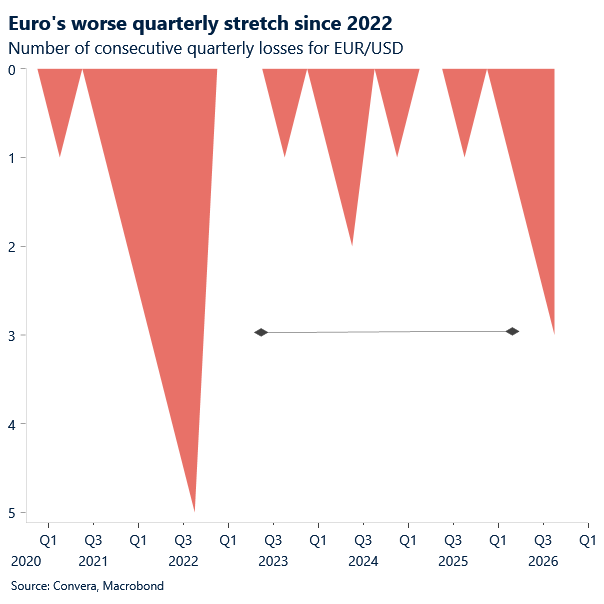
The euro ended September near 1.135, its weakest level since May 2025, after falling more than 2% against the dollar, its largest monthly decline in over a year. It also marked a third consecutive quarterly decline. Despite expectations for further ECB tightening and inflation remaining elevated, investors continue to favour the dollar’s superior yield appeal and relative macro resilience.
A growing challenge for the euro is that political risk is once again becoming a meaningful market driver. The French-German yield spread has widened to its highest level since 2012, reflecting rising concern over France’s fiscal outlook and broader political uncertainty across the euro area. That spread has increasingly become a barometer of investor confidence in the bloc and helps explain why the euro has struggled to respond to otherwise supportive economic data.
The impact is particularly visible in the crosses. EUR/GBP has extended lower, with sterling benefiting from a fading UK political risk premium following Prime Minister Burnham’s conference appearance. At the same time, options market activity suggests investors are actively building fresh bearish euro positions rather than simply unwinding existing longs, hinting that sentiment towards the single currency remains fragile.
The ECB remains on a tightening path, but markets are increasingly questioning how much support higher rates can provide if political fragmentation and fiscal concerns continue to build. For now, the combination of elevated energy prices, supportive US yields and rising political uncertainty suggests the euro remains vulnerable, even as the eurozone economy continues to show surprising resilience.
GBP: Sterling making moves against the euro
The pound enters Q4 at an important crossroads. Despite a year marked by conflict in the Middle East, volatile bond markets and repeated shifts in central bank expectations, GBP/USD has remained trapped within a historically tight 1.31-1.38 range. The dominant driver right now is the dollar’s yield advantage, which has dragged the pair towards 1.32.
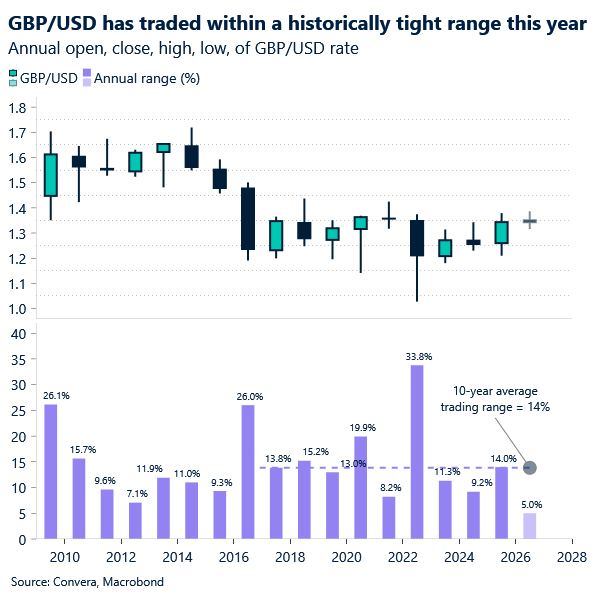
Resilient US growth and a hawkish Federal Reserve continue to support Treasury yields, but sterling has found support from Prime Minister Andy Burnham’s commitment to fiscal discipline and a more constructive UK-EU relationship.
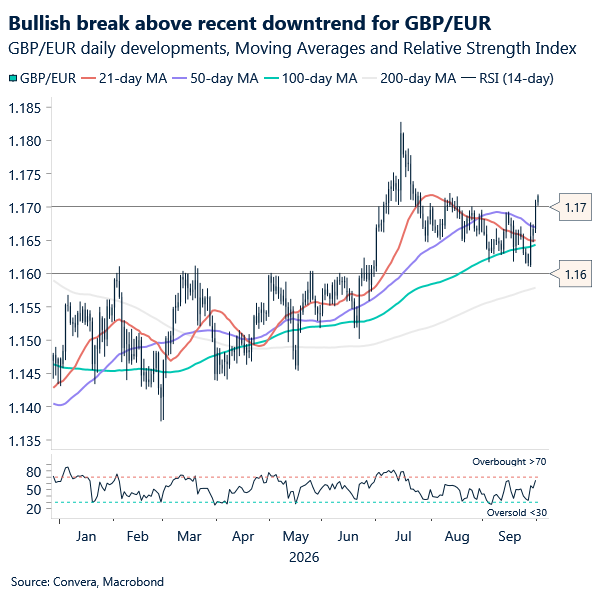
As a result, despite mixed UK economic data, GBP/USD has proven relatively resilient compared with EUR/USD, while GBP/EUR has recovered above 1.17 to its highest level in over six weeks.
Looking ahead, the fourth quarter has historically been a supportive period for sterling. Near-term risks, however, remain skewed to the downside. FX volatility typically rises into year-end, and we believe the scope for markets to become more cautious on UK assets is greater than current volatility pricing suggests.
In particular, the 28 October Autumn Budget is likely to intensify scrutiny of the Burnham government’s fiscal plans at a time when higher borrowing costs have already eroded fiscal headroom. Any perceived loosening of fiscal discipline could weigh simultaneously on both gilts and sterling.
As a result, we see the 1.30 handle as the low end of our central GBP/USD scenario for the fourth quarter.
Market snapshot
Table: Currency trends, trading ranges & technical indicators
Key global risk events
Calendar: September 28 – October 02
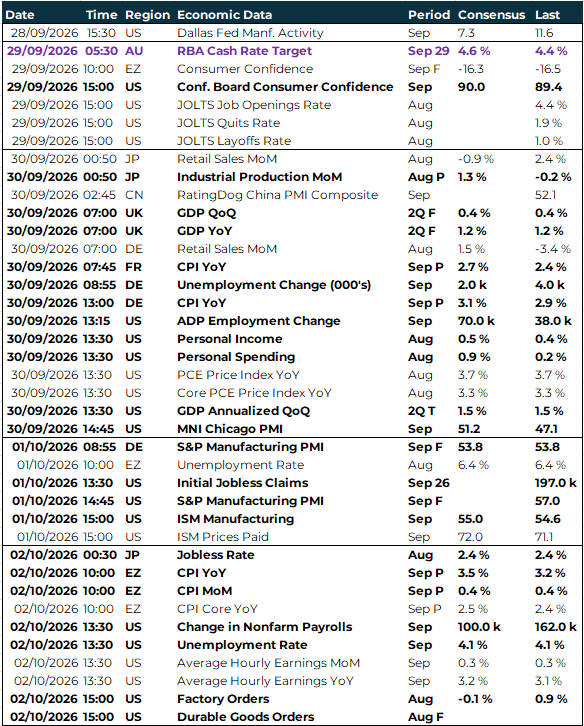
All times are in BST
Have a question? [email protected]
*The FX rates published are provided by Convera’s Market Insights team for research purposes only. The rates have a unique source and may not align to any live exchange rates quoted on other sites. They are not an indication of actual buy/sell rates, or a financial offer.